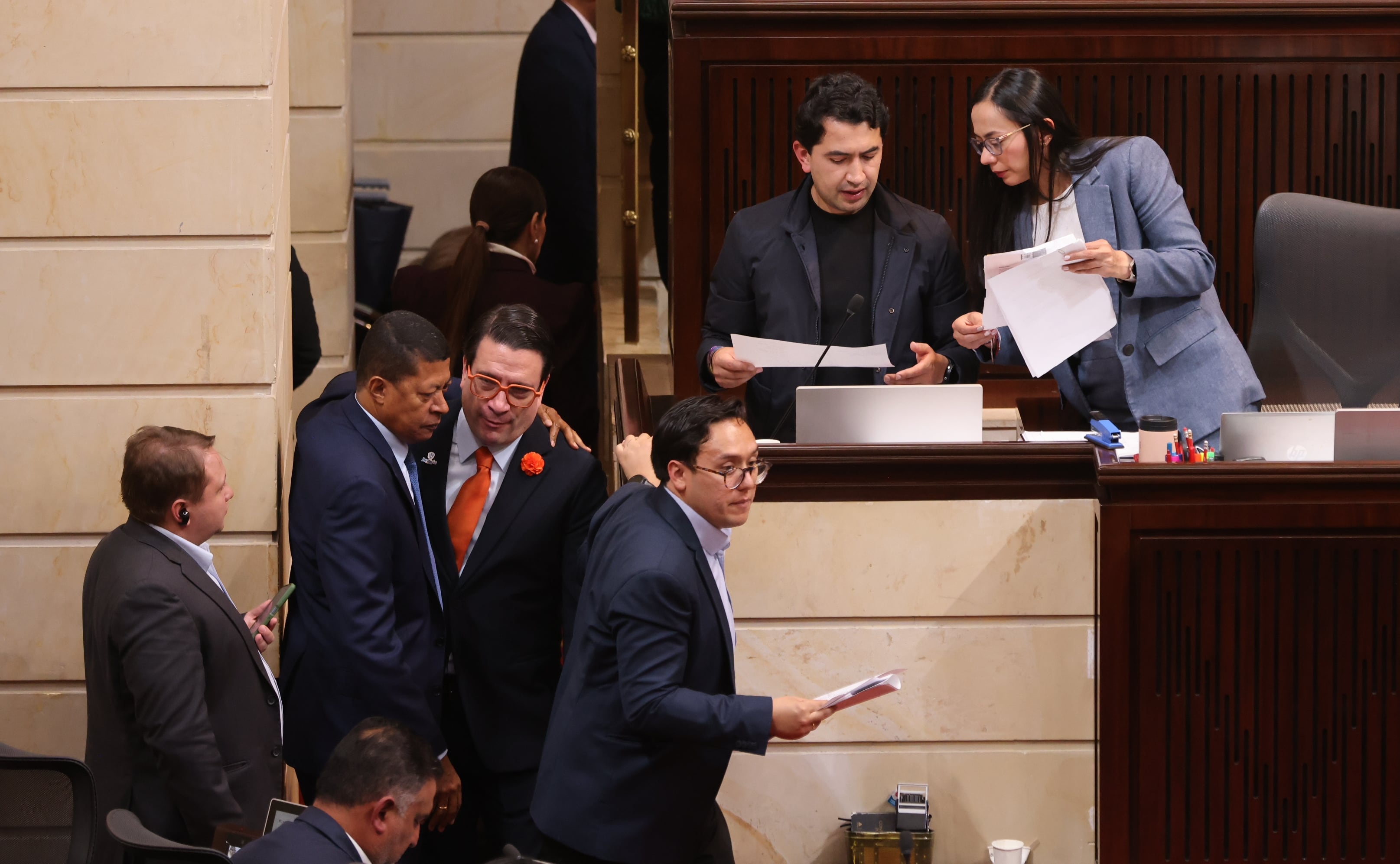
Plenaria del Senado de Colombia durante la sesión en la que se aprobó la Ley de Sometimiento. · Semana
Senate approved the Submission Law and the House now decides
The Senate approved the Submission Law with 57 votes in favor and 24 against on November 3; House approval and conciliation this Wednesday are still needed…
Submission Law advances in the Senate with a clear majority vote
With 57 votes in favor and 24 against, the Senate approved the Submission Law on November 3; the House must approve the text and conciliation this Wednesday…
The Senate approved the Submission Law on Tuesday, November 3, with 57 votes in favor and 24 against, on the deadline day, and the text now awaits House approval.
--- The context ---
The text sets the guidelines for illegal armed groups to submit to justice and establishes the conditions for them to disengage from criminal activities and receive some benefits in return. The initiative also seeks to dismantle the total peace policy of former President Gustavo Petro.
--- The facts ---
The Senate vote closed with 57 votes in favor and 24 against. Once the House approves the text, the conciliation must take place this Wednesday and, if that is achieved, the bill will move to presidential sanction.
The House was also debating the text on Tuesday. Its members were summoned on the holiday Monday because of the urgency of the timetable.
--- The positions ---
Senate President Honorio Henríquez argued that Colombia needs effective legal tools to dismantle criminal structures and protect victims. Senator Hernán Cadavid, of the Democratic Center and coordinating rapporteur, said the bill is the basis to protect Colombian institutions and that, more than submission to the law, it is an embrace of the Constitution. Daniel Briceño, the House rapporteur, denied any flaw: he said there was a hasty vote, the report was presented in blocks and was supported for more than 20 minutes.
--- What remains unknown ---
The House still must approve the text and the conciliation this Wednesday must succeed. Controversy remains over an alleged double vote on the positive report.
--- Unanswered questions ---
Will the House approve the text in the terms voted by the Senate? Will the conciliation be achieved this Wednesday? Will the controversy over the report vote be cleared up?
--- EPM analysis ---
From a rights-based perspective, the law's value will lie in ensuring submission happens before justice, under clear rules and without losing sight of victims.
📌 EPM Take: In EPM's view, the Senate's approval by 57 votes to 24 leaves the Submission Law one step from a final definition, yet the decisive moment will come in the House and in this Wednesday's conciliation. If the text advances, Colombia will have a framework for illegal armed groups to submit to justice and break away from criminal activities in exchange for some benefits. That path will only be legitimate if it protects victims and respects the Constitution throughout the process.
With 57 votes in favor and 24 against, the Senate approved the Submission Law on Tuesday, November 3, on the deadline day, leaving the text in the hands of the House.
--- The context ---
The bill sets the guidelines for illegal armed groups to submit to justice and establishes the conditions for them to abandon criminal activities and receive some benefits in return. The initiative also seeks to dismantle the total peace policy of former President Gustavo Petro.
--- The facts ---
The Senate decision was adopted with 57 votes in favor and 24 against. After the House approves the text, the conciliation must be held this Wednesday and, if it succeeds, the bill will pass to presidential sanction.
The House was also debating the text on Tuesday. Its members were summoned on the holiday Monday given the urgency of the timetable.
--- The positions ---
Honorio Henríquez, president of the Senate, defended effective legal tools to dismantle criminal structures and restore security. Hernán Cadavid, a Democratic Center senator and coordinating rapporteur, argued that the bill is the basis to protect Colombian institutions and that, more than submission to the law, it amounts to embracing the Constitution. Daniel Briceño, the House rapporteur, denied any flaw: he said there was a hasty vote, the report was presented in blocks and was supported for more than 20 minutes.
--- What remains unknown ---
Approval in the House and the conciliation this Wednesday are still pending. The controversy over an alleged double vote on the positive report also remains.
--- Unanswered questions ---
Does the House back the text approved by the Senate? Is the conciliation completed this Wednesday so the bill moves to presidential sanction? Does the defense that there was no procedural flaw hold up?
--- EPM analysis ---
In terms of order, the law aims to recover security and institutional strength: it requires submission to justice and adherence to the Constitution for any benefit.
📌 EPM Take: In EPM's view, what the Senate approved marks a turn away from total peace: by 57 votes to 24, the Submission Law places the Constitution and justice at the center. That institutional reading was voiced by Cadavid when he described the bill as protection for Colombian institutions. The House should now approve the text and the conciliation this Wednesday should succeed so the measure reaches presidential sanction without flaws or shortcuts that would weaken its authority.
Senado aprobó la Ley de Sometimiento y la Cámara define su futuro
El Senado aprobó la Ley de Sometimiento con 57 votos a favor y 24 en contra el 3 de noviembre; falta la aprobación de la Cámara y la conciliación de este…
Ley de Sometimiento avanza en el Senado con respaldo mayoritario claro
Con 57 votos a favor y 24 en contra, el Senado aprobó la Ley de Sometimiento el 3 de noviembre; la Cámara debe aprobar el articulado y la conciliación de este…
El Senado aprobó este martes 3 de noviembre la Ley de Sometimiento con 57 votos a favor y 24 en contra, en el día límite, y el articulado espera ahora la aprobación de la Cámara.
--- El contexto ---
El articulado fija los lineamientos para que los grupos armados ilegales se sometan a la justicia y las condiciones para que se desvinculen de sus actividades delincuenciales y reciban a cambio algunos beneficios. También busca desmontar la paz total del expresidente Gustavo Petro.
--- Los hechos ---
La votación en el Senado se cerró con 57 votos a favor y 24 en contra. Una vez la Cámara apruebe el articulado deberá hacerse la conciliación este miércoles y, si eso se logra, el proyecto pasará a sanción presidencial.
La Cámara también debatía el articulado el martes. Sus integrantes fueron citados el lunes festivo por la premura de los tiempos.
--- Las posiciones ---
Honorio Henríquez, presidente del Senado, sostuvo que Colombia necesita herramientas jurídicas eficaces para desmantelar las estructuras criminales y proteger a las víctimas. Hernán Cadavid, del Centro Democrático y coordinador ponente, afirmó que el proyecto es la base para proteger a las instituciones colombianas y que, más que sometimiento a la ley, es acogimiento a la Constitución. Daniel Briceño, ponente en la Cámara, negó el supuesto vicio: dijo que hubo una votación apresurada, que la ponencia se presentó en bloques y se sustentó por más de 20 minutos.
--- Lo que falta saber ---
Falta la aprobación de la Cámara y la conciliación este miércoles. Persiste la controversia sobre una supuesta doble votación de la ponencia positiva.
--- Preguntas sin respuesta ---
¿Aprobará la Cámara el articulado votado por el Senado? ¿Se logrará la conciliación este miércoles? ¿Quedará despejada la controversia sobre la ponencia?
--- Análisis EPM ---
Desde una mirada garantista, el valor de la ley estará en que el sometimiento ocurra ante la justicia, con reglas claras y sin perder de vista la protección a las víctimas.
📌 Conclusion EPM: A juicio de EPM, la aprobación en el Senado con 57 votos a favor y 24 en contra deja la Ley de Sometimiento a un paso de definirse, pero lo decisivo ocurrirá en la Cámara y en la conciliación de este miércoles. Si el articulado avanza, Colombia tendrá un marco para que los grupos armados ilegales se sometan a la justicia y se desvinculen de sus actividades delincuenciales a cambio de algunos beneficios. Ese camino solo será legítimo si protege a las víctimas y respeta la Constitución.
Con 57 votos a favor y 24 en contra, el Senado aprobó este martes 3 de noviembre la Ley de Sometimiento, en el día límite, y dejó el articulado en manos de la Cámara.
--- El contexto ---
El proyecto fija los lineamientos para que los grupos armados ilegales se sometan a la justicia y las condiciones para que abandonen sus actividades delincuenciales y reciban a cambio algunos beneficios. Además busca desmontar la paz total del expresidente Gustavo Petro.
--- Los hechos ---
La decisión se adoptó con 57 votos a favor y 24 en contra. Luego de que la Cámara apruebe el articulado deberá hacerse la conciliación este miércoles y, si eso se logra, el proyecto pasará a sanción presidencial.
La Cámara debatía también el articulado este martes. Sus miembros fueron citados el lunes festivo ante la premura de los tiempos.
--- Las posiciones ---
Honorio Henríquez, presidente del Senado, defendió herramientas jurídicas eficaces para desmantelar las estructuras criminales y recuperar la seguridad. Hernán Cadavid, del Centro Democrático y coordinador ponente, sostuvo que el proyecto es la base para proteger a las instituciones colombianas y que, más que sometimiento a la ley, es acogimiento a la Constitución. Daniel Briceño, ponente en la Cámara, negó el supuesto vicio: afirmó que hubo una votación apresurada, que la ponencia se presentó en bloques y se sustentó por más de 20 minutos.
--- Lo que falta saber ---
Aún falta la aprobación en la Cámara y la conciliación de este miércoles. Queda la controversia por una supuesta doble votación de la ponencia positiva.
--- Preguntas sin respuesta ---
¿Respalda la Cámara el articulado del Senado? ¿Se concreta la conciliación este miércoles y pasa el proyecto a sanción presidencial? ¿Se sostiene que no hubo vicio de trámite?
--- Análisis EPM ---
En clave de orden, la ley apunta a recuperar la seguridad y la institucionalidad: exige someterse a la justicia y acogerse a la Constitución como condición de cualquier beneficio.
📌 Conclusion EPM: A juicio de EPM, lo aprobado por el Senado marca un giro frente a la paz total: con 57 votos a favor y 24 en contra, la Ley de Sometimiento pone la Constitución y la justicia en el centro. Hernán Cadavid lo resumió al decir que el proyecto protege a las instituciones colombianas. Ahora la Cámara debe aprobar el articulado y la conciliación de este miércoles debe prosperar para que el texto llegue a sanción presidencial sin vicios ni atajos que debiliten su autoridad.