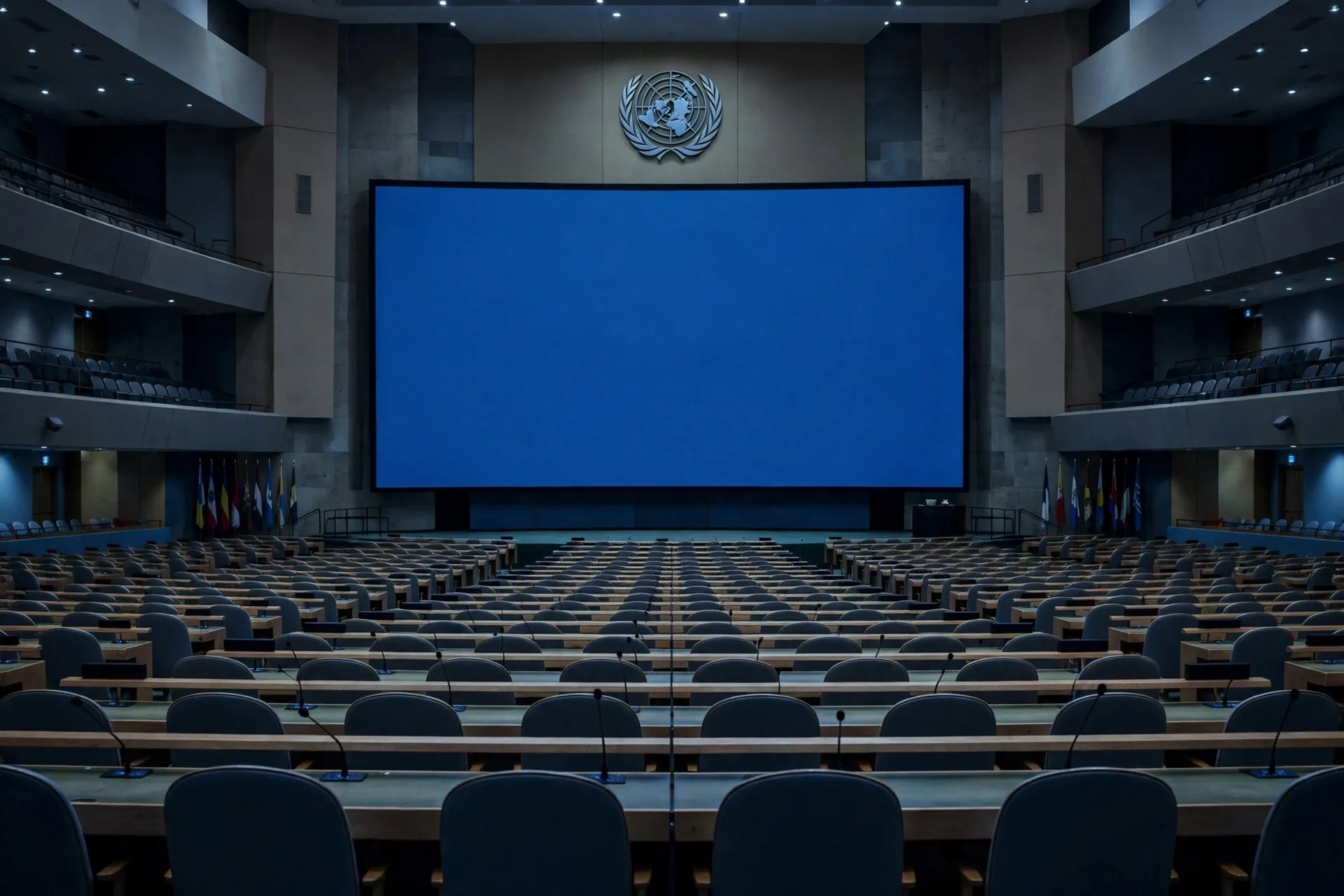
Sala de asamblea de las Naciones Unidas, escenario de la declaración británica sobre integridad de la información. · Imagen generada por EPM
UK warns UN of growing threats to information integrity and peacekeeper safety
The United Kingdom told the UN Fourth Committee that disinformation, amplified by artificial intelligence, threatens the credibility of the organisation, the…
UK condemns Russian manipulation at UN and vows to defend trusted information
The United Kingdom condemned Kremlin information manipulation at the UN Fourth Committee, put at £1.3 billion a year, and defended sanctions, a National Centre…
--- The context ---
The United Kingdom brought a broad warning about the global information environment before the UN Fourth Committee. Its deputy spokesperson, Ed Thicknesse, thanked the Department of Global Communications and Under-Secretary-General Fleming for their work.
According to the statement, Prime Minister Andy Burnham had warned at the General Assembly of an industrial-scale assault by hostile actors on the information environment, one that corrodes trust, fuels conflict and puts lives at risk.
--- The facts ---
The statement said artificial intelligence will multiply the threat by spreading false content faster, targeting it more precisely and making it harder to detect. In humanitarian crises, harmful information can undermine access to aid and put staff in danger, according to the World Disasters Report for 2026 of the international federation of Red Cross societies.
The first area of action was defending the integrity of the United Nations as a trusted source of information. The UK said it will continue to expose Russian disinformation, stating that the Kremlin spends around £1.3 billion every year manipulating information through bot farms and troll networks. It cited 31 additional sanctions against Kremlin disinformation networks, an announced National Centre for Information Defence, support given to Moldova to protect its elections, and artificial intelligence at the heart of its G20 Presidency next year.
The second area was disinformation against peacekeeping: false narratives have incited violence, contributed to the loss of peacekeepers lives and led to the destruction of UN assets, and 76% of peacekeepers surveyed by the Department of Peace Operations reported a moderate to severe impact on their safety. The third area was journalism: 129 journalists and media workers killed in 2025 according to the Committee to Protect Journalists, the deadliest year since records began.
--- The positions ---
The UK presented itself as a co-founder of the Media Freedom Coalition, defended extra-budgetary funding for peacekeeper training and technological tools, and said every attack on a media worker must be investigated so those responsible are brought to justice.
The statement added that a jacket marked PRESS no longer protects those who wear it and is too often treated as a target, even though international humanitarian law protects reporters covering conflict.
--- What remains unknown ---
The intervention did not set out a timetable or budget for the new national centre, nor explain how the results of peacekeeper training would be measured.
--- Unanswered questions ---
When will the National Centre for Information Defence start operating, and with what budget? Which countries will join London in defending information integrity inside the UN? Will UK-funded training reduce attacks driven by false narratives against peacekeepers? Will the attacks on journalists recorded in 2025 be effectively investigated?
--- EPM analysis ---
The statement links three vulnerabilities usually treated separately: the credibility of the UN, the physical safety of its missions and the survival of journalism in conflict zones. By quantifying the spending attributed to the Kremlin and the share of peacekeepers affected, it turns a general concern into a measurable problem.
📌 EPM Take: In EPM's view, the statement is right to treat disinformation as a physical risk and not merely a reputational one, because the figures on peacekeepers and journalists show concrete harm and lives lost. Its weakness lies in delivery: without a timetable, a budget or public verification mechanisms, the three areas of action remain a political commitment. The test will come when the announced centre operates, the training is deployed on the ground and the promised investigations produce accountability in concrete cases.
--- The context ---
Before the UN Fourth Committee, the United Kingdom described the information environment as an arena of state rivalry. Its deputy spokesperson, Ed Thicknesse, thanked the Department of Global Communications and Under-Secretary-General Fleming.
According to the statement, Prime Minister Andy Burnham had described an industrial-scale assault by hostile actors on the information environment, capable of corroding trust, fuelling conflict and putting lives at risk, attributed also to member states of the organisation.
--- The facts ---
The delegation warned that artificial intelligence will multiply the threat by spreading false content faster, targeting it more precisely and making it harder to detect. In humanitarian crises, harmful information can undermine access to aid and endanger staff, according to the World Disasters Report for 2026 of the international federation of Red Cross societies.
The core of the accusation pointed to Moscow. The statement said the Kremlin spends around £1.3 billion every year manipulating information, using bot farms and troll networks against democratic processes, and recalled 31 additional sanctions focused on Kremlin disinformation networks. London also announced a National Centre for Information Defence, cited support given to Moldova to protect its elections, and said artificial intelligence will be central to its G20 Presidency next year.
The second area was protecting peacekeeping: false narratives have incited violence, contributed to the loss of peacekeepers lives and led to the destruction of UN assets, and 76% of peacekeepers surveyed by the Department of Peace Operations reported a moderate to severe impact on their safety. The third area was journalism: 129 journalists and media workers killed in 2025 according to the Committee to Protect Journalists, the deadliest year since records began, and a jacket marked PRESS that no longer protects and is often a target.
--- The positions ---
The British position was one of firmness: expose Russian disinformation, sanction it, help partners exposed to interference, and sustain peacekeeper training and technological tools through extra-budgetary funding. As a co-founder of the Media Freedom Coalition, London demanded that every attack on a media worker be investigated and those responsible brought to justice.
The statement closed firmly: false information thrives when the truth is weakly defended, and the response must be stronger and more united.
--- What remains unknown ---
The intervention did not provide the methodology behind the spending figure attributed to the Kremlin, nor detail the operational scope of the announced centre or the results of the election support given to Moldova.
--- Unanswered questions ---
How does London verify the spending figure attributed to the Kremlin, and how much involves networks already sanctioned? Will the new centre have real capacity to disrupt foreign operations, or only to detect them? What measurable effect have the 31 additional sanctions had? Will other member states back a stronger UN information defence?
--- EPM analysis ---
The speech orders the threat around a principal responsible party and concrete figures, and translates it into instruments of state: sanctions, a national centre and support for allies. That concreteness sets it apart from generic condemnations, although effectiveness will depend on detection becoming real disruption.
📌 EPM Take: In EPM's view, the statement is strongest where it names the aggressor, quantifies its effort and applies sanctions, because state disinformation is not contained by symmetrical declarations or abstract calls for caution. Its limit is verification: the figure attributed to the Kremlin and the real impact of the sanctions need public evidence and constant follow-up. Defending trusted information requires applying to its own claims the same standard of proof that London demands of its adversaries in this forum.
Reino Unido alerta en la ONU sobre la desinformación y el riesgo para cascos azules
El Reino Unido advirtió en la Cuarta Comisión de la ONU que la desinformación, amplificada por la inteligencia artificial, amenaza la credibilidad de la…
Londres denuncia en la ONU la manipulación rusa y pide defender la información fiable
El Reino Unido denunció en la Cuarta Comisión de la ONU la manipulación informativa atribuida al Kremlin, cifrada en 1,3 mil millones de libras anuales, y…
--- El contexto ---
El Reino Unido llevó ante la Cuarta Comisión de las Naciones Unidas una advertencia sobre el deterioro del entorno informativo mundial. Su portavoz adjunto, Ed Thicknesse, agradeció el trabajo del Departamento de Comunicación Global y de la subsecretaria general Fleming en este ámbito.
Según la declaración, el primer ministro Andy Burnham advirtió en la Asamblea General un asalto a escala industrial de actores hostiles contra el entorno informativo, que corroe la confianza y pone vidas en riesgo.
--- Los hechos ---
La delegación sostuvo que la inteligencia artificial multiplicará la amenaza: difundirá el contenido falso más rápido, lo segmentará mejor y lo hará más difícil de detectar. En crisis humanitarias, la información dañina puede socavar el acceso a la ayuda y poner en peligro al personal, según el Informe Mundial sobre Desastres 2026 de la federación internacional de sociedades de la Cruz Roja.
El primer frente fue defender la integridad de la ONU como fuente fiable. Londres seguirá exponiendo la desinformación rusa y cifró en 1,3 mil millones de libras el gasto anual del Kremlin en manipulación informativa, con granjas de bots y redes de troles. Citó 31 sanciones adicionales contra esas redes, un Centro Nacional de Defensa de la Información anunciado, el apoyo a Moldavia para proteger sus elecciones y la inteligencia artificial como eje de su presidencia del G20.
El segundo frente fue la desinformación contra el mantenimiento de la paz: las narrativas falsas han incitado violencia, contribuido a muertes de cascos azules y a la destrucción de activos de la ONU, y el 76 % de los encuestados por el Departamento de Operaciones de Paz reportó un impacto de moderado a grave en su seguridad. El tercer frente fue el periodismo: 129 periodistas y trabajadores de medios asesinados en 2025 según el Comité para la Protección de los Periodistas, el año más mortífero registrado.
--- Las posiciones ---
Londres se presentó como cofundador de la Media Freedom Coalition, defendió financiación extrapresupuestaria para formación y herramientas tecnológicas de los cascos azules y exigió que todo ataque contra un trabajador de medios se investigue y lleve a los responsables ante la justicia.
La declaración añadió que el chaleco con la palabra PRESS ya no protege a quien lo lleva y que a menudo es un blanco.
--- Lo que falta saber ---
La intervención no detalló el calendario ni el presupuesto del nuevo centro, ni cómo se medirán los resultados de la formación de cascos azules.
--- Preguntas sin respuesta ---
¿Cuándo operará el Centro Nacional de Defensa de la Información y con qué presupuesto? ¿Qué países acompañarán a Londres dentro de la ONU? ¿Reducirá la formación financiada los ataques contra cascos azules? ¿Se investigarán los ataques contra periodistas de 2025?
--- Análisis EPM ---
El planteamiento une tres vulnerabilidades: la credibilidad de la ONU, la seguridad de sus misiones y el periodismo en conflicto. Al cuantificar el gasto atribuido al Kremlin y la proporción de cascos azules afectados, convierte una preocupación general en un problema medible.
📌 Conclusion EPM: A juicio de EPM, la declaración acierta al tratar la desinformación como un riesgo físico y no solo reputacional, porque los datos sobre cascos azules y periodistas muestran daños concretos y vidas perdidas. Su punto débil es la ejecución: sin calendario, presupuesto ni mecanismos públicos de verificación, los tres frentes quedan como compromiso político. La prueba llegará cuando el centro anunciado funcione, la formación se despliegue y las investigaciones prometidas produzcan responsables ante la justicia.
--- El contexto ---
Ante la Cuarta Comisión de las Naciones Unidas, el Reino Unido describió el entorno informativo como un campo de disputa estatal. Su portavoz adjunto, Ed Thicknesse, agradeció la labor del Departamento de Comunicación Global y de la subsecretaria general Fleming.
Según la declaración, el primer ministro Andy Burnham había señalado en la Asamblea General un asalto a escala industrial de actores hostiles contra el entorno informativo, capaz de corroer la confianza y poner vidas en riesgo.
--- Los hechos ---
La delegación advirtió que la inteligencia artificial multiplicará la amenaza al difundir más rápido, segmentar mejor y dificultar la detección del contenido falso. En crisis humanitarias, la información dañina puede socavar el acceso a la ayuda y poner en peligro al personal, según el Informe Mundial sobre Desastres 2026 de la federación internacional de sociedades de la Cruz Roja.
El núcleo de la acusación apuntó a Moscú. La declaración afirmó que el Kremlin gasta unos 1,3 mil millones de libras al año manipulando información, con granjas de bots y redes de troles, y recordó 31 sanciones adicionales contra redes del Kremlin. Londres anunció un Centro Nacional de Defensa de la Información, citó el apoyo a Moldavia para proteger sus elecciones y situó la inteligencia artificial como eje de su presidencia del G20.
El segundo frente fue proteger el mantenimiento de la paz: las narrativas falsas han incitado violencia, contribuido a muertes de cascos azules y a la destrucción de activos de la ONU, y el 76 % de los encuestados por el Departamento de Operaciones de Paz reportó un impacto grave en su seguridad. El tercer frente fue el periodismo: 129 periodistas y trabajadores de medios asesinados en 2025 según el Comité para la Protección de los Periodistas, el año más mortífero registrado, y un chaleco PRESS que ya no protege y a menudo es un blanco.
--- Las posiciones ---
La posición británica fue de firmeza: exponer la desinformación rusa, sancionarla, ayudar a socios y sostener con financiación extrapresupuestaria la formación de los cascos azules. Como cofundador de la Media Freedom Coalition, Londres exigió que todo ataque contra un trabajador de medios se investigue y que los responsables comparezcan ante la justicia.
La declaración cerró así: la información falsa prospera cuando la verdad se defiende débilmente, y la respuesta debe ser más fuerte y más unida.
--- Lo que falta saber ---
La intervención no aportó la metodología del gasto atribuido al Kremlin ni detalló el alcance operativo del centro anunciado ni los resultados del apoyo electoral a Moldavia.
--- Preguntas sin respuesta ---
¿Cómo verifica Londres la cifra de gasto atribuida al Kremlin y qué parte corresponde a redes ya sancionadas? ¿Podrá el nuevo centro desarticular operaciones extranjeras o solo detectarlas? ¿Qué efecto medible han tenido las 31 sanciones adicionales? ¿Respaldarán otros Estados reforzar la defensa informativa de la ONU?
--- Análisis EPM ---
El discurso ordena la amenaza y la traduce en instrumentos de Estado: sanciones, un centro nacional y apoyo a aliados. Esa concreción lo distingue de las condenas genéricas, aunque su eficacia dependerá de que la detección se convierta en desarticulación.
📌 Conclusion EPM: A juicio de EPM, la declaración es sólida donde nombra al agresor, cuantifica su esfuerzo y aplica sanciones, porque la desinformación estatal no se contiene con condenas simétricas. Su límite está en la verificación: la cifra atribuida al Kremlin y el impacto real de las sanciones necesitan evidencia pública y seguimiento. Defender la información fiable exige aplicar a las propias afirmaciones la misma exigencia de prueba que Londres reclama a sus adversarios.