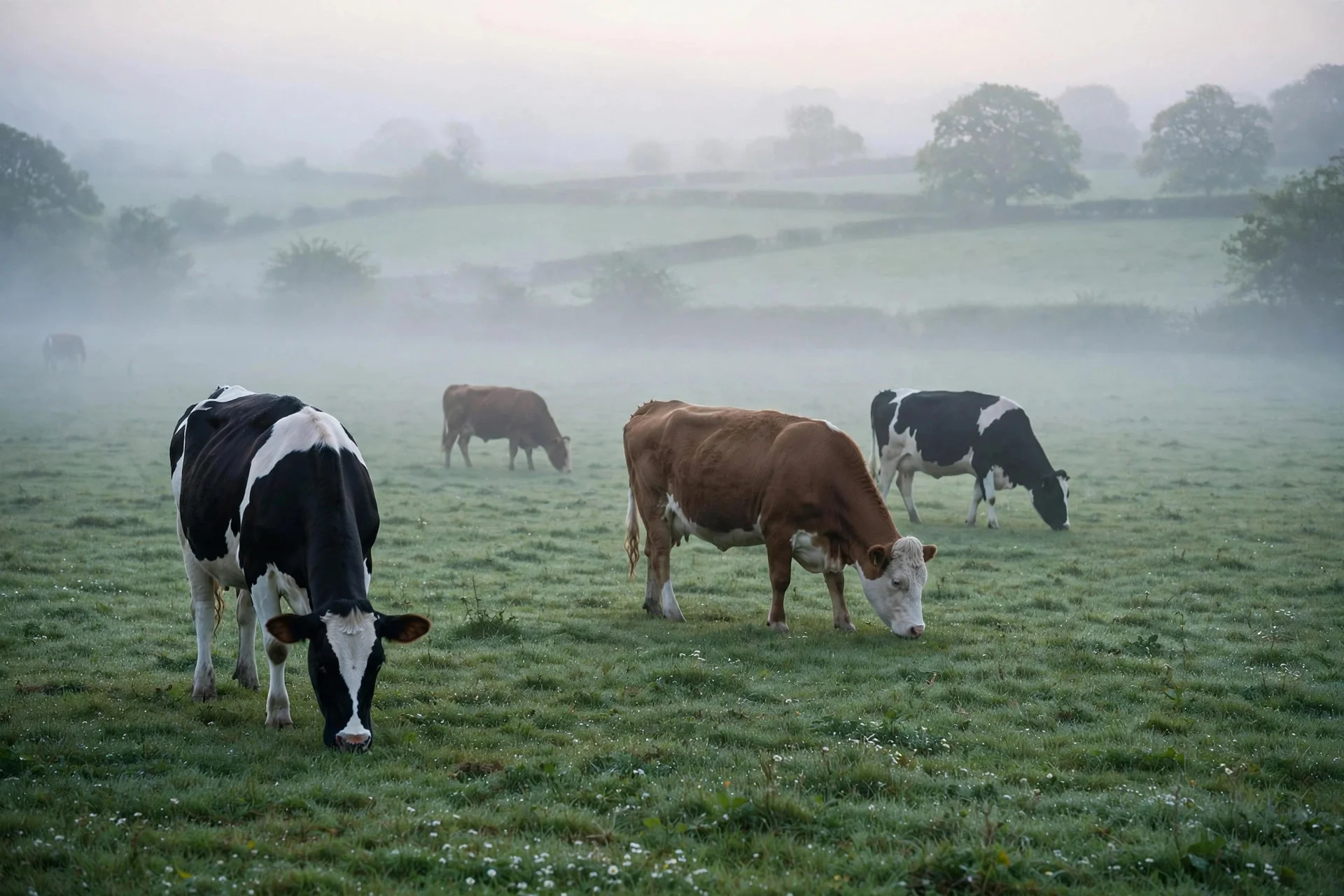
Ganado en un prado inglés con niebla matinal, imagen alusiva a la estrategia contra la tuberculosis bovina. · Imagen generada para EPM
England bets on vaccines to end bovine TB by 2038
The Government formally adopted a strategy to eradicate bovine TB from England by 2038, using vaccines for cattle and badgers, mandatory blood tests and…
Fewer outbreaks, no badger cull: England sets its bovine TB course to 2038
England formally adopted a strategy to eradicate bovine TB by 2038, with vaccines for cattle and badgers, mandatory blood tests and a new industry-government…
--- The context ---
Bovine TB remains one of the most significant animal health challenges facing England, with a heavy emotional and financial burden on farming families, disrupted rural businesses and thousands of cattle lost every year. The measure is for England —the country of the event is the United Kingdom— and aims to eradicate the disease by 2038.
--- The facts ---
The Government formally adopted the long-term strategy on Thursday 5 November, after its original publication in June, developed with farmers, vets and scientists. It combines vaccines for cattle and badgers, mandatory blood tests, more robust wildlife surveillance and more test choice, a route built on prevention and detection rather than on removing wildlife.
New TB herd breakdowns in England fell by a fifth against the previous 12 months, and 2026 marks the first year in more than a decade with no badgers culled. Herds under restriction stood at 3.4% in June 2026, against 4.2% a year earlier, declining since 2017 in the High Risk Area and sharply down since 2024 in the Edge Area.
--- The positions ---
Biosecurity Minister Baroness Hayman was reported as saying that bovine TB has devastated farming communities, causing heartbreaking losses, uncertainty and financial hardship, and that no farmer should accept it as unavoidable. She was also reported as saying the strategy will ensure the continuation of the end to badger culling and prevent its spread.
The protective turn is already underway: badger vaccination is rolling out in priority areas through a newly contracted field force, and a government-funded scheme will collect and test found dead badgers to understand the disease. Government-funded mandatory blood testing is also expanding, with additional privately funded testing piloted to detect infection.
--- What remains unknown ---
The deployable cattle vaccine is still in development, together with the DIVA skin test, which detects infected among vaccinated animals, with an ambition to deploy cattle vaccination by 2030. The first delivery plan remains unwritten: a new industry-government board, expected in 2027, will replace the existing partnership for England and must endorse that plan.
--- Unanswered questions ---
Will the cattle vaccine be ready for the 2030 ambition? Can badger vaccination hold the fall in breakdowns without a return to culling? What actions will the new board endorse in 2027? Will the current pace make England TB-free by 2038?
--- EPM analysis ---
Removals measure the road travelled: the 12-monthly total of cattle slaughtered for TB control reached a historical maximum of 34,518 to April 2018, against 20,244 animals removed in the 12 months to June 2026, a 4% decrease from 21,126. The direction encourages, yet eradication still depends on tools still arriving.
📌 EPM Take:
In EPM's view, the strength of this strategy is that it changes the instrument without lowering the goal: herds are protected by vaccinating cattle and badgers instead of sustaining control through culling wildlife. Falling breakdowns and a year without badger culling give the turn initial credit, but the final judgement will rest on the cattle vaccine, the DIVA test and the delivery plan, because a 2038 ambition only counts if each stage lands on time and holds in the field.
--- The context ---
Bovine TB has long imposed a severe cost on rural England: a heavy emotional and financial burden on farming families, disrupted businesses and thousands of cattle lost every year. The strategy applies to England, within the United Kingdom, and sets a measurable goal: eradicating the disease altogether by 2038, with results expected at each stage.
--- The facts ---
The Government formally adopted the long-term strategy on Thursday 5 November, following its original publication in June, developed with farmers, vets and scientists. The package develops vaccines for cattle and badgers, mandatory blood tests, more robust wildlife surveillance and more test choice, and expands government-funded mandatory blood testing while piloting privately funded testing.
New TB herd breakdowns in England fell by a fifth in 12 months, and 2026 is the first year in more than a decade with no badgers culled. Herds under restriction were 3.4% in June 2026 against 4.2% a year earlier, declining since 2017 in the High Risk Area and sharply down since 2024 in the Edge Area.
--- The positions ---
Biosecurity Minister Baroness Hayman was reported as saying the disease devastated farming communities, causing heartbreaking losses, uncertainty and financial hardship, and that no farmer should accept it as an unavoidable part of their livelihood. She was also reported as saying the strategy will ensure the end to badger culling continues and prevent its spread.
Governance changes too: a new industry-government board will replace the Bovine TB Partnership for England and oversee delivery. Expected in 2027, the board will consider and endorse the first delivery plan, with its priority actions and how they will be implemented, and must turn spending into fewer breakdowns.
--- What remains unknown ---
The central technical piece is not ready: the deployable cattle vaccine remains in development alongside the DIVA test, which distinguishes infected from vaccinated animals, with ambition to deploy vaccination by 2030. Still unknown are the first delivery plan, the pace of badger vaccination in priority areas and the reach of surveillance using found dead badgers.
--- Unanswered questions ---
Will cattle vaccination deploy by 2030 or will the milestone slip? What will testing and surveillance cost if breakdowns stop falling? Will the 2027 board set enforceable intermediate targets towards 2038? Can the fall in herds under restriction hold?
--- EPM analysis ---
The scale shows in animals removed: the 12-monthly total reached a historical maximum of 34,518 to April 2018, against 20,244 in the 12 months to June 2026, a 4% decrease from 21,126. The trend favours the Government, but a moderate fall does not promise eradication: pace must quicken without unsustainable rural cost.
📌 EPM Take:
In EPM's view, a 2038 goal only earns credit if governed with delivery discipline: a vaccine ready on time, testing that detects infection early and a board answerable for every advance. The Government arrives with indicators in its favour and badger culling ended in 2026, but the countryside does not live on announcements, it lives on healthy herds and accounts that balance. If the delivery plan names owners, deadlines and clear costs, this will be serious public policy, not another long promise.
Inglaterra apuesta por vacunar para erradicar la tuberculosis bovina en 2038
El Gobierno adoptó una estrategia para erradicar la tuberculosis bovina de Inglaterra en 2038, con vacunas para ganado y tejones, análisis de sangre…
Menos brotes y sin sacrificar tejones: plan inglés contra la tuberculosis bovina
Inglaterra adoptó una estrategia para erradicar la tuberculosis bovina en 2038, con vacunas para ganado y tejones, análisis de sangre obligatorios y una nueva…
--- El contexto ---
La tuberculosis bovina es un grave problema de sanidad animal en Inglaterra: carga emocional y financiera sobre las familias ganaderas, negocios rurales trastornados y miles de reses perdidas cada año. Es una medida inglesa, para Inglaterra —el país del hecho es el Reino Unido— con meta de erradicarla en 2038.
--- Los hechos ---
El Gobierno adoptó formalmente el jueves 5 de noviembre una estrategia de largo plazo publicada originalmente en junio, elaborada con ganaderos, veterinarios y científicos. Combina vacunas para el ganado y para los tejones, análisis de sangre obligatorios, vigilancia más robusta de la fauna silvestre y más opciones de pruebas.
Los nuevos brotes en rebaños de Inglaterra bajaron una quinta parte frente a los 12 meses anteriores, y 2026 es el primer año en más de una década sin sacrificio de tejones. Los rebaños bajo restricción a fines de junio de 2026 fueron 3,4%, frente a 4,2% un año antes, en descenso desde 2017 y con caída marcada desde 2024 en la zona limítrofe.
--- Las posiciones ---
La ministra de Bioseguridad, Baroness Hayman, sostuvo que la tuberculosis bovina ha devastado a las comunidades ganaderas, con pérdidas dolorosas, incertidumbre y dificultades financieras, y que ningún ganadero debería aceptar la enfermedad como parte inevitable de su medio de vida. También atribuyó a la estrategia mantener el fin del sacrificio de tejones y frenar la propagación.
El giro protector se concreta en el campo: la vacunación de tejones se despliega en las zonas prioritarias mediante un equipo de campo contratado, y un programa financiado por el Gobierno recogerá y analizará tejones hallados muertos para entender mejor la enfermedad.
--- Lo que falta saber ---
La vacuna bovina desplegable sigue en desarrollo, junto a la prueba cutánea DIVA, que distingue infectados de vacunados, con la ambición de desplegar la vacunación del ganado en 2030. Falta el primer plan de entrega: una nueva junta entre la industria y el Gobierno, prevista para 2027, sustituirá a la alianza vigente y deberá respaldarlo.
--- Preguntas sin respuesta ---
¿Llegará la vacuna bovina a tiempo para la ambición de 2030? ¿Sostendrá la vacunación de tejones el descenso de brotes sin volver al sacrificio? ¿Qué acciones fijará la nueva junta en 2027? ¿Alcanzará el ritmo actual para erradicarla en 2038?
--- Análisis EPM ---
Los animales retirados miden el camino: el total en 12 meses llegó a un máximo histórico de 34,518 hasta abril de 2018, y hoy hay 20,244 retirados en 12 meses hasta junio de 2026, una baja de 4% frente a los 21,126 anteriores. La mejora es real, pero la distancia hasta erradicar sigue siendo larga.
📌 Conclusion EPM:
A juicio de EPM, lo más valioso de esta estrategia es que cambia el instrumento sin bajar la meta: protege a los rebaños vacunando al ganado y a los tejones, en vez de sostener el control sobre el sacrificio de fauna. El descenso de brotes y un año sin sacrificio dan crédito inicial al giro, pero el juicio definitivo llegará con la vacuna bovina, la prueba DIVA y el plan de entrega, porque una ambición a 2038 exige cumplir cada etapa a tiempo.
--- El contexto ---
La tuberculosis bovina impone un coste severo al campo inglés: carga emocional y financiera sobre las familias ganaderas, negocios rurales trastornados y miles de reses perdidas cada año. Se aplica a Inglaterra, dentro del Reino Unido, con una meta exigente y medible: erradicar la enfermedad en 2038.
--- Los hechos ---
El Gobierno adoptó formalmente el jueves 5 de noviembre la estrategia publicada originalmente en junio, elaborada con ganaderos, veterinarios y científicos. El paquete desarrolla vacunas para el ganado y para los tejones, análisis de sangre obligatorios, vigilancia más robusta de la fauna y más opciones de pruebas, y amplía las pruebas obligatorias financiadas por el Gobierno y ensaya otras de financiación privada.
Los nuevos brotes en Inglaterra bajaron una quinta parte en 12 meses, y 2026 es el primer año en más de una década sin sacrificio de tejones. Los rebaños bajo restricción eran 3,4% a fines de junio de 2026, frente a 4,2% un año antes.
--- Las posiciones ---
La ministra de Bioseguridad, Baroness Hayman, afirmó que la enfermedad ha devastado a las comunidades ganaderas, con pérdidas dolorosas, incertidumbre y penurias financieras, y que ningún ganadero debe aceptarla como parte inevitable de su oficio. También sostuvo que la estrategia garantizará la continuidad del fin del sacrificio de tejones y evitará la propagación.
La gobernanza cambia con el plan: una nueva junta entre la industria y el Gobierno sustituirá a la alianza vigente para Inglaterra, supervisará la entrega y deberá considerar y respaldar el primer plan de entrega. Prevista para 2027, deberá exigir que el esfuerzo se traduzca en menos brotes.
--- Lo que falta saber ---
La pieza técnica central no está lista: la vacuna bovina desplegable avanza junto a la prueba cutánea DIVA, que distingue infectados de vacunados, con ambición de vacunar al ganado en 2030. Tampoco se conoce el primer plan de entrega, ni el ritmo de vacunación de tejones en zonas prioritarias, ni el alcance de la vigilancia con tejones hallados muertos.
--- Preguntas sin respuesta ---
¿Se vacunará al ganado en 2030 o se aplazará el hito? ¿Qué coste tendrá sostener pruebas y vigilancia? ¿Fijará la junta de 2027 metas intermedias exigibles rumbo a 2038? ¿Se mantendrá la caída de rebaños bajo restricción?
--- Análisis EPM ---
La escala se ve en los retirados: el total en 12 meses alcanzó un máximo histórico de 34,518 hasta abril de 2018, frente a 20,244 en 12 meses hasta junio de 2026, una reducción de 4% desde los 21,126 anteriores. La tendencia favorece al Gobierno, pero una baja moderada no promete la erradicación: el ritmo debe acelerar sin coste rural disparado.
📌 Conclusion EPM:
A juicio de EPM, una meta a 2038 solo merece crédito si se gobierna con disciplina de entrega: vacuna lista, pruebas que detecten a tiempo y una junta que responda por cada avance. El Gobierno llega con indicadores a favor y con el fin del sacrificio de tejones cumplido en 2026, pero el campo no vive de anuncios: vive de rebaños sanos y cuentas que cierran. Si el plan fija responsables, plazos y costes claros, será política pública seria y no otra promesa larga.