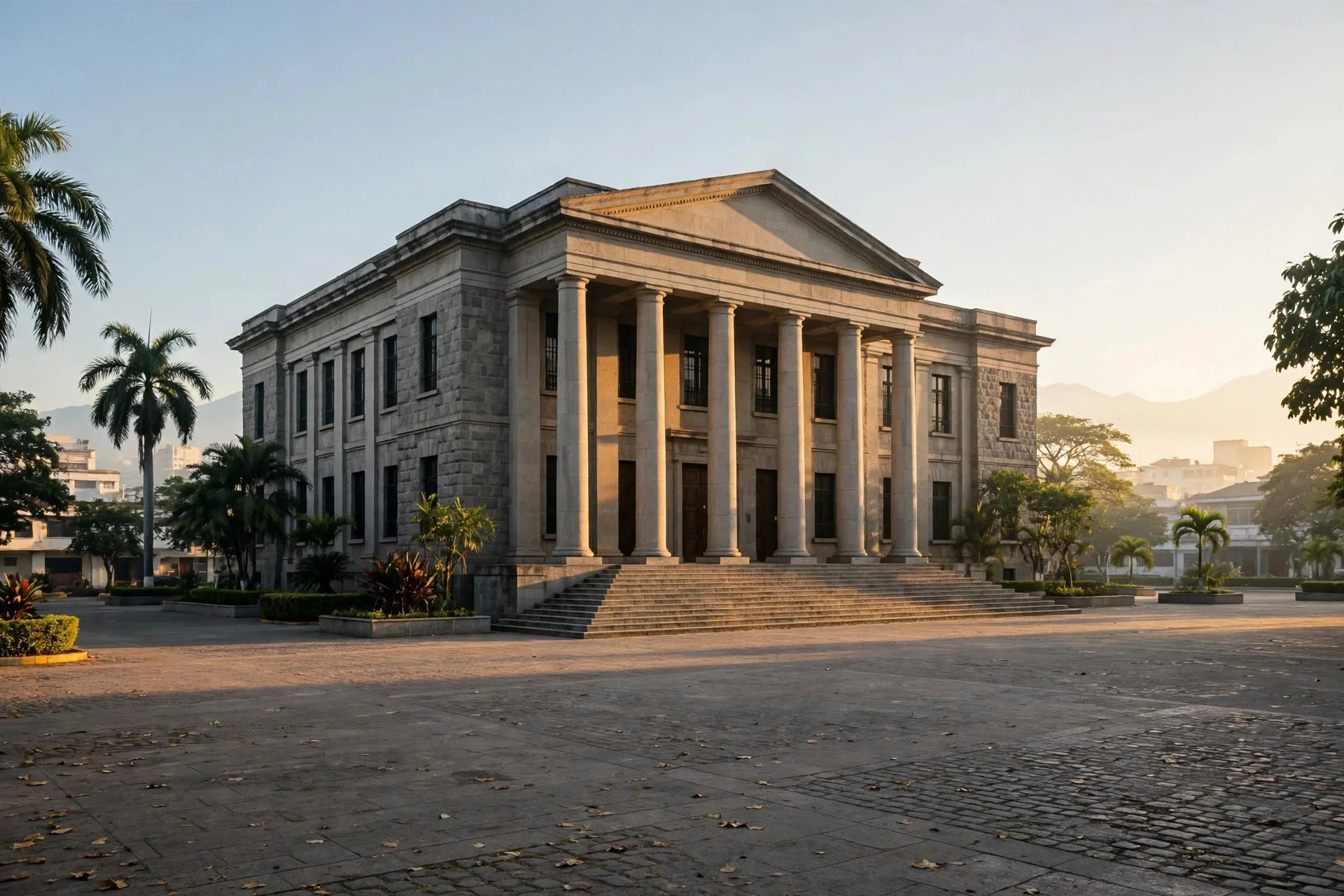
Imagen alusiva de un tribunal en San Salvador, donde se desarrolla la audiencia única contra los 26 procesados. · Imagen generada para EPM
Prosecutors seek maximum terms for 26 alleged MS members
The Attorney General's Office has requested maximum sentences, from 20 to 60 years for illicit association, for 26 alleged members of the Mara Salvatrucha…
Maximum sentences sought against 26 accused MS members
Prosecutors have requested prison terms of between 20 and 60 years for 26 accused members of the Mara Salvatrucha facing a single hearing before the First…
--- The context ---
El Salvador has maintained a state of exception since 2022, the framework under which the 26 defendants in this case were detained and now face a single joint hearing in San Salvador. The proceedings are before the First Tribunal against Organized Crime, judge two, and center on the offense of illicit association, which prosecutors attribute to the accused as alleged members of the Mara Salvatrucha.
--- The facts ---
Prosecutors have requested maximum prison sentences for the 26 defendants, seeking terms of between 20 and 60 years for illicit association. According to the fiscal investigation, the defendants formed a structure that operated in San Martín park, in Santa Tecla, La Libertad Sur, and all of them have been detained since the state of exception began in 2022.
According to the accusation, the group is headed by a corredor, or clique leader, who is also attributed with alleged offenses of drug possession and holding for trafficking purposes and of illegal or irresponsible possession, carrying or use of a firearm. The group also includes six homeboys, one chequeo, 11 paros and seven collaborators. These are sentencing requests within an ongoing process: no court has convicted these 26 defendants yet.
--- The positions ---
The prosecution states that it has abundant incriminating evidence gathered during the investigation and expects the 26 defendants to receive convictions with long prison terms. That expectation, however, is one party's position: it is for the tribunal to weigh the evidence and decide whether the requested sentences match what is proven against each individual defendant.
As an immediate precedent, the same tribunal recently convicted 17 members of the Mara Salvatrucha of illicit association, in a separate and already issued ruling. Four homeboys received 30 years, three homeboys were sentenced to 40 years for their leadership roles, and Jesús Antonio Castillo Morataya accumulated 60 years after an additional 20 years for drugs; the rest received 30 years. That judgment does not decide the current process: today's 26 remain accused persons awaiting sentence.
--- What remains unknown ---
The hearing could last several days and its outcome is not yet known. It remains to be seen what evidence prosecutors present against each defendant, how the defense responds, and whether the tribunal imposes the requested sentences or adjusts them to each defendant's attributed role.
--- Unanswered questions ---
Will the tribunal accept the maximum sentences requested for the 26 defendants? What weight will the incriminating evidence carry once it is tested at the hearing? Will the alleged clique leader receive a heavier sentence than the rest of the group? How many days will the single hearing in San Salvador ultimately last?
--- EPM analysis ---
The case concentrates the central tension of this stage of Salvadoran justice: a prosecution asking for the maximum punishment and a tribunal that must turn that request into individual, reasoned decisions. That distance is where the credibility of the process is at stake, because every conviction must rest on the evidence attributed to each defendant, not only on the gravity of the gang phenomenon.
📌 EPM Take: In EPM's view, requesting maximum sentences is the prosecution's right, but the strength of this case will be measured by the judgment and its reasoning, not by the request. The 26 defendants remain accused persons until the tribunal decides, and a hearing lasting several days should serve to examine the evidence rigorously. If the evidence is as abundant as prosecutors maintain, the ruling will show it without any need to anticipate convictions.
--- The context ---
El Salvador has sustained a state of exception since 2022, the tool with which the state dismantled gang structures across the country. Within that framework, the 26 alleged members of the Mara Salvatrucha now before the courts were detained, and they face a single joint hearing before the First Tribunal against Organized Crime in San Salvador, judge two, on charges of illicit association.
--- The facts ---
The Attorney General's Office has requested maximum prison sentences for the 26 defendants, seeking terms of between 20 and 60 years for illicit association. According to the fiscal investigation, the structure operated in San Martín park, in Santa Tecla, La Libertad Sur. All of the defendants have remained in detention since the state of exception began in 2022.
The accusation describes a structure with a defined hierarchy: one corredor, or clique leader, six homeboys, one chequeo, 11 paros and seven collaborators. The corredor is also attributed with alleged offenses of drug possession and holding for trafficking purposes and of illegal or irresponsible possession, carrying or use of a firearm. The hearing could extend over several days before the tribunal rules.
--- The positions ---
The prosecution states that it holds abundant incriminating evidence obtained during the investigation and expects the 26 defendants to receive convictions with long prison sentences. The request for maximum terms sends a clear signal of firmness against a structure accused of operating in a Santa Tecla park and of maintaining the chain of command characteristic of the Mara Salvatrucha.
The immediate precedent supports that expectation of firmness: the same tribunal recently convicted 17 members of the Mara Salvatrucha of illicit association. Four homeboys received 30 years in prison, three other homeboys were sentenced to 40 years for their leadership functions, and Jesús Antonio Castillo Morataya accumulated 60 years after an additional 20 years for drugs; the remaining convicted received 30 years.
--- What remains unknown ---
The outcome of the hearing, which could extend over several days, is still to be known. It remains to be seen whether the tribunal will adopt the requested sentences in full, how the terms will be graduated according to each defendant's rank, and whether the alleged clique leader will face additional penalties for the alleged drug and firearm offenses attributed to him.
--- Unanswered questions ---
Will the tribunal impose the maximum sentences requested by prosecutors? What sentence will the alleged clique leader receive compared with the rest of the structure? Will the pattern of severity from the recent case of the 17 convicted members be repeated? How many days will the single hearing take before the ruling is known?
--- EPM analysis ---
The case shows a justice system acting on years of investigative work accumulated since 2022. The structure described by prosecutors, with a corredor, homeboys, a chequeo, paros and collaborators, is the classic anatomy of a clique, and dismantling it with long convictions closes the cycle that began with the detentions under the state of exception. The sentence will show whether that investigative work becomes effective punishment.
📌 EPM Take: In EPM's view, the request for maximum sentences is the proportionate response to a Mara Salvatrucha structure accused of operating in Santa Tecla. The precedent of the 17 convicted members before the same tribunal shows that such requests, when backed by evidence, end in severe and deserved convictions. The hearing should conclude with an unequivocal signal that belonging to a clique costs decades in prison and that San Martín park belongs to the public again.
Fiscalía pide penas máximas para 26 presuntos miembros de la MS
La Fiscalía General de la República pidió penas máximas, de 20 a 60 años por agrupaciones ilícitas, para 26 presuntos integrantes de la Mara Salvatrucha…
Penas máximas solicitadas contra 26 acusados de la Mara Salvatrucha
La Fiscalía solicitó penas de entre 20 y 60 años de cárcel para 26 acusados de la Mara Salvatrucha que enfrentan una audiencia única ante el Tribunal Primero…
--- El contexto ---
El Salvador mantiene desde 2022 el régimen de excepción, el marco bajo el cual fueron detenidos los 26 procesados que enfrentan una audiencia única en San Salvador. El caso se tramita ante el Tribunal Primero contra el Crimen Organizado, juez dos, por el delito de agrupaciones ilícitas que la Fiscalía atribuye a los acusados como presuntos integrantes de la Mara Salvatrucha.
--- Los hechos ---
La Fiscalía solicitó penas máximas de prisión para los 26 acusados. Las condenas pedidas oscilan entre 20 y 60 años de cárcel por agrupaciones ilícitas. Según la investigación fiscal, los procesados integraban una estructura que operaba en el parque San Martín, en Santa Tecla, La Libertad Sur, y todos permanecen detenidos desde el inicio del régimen de excepción, en 2022.
El grupo, según la acusación, lo encabeza un corredor o jefe de clica, al que también se le atribuyen presuntos delitos de posesión y tenencia de drogas con fines de tráfico y de tenencia, portación o conducción ilegal o irresponsable de arma de fuego. Lo completan seis homeboys, un chequeo, 11 paros y siete colaboradores. Son solicitudes dentro de un proceso en curso: nadie ha sido condenado todavía en este caso.
--- Las posiciones ---
La representación fiscal sostiene que cuenta con abundantes pruebas de cargo reunidas durante la investigación y espera que los 26 procesados reciban condenas con altas penas de prisión. Esa expectativa es la posición de una parte: corresponde al tribunal valorar la prueba y decidir si las penas solicitadas se ajustan a lo demostrado contra cada acusado.
Como antecedente inmediato, el mismo tribunal condenó recientemente a 17 integrantes de la Mara Salvatrucha por agrupaciones ilícitas, en una resolución distinta y ya dictada. Cuatro homeboys recibieron 30 años, tres homeboys fueron condenados a 40 años por liderazgo y Jesús Antonio Castillo Morataya acumuló 60 años tras 20 años adicionales por drogas; los demás recibieron 30 años. Ese fallo no decide el proceso actual: los 26 de hoy siguen siendo acusados a la espera de sentencia.
--- Lo que falta saber ---
La audiencia podría prolongarse durante varios días y su desenlace aún no se conoce. Falta saber qué pruebas presentará la Fiscalía contra cada procesado, cómo responderá la defensa y si el tribunal impondrá las penas solicitadas o las ajustará al rol atribuido a cada acusado.
--- Preguntas sin respuesta ---
¿Aceptará el tribunal las penas máximas solicitadas para los 26 procesados? ¿Qué peso tendrán las pruebas de cargo al ser examinadas en audiencia? ¿Recibirá el presunto corredor de la clica una pena mayor que el resto del grupo? ¿Cuántos días durará la audiencia única?
--- Análisis EPM ---
El proceso condensa la tensión de esta etapa judicial: una Fiscalía que pide el máximo castigo y un tribunal obligado a convertir esa petición en decisiones individuales y motivadas. Ahí se juega la credibilidad del proceso, porque cada condena deberá sostenerse en la prueba atribuida a cada procesado y no solo en la gravedad del fenómeno pandillero.
📌 Conclusion EPM: A juicio de EPM, pedir penas máximas es un derecho de la Fiscalía, pero la fortaleza de este caso se medirá en la sentencia y en su fundamentación, no en la solicitud. Los 26 procesados conservan su condición de acusados hasta que el tribunal decida, y la audiencia de varios días debe servir para examinar la prueba con rigor. Si las pruebas son tan abundantes como asegura la representación fiscal, el fallo lo demostrará sin necesidad de anticipar condenas.
--- El contexto ---
El Salvador sostiene desde 2022 el régimen de excepción, la herramienta con la que el Estado desarticuló estructuras de pandillas. En ese marco fueron detenidos los 26 presuntos integrantes de la Mara Salvatrucha que ahora enfrentan una audiencia única ante el Tribunal Primero contra el Crimen Organizado de San Salvador, juez dos, por el delito de agrupaciones ilícitas.
--- Los hechos ---
La Fiscalía General de la República solicitó penas máximas de prisión para los 26 acusados, con condenas pedidas de entre 20 y 60 años de cárcel por agrupaciones ilícitas. De acuerdo con la investigación fiscal, la estructura operaba en el parque San Martín, en Santa Tecla, La Libertad Sur. Todos los procesados permanecen detenidos desde el inicio del régimen de excepción, en 2022.
La acusación describe una estructura con jerarquía definida: un corredor o jefe de clica, seis homeboys, un chequeo, 11 paros y siete colaboradores. Al corredor se le atribuyen además presuntos delitos de posesión y tenencia de drogas con fines de tráfico y de tenencia, portación o conducción ilegal o irresponsable de arma de fuego. La audiencia podría prolongarse durante varios días antes de que el tribunal resuelva.
--- Las posiciones ---
La representación fiscal asegura contar con abundantes pruebas de cargo obtenidas durante la investigación y espera que los 26 procesados reciban condenas con altas penas de prisión. La petición de penas máximas envía una señal clara de firmeza frente a una estructura señalada de operar en un parque de Santa Tecla y de mantener la cadena de mando propia de la Mara Salvatrucha.
El antecedente inmediato respalda esa expectativa de firmeza: el mismo tribunal condenó recientemente a 17 integrantes de la Mara Salvatrucha por agrupaciones ilícitas. Cuatro homeboys recibieron 30 años de prisión, otros tres homeboys fueron condenados a 40 años por sus funciones de liderazgo y Jesús Antonio Castillo Morataya acumuló 60 años tras sumar 20 años adicionales por drogas; los demás condenados recibieron 30 años.
--- Lo que falta saber ---
Queda por conocer el desenlace de la audiencia, que podría extenderse varios días. Falta saber si el tribunal acogerá íntegras las penas solicitadas, cómo se graduarán según el rango de cada procesado y si el corredor atribuido recibirá penas adicionales por los presuntos delitos de drogas y de arma de fuego.
--- Preguntas sin respuesta ---
¿Impondrá el tribunal las penas máximas solicitadas por la Fiscalía? ¿Qué condena recibirá el presunto corredor de la clica frente al resto de la estructura? ¿Se repetirá el patrón de severidad del caso reciente de los 17 condenados? ¿Cuántos días tomará la audiencia única antes de conocerse la resolución?
--- Análisis EPM ---
El caso muestra una justicia que actúa con el respaldo de años de investigación acumulada desde 2022. La estructura descrita, con corredor, homeboys, chequeo, paros y colaboradores, es la anatomía clásica de una clica, y desmontarla con condenas largas cierra el ciclo abierto con las detenciones del régimen de excepción. La sentencia dirá si ese trabajo se convierte en castigo efectivo.
📌 Conclusion EPM: A juicio de EPM, la petición de penas máximas es la respuesta proporcional frente a una estructura de la Mara Salvatrucha señalada de operar en Santa Tecla. El antecedente de los 17 condenados por el mismo tribunal muestra que estas solicitudes, cuando la prueba las respalda, terminan en condenas severas y merecidas. La audiencia debe concluir con una señal inequívoca de que pertenecer a una clica cuesta décadas de prisión y de que el parque San Martín vuelve a ser de la gente.