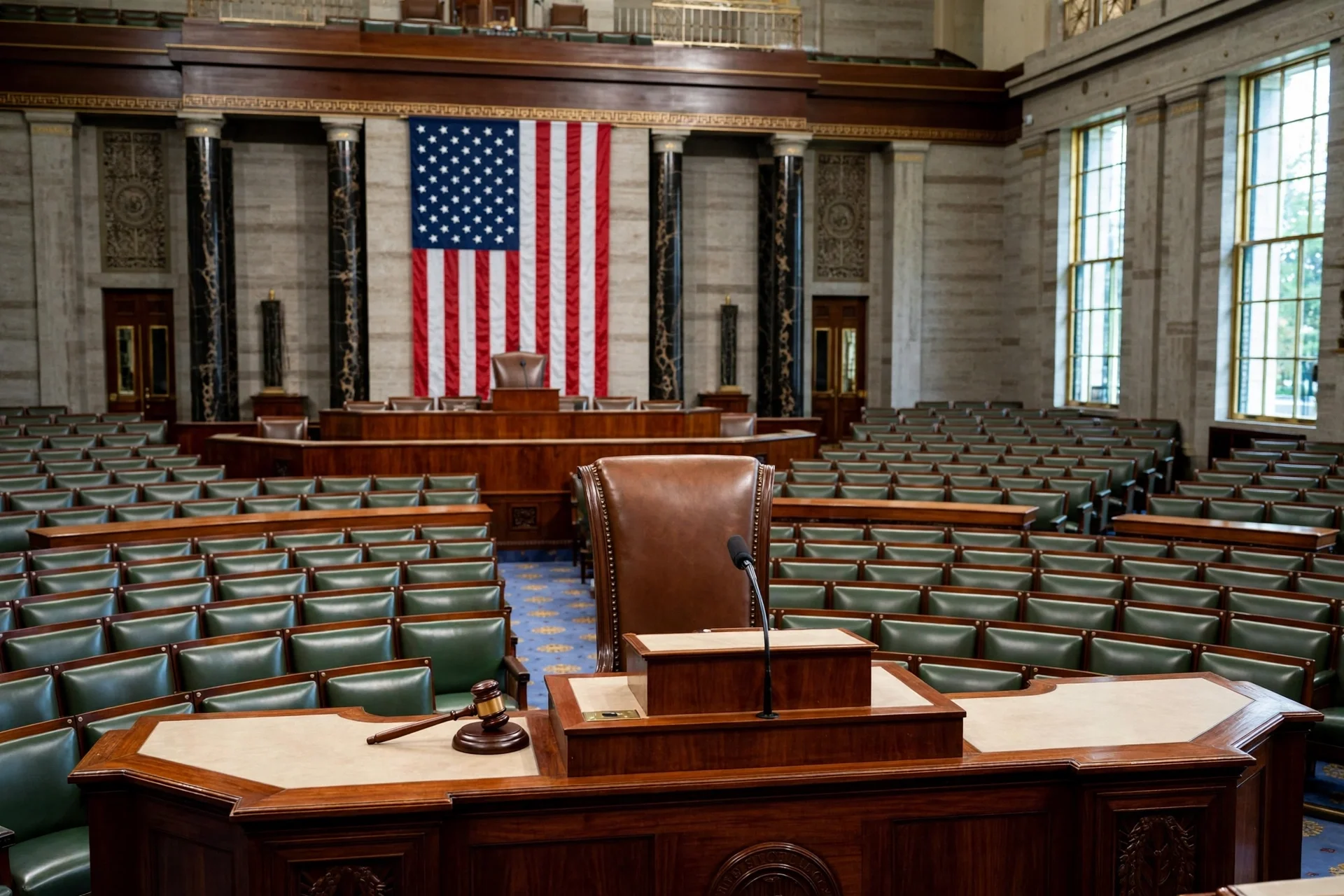
El pleno de la Cámara baja en Washington, imagen alusiva al relevo de liderazgo tras las elecciones legislativas. · Imagen generada para EPM
Mike Johnson steps aside from House leadership after Republican defeat
Mike Johnson will not seek the minority leadership after the Republican defeat.
Johnson will not seek minority leadership as House turns over
After losing the majority, Mike Johnson will not seek to lead the Republican minority.
--- The context ---
The Republican defeat in the legislative elections shifted the balance of power in Washington. Democrats are now in position to regain the House of Representatives, and Republicans must rethink their leadership for the next session.
--- The facts ---
Mike Johnson decided not to seek the minority leadership in the next Congress, according to sources in his office. He was reelected as a congressman from Louisiana, but will not run this month to lead his party in the Congress that begins on January 3. Republicans will choose their House leadership in the middle of this month.
--- The positions ---
The likely candidates are Jim Jordan of Ohio, who has led the Judiciary Committee, and Steve Scalise of Louisiana, the current majority leader. Both announced interest in leading their party. Jordan has been one of the leaders of the most conservative bloc, the Freedom Caucus.
--- What remains unknown ---
Democrats may have won close to 260 seats, a gain of more than 40. Johnson had led the lower chamber with a majority of only 220 to 215, a narrow balance that shaped his tenure.
--- Unanswered questions ---
Who will unite the Republican factions after the defeat? What weight will the Freedom Caucus carry in choosing the leadership? How will the agenda change under a broader Democratic majority?
--- EPM analysis ---
Johnson became speaker in October 2023 after the removal of Kevin McCarthy, promoted by conservatives. McCarthy later retired from Congress. The current minority leader, Hakeem Jeffries, is on track to become the next speaker and would be the first Black person to preside over the House.
📌 EPM Take: In EPM's view, Johnson's departure from the leadership reflects the political cost of governing with a minimal majority and sustaining fragile balances for years. His decision opens a competition that will define whether Republicans seek moderation or greater confrontation. At the same time, Jeffries's likely rise marks a historic change in the House, with institutional implications beyond the immediate partisan turnover in Washington.
--- The context ---
The Republican defeat in the legislative elections forced a leadership change in the House of Representatives. With the majority lost, the party must reorganize to serve as an effective opposition in the next session.
--- The facts ---
Mike Johnson will not seek the minority leadership in the next Congress, according to sources in his office. Although reelected as a congressman from Louisiana, he will not run this month to lead Republicans in the Congress that begins on January 3. The party will choose its House leadership in the middle of this month.
--- The positions ---
The likely candidates are Jim Jordan of Ohio, who has led the Judiciary Committee, and Steve Scalise of Louisiana, the current majority leader. Both announced interest in leading their party. Jordan, one of the leaders of the Freedom Caucus, represents the most conservative wing.
--- What remains unknown ---
Democrats may have won close to 260 seats, a gain of more than 40, which would give them broad control. Johnson led with a majority of only 220 to 215, a margin that limited every vote.
--- Unanswered questions ---
Will the new leadership prioritize unity or a tougher opposition? Can the party correct the mistakes of the defeat? What strategy will it follow facing a Democratic House?
--- EPM analysis ---
Johnson was elected speaker in October 2023 after the removal of Kevin McCarthy, who later retired from Congress. The current minority leader, Hakeem Jeffries, is on track to become the next speaker and would be the first Black person to preside over the House.
📌 EPM Take: In EPM's view, Johnson acted realistically by stepping aside after losing the majority, rather than clinging to weakened leadership. The contest between Jordan and Scalise will define the character of the Republican opposition and its internal discipline. Order, cohesion and a clear message will be decisive for the party to regain ground and serve as a serious counterweight during the next legislative session.
Mike Johnson renuncia al liderato republicano tras la derrota legislativa
Mike Johnson no buscará la jefatura de la minoría tras la derrota republicana.
Johnson deja el camino libre tras perder la mayoría en la Cámara baja
Tras perder la mayoría, Mike Johnson no buscará liderar a la minoría republicana.
--- El contexto ---
La derrota republicana en las elecciones legislativas alteró el equilibrio de poder en Washington. Los demócratas quedaron en posición de recuperar la Cámara de Representantes y los republicanos deben replantear su dirección para la próxima sesión.
--- Los hechos ---
Mike Johnson decidió no buscar la jefatura de la minoría en el próximo Congreso, según confirmaron fuentes de su oficina. Fue reelecto como congresista por Luisiana, pero no aspirará este mes a liderar a su grupo en el Congreso que inicia el 3 de enero. Los republicanos escogerán su liderato cameral a mediados de este mes.
--- Las posiciones ---
Quedan como candidatos probables Jim Jordan, de Ohio, quien ha liderado el Comité de lo Jurídico, y Steve Scalise, de Luisiana, actual líder de la mayoría. Ambos anunciaron interés en liderar su grupo. Jordan ha sido uno de los líderes del bloque más conservador, el Freedom Caucus.
--- Lo que falta saber ---
Los demócratas pueden haber ganado cerca de 260 escaños, un avance de más de 40. Johnson había liderado la Cámara baja con una mayoría de solo 220 a 215, un equilibrio estrecho que marcó su gestión.
--- Preguntas sin respuesta ---
¿Quién logrará unir a las facciones republicanas tras la derrota? ¿Qué peso tendrá el Freedom Caucus en la elección del liderato? ¿Cómo cambiará la agenda con una mayoría demócrata más amplia?
--- Análisis EPM ---
Johnson llegó a la presidencia cameral en octubre de 2023, tras la destitución de Kevin McCarthy promovida por conservadores. McCarthy se retiró después del Congreso. El actual líder de la minoría, Hakeem Jeffries, está encaminado a ser el próximo speaker y sería el primer negro en presidir la Cámara.
📌 Conclusion EPM: A juicio de EPM, la salida de Johnson del liderato refleja el costo político de gobernar con una mayoría mínima y de sostener equilibrios frágiles durante años. Su decisión abre una competencia que definirá si los republicanos buscan moderación o mayor confrontación. El ascenso de Jeffries marca además un relevo histórico y significativo en la Cámara de Representantes.
--- El contexto ---
La derrota republicana en las elecciones legislativas forzó un relevo en la Cámara de Representantes. Con la mayoría perdida, el partido debe reorganizarse para ejercer una oposición efectiva en la próxima sesión del Congreso.
--- Los hechos ---
Mike Johnson no buscará la jefatura de la minoría en el próximo Congreso, según confirmaron fuentes de su oficina. Aunque fue reelecto como congresista por Luisiana, no aspirará este mes a liderar a los republicanos en el Congreso que inicia el 3 de enero. El partido escogerá su liderato cameral a mediados de este mes.
--- Las posiciones ---
Como candidatos probables quedan Jim Jordan, de Ohio, quien ha liderado el Comité de lo Jurídico, y Steve Scalise, de Luisiana, actual líder de la mayoría. Ambos anunciaron interés en liderar su grupo. Jordan, uno de los líderes del Freedom Caucus, representa el ala más conservadora.
--- Lo que falta saber ---
Los demócratas pueden haber ganado cerca de 260 escaños, un avance de más de 40, lo que les daría un control amplio. Johnson lideró con una mayoría de solo 220 a 215, un margen que limitó cada votación.
--- Preguntas sin respuesta ---
¿Priorizará el nuevo liderato la unidad interna o una oposición más dura? ¿Podrá el partido corregir los errores de la derrota? ¿Qué estrategia seguirá ante una Cámara demócrata?
--- Análisis EPM ---
Johnson fue electo presidente cameral en octubre de 2023 tras la destitución de Kevin McCarthy, quien luego se retiró del Congreso. El actual líder de la minoría, Hakeem Jeffries, está encaminado a ser el próximo speaker y sería el primer negro en presidir la Cámara.
📌 Conclusion EPM: A juicio de EPM, Johnson actuó con realismo al apartarse tras perder la mayoría, en lugar de aferrarse a un liderato debilitado. La competencia entre Jordan y Scalise definirá el carácter de la oposición republicana y su disciplina interna. Orden, cohesión y mensaje claro serán decisivos para que el partido recupere terreno y ejerza un contrapeso serio durante la próxima sesión legislativa.