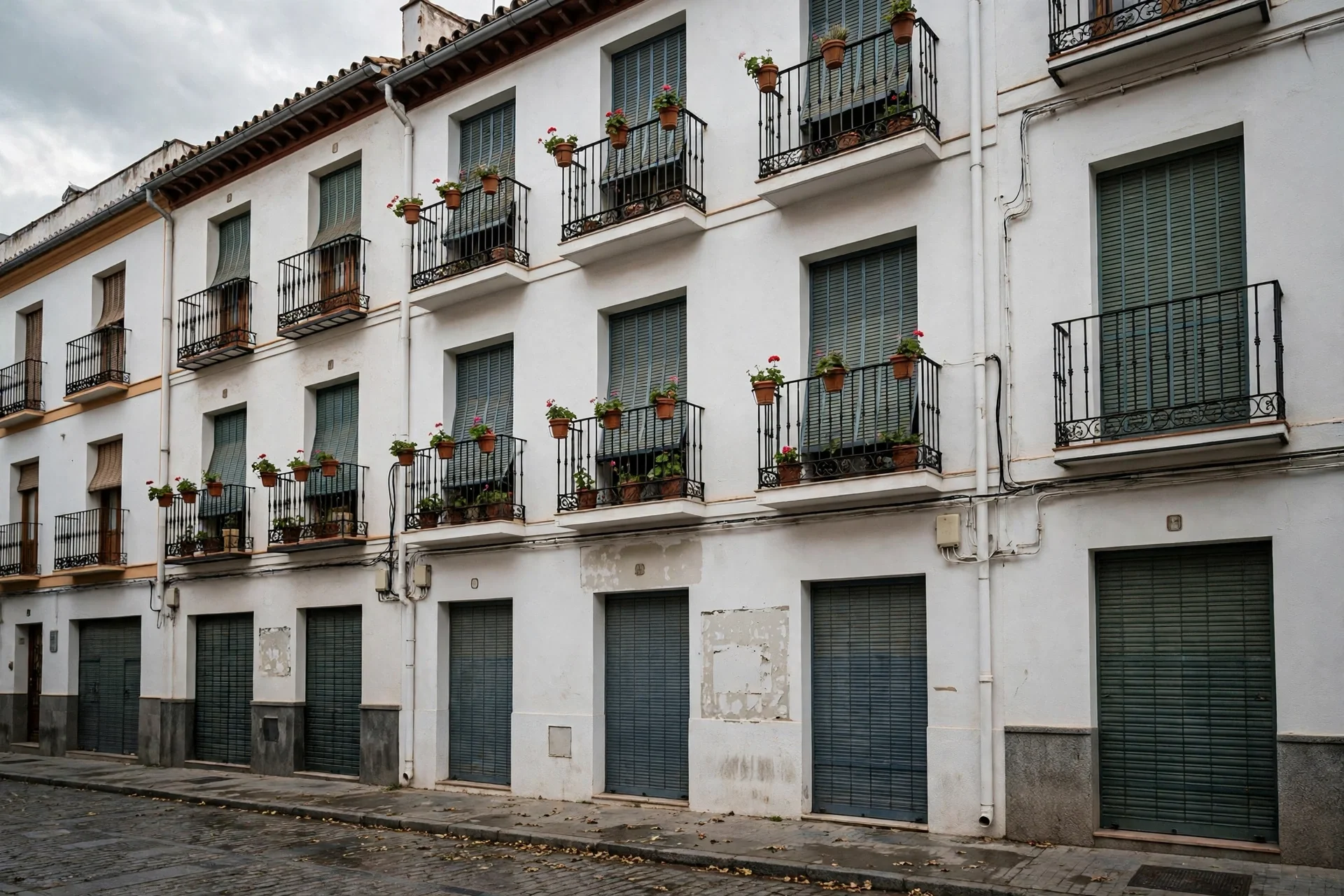
Viviendas en una calle andaluza con persianas bajadas, en un mes de fuerte caída de la oferta de alquiler. · Imagen generada por EPM
Rental listings fall 16% in Andalusia one month after decree
One month after the housing decree entered into force, rental supply has fallen 16% in Andalusia and 19% in Spain, with 26,531 listings gone and falls in every…
Andalusia rental supply drops 16% a month after the decree
Rental supply has fallen 16% in Andalusia and 19% across Spain one month after the housing decree entered into force, with 26,531 listings gone, contracts…
--- The context ---
The Spanish government launched a decree a month ago to ease access to rented housing and prevent evictions. President Pedro Sánchez reactivated it after PP, Vox and Junts voted it down in Congress, called a general election and dissolved the courts. The rule entered into force on 8 October.
The rule extends by two years contracts that were due to expire before 31 December 2028, protects vulnerable people against evictions and regulates seasonal and room rentals. It still must be validated by the Permanent Deputation on 12 November, and another decree on automatic renewal, which on the available information lacks sufficient support, will be voted on the same day.
--- The facts ---
Within a month, rental supply has fallen 16% in Andalusia and 19% across Spain. According to data from property portals, 26,531 listings disappeared in one month in Spain and the slump exceeds 20% in twelve autonomous communities. The largest fall among provincial capitals is in Teruel, at -46%.
In Andalusian capitals the falls are widespread: Jaén records -31%, Almería -26%, Cádiz -26%, Córdoba -19%, Granada -19%, Huelva -23%, Málaga -11% and Sevilla -23%. Another property portal also points to a contraction in long-term supply, down 12.8% since 1 October in Spain, and puts the fall at 13%.
That second portal details falls by Andalusian capital between 1 and 26 October: Almería records 23.15%, Cádiz 26.8%, Córdoba 14.8%, Granada 13.3%, Huelva 20.6%, Jaén 32.1%, Málaga 12.1% and Sevilla 14.7%. Long-term supply had already fallen by almost half against the 2021 average, from 100 listings in January 2021 to 53 in October 2026.
--- The positions ---
Experts warned that these regulations create insecurity for landlords, who lose control of their properties. José María Alfaro, president of the Federation of Real Estate Associations, pointed out in reported speech that contracts have been halted while being marketed, formalised and even on the verge of signing, and that they have moved to sale. Many owners withdraw their assets, switch to tourist, seasonal or room rentals, sell or leave the home empty, and shared-flat offers have multiplied by five.
--- What remains unknown ---
It remains to be seen whether the Permanent Deputation validates the rule on 12 November and what happens after the 29 November election. The portal that puts the fall at 13% expects historic lows in early 2027 if the trend does not change, with contracts halted while awaiting the election and funds disinvesting.
--- Unanswered questions ---
Will the extension protect those who already have a contract without closing access to those looking for a home now? Will withdrawn homes return if the framework changes after the election? Will supply hit historic lows in early 2027?
--- EPM analysis ---
The tension is clear: the rule protects current tenants and vulnerable people, but the first month's data show a rapid withdrawal of supply that harms those searching for a home. The full effect will depend on validation, on the election result and on whether owners regain confidence.
📌 EPM Take:
In EPM's view, protection against evictions is a legitimate goal that cannot be judged only by its declared intention, but by the real access left for families looking for a home today in Andalusia and in Spain. If supply falls 16% in one month and thousands of listings disappear, policy must correct the incentive that pushes owners to withdraw homes, without abandoning vulnerable people or turning protection for some into practical exclusion for others still waiting for an opportunity.
--- The context ---
The Spanish government launched a decree a month ago to ease access to rented housing and prevent evictions, reactivated by Pedro Sánchez after it was voted down in Congress by PP, Vox and Junts. Sánchez called a general election and dissolved the courts, and the rule entered into force on 8 October pending validation.
The rule extends by two years contracts that were due to expire before 31 December 2028, protects vulnerable people against evictions and regulates seasonal and room rentals. The Permanent Deputation must validate it on 12 November, the same day another decree on automatic renewal, which on the available information lacks sufficient support, will be voted on.
--- The facts ---
Within a month, rental supply has fallen 16% in Andalusia and 19% across Spain. According to data from property portals, 26,531 listings disappeared in one month in Spain and the slump exceeds 20% in twelve autonomous communities. The largest disappearance among capitals is in Teruel, at -46%.
By Andalusian capital, Jaén falls -31%, Almería -26%, Cádiz -26%, Córdoba -19%, Granada -19%, Huelva -23%, Málaga -11% and Sevilla -23%. Another property portal describes a contraction in long-term supply of 12.8% since 1 October in Spain and puts the fall at 13%, expecting historic lows in early 2027 if the trend does not change.
That portal records, between 1 and 26 October, falls of 23.15% in Almería, 26.8% in Cádiz, 14.8% in Córdoba, 13.3% in Granada, 20.6% in Huelva, 32.1% in Jaén, 12.1% in Málaga and 14.7% in Sevilla. Long-term supply had already fallen by almost half against the 2021 average, from 100 listings in January 2021 to 53 in October 2026, with 47 gone.
--- The positions ---
Experts warned that these regulations create insecurity for landlords, who lose control of their properties and bear the economic weight of supporting vulnerable people. José María Alfaro, president of the Federation of Real Estate Associations, pointed out in reported speech that contracts have been halted while being marketed, formalised and even on the verge of signing, and that they have moved to sale. Owners withdraw assets, switch to tourist, seasonal or room rentals, sell or leave the home empty, and shared flats have multiplied by five.
--- What remains unknown ---
Validation on 12 November and the result of the 29 November election remain to be seen. The portals describe contracts halted while awaiting the election and funds disinvesting from rented housing, a scenario that keeps the market waiting.
--- Unanswered questions ---
How long will withdrawn supply take to recover if the framework changes again after the election? How many halted contracts will end in sale instead of rental? Will the government accept the cost of a 19% fall across Spain in just one month?
--- EPM analysis ---
The central fact is the speed of the withdrawal: when an owner perceives that control of the home is lost, the response is not to debate the rule but to leave the market. That exit reduces supply, hardens access for new tenants and shifts homes toward sale, tourism or room rental.
📌 EPM Take:
In EPM's view, the decree's first month confirms the prior warning from experts and the property sector: intervening in the contract without giving owners security destroys supply at great speed, with 16% less in Andalusia and 19% less in Spain. Protecting vulnerable people requires resources and guarantees that do not fall on whoever provides the home, because without landlord confidence there will be no homes to protect and no rentals to extend for families.
La oferta de alquiler cae un 16% en Andalucía en un mes
Un mes después de entrar en vigor el decreto de vivienda, la oferta de alquiler ha caído un 16% en Andalucía y un 19% en España, con 26.531 anuncios…
Andalucía pierde un 16% de alquiler un mes tras el decreto
La oferta de alquiler ha caído un 16% en Andalucía y un 19% en España un mes después de la entrada en vigor del decreto de vivienda, con 26.531 anuncios…
--- El contexto ---
El Gobierno puso en marcha hace un mes un decreto para facilitar el acceso a la vivienda de alquiler e impedir los desahucios. Pedro Sánchez lo reactivó tras ser tumbado en el Congreso por PP, Vox y Junts, convocó elecciones generales y disolvió las cortes. La norma entró en vigor el 8 de octubre.
La norma prorroga dos años los contratos que vencieran antes del 31 de diciembre de 2028, protege frente a los desahucios de personas vulnerables y regula los alquileres de temporada y por habitaciones. Debe ser convalidada por la Diputación Permanente el 12 de noviembre, día en que también se votará otro decreto de renovación automática sin apoyos suficientes, según la información disponible.
--- Los hechos ---
En un mes, la oferta de alquiler ha caído un 16% en Andalucía y un 19% en toda España. Según los datos de los portales inmobiliarios, han desaparecido 26.531 anuncios en un mes en España y el desplome supera el 20% en doce comunidades autónomas. La mayor caída entre las capitales se registra en Teruel, con un -46%.
En las capitales andaluzas, las caídas son generalizadas: Jaén registra un -31%, Almería un -26%, Cádiz un -26%, Córdoba un -19%, Granada un -19%, Huelva un -23%, Málaga un -11% y Sevilla un -23%. Otro portal apunta una contracción de la oferta de larga duración, con una caída del 12,8% desde el 1 de octubre en España, y fija la caída en un 13%. La oferta de larga duración ya había caído casi a la mitad frente a la media de 2021, de 100 anuncios en enero de 2021 a 53 en octubre de 2026.
Ese segundo portal también registra caídas en las capitales andaluzas entre el 1 y el 26 de octubre, con Jaén a la cabeza con un 32,1%, seguida de Cádiz con un 26,8% y de Almería con un 23,15%.
--- Las posiciones ---
Los expertos advertían de que estas regulaciones generan inseguridad en los arrendadores, al perder el control de sus propiedades. José María Alfaro, presidente de la Federación de Asociaciones Inmobiliarias, señaló en indirecto que se han paralizado contratos en comercialización, formalización e incluso a punto de firma, y que han pasado a la venta. Muchos propietarios retiran sus activos, pasan al alquiler turístico o por habitaciones, venden o dejan la vivienda vacía.
--- Lo que falta saber ---
Falta saber si la Diputación Permanente convalidará la norma el 12 de noviembre y qué ocurrirá tras las elecciones del 29 de noviembre. El portal que fija la caída en un 13% prevé mínimos históricos a principios de 2027 si no cambia la tendencia, con contratos paralizados y desinversión de fondos.
--- Preguntas sin respuesta ---
¿Protegerá la prórroga a quienes ya tienen contrato sin cerrar el acceso a quienes buscan vivienda ahora? ¿Volverán los pisos retirados si cambia el marco tras las elecciones? ¿Toca la oferta mínimos históricos a principios de 2027?
--- Análisis EPM ---
La tensión es evidente: la norma protege a los inquilinos actuales y a las personas vulnerables, pero los datos del primer mes muestran una retirada rápida de oferta que perjudica a quienes buscan casa.
📌 Conclusion EPM:
A juicio de EPM, proteger frente a los desahucios es un objetivo legítimo que no puede evaluarse solo por la intención declarada, sino por el acceso real que queda para las familias que buscan vivienda hoy. Si la oferta cae un 16% en un mes y desaparecen miles de anuncios, la política debe corregir el incentivo que empuja a retirar pisos, sin abandonar a las personas vulnerables ni convertir la protección de unos en exclusión de otros.
--- El contexto ---
El Gobierno puso en marcha hace un mes un decreto para facilitar el acceso a la vivienda de alquiler e impedir los desahucios, reactivado por Pedro Sánchez tras ser tumbado en el Congreso por PP, Vox y Junts. Sánchez convocó elecciones generales y disolvió las cortes, y la norma entró en vigor el 8 de octubre.
La norma prorroga dos años los contratos que vencieran antes del 31 de diciembre de 2028, protege frente a los desahucios de personas vulnerables y regula los alquileres de temporada y por habitaciones. La Diputación Permanente debe convalidarla el 12 de noviembre, día en que también se votará otro decreto de renovación automática sin apoyos suficientes, según la información disponible.
--- Los hechos ---
En un mes, la oferta de alquiler ha caído un 16% en Andalucía y un 19% en toda España. Según los portales inmobiliarios, han desaparecido 26.531 anuncios en un mes en España y el desplome supera el 20% en doce comunidades autónomas. La mayor caída entre las capitales se da en Teruel, con un -46%.
Por capitales andaluzas, Jaén cae un -31%, Almería un -26%, Cádiz un -26%, Córdoba un -19%, Granada un -19%, Huelva un -23%, Málaga un -11% y Sevilla un -23%. Otro portal describe una contracción de la oferta de larga duración del 12,8% desde el 1 de octubre y fija la caída en un 13%, con previsión de mínimos históricos a principios de 2027. La oferta de larga duración ya era casi la mitad de la media de 2021: 53 anuncios en octubre de 2026 frente a 100 en enero de 2021.
Ese portal también registra caídas en las capitales andaluzas entre el 1 y el 26 de octubre, con Jaén a la cabeza con un 32,1%, Cádiz con un 26,8% y Huelva con un 20,6%.
--- Las posiciones ---
Los expertos advertían de que estas regulaciones generan inseguridad en los arrendadores, al perder el control de sus propiedades y cargar con el peso del apoyo a los vulnerables. José María Alfaro, presidente de la Federación de Asociaciones Inmobiliarias, señaló en indirecto que se han paralizado contratos en comercialización, formalización e incluso a punto de firma, que han pasado a la venta. Los propietarios retiran activos, pasan al alquiler turístico o por habitaciones, venden o dejan la vivienda vacía.
--- Lo que falta saber ---
Queda por ver la convalidación del 12 de noviembre y el resultado de las elecciones del 29 de noviembre. Los portales describen contratos paralizados a la espera de las elecciones y una desinversión de fondos, un escenario que mantiene al mercado a la expectativa.
--- Preguntas sin respuesta ---
¿Cuánto tardará en recuperarse la oferta retirada si el marco vuelve a cambiar tras las elecciones? ¿Cuántos contratos paralizados terminarán en venta en lugar de en alquiler? ¿Asumirá el Gobierno el coste de una caída del 19% en toda España en solo un mes?
--- Análisis EPM ---
El dato central es la velocidad de la retirada: cuando el propietario percibe que pierde el control de su vivienda, la respuesta es salir del mercado. Esa salida reduce la oferta y desplaza pisos hacia la venta, el turismo o el alquiler por habitaciones.
📌 Conclusion EPM:
A juicio de EPM, el primer mes del decreto confirma la advertencia previa de los expertos y del sector inmobiliario: intervenir el contrato sin dar seguridad al propietario destruye oferta a gran velocidad, con un 16% menos en Andalucía y un 19% menos en España. Proteger a las personas vulnerables exige garantías que no recaigan sobre quien pone la vivienda, porque sin confianza de los arrendadores no habrá pisos que proteger.