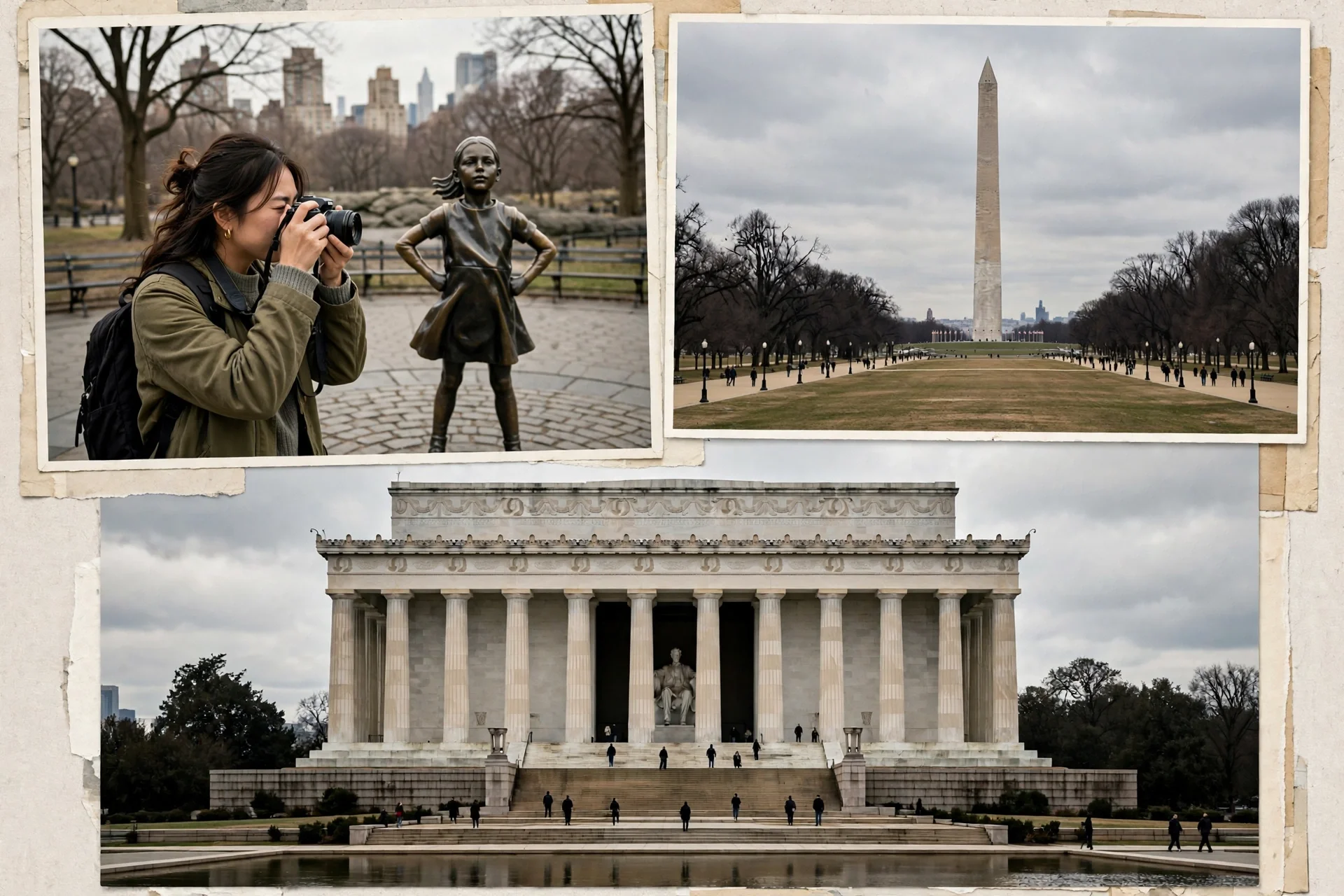
Ilustración alusiva al recorrido de Rusinque por Nueva York y Washington · Imagen generada para EPM
Rusinque visits United States and defends her freedom
Former superintendent Cielo Rusinque shared a trip through Boston, Salem, New York and Washington a year after renouncing her official visa as a gesture of…
Rusinque returns to United States after renouncing visa
Cielo Rusinque publicised a holiday trip across the United States a year after returning her official visa as a gesture of dignity.
--- The context ---
Former superintendent of Industry and Commerce Cielo Rusinque returned to public debate after sharing images from a holiday trip across the United States, a year after announcing her renunciation of her official visa. She presented that return, made on September 30, 2025, as an act of dignity in response to the withdrawal of the same document from former president Gustavo Petro.
--- The facts ---
The tour included Boston, Salem, New York and Washington, with photographs shared by Rusinque on social media. In New York she was seen by The San Remo building, facing Central Park, and beside the Fearless Girl sculpture, a work by Kristen Visbal, in the financial district. In Washington she visited the National Mall and posed before the statue of Abraham Lincoln.
--- The positions ---
Citizens online linked her presence in the United States with that renunciation and accused her of an apparent contradiction. Rusinque rejected the criticism, denounced vulgar remarks and hateful comments about her personal appearance, and noted that some demanded to know why she had visited the United States and not Cuba or warned they would seek removal of her United States visa.
On Cuba she admitted there was some truth in that point, said she had long wished to visit the island and promised photos when she travelled there. On entry she explained she had renounced the official visa granted as minister, that her French nationality means she does not need that document to enter, and that she also holds a diplomatic visa current through 2031. She closed by asking critics to stop suffering and stating she would remain free, progressive, dignified and beautiful.
--- What remains unknown ---
The source does not give exact dates for the trip or documents independently verifying the immigration status invoked. It also does not detail the procedures used on entry. What can be verified is the public explanation offered by Rusinque herself and the images she released from each stop.
--- Unanswered questions ---
Should a public gesture of dignity forever condition the travel of someone who has left office? Does French nationality close the debate about political coherence here? Will Rusinque answer questions of substance with the same openness shown toward personal comments?
--- EPM analysis ---
This case crosses personal freedom with political memory. No one loses the right to travel over a past institutional position, and the legal route explained answers clearly how she entered the country. But a renunciation presented to the country as a symbol of dignity will keep being cited whenever conduct seems to move the opposite way. Separating the legal, personal and political levels allows the episode to be judged fairly, without insults or closed defences.
📌 EPM Take: In EPM's view, this episode matters less for a personal trip than for what it reveals about public debate in Colombia, where a decision presented as a gesture of dignity became a permanent test applied to every later step taken by its author. The immigration explanation offered settles the legal doubt, but it does not settle the political discussion about coherence, example and the use of symbols. That discussion is legitimate when it stays on ideas and avoids personal attacks and empty praise.
--- The context ---
Former superintendent of Industry and Commerce Cielo Rusinque sparked an avoidable controversy by showing a holiday trip across the United States on social media, a year after returning her official visa. On September 30, 2025, she presented that return as an act of institutional dignity after the withdrawal of the document from former president Gustavo Petro, amid statements about the Middle East conflict between Palestine and Israel.
--- The facts ---
The itinerary disclosed by the former official included Boston, Salem, New York and Washington. In New York she shared images by The San Remo building, facing Central Park, and beside the Fearless Girl sculpture, a work by Kristen Visbal, in the financial district. In Washington she visited the National Mall and posed before the statue of Abraham Lincoln. No outside leak brought the tour to public attention.
--- The positions ---
Criticism online targeted that coherence and reproached her for visiting the country she had diplomatically questioned months earlier. Rusinque rejected the criticism, denounced vulgar abuse and hatred over her personal appearance, and said some demanded Cuba instead of the United States or announced steps to have her United States visa taken away.
On Cuba she conceded there was some truth in the comment, said she had long wanted to visit the island and promised photos when it happened. On entry she explained she renounced the official visa received as minister, that her French nationality means she does not need that document to enter, and that she also holds a diplomatic visa current through 2031. She closed by asking critics to stop suffering and proclaiming she would remain free, progressive, dignified and beautiful.
--- What remains unknown ---
No precise dates for the trip are given and no explanation of why she publicised a tour that would foreseeably reopen the controversy. Nor are there independent documents confirming the immigration status described in her reply. The only account available is the response the former official offered to online critics.
--- Unanswered questions ---
Was it foreseeable that publicising the trip would reopen debate about the gesture of 2025? Is a lawful entry route enough to answer the underlying political objection? Will Rusinque adopt a stable standard for the public reading of her private acts?
--- EPM analysis ---
Lawful entry and coherence of gesture are different matters, and mixing them weakens discussion. A valid immigration explanation does not make later use of a symbol coherent, and political incoherence does not make an entry covered by the nationality invoked irregular. Whoever turns a decision into a public banner assumes every later step will be read in its light. The legal answer was sufficient, but the political answer was reduced to a defiant closing line.
📌 EPM Take: In EPM's view, someone who held a senior national oversight post and turned an immigration renunciation into a public symbol cannot expect that symbol to stop being examined when personal circumstances later change. The French nationality and the current diplomatic visa explain why entry was lawful, but by themselves they do not answer the deeper question about coherence between the announced gesture and later conduct. Calm scrutiny, without insults and centred on verified facts, is the right way to assess responsibility here.
Rusinque viaja a Estados Unidos y defiende su libertad
La exsuperintendente Cielo Rusinque compartió un viaje por Boston, Salem, Nueva York y Washington un año después de renunciar a su visa oficial por dignidad.
Rusinque vuelve a Estados Unidos tras renunciar a su visa
Cielo Rusinque difundió un viaje vacacional por Estados Unidos un año después de devolver su visa oficial como gesto de dignidad.
--- El contexto ---
La exsuperintendente de Industria y Comercio Cielo Rusinque volvió al debate público tras compartir imágenes de un viaje vacacional por Estados Unidos, un año después de anunciar su renuncia a la visa oficial. Presentó aquella entrega, realizada el 30 de septiembre de 2025, como un acto de dignidad ante el retiro del mismo documento al expresidente Gustavo Petro.
--- Los hechos ---
El recorrido incluyó Boston, Salem, Nueva York y Washington, con fotografías difundidas por la propia Rusinque en redes sociales. En Nueva York se la observó junto al edificio The San Remo, frente a Central Park, y junto a la escultura La Niña Sin Miedo, obra de Kristen Visbal, en el distrito financiero. En Washington visitó el National Mall y posó ante la estatua de Abraham Lincoln.
--- Las posiciones ---
Los cuestionamientos ciudadanos vincularon su presencia en Estados Unidos con aquella renuncia y le reprocharon una aparente contradicción. Rusinque rechazó las críticas, denunció vulgaridades y comentarios de odio sobre su aspecto personal, y señaló que algunos le reclamaban haber visitado Estados Unidos y no Cuba o anunciaban que pedirían que le quitaran la visa estadounidense.
Sobre Cuba admitió que en ese punto había algo de razón, que deseaba conocer la isla desde hacía tiempo y que compartiría fotos cuando viajara. Sobre su ingreso explicó que renunció a la visa oficial otorgada como ministra, que por su nacionalidad francesa no necesita ese documento para entrar y que además conserva una visa diplomática vigente hasta 2031. Cerró pidiendo que dejaran de sufrir y afirmando que seguiría libre, progresista, digna y bella.
--- Lo que falta saber ---
La fuente no precisa las fechas exactas del viaje ni aporta documentos que verifiquen de forma independiente el estatus migratorio invocado. Tampoco detalla los trámites usados en el ingreso. Lo verificable es la explicación pública de la propia interesada y las imágenes que difundió en cada parada del recorrido.
--- Preguntas sin respuesta ---
¿Debe un gesto público de dignidad condicionar para siempre los viajes de quien ya dejó el cargo? ¿Cierra la nacionalidad francesa el debate sobre coherencia política? ¿Responderá Rusinque a las preguntas de fondo con la misma apertura mostrada ante los comentarios personales?
--- Análisis EPM ---
El caso cruza libertad personal y memoria política. Nadie pierde el derecho a viajar por una posición institucional pasada, y la vía jurídica explicada responde con claridad cómo ingresó al país. Pero una renuncia presentada ante el país como símbolo de dignidad seguirá citándose cada vez que la conducta parezca moverse en dirección contraria. Distinguir lo legal, lo personal y lo político permite juzgar el episodio con justicia, sin insultos ni defensas cerradas.
📌 Conclusion EPM: A juicio de EPM, el episodio importa menos por un viaje personal que por lo que revela sobre el debate público en Colombia, donde una decisión presentada como gesto de dignidad terminó convertida en examen permanente de cada paso posterior de su autora. La explicación migratoria ofrecida cierra la duda jurídica, pero no la discusión política sobre coherencia, ejemplo y uso de los símbolos. Esa discusión es legítima si se mantiene en el terreno de las ideas y no deriva en ataques personales ni en celebraciones vacías sin contexto completo.
--- El contexto ---
La exsuperintendente de Industria y Comercio Cielo Rusinque provocó una controversia evitable al mostrar un viaje vacacional por Estados Unidos, un año después de devolver su visa oficial. El 30 de septiembre de 2025 presentó esa entrega como un acto de dignidad institucional frente al retiro del documento al expresidente Gustavo Petro, en medio de declaraciones oficiales sobre el conflicto en Oriente Medio entre Palestina e Israel.
--- Los hechos ---
El itinerario divulgado por la propia exfuncionaria incluyó Boston, Salem, Nueva York y Washington. En Nueva York compartió imágenes junto al edificio The San Remo, frente a Central Park, y junto a la escultura La Niña Sin Miedo, obra de Kristen Visbal, en el distrito financiero. En Washington visitó el National Mall y posó ante la estatua de Abraham Lincoln. Ninguna filtración ajena trajo el recorrido a la esfera pública.
--- Las posiciones ---
Las críticas en redes apuntaron a esa coherencia y le reprocharon visitar el país cuestionado diplomáticamente meses atrás. Rusinque rechazó los señalamientos, denunció vulgaridades y odio por su aspecto personal, y afirmó que algunos le exigían haber ido a Cuba en vez de a Estados Unidos o anunciaban gestiones para que le quitaran la visa estadounidense.
Sobre Cuba concedió que había algo de razón, que deseaba conocer la isla desde hacía tiempo y que compartiría fotos cuando el viaje ocurriera. Sobre el ingreso explicó que renunció a la visa oficial recibida como ministra, que por su nacionalidad francesa no necesita ese documento para entrar y que además mantiene una visa diplomática vigente hasta 2031. Cerró pidiendo que dejaran de sufrir y proclamando que seguiría libre, progresista, digna y bella.
--- Lo que falta saber ---
No constan las fechas del viaje ni una explicación de por qué difundió un recorrido que previsiblemente reabriría la controversia. Tampoco hay documentos independientes que confirmen cada elemento del estatus migratorio descrito. La única rendición disponible es el mensaje de respuesta de la propia exfuncionaria.
--- Preguntas sin respuesta ---
¿Era previsible que difundir el viaje reabriera el debate sobre el gesto de 2025? ¿Basta una vía legal de ingreso para responder la objeción política de fondo? ¿Adoptará Rusinque un criterio estable sobre la lectura pública de sus actos privados?
--- Análisis EPM ---
Legalidad y coherencia son asuntos distintos, y mezclarlos empobrece la discusión. Una explicación migratoria válida no vuelve coherente cualquier uso posterior del símbolo, y una incoherencia política tampoco vuelve irregular un ingreso amparado en la nacionalidad invocada. Quien convierte una decisión administrativa en bandera pública asume que cada paso posterior se leerá a su luz. La respuesta jurídica fue suficiente, pero la política quedó reducida a una frase desafiante de cierre.
📌 Conclusion EPM: A juicio de EPM, quien ocupó un cargo de vigilancia nacional y convirtió una renuncia migratoria en símbolo público no puede esperar que ese símbolo deje de examinarse cuando cambian las circunstancias personales. La nacionalidad francesa y la visa diplomática vigente explican la legalidad del ingreso, pero no responden por sí solas la pregunta de fondo sobre coherencia entre el gesto anunciado y la conducta posterior. El escrutinio sereno, sin insultos y centrado en hechos verificables, es la vía correcta para valorar responsabilidades.