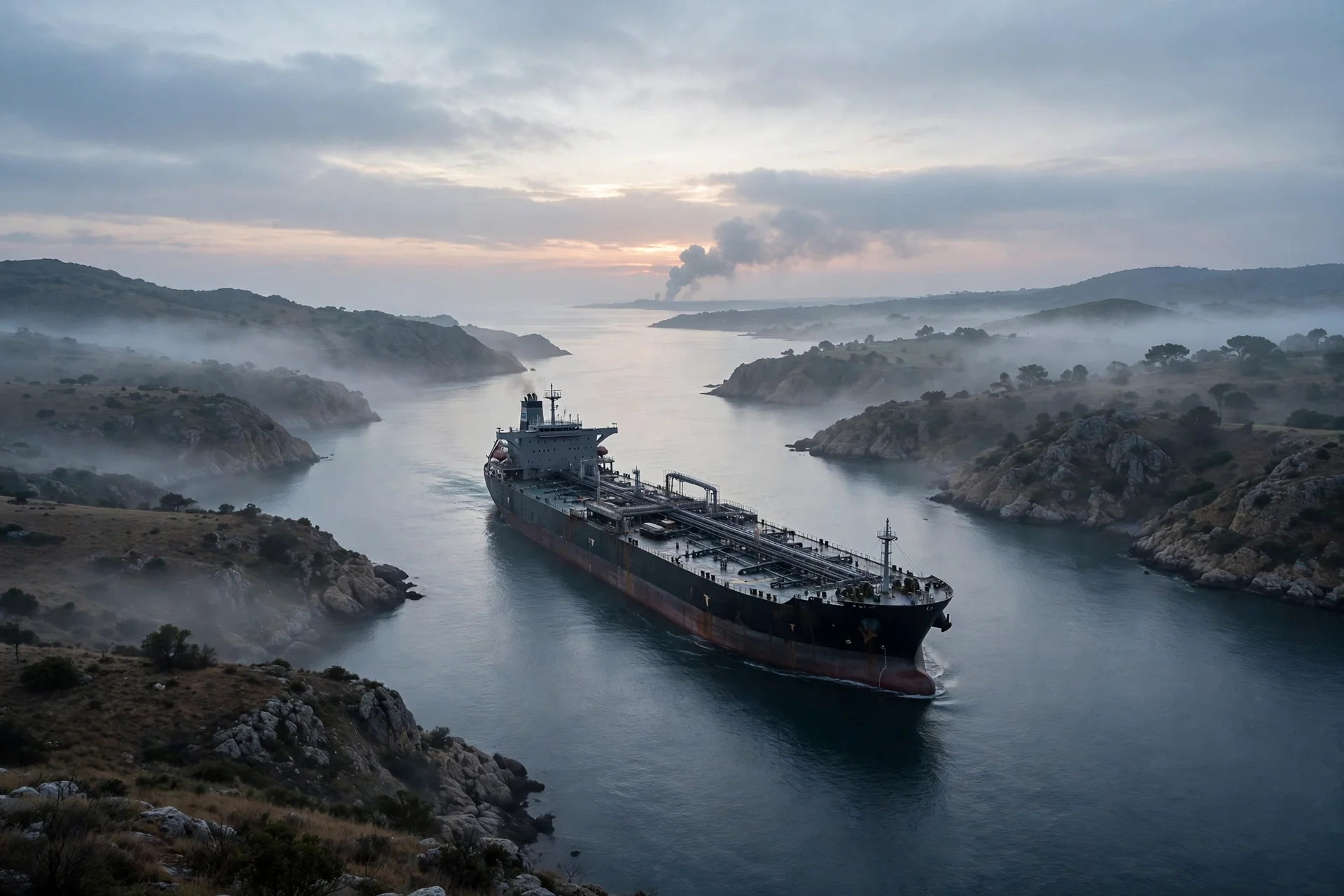
Imagen alusiva generada por EPM: un petrolero cruza un estrecho al amanecer con humo lejano en el horizonte. · EPM
Three oil tankers caught fire in Hormuz, Iran says
According to the Revolutionary Guards, three oil tankers caught fire this Sunday in Hormuz, with no names or flags released by Tehran.
Three tankers burned in Hormuz, Iran says
Tehran claims three oil tankers caught fire this Sunday in Hormuz and an Iranian agency held that two ships struck naval mines.
--- The context ---
The Strait of Hormuz is a strategic maritime route through which one fifth of the world's hydrocarbons travelled before the war triggered in late February by Israeli and United States attacks against Tehran. Iran claims control of that route, and its forces regularly attack ships passing through the area without its authorisation along the coast of Oman. Several vessels have suffered explosions and mine strikes there.
--- The facts ---
Iran's Revolutionary Guards reported this Sunday that three oil tankers caught fire while sailing through what they described as an illegal route in the strait, during the early hours of the day. Tehran described what happened as explosions and called the vessels offenders. Tehran released no names or flags, and that account has not been independently confirmed.
Before that announcement, an Iranian agency claimed that two of the ships had struck naval mines. Separately, the British maritime security agency reported this Sunday that one oil tanker caught fire on Saturday in the strait, off Oman. According to public media in the United Arab Emirates, 22 people have been rescued from a burning ship in the Gulf of Oman and are in stable condition. It has not been possible to confirm whether that rescue is related to the fire reported through the British channel.
--- The positions ---
Tehran maintains its claim of control over the route and presents the vessels it named as offenders sailing without its authorisation. The United States, for its part, imposes a blockade on Iranian ports and escorts oil tankers along the Omani coasts. Washington also says it has cleared mines from much of the maritime route. Civilian transit lies between those positions, exposed to explosions and mine strikes.
--- What remains unknown ---
Independent confirmation is still missing that three oil tankers caught fire this Sunday, as the Guards claim. Nor is it confirmed that the ship from which 22 people were rescued is the same one that caught fire on Saturday off Oman, or that both events form part of a single incident in the strait.
--- Unanswered questions ---
Can it be independently confirmed that three oil tankers caught fire this Sunday in Hormuz, as the Guards claim? Will the names and flags of the vessels Tehran called offenders be made known? Is the burning ship in the Gulf of Oman, from which 22 people were rescued, the same tanker whose Saturday fire was reported by the British agency?
--- EPM analysis ---
The most immediate risk is not only commercial, but human. Each attributed explosion, each reported mine strike and each reported fire endangers crews who do not decide the dispute over control of the route. Protecting life at sea and ensuring safe civilian transit require verifiable information, clear warning channels and restraint among the parties. Without that verification, an unconfirmed claim can accelerate escalation.
📌 EPM Take: In EPM's view, prudence requires distinguishing between what Tehran claims and what has actually been confirmed, because confusing the two puts crews at risk and fuels an unnecessary escalation. The Guards speak of three tankers set ablaze, but the confirmation available through another channel is limited to one fire on Saturday off Oman. Until names, flags and independent verification exist, the priority must be protecting life at sea, ensuring the rescue of those who sail and preserving safe and verifiable civilian transit for everyone.
--- The context ---
The Strait of Hormuz concentrates a decisive share of world hydrocarbon transit, since one fifth of those hydrocarbons travelled through that route before the war triggered in late February by Israeli and United States attacks against Tehran. Iran claims control of the passage, and its forces regularly attack ships crossing it without its authorisation along the coast of Oman. Several vessels have suffered explosions and mine strikes there, a direct threat to freedom of navigation.
--- The facts ---
Iran's Revolutionary Guards reported this Sunday that three oil tankers caught fire while sailing through what they described as an illegal route in the strait, during the early hours of the day. Tehran spoke of explosions and called the vessels offenders. That claim has not been independently confirmed, and Tehran released no names or flags.
Earlier, an Iranian agency claimed that two of the ships had struck naval mines. The British maritime security agency reported this Sunday that one oil tanker caught fire on Saturday in the strait, off Oman. According to public media in the United Arab Emirates, 22 people have been rescued from a burning ship in the Gulf of Oman and are in stable condition, with no confirmation that this event is the same one reported through the British channel.
--- The positions ---
Tehran defends its claim of control over the route and treats anyone sailing without its authorisation as an offender. Against that, the United States imposes a blockade on Iranian ports and escorts oil tankers along the Omani coasts. Washington also says it has cleared mines from much of the maritime route. Escort and mine clearance thus respond to explosions and mine strikes that would in practice close a strategic passage.
--- What remains unknown ---
There is still no independent confirmation of the Iranian account of the three tankers set ablaze this Sunday. Confirmation is also missing on whether the burning ship from which 22 people were rescued in the Gulf of Oman corresponds to the tanker whose Saturday fire the British maritime security agency reported.
--- Unanswered questions ---
Who laid the mines that, according to an Iranian agency, two ships struck in the strait? Will Tehran present the names and flags of the three tankers that, according to the Guards, caught fire this Sunday? Can escorted transit along the Omani coasts be maintained if explosions and mine strikes continue on the route?
--- EPM analysis ---
Firmness in the face of the use of mines and of attacks on transit is not a rhetorical gesture, but a condition for the strait to remain open. Backing the escort of tankers and the mine clearance reported by Washington is consistent with defending free navigation, always on verified facts and without accepting as proven a claim that still lacks independent confirmation.
📌 EPM Take: In EPM's view, no claim about Hormuz should be taken as proven without verification, but there can be no weakness either in the face of the use of mines and attacks against maritime transit. Tehran claims three tankers caught fire and an Iranian agency speaks of strikes against naval mines, while confirmation through another channel reaches one fire on Saturday off Oman. The firm response is to sustain the escort, complete the mine clearance and demand verifiable details, with names and flags, before accepting any account as settled fact.
Tres petroleros se incendiaron en Ormuz, según Irán
Según los Guardianes de la Revolución, tres petroleros se incendiaron este domingo en Ormuz, sin nombres ni banderas comunicados por Teherán.
Tres petroleros ardieron en Ormuz, según Irán
Teherán afirma que tres petroleros se incendiaron este domingo en Ormuz y una agencia iraní sostuvo que dos barcos chocaron con minas navales.
--- El contexto ---
El estrecho de Ormuz es una ruta marítima estratégica por donde transitaba una quinta parte de los hidrocarburos mundiales antes de la guerra desencadenada a finales de febrero por ataques israelíes-estadounidenses contra Teherán. Irán reclama el control de esa vía y sus fuerzas atacan regularmente a los barcos que pasan por la zona sin su autorización bordeando la costa de Omán. Varios buques han sufrido allí explosiones y choques con minas.
--- Los hechos ---
Los Guardianes de la Revolución iraníes informaron este domingo que tres petroleros se incendiaron mientras navegaban por lo que calificaron como una vía ilegal en el estrecho, durante las primeras horas del día. Teherán calificó lo ocurrido de explosiones y describió a los buques como infractores. Teherán no comunicó nombres ni banderas, y esa versión no ha sido confirmada de forma independiente.
Antes de ese anuncio, una agencia iraní afirmó que dos de los barcos habían chocado con minas navales. Por otra vía, la agencia británica de seguridad marítima informó este domingo que un petrolero se incendió el sábado en el estrecho, frente a Omán. Según medios públicos de Emiratos Árabes Unidos, 22 personas han sido rescatadas de un barco en llamas en el Golfo de Omán y se encuentran en un estado estable. No se ha podido confirmar si ese rescate guarda relación con el incendio comunicado por la vía británica.
--- Las posiciones ---
Teherán sostiene su reclamo de control sobre la ruta y presenta a los buques señalados como infractores que navegaban sin su autorización. Estados Unidos, por su parte, impone un bloqueo a los puertos iraníes y escolta a los petroleros a lo largo de las costas omaníes. Washington asegura, además, haber desminado gran parte de la vía marítima. Entre ambas posiciones queda el tránsito civil, expuesto a explosiones, choques con minas y decisiones tomadas lejos de las tripulaciones que cruzan el estrecho.
--- Lo que falta saber ---
Falta la confirmación independiente de que tres petroleros se hayan incendiado este domingo, tal como afirman los Guardianes. Tampoco está confirmado que el barco del que fueron rescatadas 22 personas sea el mismo que se incendió el sábado frente a Omán, ni que ambos hechos formen parte de un único incidente en el estrecho.
--- Preguntas sin respuesta ---
¿Podrá confirmarse de forma independiente que tres petroleros se incendiaron este domingo en Ormuz, como afirman los Guardianes? ¿Se conocerán los nombres y las banderas de los buques que Teherán calificó de infractores? ¿Es el barco en llamas del Golfo de Omán, del que fueron rescatadas 22 personas, el mismo petrolero cuyo incendio el sábado comunicó la agencia británica?
--- Análisis EPM ---
El riesgo más inmediato no es solo comercial, sino humano. Cada explosión atribuida, cada choque con minas relatado y cada incendio comunicado ponen en peligro a tripulaciones que no deciden la disputa por el control de la ruta. Proteger la vida en el mar y garantizar un tránsito civil seguro exige información verificable, canales de aviso claros y contención entre las partes. Sin esa verificación, una afirmación sin confirmar puede acelerar la escalada.
📌 Conclusion EPM: A juicio de EPM, la prudencia obliga a distinguir entre lo afirmado por Teherán y lo efectivamente confirmado, porque confundir ambos planos pone en riesgo a las tripulaciones y alimenta una escalada innecesaria. Los Guardianes hablan de tres petroleros incendiados, pero la confirmación disponible por otra vía se limita a un incendio el sábado frente a Omán. Hasta que existan nombres, banderas y verificación independiente, la prioridad debe ser proteger la vida en el mar, asegurar el rescate de quienes navegan y preservar un tránsito civil seguro y comprobable para todos.
--- El contexto ---
El estrecho de Ormuz concentra una parte decisiva del tránsito mundial de hidrocarburos, pues por esa ruta transitaba una quinta parte de ellos antes de la guerra desencadenada a finales de febrero por ataques israelíes-estadounidenses contra Teherán. Irán reclama el control del paso y sus fuerzas atacan regularmente a los barcos que lo cruzan sin su autorización bordeando la costa de Omán. Varios buques han sufrido allí explosiones y choques con minas, una amenaza directa a la libertad de navegación.
--- Los hechos ---
Los Guardianes de la Revolución iraníes informaron este domingo que tres petroleros se incendiaron mientras navegaban por lo que calificaron como una vía ilegal en el estrecho, durante las primeras horas del día. Teherán habló de explosiones y calificó a los buques de infractores. Esa afirmación no ha sido confirmada de forma independiente, y Teherán no comunicó nombres ni banderas.
Antes, una agencia iraní afirmó que dos de los barcos habían chocado con minas navales. La agencia británica de seguridad marítima informó este domingo que un petrolero se incendió el sábado en el estrecho, frente a Omán. Según medios públicos de Emiratos Árabes Unidos, 22 personas han sido rescatadas de un barco en llamas en el Golfo de Omán y se encuentran en un estado estable, sin confirmación de que ese hecho sea el mismo comunicado por la vía británica.
--- Las posiciones ---
Teherán defiende su reclamo de control sobre la ruta y trata como infractor a quien navega sin su autorización. Frente a ello, Estados Unidos impone un bloqueo a los puertos iraníes y escolta a los petroleros a lo largo de las costas omaníes. Washington asegura, además, haber desminado gran parte de la vía marítima. La escolta y el desminado responden así a explosiones y choques con minas que cerrarían en la práctica un paso estratégico.
--- Lo que falta saber ---
No existe todavía confirmación independiente de la versión iraní sobre los tres petroleros incendiados este domingo. Falta confirmar, además, si el barco en llamas del que fueron rescatadas 22 personas en el Golfo de Omán corresponde al petrolero cuyo incendio el sábado informó la agencia británica de seguridad marítima.
--- Preguntas sin respuesta ---
¿Quién colocó las minas con las que, según una agencia iraní, chocaron dos barcos en el estrecho? ¿Presentará Teherán los nombres y las banderas de los tres petroleros que, según los Guardianes, se incendiaron este domingo? ¿Podrá mantenerse el tránsito escoltado por las costas omaníes si continúan las explosiones y los choques con minas en la ruta?
--- Análisis EPM ---
La firmeza frente al uso de minas y frente a los ataques al tránsito no es un gesto retórico, sino una condición para que el estrecho siga abierto. Respaldar la escolta de petroleros y el desminado comunicado por Washington es coherente con la defensa de la navegación libre, siempre sobre hechos verificados y sin aceptar como probada una afirmación que aún carece de confirmación independiente.
📌 Conclusion EPM: A juicio de EPM, ninguna afirmación sobre Ormuz debe darse por probada sin verificación, pero tampoco cabe debilidad frente al uso de minas y a los ataques contra el tránsito marítimo. Teherán afirma que tres petroleros se incendiaron y una agencia iraní habla de choques con minas navales, mientras la confirmación por otra vía alcanza a un incendio el sábado frente a Omán. La respuesta firme es sostener la escolta, completar el desminado y exigir datos comprobables, con nombres y banderas, antes de aceptar cualquier versión como hecho cerrado.