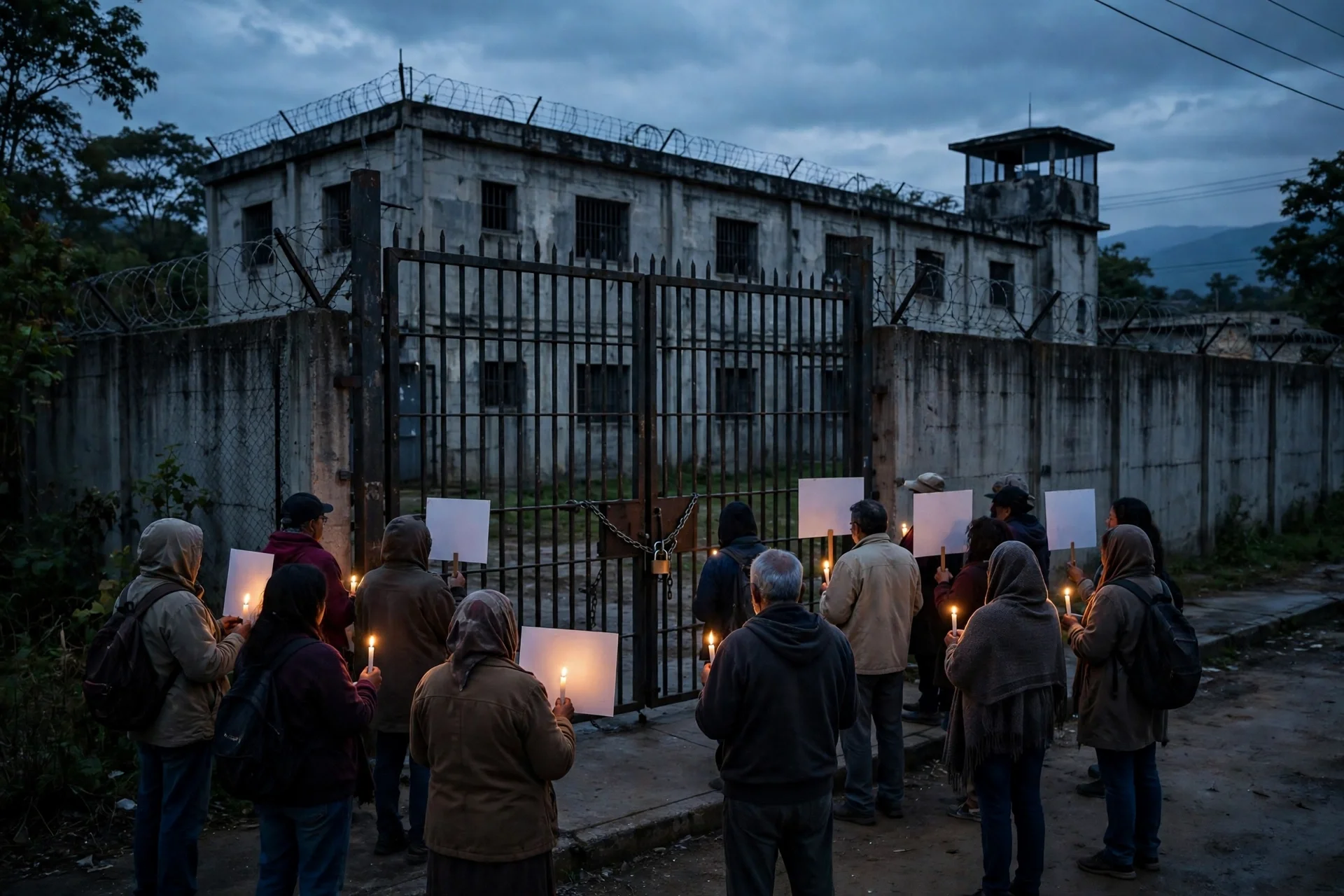
Imagen alusiva de familiares con velas frente a una prisión. · Imagen generada por EPM
Figuera expects new releases of political prisoners in Venezuela
Dinorah Figuera said new releases of political prisoners will be announced soon in Venezuela after talks with Jorge Rodríguez.
Venezuela nears new prisoner releases, Figuera says
Dinorah Figuera said the Venezuelan government will soon announce new releases of political prisoners.
--- The context ---
Venezuela is keeping open a dialogue process that began in August between the ruling movement and sectors of the opposition, with the situation of people jailed for political reasons at the center of the demands. The release of all detainees is presented as a demand shared by families and political leaders, while the releases recorded in recent months have still not reached everyone affected.
--- The facts ---
Dinorah Figuera, president of the National Assembly elected in 2015, said on Sunday that the ruling movement will soon announce new releases of political prisoners. Her remarks followed a meeting with Jorge Rodríguez, the head of Parliament, who told her they were close to announcing the release of another group of detainees as both sides prepare to resume the dialogue toward a fourth round of talks.
Figuera also conveyed to Delcy Rodríguez the demands of relatives of jailed members of the Armed Forces seeking the freedom of their loved ones. According to Foro Penal, Venezuela currently holds 322 political prisoners, of whom 182 are civilians and 140 belong to the Armed Forces. Some detained service members expressed their intention to leave Venezuela once released and mentioned Spain and Germany as possible destinations.
--- The positions ---
Figuera said her sector insists on securing the release of all political prisoners and described that release as a demand made not only by the population. From the government side, Delcy Rodríguez stated in August that 1,046 Venezuelans had regained their freedom since the procedure began in January. The regime, however, rejects that political prisoners exist and maintains that the detentions respond to crimes, a position questioned by human rights organizations and opposition sectors.
--- What remains unknown ---
There is still no official list with the names of those who would benefit from the new measures and no confirmed date for the announced step. It is also unknown how many people the next group would include or whether it would cover both civilians and service members. The absence of that information previously forced families from different regions to wait outside prisons without knowing whether their relatives were included.
--- Unanswered questions ---
When will the new group of releases be announced and who will be included? Will the measure reach the 322 political prisoners registered by Foro Penal or only part of them? What guarantees will those released receive, after an amnesty law that reached more than 8,000 people but left many beneficiaries still subject to judicial restrictions?
--- EPM analysis ---
The anticipated announcement combines sustained social pressure with political negotiation. The protest camp outside Rodeo I prison, in Miranda state, was lifted on Sunday after ten months of protest that began on January 8, although in recent days around 20 relatives remained compared with an initial average close to 100. Activist Sairam Rivas clarified that leaving the site does not mean abandoning the demands and that the claims will move to institutions and embassies. The visit by María Corina Machado on Friday and the request raised in Washington show the issue retains domestic and external weight.
📌 EPM Take: In EPM's view, the credibility of this process will be measured in verifiable names rather than general previews, because families have already waited more than 300 days without full certainty. If the new announcement includes a clear list, a timetable and an end to restrictions for those already released, the dialogue will gain concrete support. If it is again partial and lacking detail, distrust will grow and the protest will simply change location without losing strength or legitimacy among Venezuelans demanding answers today.
--- The context ---
The dialogue process begun in August between the Venezuelan government and sectors of the opposition is moving toward a fourth round of talks with one especially sensitive item on the table: the situation of people jailed for political reasons. The releases recorded in recent months are part of a procedure started in January, but they have still not reached all detainees.
--- The facts ---
Dinorah Figuera, president of the National Assembly elected in 2015, said on Sunday that the government will soon announce new releases of political prisoners. She spoke after meeting Jorge Rodríguez, the head of Parliament and the regime's main representative in the negotiations, who told her they were close to communicating the release of another group of detainees.
Figuera also conveyed to Delcy Rodríguez the demands of relatives of Armed Forces members who remain jailed. Foro Penal counts 322 political prisoners in the country, with 182 civilians and 140 service members. According to Figuera, some detained service members expressed their intention to leave Venezuela once freed and mentioned Spain and Germany as possible destinations.
--- The positions ---
The opposition raises the release of all detainees as one of its main demands and says it has repeatedly insisted on obtaining a concrete definition. On the government side, Delcy Rodríguez said in August that 1,046 Venezuelans had regained their freedom since the procedure began. Added to that balance is the amnesty law approved in February, which reached more than 8,000 people, although many beneficiaries were already out of prison and remained subject to judicial restrictions. The regime rejects the existence of political prisoners and attributes the detentions to crimes.
--- What remains unknown ---
No official list has yet been published with the names of the next group, and the date of the announcement has not been confirmed. It is also unknown whether the new measures will include civilians and service members or what will happen with the judicial restrictions still weighing on people already released. Without those facts, any assessment of the announcement's real scope remains necessarily incomplete.
--- Unanswered questions ---
Which names will make up the next group of releases and when will the official list be known? Will the new releases verifiably reduce Foro Penal's register of 322 political prisoners? Will the February amnesty law translate into the definitive closure of cases, or will judicial restrictions remain in force for thousands of beneficiaries?
--- EPM analysis ---
The closing of the camp outside Rodeo I prison, in Miranda state, ends a protest sustained for ten months since January 8, when Jorge Rodríguez announced the release of a significant number of people. According to the Committee for the Freedom of Political Prisoners, around 20 relatives remained in recent days compared with an initial average close to 100. Activist Sairam Rivas warned that the demands will move to institutions and embassies, and the issue also reached Washington, where Marco Rubio asked for the releases to continue.
📌 EPM Take: In EPM's view, an announcement of releases will only have value if it is carried out with order, public names and clear legal effects, without turning each release into a negotiable gesture. The law and verifiable lists must prevail over verbal previews, because institutional trust is built with provable acts. If the next group leaves with its legal situation resolved, there will be real progress; if restrictions and uncertainty persist, the underlying problem will remain intact for the affected families and for public confidence.
Figuera anticipa nuevas liberaciones de presos en Venezuela
Dinorah Figuera anticipó nuevas excarcelaciones de presos políticos en Venezuela tras conversar con Jorge Rodríguez.
Anuncian excarcelaciones cercanas en Venezuela, según Figuera
Dinorah Figuera anticipó que el oficialismo anunciará nuevas liberaciones de presos políticos en Venezuela.
--- El contexto ---
Venezuela mantiene abierto un proceso de diálogo iniciado en agosto entre el oficialismo y sectores de la oposición, con la situación de las personas encarceladas por motivos políticos en el centro de las demandas. La liberación de todos los detenidos se presenta como una exigencia compartida por familias y dirigentes, mientras las excarcelaciones recientes no alcanzaron a todos los afectados.
--- Los hechos ---
La presidenta de la Asamblea Nacional electa en 2015, Dinorah Figuera, anticipó este domingo que el oficialismo anunciará próximamente nuevas excarcelaciones de presos políticos. La anticipación surgió tras un encuentro con Jorge Rodríguez, titular del Parlamento, quien le transmitió que están cerca de anunciar la salida de otro grupo de detenidos y que el diálogo avanza hacia un cuarto ciclo.
Figuera también trasladó a Delcy Rodríguez los reclamos de familiares de militares encarcelados que buscan recuperar la libertad de sus parientes. Según los registros de Foro Penal, en Venezuela hay 322 presos políticos, de los cuales 182 son civiles y 140 pertenecen a las Fuerzas Armadas. Algunos militares detenidos manifestaron su intención de abandonar el país tras ser liberados y mencionaron a España y Alemania como posibles destinos.
--- Las posiciones ---
Figuera sostuvo que su sector insiste en consolidar la salida de todos los presos políticos y describió esa liberación como una demanda que hace no solamente la población. Desde el oficialismo, Delcy Rodríguez afirmó en agosto que 1.046 venezolanos habían recuperado la libertad desde el comienzo del procedimiento iniciado en enero. El régimen, en cambio, rechaza que existan presos políticos y sostiene que las detenciones responden a la comisión de delitos, una postura cuestionada por organizaciones de derechos humanos y por la oposición.
--- Lo que falta saber ---
Todavía no hay un listado oficial con los nombres de quienes serían beneficiados por las nuevas medidas ni una fecha confirmada para el anuncio anticipado. Tampoco se conoce cuántas personas integrarían el próximo grupo ni si incluiría a civiles y militares. La falta de esa información ya obligó antes a familias de distintas regiones a esperar frente a las prisiones sin saber si sus allegados estaban incluidos.
--- Preguntas sin respuesta ---
¿Cuándo se anunciará el nuevo grupo de liberaciones y quiénes lo integrarán? ¿La medida alcanzará a los 322 presos políticos registrados por Foro Penal o solo a una parte de ellos? ¿Qué garantías tendrán quienes salgan, tras una ley de amnistía que alcanzó a más de 8.000 personas pero dejó a muchos beneficiarios todavía sometidos a restricciones judiciales?
--- Análisis EPM ---
El anuncio anticipado combina presión social sostenida y negociación política. El campamento frente a Rodeo I, en el estado Miranda, se levantó este domingo tras diez meses de protesta iniciada el 8 de enero, aunque en los últimos días quedaban unos 20 familiares frente a un promedio inicial cercano a los 100. La activista Sairam Rivas aclaró que retirarse no supone abandonar las exigencias y que los reclamos se trasladarán a instituciones y embajadas. La visita de María Corina Machado el viernes y el pedido planteado en Washington muestran que el tema conserva peso interno y externo.
📌 Conclusion EPM: A juicio de EPM, la credibilidad del proceso se medirá en nombres verificables y no en anticipos generales, porque las familias ya esperaron más de 300 días sin certezas completas. Si el nuevo anuncio incluye un listado claro, un calendario y el fin de las restricciones para quienes ya salieron, el diálogo ganará respaldo concreto. Si vuelve a ser parcial y sin detalles, la desconfianza crecerá y la protesta cambiará de lugar sin perder fuerza ni legitimidad ante la población venezolana que reclama respuestas.
--- El contexto ---
El proceso de diálogo iniciado en agosto entre el oficialismo venezolano y sectores de la oposición avanza hacia un cuarto ciclo de conversaciones con un punto especialmente sensible sobre la mesa: la situación de las personas encarceladas por motivos políticos. Las excarcelaciones registradas en los últimos meses forman parte de un procedimiento iniciado en enero, pero todavía no alcanzaron al conjunto de los detenidos.
--- Los hechos ---
Dinorah Figuera, presidenta de la Asamblea Nacional electa en 2015, anticipó este domingo que el oficialismo anunciará próximamente nuevas liberaciones de presos políticos. Lo hizo después de conversar con Jorge Rodríguez, titular del Parlamento y principal representante del régimen en las negociaciones, quien le transmitió que están cerca de comunicar la salida de otro grupo de detenidos.
La dirigente también trasladó a Delcy Rodríguez los reclamos de familiares de integrantes de las Fuerzas Armadas que permanecen encarcelados. Foro Penal contabiliza 322 presos políticos en el país, con 182 civiles y 140 militares. Según explicó Figuera, algunos militares detenidos manifestaron su intención de abandonar Venezuela una vez liberados y mencionaron a España y Alemania como posibles destinos.
--- Las posiciones ---
La oposición plantea la liberación de todos los detenidos como una de sus principales exigencias y asegura haber insistido en reiteradas oportunidades para obtener una definición concreta. Del oficialismo, Delcy Rodríguez sostuvo en agosto que 1.046 venezolanos habían recuperado la libertad desde el comienzo del procedimiento. A ese balance se suma la ley de amnistía aprobada en febrero, que alcanzó a más de 8.000 personas, aunque buena parte de los beneficiarios ya estaba fuera de prisión y seguía sometida a restricciones judiciales. El régimen rechaza la existencia de presos políticos y atribuye las detenciones a la comisión de delitos.
--- Lo que falta saber ---
No se ha publicado todavía un listado oficial con los nombres del próximo grupo ni se ha confirmado la fecha del anuncio. Tampoco se sabe si las nuevas medidas incluirán a civiles y militares ni qué ocurrirá con las restricciones judiciales que aún pesan sobre personas ya excarceladas. Sin esos datos, cualquier valoración sobre el alcance real del anuncio queda necesariamente incompleta.
--- Preguntas sin respuesta ---
¿Qué nombres integrarán el próximo grupo de liberados y cuándo se conocerá el listado oficial? ¿Las nuevas excarcelaciones reducirán de forma verificable el registro de 322 presos políticos de Foro Penal? ¿La ley de amnistía de febrero se traducirá en el cierre definitivo de los procesos o seguirán vigentes las restricciones judiciales para miles de beneficiarios?
--- Análisis EPM ---
El cierre del campamento frente a Rodeo I, en el estado Miranda, marca el fin de una protesta sostenida durante diez meses desde el 8 de enero, cuando Jorge Rodríguez anunció la excarcelación de un número importante de personas. Según el Comité por la Libertad de los Presos Políticos, en los últimos días quedaban unos 20 familiares frente a un promedio inicial cercano a los 100. La activista Sairam Rivas advirtió que los reclamos se trasladarán a instituciones y embajadas, y el tema también llegó a Washington, donde Marco Rubio pidió continuar con las liberaciones.
📌 Conclusion EPM: A juicio de EPM, un anuncio de liberaciones solo tendrá valor si se ejecuta con orden, nombres públicos y efectos jurídicos claros, sin convertir cada excarcelación en un gesto negociable. La ley y los listados verificables deben prevalecer sobre los anticipos verbales, porque la confianza institucional se construye con actos comprobables. Si el próximo grupo sale con su situación legal resuelta, habrá un avance real; si persisten las restricciones y la incertidumbre, el problema de fondo seguirá intacto para las familias afectadas.