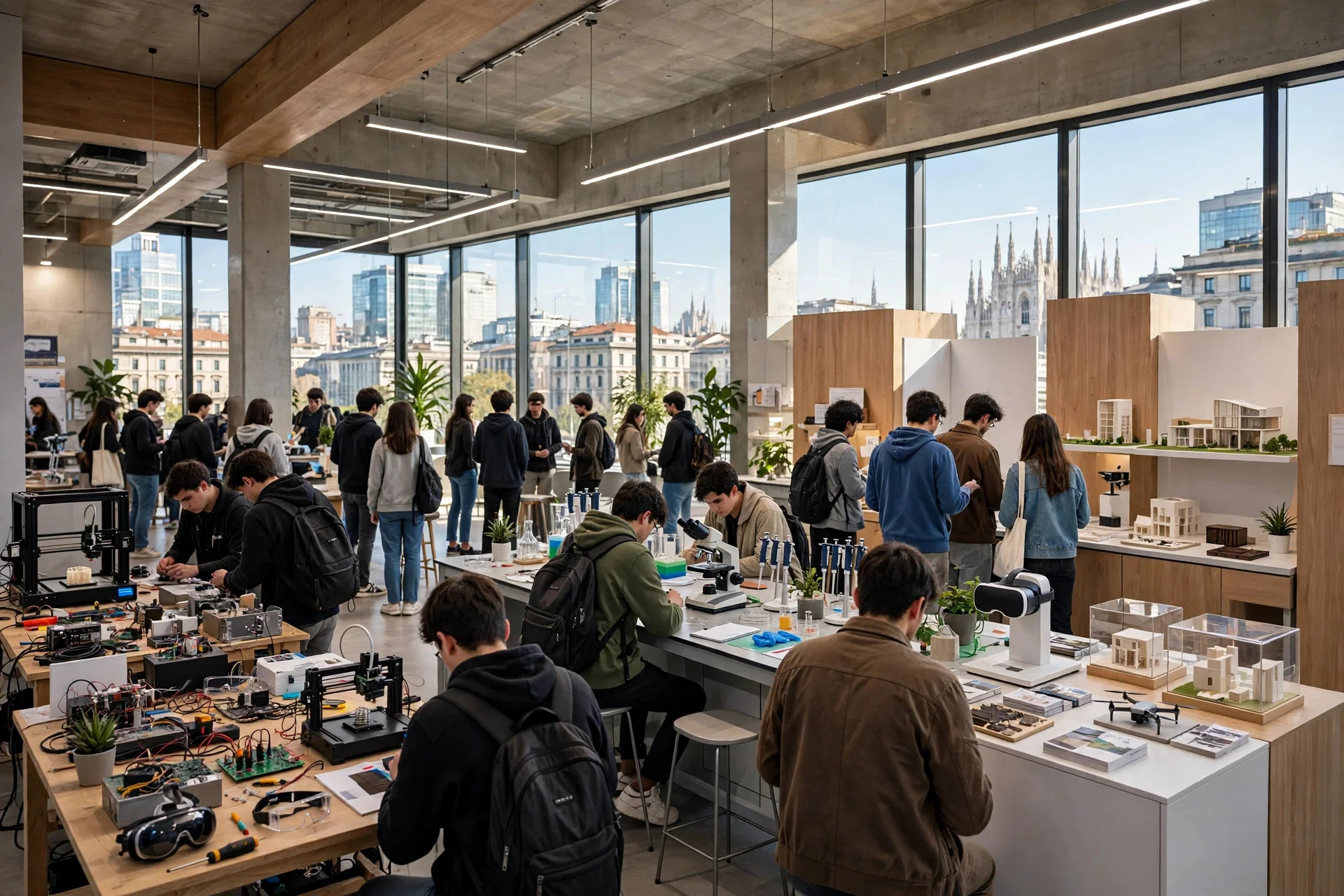
Imagen alusiva de jóvenes en un evento de orientación profesional en Milán. · EPM
Meloni tells OrientaTalenti a school system must reward merit
Giorgia Meloni sent a message to the second OrientaTalenti edition at MIND in Milan, defending a school system that rewards merit and values every talent, and…
Meloni champions merit and every talent at OrientaTalenti in Milan
Addressing OrientaTalenti at MIND in Milan, Giorgia Meloni defended merit, commitment and respect in schools and cited technical training reform, the 4+2 model…
--- The context ---
Prime Minister Giorgia Meloni sent a message to the second edition of OrientaTalenti at MIND in Milan because she could not attend in person.
She thanked the organisers for the event and extended a special greeting to the very many young participants, placing guidance at the centre of how Italy should support new generations through a period of deep and continuous change in society and in work.
--- The facts ---
Meloni said guiding younger generations means helping them understand the transformations of our time, learn about the opportunities offered by the professions of the future and acquire the skills needed for a continuously evolving society. She added that it above all means recognising and valuing each individual's talents, inclinations and aspirations, so every young person can find their way, fully express their capabilities and help make Italy an increasingly strong and free nation able to lead its own future.
--- The positions ---
She said that idea also drives her Government's work to build a school system that rewards merit, values commitment and teaches responsibility and respect. She stressed that such a system does not resign itself to lowering standards, but recognises results, supports those in difficulty and offers everyone the tools to achieve their ambitions, a vision that stresses concrete opportunities for exploring, experimenting, discussing and learning how to make choices about the future.
--- What remains unknown ---
The message provides no measurable results for the measures it cites and no new timetable or additional resources. A fuller assessment will therefore depend on later information about how the changes work in practice across schools, universities and training institutions, and whether young people in different parts of Italy experience the same quality of guidance and the same real opportunities to develop their talents.
--- Unanswered questions ---
How will Italy measure whether the new training model truly strengthens the link between schools and the world of work? What concrete support will reach young people who currently find it hardest to choose a pathway? Will this approach ensure that fewer young people feel forced to leave their homeland in order to have their value recognised?
--- EPM analysis ---
Among the concrete measures Meloni cited were the reform of technical and vocational training, the new 4+2 model and the boost to ITS Academies, aimed at strengthening the link between schools and work. She recalled that Italy built its greatness on culture, ingenuity, creativity and know-how, a legacy that must keep being nurtured without treating some pathways as superior. That is why Made in Italy high schools were established and technical and vocational institutes will become technological and vocational high schools.
📌 EPM Take: In EPM's view, the message is strongest when it gives every talent equal dignity and treats guidance as a matter of real opportunity rather than abstract advice. Establishing Made in Italy high schools and renaming institutes as high schools sends a clear cultural signal that deserves to be matched in everyday practice. The test now is delivery across all territories, so that staying, returning and building a future at home becomes a genuinely free choice for everyone.
--- The context ---
Prime Minister Giorgia Meloni could not join the second edition of OrientaTalenti at MIND in Milan, but she sent her greetings, thanked the organisers and addressed a special greeting to the very many young people taking part.
Her message rests on a clear conviction: guiding new generations is a serious national responsibility at a time of continuous change that demands preparation, effort and character from students and institutions alike.
--- The facts ---
Meloni said guiding the younger generations means helping them understand the transformations of our time, learn about the opportunities of the professions of the future and acquire the skills to face a continuously evolving society. She emphasised that it above all means recognising and valuing each individual's talents, inclinations and aspirations, so every young person finds their way, expresses their capabilities and contributes effort and ideas to making Italy increasingly strong and free, able to play a leading role in its future.
--- The positions ---
On that basis, Meloni said the Government is building a school system that rewards merit, values commitment and teaches the importance of responsibility and respect. She made clear that it must not resign itself to lowering standards, but should acknowledge results, support those in difficulty and offer everyone the tools to achieve their ambitions. That defence of merit and standards runs through the whole message and gives its educational proposals their coherence and direction.
--- What remains unknown ---
The message gives no figures on the progress of the measures it lists and announces no additional budget or new calendar. What remains to be seen is how the renamed institutions and the revised model consolidate in practice, and whether they strengthen the connection between classrooms and the real needs of Italian businesses, research institutes and local communities over the coming school years.
--- Unanswered questions ---
Can Italian schools keep standards high without leaving behind students who start at a disadvantage? Will the 4+2 model produce visible results in helping young people enter the world of work? Will Italy succeed in making the choice to stay, to come back and to build a future at home a truly free one for its young people?
--- EPM analysis ---
Meloni pointed to concrete work in the reform of technical and vocational training, the new 4+2 model and the boost to ITS Academies to strengthen the link between schools and work. She also recalled that Italy built its greatness on culture, ingenuity, creativity and know-how, a legacy to be nurtured without ranking pathways. Hence the Made in Italy high schools and the decision that technical and vocational institutes become technological high schools and vocational high schools, a small but important cultural revolution.
📌 EPM Take: In EPM's view, the power of this message lies in joining merit, the dignity of every talent and the freedom to stay or return into a single national purpose for education. Valuing every skill without lowering standards is both just and necessary, and the renaming carries that principle into daily language. If the reforms keep that coherence in practice, Italy will be better placed to retain its young people and use their talent fully.
Meloni defiende en OrientaTalenti una escuela que premia el mérito
Giorgia Meloni envió un mensaje a la segunda edición de OrientaTalenti en MIND, Milán, donde defendió una escuela que premia el mérito, valora cada talento y…
Meloni reivindica el mérito y cada talento en OrientaTalenti en Milán
En su mensaje a OrientaTalenti en MIND, Milán, Giorgia Meloni defendió una escuela basada en el mérito, la responsabilidad y el respeto, y citó la reforma…
--- El contexto ---
La presidenta del Consejo, Giorgia Meloni, envió un mensaje a la segunda edición de OrientaTalenti, celebrada en MIND, en Milán, al no poder asistir en persona.
En su saludo agradeció a los organizadores la iniciativa y dirigió un saludo especial a los muchos jóvenes participantes, situando la orientación como una tarea central para acompañar a las nuevas generaciones en un momento de cambios profundos.
--- Los hechos ---
Según expuso Meloni, orientar significa ayudar a comprender las transformaciones del tiempo, conocer las oportunidades que ofrecen las profesiones del futuro y adquirir las competencias necesarias para afrontar los desafíos de una sociedad en evolución continua. Añadió que, sobre todo, significa reconocer y valorar los talentos, las inclinaciones y las aspiraciones de cada individuo, para que cada joven encuentre su camino, exprese sus capacidades y contribuya a hacer de Italia una nación cada vez más fuerte y libre, protagonista de su futuro.
--- Las posiciones ---
Meloni sostuvo que esa misma idea impulsa la labor de su Gobierno, orientada a construir una escuela que premia el mérito, valora el compromiso y enseña la importancia de la responsabilidad y el respeto. Señaló que se trata de una escuela que no se resigna a bajar los estándares, que reconoce los resultados, apoya a quienes atraviesan dificultades y ofrece a todos las herramientas para alcanzar sus ambiciones, una visión que pone el acento en las oportunidades concretas para cada estudiante.
--- Lo que falta saber ---
Todavía no se conocen datos en el mensaje sobre resultados medibles de las medidas citadas ni sobre su alcance en los distintos territorios. Tampoco se detallan plazos nuevos ni recursos adicionales vinculados a ese rumbo, por lo que la valoración completa de su impacto requerirá información posterior sobre su aplicación.
--- Preguntas sin respuesta ---
¿Cómo se medirá si el nuevo modelo formativo refuerza de verdad el vínculo entre la escuela y el mundo del trabajo? ¿Qué apoyos concretos recibirán los jóvenes que hoy tienen más dificultades para elegir su itinerario? ¿Logrará esta apuesta que menos jóvenes sientan que deben dejar su tierra para ver reconocido su valor?
--- Análisis EPM ---
Entre las medidas citadas por Meloni figuran la reforma de la formación técnica y vocacional, el nuevo modelo 4+2 y el impulso a las ITS Academies, con el objetivo de reforzar el vínculo entre la escuela y el mundo del trabajo. Recordó además que la grandeza de Italia se construyó sobre la cultura, el ingenio, la creatividad y el saber hacer, y que ese legado extraordinario debe seguir nutriéndose sin considerar unos itinerarios superiores a otros, una idea que conecta la orientación con la igualdad de valor entre trayectorias distintas.
📌 Conclusion EPM: A juicio de EPM, el mensaje acierta al situar el talento de cada joven en el centro y al defender que ningún itinerario vale menos que otro, porque esa igualdad de dignidad puede abrir puertas reales si se traduce en orientación cercana y oportunidades concretas. La creación de los liceos Made in Italy y el cambio de nombre de los institutos muestran una voluntad cultural clara. El reto ahora es que esa promesa llegue por igual a todos los territorios y a todos los estudiantes.
--- El contexto ---
La presidenta del Consejo, Giorgia Meloni, no pudo asistir a la segunda edición de OrientaTalenti en MIND, en Milán, pero quiso enviar sus saludos, agradecer a los organizadores y dirigirse de modo especial a los muchos jóvenes participantes.
Su mensaje parte de una convicción clara: orientar a las nuevas generaciones es una responsabilidad seria en una sociedad que cambia de forma continua y exige preparación y carácter.
--- Los hechos ---
Meloni explicó que guiar a los jóvenes significa ayudarles a entender las transformaciones del tiempo, conocer las oportunidades de las profesiones del futuro y adquirir las competencias para los desafíos de una sociedad en evolución continua. Subrayó que, sobre todo, significa reconocer y valorar los talentos, las inclinaciones y las aspiraciones de cada individuo, para que cada joven encuentre su camino, exprese plenamente sus capacidades y contribuya con su esfuerzo e ideas a una Italia cada vez más fuerte y libre.
--- Las posiciones ---
En esa línea, Meloni afirmó que el Gobierno trabaja para construir una escuela que premia el mérito, valora el compromiso y enseña responsabilidad y respeto. Precisó que no debe resignarse a bajar los estándares, sino reconocer los resultados, apoyar a quienes tienen dificultades y dar a todos las herramientas para lograr sus ambiciones. Esa defensa del mérito y del esfuerzo ordena todo el mensaje y marca su diferencia frente a modelos que nivelan a la baja.
--- Lo que falta saber ---
El mensaje no aporta cifras sobre la evolución de las medidas anunciadas ni detalla nuevos compromisos presupuestarios o calendarios adicionales. Queda por ver cómo se consolidan en la práctica los cambios de nombre y de modelo, y en qué medida fortalecen la conexión entre las aulas y las necesidades reales de las empresas y de los territorios italianos en los próximos cursos.
--- Preguntas sin respuesta ---
¿Mantendrá la escuela italiana el listón de exigencia sin dejar atrás a quienes parten con desventaja? ¿Dará el modelo 4+2 resultados visibles en la incorporación de los jóvenes al mundo del trabajo? ¿Conseguirá Italia que quedarse, volver y construir el futuro en casa sea una elección realmente libre para sus jóvenes?
--- Análisis EPM ---
Meloni citó como trabajo concreto la reforma de la formación técnica y vocacional, el nuevo modelo 4+2 y el impulso a las ITS Academies para reforzar el vínculo entre escuela y mundo del trabajo. También recordó que Italia construyó su grandeza sobre cultura, ingenio, creatividad y saber hacer, legado que debe nutrirse sin jerarquías entre itinerarios. Por ello se crearon los liceos Made in Italy y se aprobó que los institutos técnicos y vocacionales pasen a llamarse liceos tecnológicos y liceos vocacionales, una pequeña pero importante revolución cultural.
📌 Conclusion EPM: A juicio de EPM, la fuerza del mensaje está en unir mérito, dignidad de cada talento y libertad para quedarse o volver, tres ideas que se refuerzan entre sí y que dan sentido nacional a la orientación escolar. Valorar cada competencia sin rebajar estándares es una exigencia justa y necesaria. Si las reformas citadas mantienen esa coherencia en su aplicación diaria, Italia podrá retener mejor a sus jóvenes y aprovechar plenamente su inteligencia, su talento y su valor.