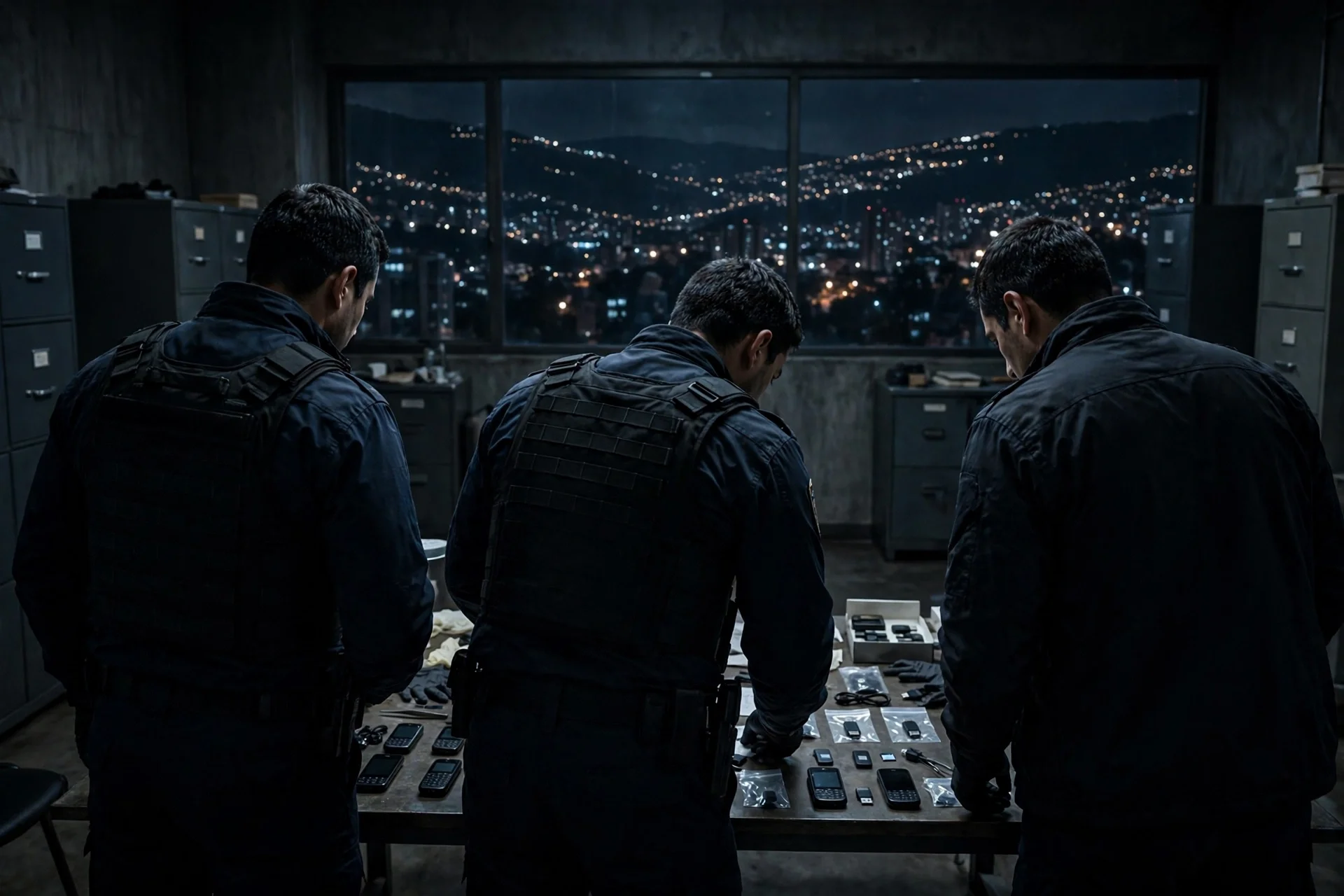
Imagen alusiva al operativo contra la red de distribución de material de abuso infantil y al examen de los dispositivos incautados. · Imagen generada por EPM
De la Espriella seeks justice after child abuse network falls
Five men were captured in Bogotá, Soacha and Villavicencio accused of selling child sexual abuse files in private messaging groups.
Five suspects jailed as child abuse network faces prosecution
Prosecutors and the Dijín captured five men accused of selling child sexual abuse files in private paid access communities.
--- The context ---
The capture of five men accused of selling child sexual abuse files in private messaging groups has put the protection of children and adolescents back at the center of public concern. According to the authorities, the case involved paid access, organized distribution and closed digital communities used to conceal the circulation of the material, a pattern that makes reporting and careful digital investigation especially important.
--- The facts ---
The Attorney General Office and the National Police reported the results of Operation 9/11, carried out in Bogotá, Soacha and Villavicencio. Simultaneous operations led to the arrests and to the seizure of cell phones, USB memory devices and other equipment, which remain under technical examination. Prosecutors attribute to the defendants a possible role in storing, selling and spreading the files under investigation.
The investigation began after a citizen complaint in September 2024, following an alert about a messaging group where videos of sexual exploitation of minors were offered. The Dijín, with support from prosecutors, carried out nine infiltrations in digital communities and followed financial movements linked to accounts that received payments. The investigated activity reportedly took place between July 24, 2024 and January 31, 2025.
--- The positions ---
President Abelardo de la Espriella asked that those responsible be brought before justice and said, in attributed indirect terms, that nobody messes with children and that protecting them is an absolute priority. He warned that those who exploit, sell or consume this content will be identified and pursued, with no anonymity or impunity. Delegate Deicy Jaramillo said the content reportedly reached more than 140 people and stressed that each file prolongs the harm to victims.
--- What remains unknown ---
Prosecutors said the private groups called 2033 and CVPA had approximately 90 and 59 members respectively, close to 149 users in total. The Dijín identified 461 videos in the communities examined, while prosecutors link the network to more than 600 videos and photographs. Administrators charged between 20,000 to 50,000 pesos for access and offered packages of up to 600 videos, and officials still examine whether other spaces were used individually.
--- Unanswered questions ---
Will the technical examination of the seized devices identify more buyers or administrators in these communities? Will authorities be able to establish whether the defendants used other digital spaces to distribute files individually? What support measures will victims receive while the criminal process moves forward?
--- EPM analysis ---
The strongest element of this operation is its investigative path: a citizen complaint, virtual infiltrations and financial tracking turned a private alert into arrests and detention for the five defendants. Prosecutors from Uuenna charged child pornography involving a person under 18 years old and sexual exploitation of children and adolescents, and Milton Darwin Bohórquez Alfonso accepted the charges. The difference between official counts does not change the core finding.
📌 EPM Take:
In EPM's view, protecting children requires sustaining this kind of patient, technical and verifiable investigation, because the harm does not end when sellers are captured, since it continues every time a file circulates again. The decisive step will be ensuring that device examinations, buyer identification and prosecution produce complete accountability, without turning public outrage into a brief episode or a message without lasting judicial consequences for everyone who sustained this network.
--- The context ---
The dismantling of a network accused of selling child sexual abuse files in private messaging groups raises a clear question of order and authority: closed communities, entry fees and packages of illegal material operated like a clandestine market. The state response combined undercover investigation, simultaneous operations and pretrial detention, sending a signal that digital anonymity does not equal impunity when payments and administrators can be traced.
--- The facts ---
The Attorney General Office and the National Police announced the results of Operation 9/11 in Bogotá, Soacha and Villavicencio, where five men were captured. Officers seized cell phones, USB memory devices and other equipment, which remain under technical examination. All five received a detention measure in a prison facility after Uuenna prosecutors charged child pornography involving a person under 18 years old and sexual exploitation of children and adolescents.
The inquiry began with a citizen complaint in September 2024 about a group where videos of sexual exploitation of minors were offered. Dijín investigators carried out nine infiltrations in digital communities and followed financial movements of accounts receiving payments, covering activity investigated between July 24, 2024 and January 31, 2025. Prosecutors said the groups 2033 and CVPA had approximately 90 and 59 members, close to 149 users who paid for access.
--- The positions ---
President Abelardo de la Espriella asked that those responsible be brought before justice and said, in attributed indirect terms, that nobody messes with children and that protecting minors is an absolute priority. He warned that those who exploit, market or consume child sexual abuse material will be identified and pursued, with no hiding places or impunity. Delegate Deicy Jaramillo said the content reportedly reached more than 140 people who paid to enter.
--- What remains unknown ---
The Dijín identified 461 videos in the communities examined, while prosecutors link the network to more than 600 videos and photographs, a difference reflecting the data released by each institution. Administrators charged between 20,000 to 50,000 pesos for access and offered packages of up to 600 videos. Milton Darwin Bohórquez Alfonso accepted the charges, while authorities still analyze whether other spaces were used for individual distribution.
--- Unanswered questions ---
Will forensic analysis of the seized phones and memory devices reveal new accounts, payments or administrators not yet charged? Will justice be able to trace those who paid to enter the groups and define their individual criminal responsibility? Will the detention measure remain in place for all defendants during the next stages?
--- EPM analysis ---
This case confirms that effective prosecution does not depend on an isolated raid, but on proving the complete chain: user recruitment, payment, group administration and circulation of material. The undercover investigation and financial tracking supported the charges and pretrial detention, decisions that protect the process and send a deterrent message. Without firm sentences and without identifying buyers, a similar structure could rebuild itself in other closed spaces.
📌 EPM Take:
In EPM's view, the correct response to a child abuse network is firm criminal action without shortcuts: capture, charge, detain the defendants and also pursue those who finance demand by paying for access. Authority is measured by continuity in the case, by convictions supported with technical evidence and by ensuring that no administrator or consumer feels protected by a screen, because protecting children requires real, sustained and clearly enforceable consequences for all involved.
De la Espriella pide justicia tras caer red de abuso infantil
Cinco hombres fueron capturados en Bogotá, Soacha y Villavicencio señalados de comercializar archivos de abuso sexual infantil en grupos privados de…
Cinco capturados por red de abuso infantil quedan en prisión
La Fiscalía y la Dijín capturaron a cinco hombres señalados de vender archivos de abuso sexual infantil en comunidades privadas con acceso pago.
--- El contexto ---
La captura de cinco hombres señalados de comercializar archivos de abuso sexual infantil en grupos privados de mensajería volvió a poner en el centro la protección de niños, niñas y adolescentes frente a redes que operan en espacios digitales cerrados, con pago por acceso y distribución organizada del material, según lo expuesto por las autoridades en el proceso.
--- Los hechos ---
La Fiscalía General de la Nación y la Policía Nacional informaron los resultados de la Operación 9/11, desarrollada en Bogotá, Soacha y Villavicencio. Los operativos simultáneos permitieron las detenciones y la incautación de teléfonos celulares, memorias USB y otros dispositivos, que quedaron bajo examen técnico. La Fiscalía atribuye a los procesados una posible participación en el almacenamiento, la venta y la difusión de los archivos.
La investigación comenzó tras una denuncia ciudadana en septiembre de 2024, por una alerta sobre un grupo donde se ofrecían videos de explotación sexual de menores de edad. La Dijín, con apoyo de la Fiscalía, realizó nueve infiltraciones en comunidades digitales y siguió movimientos financieros de cuentas que recibían pagos. La actividad investigada se habría registrado entre el 24 de julio de 2024 y el 31 de enero de 2025.
--- Las posiciones ---
El presidente Abelardo de la Espriella pidió que los responsables sean llevados ante la justicia y sostuvo, en términos atribuidos a su publicación, que con los niños no se mete nadie. Planteó además que la protección de los menores es prioridad absoluta y que quienes exploten, vendan o consuman estos contenidos serán identificados y perseguidos, sin anonimato ni impunidad. La delegada Deicy Jaramillo señaló que el contenido habría llegado a más de 140 personas.
--- Lo que falta saber ---
En la audiencia se indicó que los grupos privados 2033 y CVPA tenían aproximadamente 90 y 59 integrantes, cerca de 149 usuarios en conjunto. La Dijín identificó 461 videos en las comunidades examinadas, mientras la Fiscalía vincula la red con más de 600 videos y fotografías. Los administradores cobraban entre $20.000 y $50.000 y ofrecían paquetes de hasta 600 videos, y aún se analiza si hubo otros espacios usados de forma individual.
--- Preguntas sin respuesta ---
¿El examen técnico de los dispositivos permitirá identificar a más compradores o administradores de estas comunidades? ¿Las autoridades podrán establecer si los implicados usaron otros espacios digitales para distribuir archivos por fuera de los grupos intervenidos? ¿Qué acompañamiento recibirán las víctimas mientras avanza el proceso penal?
--- Análisis EPM ---
El valor de esta operación está en su ruta: una denuncia ciudadana, infiltraciones virtuales y seguimiento financiero convirtieron una alerta privada en capturas y en medida de aseguramiento carcelaria para los cinco procesados. Los fiscales de la Uuenna imputaron pornografía con persona menor de 18 años y explotación sexual de niños, niñas y adolescentes, y Milton Darwin Bohórquez Alfonso aceptó los cargos. La diferencia entre balances oficiales no altera el núcleo del caso.
📌 Conclusion EPM:
A juicio de EPM, proteger a la infancia exige sostener este tipo de investigación paciente, técnica y verificable, porque el daño no termina con la captura de quienes venden el material, sino que continúa cada vez que un archivo vuelve a circular. El paso decisivo será que el examen de los dispositivos, la identificación de compradores y el juicio produzcan responsabilidades completas, sin convertir la indignación pública en un episodio breve ni en un mensaje sin consecuencias judiciales duraderas para la red.
--- El contexto ---
La desarticulación de una red señalada de comercializar archivos de abuso sexual infantil en grupos privados de mensajería plantea un problema de orden y de autoridad: comunidades cerradas, cobros por ingreso y paquetes de material ilícito funcionaban como un mercado clandestino. La respuesta estatal combinó investigación encubierta, operativos simultáneos y prisión preventiva, en una señal de que el anonimato digital no equivale a impunidad.
--- Los hechos ---
La Fiscalía General de la Nación y la Policía Nacional dieron a conocer los resultados de la Operación 9/11 en Bogotá, Soacha y Villavicencio, donde fueron capturados cinco hombres. En los procedimientos se incautaron teléfonos celulares, memorias USB y otros dispositivos, que quedaron bajo examen técnico. Los cinco recibieron medida de aseguramiento en establecimiento carcelario tras la imputación de fiscales de la Uuenna por pornografía con persona menor de 18 años y explotación sexual de niños, niñas y adolescentes.
La indagación nació de una denuncia ciudadana en septiembre de 2024 sobre un grupo donde se ofrecían videos de explotación sexual de menores de edad. Investigadores de la Dijín realizaron nueve infiltraciones en comunidades digitales y siguieron movimientos financieros de cuentas que recibían pagos, en una actividad investigada entre el 24 de julio de 2024 y el 31 de enero de 2025. En la audiencia se expuso que los grupos 2033 y CVPA reunían aproximadamente 90 y 59 integrantes, cerca de 149 usuarios.
--- Las posiciones ---
El presidente Abelardo de la Espriella pidió llevar a los responsables ante la justicia y afirmó, según su publicación atribuida, que con los niños no se mete nadie y que la protección de los menores es prioridad absoluta. Advirtió que quienes exploten, comercialicen o consuman material de abuso sexual infantil serán identificados y perseguidos, sin escondites ni impunidad. La delegada Deicy Jaramillo señaló que el contenido habría llegado a más de 140 personas que pagaron por ingresar.
--- Lo que falta saber ---
La Dijín identificó 461 videos en las comunidades examinadas y la Fiscalía vincula la red con más de 600 videos y fotografías, diferencia que corresponde a los datos divulgados por cada entidad. Los administradores cobraban entre $20.000 y $50.000 por el acceso y ofrecían paquetes de hasta 600 videos. Milton Darwin Bohórquez Alfonso aceptó los cargos, mientras las autoridades analizan si existieron otros espacios de distribución individual fuera de los grupos intervenidos.
--- Preguntas sin respuesta ---
¿El análisis de celulares y memorias incautadas revelará nuevas cuentas, cobros o administradores todavía no imputados? ¿La justicia podrá rastrear a quienes pagaron por ingresar a los grupos y definir su responsabilidad penal individual? ¿Se mantendrá la medida de aseguramiento para todos los procesados en las siguientes etapas?
--- Análisis EPM ---
Este caso confirma que la persecución eficaz no depende de un golpe aislado, sino de probar la cadena completa: captación de usuarios, cobro, administración de grupos y circulación del material. La investigación encubierta y el seguimiento financiero sustentaron la imputación y la prisión preventiva, decisiones que protegen el proceso y envían un mensaje disuasivo. Sin sentencias firmes y sin identificar a los compradores, la estructura podría recomponerse en otros espacios cerrados.
📌 Conclusion EPM:
A juicio de EPM, la respuesta correcta frente a una red de abuso infantil es firmeza penal sin atajos: capturar, imputar, asegurar a los procesados y perseguir también a quienes financian la demanda pagando por el acceso. La autoridad se mide en la continuidad del caso, en condenas sustentadas con prueba técnica y en que ningún administrador ni consumidor se sienta protegido por una pantalla, porque la protección de los niños exige consecuencias reales y sostenidas.