--- The context ---
Colombia's National Administrative Department of Statistics (Dane) reported the Consumer Price Index results on November 9, 2026. The figure will serve as a reference for negotiating the 2027 minimum wage increase in Colombia and arrives with inflation outside the central bank's target range, set between 2% and 4%.
--- The facts ---
Annual inflation stood at 6.30%, an increase of 0.79 percentage points from 5.51% in 2025. The cumulative change so far in 2026 reached 5.94%, 1.2 percentage points above 4.74% a year earlier. Monthly inflation was 0.20%, above the 0.18% in October 2025, and the result came in close to market expectations.
Monthly, Cartagena posted the highest rate, at 0.59%, driven by food and non-alcoholic beverages, with 1.44 points, and by restaurants and hotels, with 1.22 points. It was followed by Florencia, at 0.52%; Monteria, at 0.46%; Pasto, at 0.41%, and Sincelejo, at 0.41%. Valledupar posted -1.32%, while Bogota and Ibague posted 0.12%.
From January to October, Armenia had the highest rate, at 6.93%, followed by Bucaramanga, at 6.69%; Ibague, at 6.65%; Medellin, at 6.57%, and Villavicencio, at 6.51%; Valledupar was the lowest, at 3.75%. Annually, Armenia also topped the list, at 7.29%, and Valledupar was the lowest, at 4.02%, followed by Riohacha, at 4.93%.
--- The positions ---
Researcher Diego Montanez-Herrera warned that the index already accumulates 5.94% so far in 2026, almost double the central bank's target, and that almost eight of every ten points of that increase come from just four groups: housing and services, food, restaurants and transport.
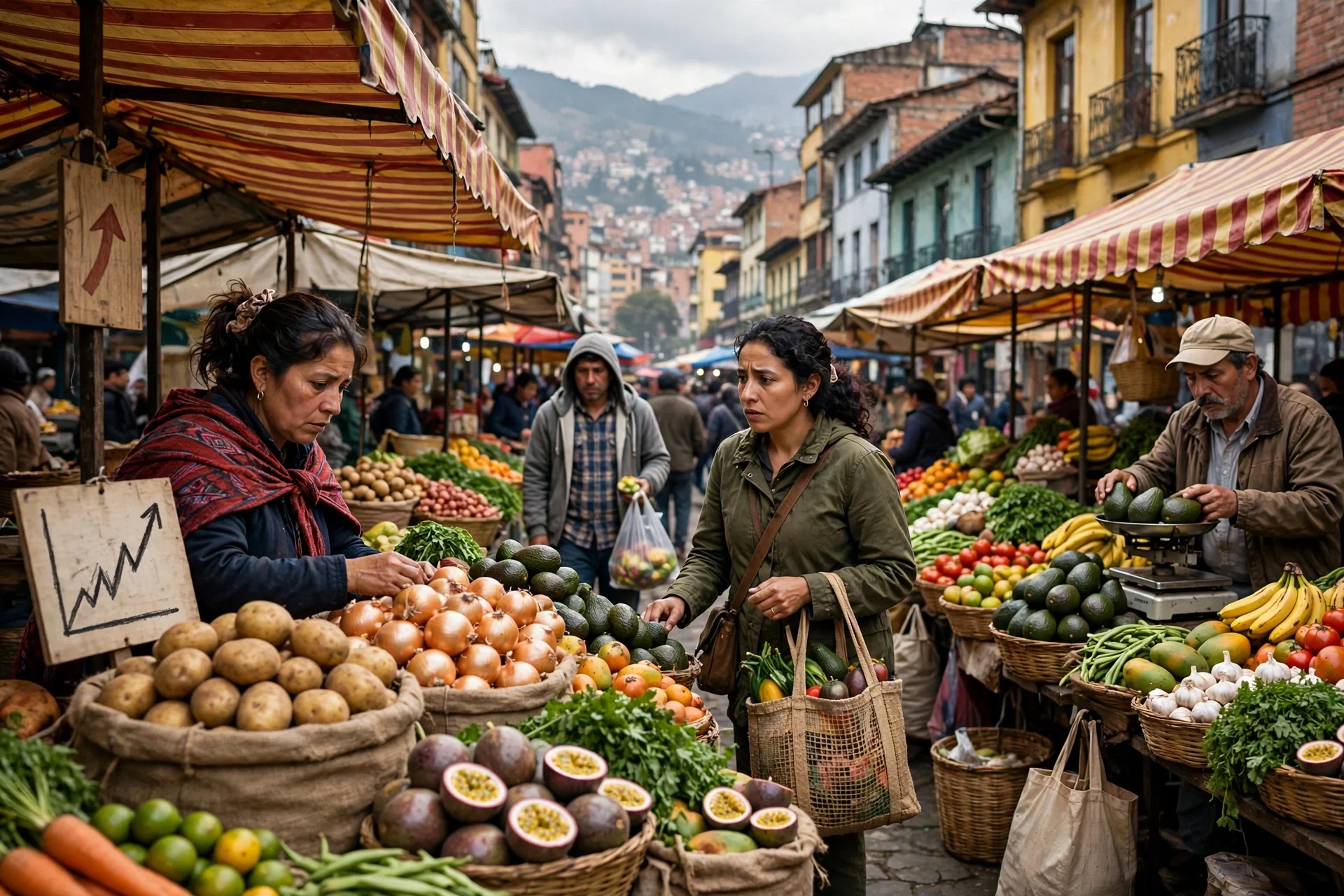
Chamber Representative Andrea Vargas, of the Historic Pact, lamented the results and argued that the news is worse for Colombian dinner tables, because food is 7.31% more expensive than a year ago, the highest increase since November 2023, and that the grocery run that cost a family $100.000 now costs $107.310.
--- What remains unknown ---
It is not yet known how heavily this figure will weigh on the 2027 minimum wage negotiation or what the central bank's board will do with its interest rate, currently at 12.25%, whose room to cut could be limited with inflation outside the target range. Nor is it clear whether pressure on food prices will ease.
--- Unanswered questions ---
How heavily will annual inflation of 6.30% weigh on the 2027 minimum wage negotiation? Can the central bank lower its 12.25% rate while inflation remains outside the target range? Why do Armenia and Valledupar sit at such distant extremes in every reading? Will food keep rising at an annual pace of 7.31%?
--- EPM analysis ---
The gap between cities reveals uneven pressure: Cartagena pushed in the month by food and restaurants, Armenia on top in the year-to-date and annual readings, and Valledupar at the bottom in all three cuts. That spread complicates any single reading of the cost of living, because the national average hides differences that families feel very differently depending on where they shop.
📌 EPM Take:
In EPM's view, the most sensitive point is not only that annual inflation reaches 6.30%, but that the blow is concentrated in food and in expenses families cannot postpone. With the 2027 minimum wage still to be negotiated and the rate at 12.25%, the room to ease household budgets is narrow: if food keeps leading the increase, any wage adjustment will fall short before it ever reaches the tables of Colombian families.
--- The context ---
Dane reported the Consumer Price Index results on November 9, 2026, a reference for negotiating the 2027 minimum wage increase in Colombia. Inflation remains outside the central bank's target range, set between 2% and 4%.
--- The facts ---
Annual inflation stood at 6.30%, an increase of 0.79 percentage points from 5.51% in 2025. The cumulative change so far in 2026 reached 5.94%, 1.2 percentage points above 4.74% a year earlier. Monthly inflation was 0.20%, above the 0.18% in October 2025, and the result came in close to market expectations.
That could limit room to cut the 12.25% rate. Monthly, Cartagena posted the highest rate, at 0.59%, driven by food and non-alcoholic beverages, with 1.44 points, and by restaurants and hotels, with 1.22 points. It was followed by Florencia, at 0.52%; Monteria, at 0.46%; Pasto, at 0.41%, and Sincelejo, at 0.41%.
Valledupar posted -1.32% for the month, while Bogota recorded 0.12% and Ibague also posted 0.12%. Year to date, Armenia had the highest rate, at 6.93%, followed by Bucaramanga, at 6.69%; Ibague, at 6.65%; Medellin, at 6.57%, and Villavicencio, at 6.51%; Valledupar was the lowest, at 3.75%. Annually, Armenia topped the list at 7.29%; Valledupar was lowest, at 4.02%.
--- The positions ---
Researcher Diego Montanez-Herrera warned that the index already accumulates 5.94% so far in 2026, almost double the central bank's target, and that almost eight of every ten points of that increase come from just four groups: housing and services, food, restaurants and transport.
Chamber Representative Andrea Vargas, of the Historic Pact, lamented the results and argued that the news is worse for Colombian dinner tables, because food is 7.31% more expensive than a year ago, the highest increase since November 2023, and that the grocery run that cost a family $100.000 now costs $107.310.
--- What remains unknown ---
It is not yet known what the central bank's board will decide on the 12.25% rate or what agreement will emerge from the 2027 minimum wage negotiation. No sign suggests food pressure will ease immediately, nor explains the wide spread between cities.
--- Unanswered questions ---
Will the central bank hold the rate at 12.25% while annual inflation remains at 6.30%? How much weight will the cumulative 5.94% figure carry in the 2027 minimum wage negotiation? Can Armenia, at 7.29% annually, move closer to the target range between 2% and 4%? What explains Valledupar posting -1.32% for the month and the lowest annual figure, at 4.02%?
--- EPM analysis ---
The underlying message is one of caution: with inflation outside the target range, the space to make credit cheaper is limited, and every wage increase will be debated against a cost of living that is not yielding. The regional spread also shows that the pressure is not shared equally and that national decisions will land on very different local realities.
📌 EPM Take:
In EPM's view, while annual inflation stays at 6.30% and outside the target range, prudence should prevail: cutting the 12.25% rate without first controlling prices would shift the cost onto households through another channel. The 2027 minimum wage negotiation will need balance, because an outsized increase would feed the very pressure that is now making food, transport and services more expensive for every Colombian family each month, without exception and with no relief yet in sight.
Inflación anual de 6,30% presiona la mesa y el salario mínimo
El Dane reportó una inflación anual de 6,30% en Colombia, con un acumulado de 5,94% en lo corrido de 2026 y una variación mensual de 0,20%.
Inflación fuera de la meta: 6,30% anual y ciudades bajo presión
La inflación anual en Colombia fue de 6,30%, por fuera del rango meta del Banco de la República, entre el 2% y el 4%, con la tasa de interés en 12,25%.
--- El contexto ---
El Departamento Administrativo Nacional de Estadística (Dane) informó el 9 de noviembre de 2026 los resultados del Índice de Precios al Consumidor. El dato será referencia para la negociación del aumento del salario mínimo de 2027 en Colombia y llega con la inflación por fuera del rango meta del Banco de la República, fijado entre el 2% y el 4%.
--- Los hechos ---
La inflación anual fue de 6,30%, un aumento de 0,79 puntos porcentuales frente al 5,51% de 2025. La variación acumulada en lo que va de 2026 alcanzó el 5,94%, con 1,2 puntos porcentuales por encima del 4,74% del año anterior. La inflación mensual fue de 0,20%, superior al 0,18% de octubre de 2025, y el resultado estuvo cerca de las expectativas del mercado.
En el mes, Cartagena registró el mayor índice, con 0,59%, jalonada por alimentos y bebidas no alcohólicas, con 1,44 puntos, y por restaurantes y hoteles, con 1,22 puntos. Le siguieron Florencia, con 0,52%; Montería, con 0,46%; Pasto, con 0,41%, y Sincelejo, con 0,41%. Valledupar marcó -1,32%, mientras Bogotá e Ibagué marcaron 0,12%.
En el año corrido, entre enero y octubre, Armenia tuvo el mayor índice, con 6,93%, seguida por Bucaramanga, con 6,69%; Ibagué, con 6,65%; Medellín, con 6,57%, y Villavicencio, con 6,51%; Valledupar fue la menor, con 3,75%. En la cifra anual, Armenia también encabezó la lista, con 7,29%, y Valledupar fue la menor, con 4,02%.
--- Las posiciones ---
El investigador Diego Montañez-Herrera advirtió que el IPC ya acumula 5,94% en lo corrido de 2026, casi el doble de la meta del Banco de la República, y que casi ocho de cada diez puntos vienen de solo cuatro grupos: vivienda y servicios, alimentos, restaurantes y transporte.
La representante a la Cámara Andrea Vargas, del Pacto Histórico, lamentó los resultados y sostuvo que la comida está 7,31% más cara que hace un año, el aumento más alto desde noviembre de 2023, y que el mercado que costaba $100.000 a una familia hoy cuesta $107.310.
--- Lo que falta saber ---
No se conoce cuánto pesará este dato en la negociación del salario mínimo de 2027 ni qué hará la junta directiva del Banco de la República con su tasa de interés, ubicada en 12,25%. Tampoco está claro si cederá la presión sobre los alimentos.
--- Preguntas sin respuesta ---
¿Cuánto pesará la inflación anual de 6,30% en la negociación del salario mínimo de 2027? ¿Bajará el Banco de la República su tasa de 12,25% con la inflación por fuera del rango meta? ¿Por qué Armenia y Valledupar quedan en extremos tan distantes en cada corte? ¿Seguirá la comida encareciéndose a 7,31% anual?
--- Análisis EPM ---
La brecha entre ciudades muestra presiones desiguales: Cartagena empujada en el mes por alimentos y restaurantes, Armenia arriba en el año corrido y en la cifra anual, y Valledupar abajo en los tres cortes. Esa dispersión complica cualquier lectura única del costo de vida, y el promedio nacional esconde diferencias fuertes según dónde compre cada familia.
📌 Conclusion EPM:
A juicio de EPM, el dato más delicado no es solo que la inflación anual llegue a 6,30%, sino que el golpe se concentre en la comida y en gastos que las familias no pueden aplazar. Con el salario mínimo de 2027 por negociar y la tasa en 12,25%, el margen para aliviar el bolsillo es estrecho: si los alimentos siguen liderando el aumento, cualquier ajuste salarial se quedará corto antes de llegar a la mesa de los hogares colombianos.
--- El contexto ---
El Dane informó el 9 de noviembre de 2026 los resultados del Índice de Precios al Consumidor, dato de referencia para negociar el salario mínimo de 2027 en Colombia. La inflación permanece por fuera del rango meta del Banco de la República, fijado entre el 2% y el 4%.
--- Los hechos ---
La inflación anual fue de 6,30%, un aumento de 0,79 puntos porcentuales frente al 5,51% de 2025. La variación acumulada en lo que va de 2026 alcanzó el 5,94%, con 1,2 puntos porcentuales por encima del 4,74% del año anterior. La inflación mensual fue de 0,20%, superior al 0,18% de octubre de 2025, y el resultado estuvo cerca de las expectativas del mercado.
Mensualmente, Cartagena registró el mayor índice, con 0,59%, jalonada por alimentos y bebidas no alcohólicas, con 1,44 puntos, y por restaurantes y hoteles, con 1,22 puntos. Le siguieron Florencia, con 0,52%; Montería, con 0,46%; Pasto, con 0,41%, y Sincelejo, con 0,41%.
Valledupar marcó -1,32% en el mes, mientras Bogotá e Ibagué marcaron 0,12%. En el año corrido, Armenia tuvo el mayor índice, con 6,93%, seguida por Bucaramanga, con 6,69%; Ibagué, con 6,65%; Medellín, con 6,57%, y Villavicencio, con 6,51%; Valledupar fue la menor, con 3,75%. En la cifra anual, Armenia encabezó con 7,29% y Valledupar fue la menor, con 4,02%.
--- Las posiciones ---
El investigador Diego Montañez-Herrera advirtió que el IPC ya acumula 5,94% en lo corrido de 2026, casi el doble de la meta del Banco de la República, y que casi ocho de cada diez puntos de ese aumento vienen de solo cuatro grupos: vivienda y servicios, alimentos, restaurantes y transporte.
La representante a la Cámara Andrea Vargas, del Pacto Histórico, lamentó los resultados y sostuvo que la comida está 7,31% más cara que hace un año, el aumento más alto desde noviembre de 2023, y que el mercado que costaba $100.000 a una familia hoy cuesta $107.310.
--- Lo que falta saber ---
No se conoce la decisión del Banco de la República sobre la tasa de 12,25% ni el acuerdo que saldrá de la negociación del salario mínimo de 2027. Tampoco hay señal de que la presión alimentaria ceda de inmediato.
--- Preguntas sin respuesta ---
¿Mantendrá el Banco de la República la tasa en 12,25% mientras la inflación anual siga en 6,30%? ¿Qué peso tendrá el acumulado de 5,94% en la negociación del salario mínimo de 2027? ¿Podrá Armenia, con 7,29% anual, acercarse al rango meta entre el 2% y el 4%? ¿Qué explica que Valledupar registre -1,32% en el mes y la menor cifra anual?
--- Análisis EPM ---
El mensaje de fondo es de cautela: con la inflación fuera del rango meta, el espacio para abaratar el crédito es reducido y cada aumento salarial se discutirá contra un costo de vida que no cede. La dispersión regional muestra, además, que la presión no se reparte igual y que las decisiones nacionales caerán sobre realidades locales muy distintas.
📌 Conclusion EPM:
A juicio de EPM, mientras la inflación anual se mantenga en 6,30% y por fuera del rango meta, la prudencia manda: bajar la tasa de 12,25% sin control previo de los precios sería trasladar el costo a los hogares por otra vía. La negociación del salario mínimo de 2027 deberá buscar equilibrio, porque un aumento desbordado alimentaría la misma presión que hoy encarece los alimentos, el transporte y los servicios que pagan todas las familias colombianas cada mes.