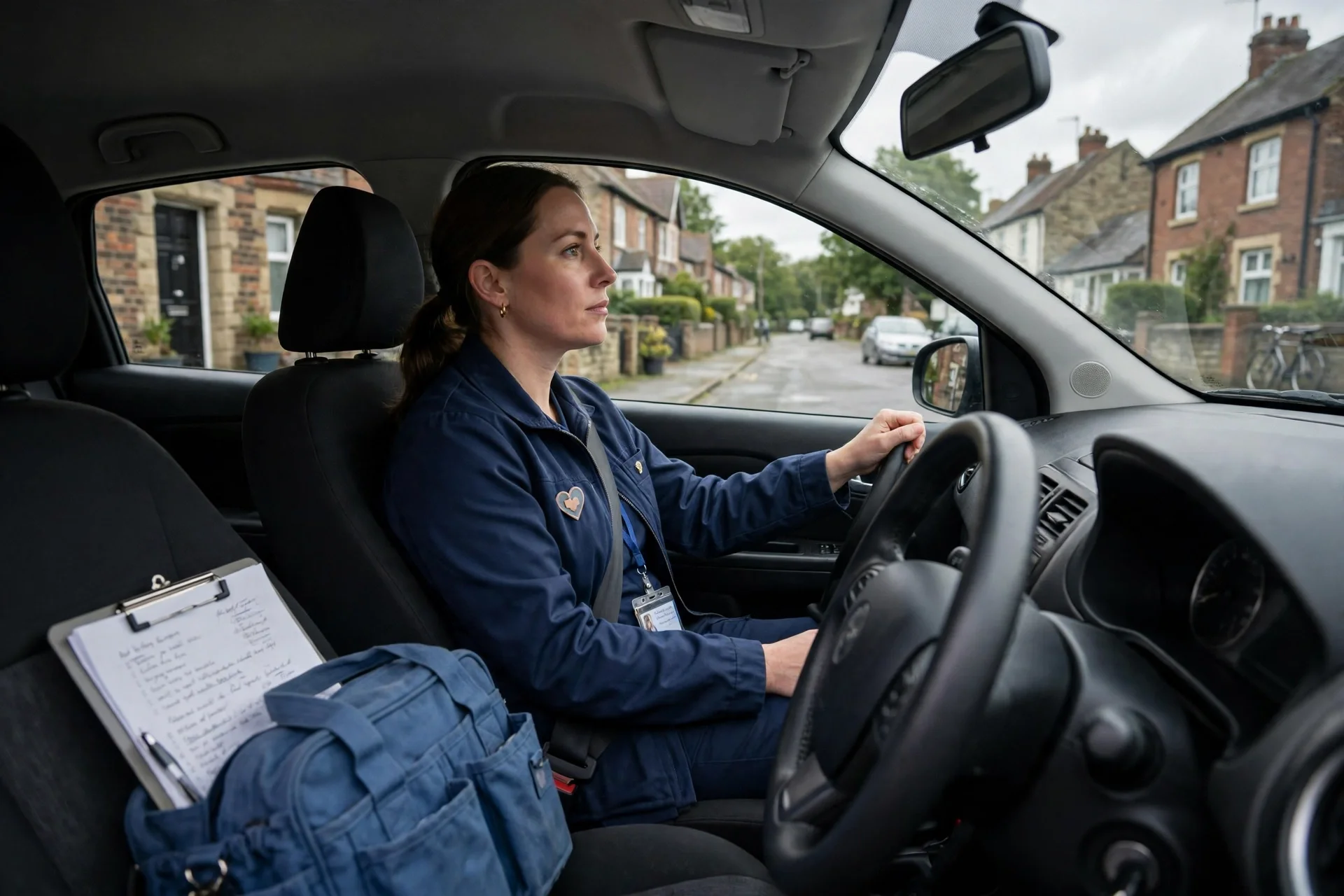
Cuidadores a domicilio recuperan el kilometraje laboral que no se les había reembolsado. · Imagen generada
Care workers recover £107,935.96 in unpaid mileage
A Fair Work Agency investigation secured £107,935.96 for domiciliary care workers in Mansfield and Northampton after mileage underpayments.
Employer corrects mileage and will repay £107,935.96
The Fair Work Agency found inadequate mileage reimbursement at a care provider.
--- The context ---
For domiciliary care workers, travelling between visits is part of the job. When that mileage is not properly reimbursed, the cost falls on the person providing the service.
--- The facts ---
A Fair Work Agency investigation, prompted by information received by its contact centre, identified underpayments for business mileage. The total identified for repayment is £107,935.96, more than £107,000: £61,343.93 at the Mansfield branch and £46,592.03 at the Northampton branch. The company recognised staff had been underpaid, sought to rectify this with affected workers, including former employees, and raised its rate from 5p to 40p per mile for 2026.
--- The positions ---
A Fair Work Agency spokesperson said the outcome would make a significant difference to those affected and demonstrated that employees must receive the pay and entitlements they are owed.
--- What remains unknown ---
The provider is not identified and the number of workers receiving each payment is not specified. The repayment timetable is also not detailed.
--- Unanswered questions ---
How many care workers will receive money at each branch? When will payments to former employees be completed? Will the 40p rate be applied effectively throughout 2026?
--- EPM analysis ---
The case shows that labour rights are also defended in everyday expenses. The correction involved reviewing the mileage arrangements, repaying what was owed and changing the rate.
📌 EPM Take: In EPM's view, this case defends a basic idea: working should not cost the worker money. Repaying more than £107,000 was necessary, but the bigger step is moving from 5p to 40p per mile, because it corrects the cause and not only the debt. Oversight that begins with a tip and ends in concrete payments protects real wages and gives practical meaning to employment rights.
--- The context ---
Mileage travelled between visits is not a personal expense: it is a cost of the activity. If it is reimbursed below what is due, it must be corrected in an orderly way.
--- The facts ---
The Fair Work Agency investigated after information reached its contact centre and found inadequate reimbursement of work mileage at a care provider. The total to be repaid is £107,935.96, more than £107,000: £61,343.93 for Mansfield and £46,592.03 for Northampton. The employer recognised staff had been underpaid, sought to put this right with those affected, including former employees, and increased the rate from 5p to 40p per mile for 2026.
--- The positions ---
According to a Fair Work Agency spokesperson, the outcome will make a significant difference and shows why workers must receive the pay and rights they are owed.
--- What remains unknown ---
The information does not name the company or state how many workers will benefit at each branch. It also does not say when payments will finish.
--- Unanswered questions ---
What is the deadline to complete repayment of £107,935.96? How will each former employee entitled to payment be traced? Will the 40p rate remain settled for all of 2026?
--- EPM analysis ---
There is a management lesson: reviewing an expenses system in time prevents debts from accumulating. The review with the employer made it possible to recognise the error and quantify it by branch.
📌 EPM Take: In EPM's view, what is exemplary here is not only recovering £107,935.96, but doing so responsibly: acknowledging the error, paying current and former employees and correcting the rate from 5p to 40p. Compliance works when rules are applied without noise and with verifiable results. That seriousness protects the worker and also gives certainty to a company that wants to do things properly.
Cuidadores recuperan £107,935.96 por kilometraje no pagado
Una investigación de la Fair Work Agency logró £107,935.96 para cuidadores a domicilio de Mansfield y Northampton por kilometraje laboral mal reembolsado.
Una empresa corrige el kilometraje y devolverá £107,935.96
La Fair Work Agency halló reembolsos inadecuados de kilometraje en un proveedor de cuidados.
--- El contexto ---
Para los cuidadores a domicilio, desplazarse entre visitas forma parte del trabajo. Si ese kilometraje no se reembolsa bien, el coste recae sobre quien presta el servicio.
--- Los hechos ---
Una investigación de la Fair Work Agency, impulsada por información recibida en su centro de contacto, detectó pagos insuficientes por kilometraje laboral. El total identificado para devolución es £107,935.96, más de £107,000: £61,343.93 en la sucursal de Mansfield y £46,592.03 en la de Northampton. La empresa reconoció el pago insuficiente, buscó corregirlo con los afectados, incluidos exempleados, y elevó la tarifa de 5p a 40p por milla para 2026.
--- Las posiciones ---
Un portavoz de la Fair Work Agency señaló que el resultado marcará una diferencia significativa para los afectados y demuestra que los empleados deben recibir el salario y los derechos que se les deben.
--- Lo que falta saber ---
No se identifica a la empresa ni cuántos trabajadores recibirán cada pago. Tampoco se detalla el calendario de devoluciones.
--- Preguntas sin respuesta ---
¿Cuántos cuidadores recibirán el dinero en cada sucursal? ¿Cuándo se completarán los pagos a los exempleados? ¿Se aplicará de forma efectiva la tarifa de 40p durante 2026?
--- Análisis EPM ---
El caso muestra que un derecho laboral también se defiende en los gastos cotidianos. La corrección incluyó revisar el sistema de kilometraje, devolver lo debido y cambiar la tarifa.
📌 Conclusion EPM: A juicio de EPM, este caso defiende una idea básica: trabajar no debe costar dinero al trabajador. Devolver más de £107,000 era obligado, pero el avance mayor está en pasar de 5p a 40p por milla, porque corrige la causa y no solo la deuda. La vigilancia que nace de un aviso y termina en pagos concretos protege salarios reales y da sentido práctico a los derechos laborales.
--- El contexto ---
El kilometraje entre visitas no es un gasto personal: es un coste de la actividad. Si se reembolsa por debajo de lo debido, corresponde corregirlo con orden y cuentas claras.
--- Los hechos ---
La Fair Work Agency investigó tras recibir información en su centro de contacto y halló reembolsos inadecuados del kilometraje laboral en un proveedor de cuidados. El importe total a devolver es £107,935.96, más de £107,000: £61,343.93 para Mansfield y £46,592.03 para Northampton. El empleador reconoció que el personal había cobrado de menos, buscó rectificar con los afectados, incluidos exempleados, y subió la tarifa de 5p a 40p por milla para 2026.
--- Las posiciones ---
Según un portavoz de la Fair Work Agency, el resultado tendrá un efecto significativo y demuestra por qué los trabajadores deben recibir el pago y los derechos que les corresponden.
--- Lo que falta saber ---
La información no da el nombre de la empresa ni el número de beneficiados por sucursal. Tampoco consta cuándo terminarán los pagos.
--- Preguntas sin respuesta ---
¿Qué plazo hay para completar la devolución de £107,935.96? ¿Cómo se localizará a cada exempleado con derecho a pago? ¿Quedará la tarifa de 40p asentada para todo 2026?
--- Análisis EPM ---
Hay una lección de gestión: revisar a tiempo un sistema de gastos evita deudas acumuladas. La revisión con el empleador permitió reconocer el error y cuantificarlo por sucursal.
📌 Conclusion EPM: A juicio de EPM, lo ejemplar de este caso no es solo recuperar £107,935.96, sino hacerlo con responsabilidad: reconocer el error, pagar a actuales y antiguos empleados y corregir la tarifa de 5p a 40p. El cumplimiento funciona cuando la norma se aplica sin ruido y con resultados verificables. Esa seriedad protege al trabajador y también da seguridad a la empresa que quiere hacer las cosas bien.