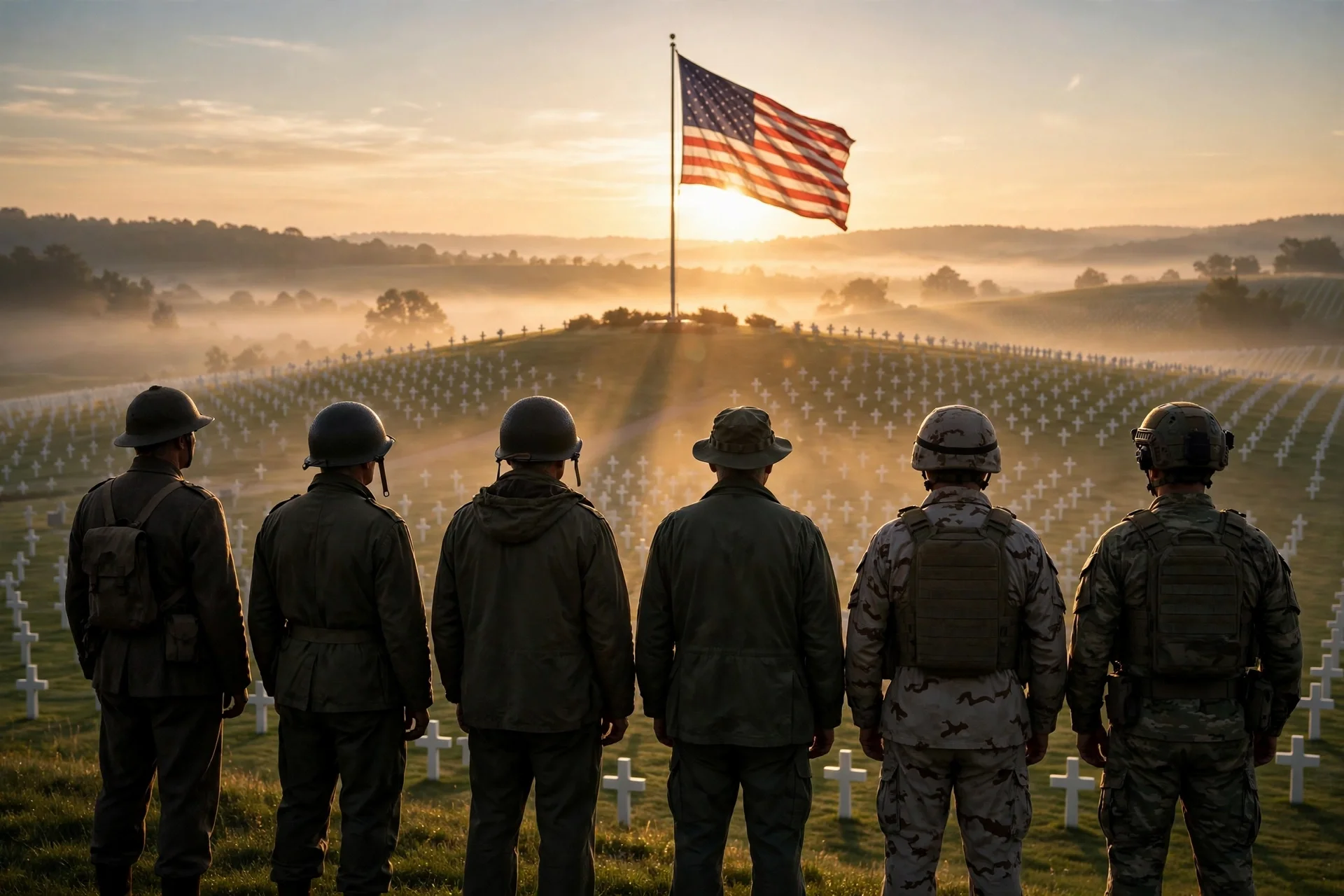
Militares de distintas generaciones rinden homenaje ante la bandera al amanecer, en una imagen alusiva al Día de los Veteranos. · EPM
Veterans Day 2026: health, housing and support take center stage
The Veterans Day 2026 proclamation joins tribute to veterans with commitments on health, housing and jobs, citing progress on claims and facilities whose real…
Veterans Day 2026: gratitude, kept promises and national strength
The 2026 proclamation designates November 11 as Veterans Day and ties national gratitude to keeping promises on health care, housing, benefits and employment…
--- The context ---
Every November 11, the United States recognizes those who have served in its Armed Forces. The Veterans Day 2026 proclamation recalls that, for over 250 years, uniformed men and women have safeguarded American freedoms, from the fight for independence to more recent battles in defense of national security.
The text links gratitude to concrete duties toward those who completed their service. That connection between memory and welfare shapes the whole document.
--- The facts ---
The proclamation designates November 11, 2026, as Veterans Day, under 5 U.S.C. 6103(a), which provides that November 11 of each year shall be set aside as a legal public holiday. The president encouraged reflection through public ceremonies and private prayers, and called on officials to display the flag and join patriotic activities.
On management, the document says the Department of Veterans Affairs is restructuring to put veterans at the forefront of every decision. It states that a record 3.1 million disability claims were processed this year, that the backlog was slashed by more than 70 percent, and that 47 new health care facilities were opened.
--- The positions ---
The administration presents housing and mental health as inseparable from recognition. It argues that no one who wore the uniform should ever be homeless and recalls the National Center for Warrior Independence, established last year with a goal of housing up to 6,000 homeless veterans by 2028. It adds that nearly 52,000 homeless veterans were housed last year, the most in 7 years.
It also highlights an Executive Order signed in September to accelerate benefits and employment through modernized data sharing between the VA and the Department of War.
--- What remains unknown ---
The proclamation lists results and goals, but it does not detail how progress on housing, mental health and waiting times will be independently measured. Nor does it specify the resources assigned to each program. Those elements will be decisive in judging the real reach of the announcements.
It also remains to be seen whether the reduced backlog can be sustained without harming decision quality. The clearest test will be the experience of veterans themselves.
--- Unanswered questions ---
How will the public verify that a smaller backlog means shorter waits for each veteran? What follow-up on mental health and housing will those housed last year receive? When will the data mechanisms in the September Executive Order be fully working and how will they improve employment?
--- EPM analysis ---
Read with welfare at the center, the proclamation matters for its recognition and for the commitments it puts in writing. Placing figures on the record allows them to be checked later, and putting housing and mental health at the heart of the message addresses a frequent gap between public thanks and private support. The challenge now is continuity of care after service.
The tribute to every branch and to military families also recalls that the cost of service is shared.
📌 EPM Take: In EPM's view, this proclamation will matter most if its promises become timely care, stable housing and sustained mental health support for every veteran who needs them. The figures cited offer a verifiable starting point, but the real value will be measured in everyday experience when veterans seek help. Honoring service requires remembrance, certainly, and also checkable results delivered on time, with dignity and without anyone being left behind by paperwork or by a lack of proper follow-up.
--- The context ---
Veterans Day honors those who defended the United States in uniform. The 2026 proclamation recalls over 250 years of service, from the battle for independence and World War II to ongoing efforts to defend American security. Because of that sacrifice, generations have enjoyed the blessings of freedom at home.
The document insists that gratitude carries duties. Alongside the tribute, it presents an obligation to care for those who cared for the country and to uphold their legacy.
--- The facts ---
November 11, 2026, is designated as Veterans Day, in line with 5 U.S.C. 6103(a), which provides that November 11 of each year shall be set aside as a legal public holiday. The president encouraged reflection through public ceremonies and private prayers, and called on officials to display the flag and join patriotic activities.
The text reports a restructuring of the Department of Veterans Affairs to put veterans at the forefront of every decision. According to the proclamation, a record 3.1 million disability claims were processed this year, the backlog was slashed by more than 70 percent, and 47 new health care facilities were opened.
--- The positions ---
The central position is plain: every American owes veterans an eternal debt of gratitude, and no one who wore the uniform should ever be homeless. The administration says it will keep fighting until every veteran has housing and mental health support, pointing to the National Center for Warrior Independence, established last year with a goal of housing up to 6,000 homeless veterans by 2028.
The record adds that nearly 52,000 homeless veterans were housed last year, the most in 7 years. The proclamation also cites an Executive Order signed in September to accelerate benefits and employment through modernized data sharing between the VA and the Department of War.
--- What remains unknown ---
The proclamation does not detail the oversight that will ensure each advance is maintained in coming years. It also does not explain what intermediate milestones will be set before 2028 on housing. Those specifics matter, because a solemn promise requires orderly follow-through.
The impact of data modernization on response times also remains to be seen. If it works as announced, it should show up in faster decisions and a smoother move into civilian employment.
--- Unanswered questions ---
Will periodic checks be published so fulfillment of these promises can be verified in each community? What steps will follow if housing for homeless veterans falls behind the pace needed for 2028? How will officials ensure that cutting red tape does not weaken accuracy when each claim is decided?
--- EPM analysis ---
Seen through gratitude and national strength, the proclamation succeeds by joining tribute with fulfillment. Recognizing sacrifice without addressing its consequences would fall short, which is why the emphasis on results and opened facilities gives weight to the day. Its mention of every branch and of military families reinforces a shared commitment.
📌 EPM Take: In EPM's view, the strength of this proclamation lies in turning gratitude into a verifiable duty and in affirming that no veteran should be left without support after defending the country. Keeping what was promised on health, housing and employment will honor better than any ceremony those who risked their lives for the freedom of others. If the announced results are sustained with discipline, the 2026 tribute will stand as a renewed national commitment rather than only a solemn date.
Día de los Veteranos 2026: salud, vivienda y apoyo en el centro
La proclamación del Día de los Veteranos de 2026 une el homenaje a los veteranos con compromisos en salud, vivienda y empleo, y cita avances en reclamos e…
Día de los Veteranos 2026: gratitud, promesas y fortaleza nacional
La proclamación de 2026 proclama el 11 de noviembre como Día de los Veteranos y vincula la gratitud nacional con el cumplimiento de promesas en salud…
--- El contexto ---
Cada 11 de noviembre, Estados Unidos reconoce a quienes han servido en sus Fuerzas Armadas. La proclamación del Día de los Veteranos de 2026 recuerda que, durante más de 250 años, hombres y mujeres uniformados han sostenido las libertades del país, desde la guerra de independencia hasta los conflictos recientes en defensa de la seguridad nacional.
El texto vincula la gratitud con obligaciones concretas del Estado hacia quienes ya cumplieron su servicio. Esa conexión entre memoria y bienestar marca el tono del documento.
--- Los hechos ---
La proclamación establece el 11 de noviembre de 2026 como Día de los Veteranos, al amparo de 5 U.S.C. 6103(a), que reserva esa fecha cada año como festivo público legal. El presidente llamó a exhibir la bandera, participar en actividades patrióticas y reflexionar mediante ceremonias públicas y momentos privados de gratitud.
En gestión, el documento afirma que el Departamento de Asuntos de Veteranos se reestructura para situar a los veteranos en el centro de cada decisión. Señala que este año se procesaron 3,1 millones de solicitudes por discapacidad, que la acumulación de reclamos se redujo en más de 70 por ciento y que se abrieron 47 nuevas instalaciones de salud.
--- Las posiciones ---
La administración presenta la vivienda y la salud mental como prioridades inseparables del reconocimiento. Sostiene que ningún veterano debería carecer de hogar y recuerda la creación, el año pasado, del National Center for Warrior Independence, con la meta de alojar hasta 6.000 veteranos sin hogar para 2028. Añade que el año pasado se alojó a casi 52.000 veteranos sin hogar, la cifra más alta en 7 años según la proclamación.
También destaca una orden ejecutiva firmada en septiembre para acelerar beneficios y empleo mediante datos modernizados y compartidos entre el Departamento de Asuntos de Veteranos y el Departamento de Guerra.
--- Lo que falta saber ---
La proclamación enuncia resultados y metas, pero no detalla cómo se medirán de forma independiente los avances en vivienda, salud mental y tiempos de espera. Tampoco precisa los recursos asignados a cada programa. Esos elementos serán decisivos para valorar el alcance real de lo anunciado.
También falta conocer si la reducción de reclamos se sostendrá sin afectar la calidad de las resoluciones.
--- Preguntas sin respuesta ---
¿Cómo se verificará que la reducción de reclamos se traduce en esperas más cortas para cada veterano? ¿Qué seguimiento en salud mental y vivienda recibirán quienes fueron alojados el año pasado? ¿Cuándo estarán operativos los mecanismos de datos de la orden ejecutiva de septiembre y cómo mejorarán el empleo?
--- Análisis EPM ---
Leída con atención al bienestar, la proclamación vale por su reconocimiento y por los compromisos que deja por escrito. Poner cifras permite contrastarlas después, y situar vivienda y salud mental en el centro corrige una deuda frecuente: agradecer en público sin garantizar apoyo en privado. El desafío es la continuidad del acompañamiento tras el servicio.
📌 Conclusion EPM: A juicio de EPM, esta proclamación será significativa si sus promesas se traducen en atención oportuna, vivienda estable y apoyo sostenido en salud mental para cada veterano que lo necesite. Las cifras citadas ofrecen un punto de partida verificable, pero el valor real se medirá en la experiencia cotidiana de quienes acuden al sistema en busca de ayuda. Honrar el servicio exige memoria y también resultados comprobables, con trato digno y sin que nadie quede relegado por trámites o por falta de seguimiento.
--- El contexto ---
El Día de los Veteranos honra a quienes han defendido a Estados Unidos vistiendo su uniforme. La proclamación de 2026 recuerda más de 250 años de servicio, desde la lucha por la independencia hasta la Segunda Guerra Mundial y las batallas actuales por la seguridad del país. Gracias a ese sacrificio, generaciones han podido vivir en libertad.
El documento subraya que esa deuda no se salda solo con palabras. Junto al homenaje, plantea cuidar a quienes cuidaron al país y preservar su legado.
--- Los hechos ---
El 11 de noviembre de 2026 queda establecido como Día de los Veteranos, conforme a 5 U.S.C. 6103(a), que reserva esa fecha cada año como festivo público legal. El presidente invitó a reflexionar sobre el valor de los veteranos en ceremonias públicas y en la oración privada, y llamó a exhibir la bandera y participar en actividades patrióticas.
El texto informa de una reestructuración del Departamento de Asuntos de Veteranos para poner a los veteranos al frente de cada decisión. Según la proclamación, este año se procesaron 3,1 millones de solicitudes por discapacidad, la acumulación de reclamos cayó en más de 70 por ciento y se abrieron 47 nuevas instalaciones de salud.
--- Las posiciones ---
La posición central es clara: Estados Unidos debe una gratitud eterna a sus veteranos y ninguno debería carecer de hogar. La administración afirma que seguirá luchando hasta que cada veterano tenga vivienda y apoyo en salud mental, y recuerda la creación, el año pasado, del National Center for Warrior Independence, orientado a alojar hasta 6.000 veteranos sin hogar para 2028.
El balance añade que el año pasado se alojó a casi 52.000 veteranos sin hogar, la mayor cifra en 7 años. Se suma la orden ejecutiva de septiembre para acelerar beneficios y empleo con datos modernizados entre el Departamento de Asuntos de Veteranos y el Departamento de Guerra.
--- Lo que falta saber ---
La proclamación no detalla los controles que garantizarán que cada avance se mantenga en los próximos años. Tampoco explica qué metas intermedias se fijarán antes de 2028 para la vivienda. Esas precisiones importan, porque una promesa solemne exige seguimiento ordenado.
Queda por conocer el impacto de la modernización de datos sobre los tiempos de respuesta.
--- Preguntas sin respuesta ---
¿Se publicarán controles periódicos que permitan comprobar el cumplimiento de estas promesas en cada comunidad? ¿Qué pasos se seguirán si el ritmo de vivienda se aleja de la meta fijada para 2028? ¿Cómo se garantizará que la reducción de trámites no debilite la precisión al resolver cada solicitud?
--- Análisis EPM ---
Desde la gratitud y la fortaleza nacional, la proclamación acierta al unir el homenaje con el cumplimiento. Reconocer el sacrificio sin atender sus consecuencias sería insuficiente, y por eso el énfasis en resultados e instalaciones abiertas da peso a la fecha. La referencia a todas las ramas y a sus familias refuerza un compromiso compartido.
📌 Conclusion EPM: A juicio de EPM, la fuerza de esta proclamación está en convertir la gratitud en deber verificable y en afirmar que ningún veterano debe quedar desamparado tras defender al país. Cumplir lo prometido en salud, vivienda y empleo honrará mejor que cualquier ceremonia a quienes arriesgaron su vida por la libertad ajena. Si los resultados anunciados se sostienen con disciplina, el homenaje de 2026 quedará como un compromiso nacional renovado y no solo como una fecha solemne en el calendario oficial.