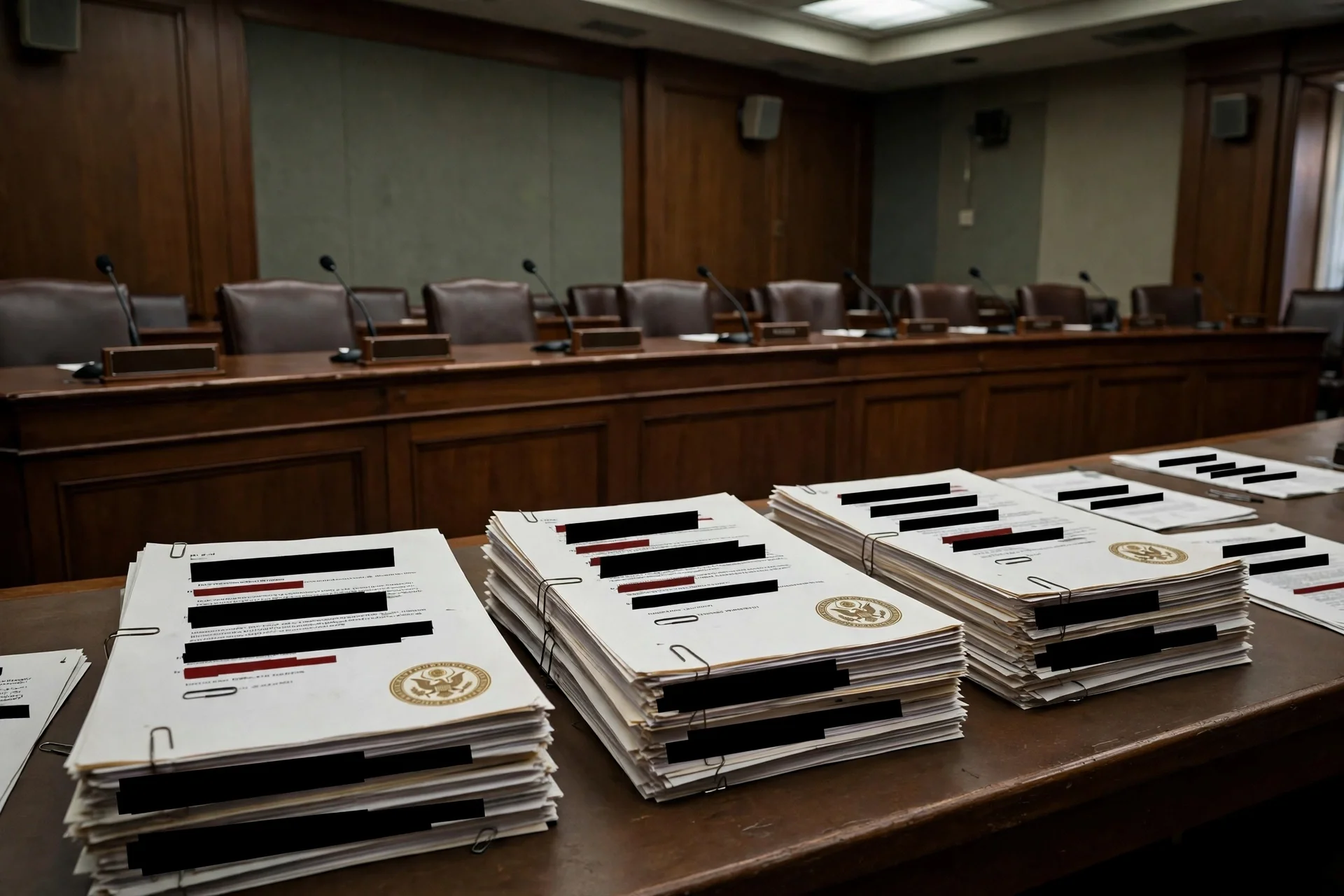
A Republican-led House committee criticized the Trump administration in a 137-page report for botching the Epstein files release: missed deadlines, concealed…
Congress report: Epstein files rollout failed victims
In a 137-page report, the Republican-led Oversight Committee documented the administration's failures in releasing the Epstein files: broken deadlines, victims…
--- The context ---
For the women abused by Jeffrey Epstein as minors, the promise attached to the files was never abstract: the truth would come out, and their names would finally be protected. The release of the records was supposed to mark a break with decades of institutional failure that began when federal authorities first investigated Epstein nearly two decades ago and declined to bring charges. A new report by the Republican-led House Oversight Committee reviews how the government handled the criminal investigations of Epstein and Ghislaine Maxwell, and whether the long-promised disclosure honored that double commitment.
--- The facts ---
On Tuesday, the committee slammed the Trump administration for botching the public release of millions of pages of records relating to Epstein. In its 137-page report, the panel faulted President Donald Trump and the Justice Department for reneging on a promise to open the files, which led Congress to pass a law forcing their release. After Congress stepped in, the administration missed disclosure deadlines and concealed names of alleged co-conspirators while failing to protect victims, including through deficient redactions that exposed their sensitive information, the report said.
The bulk of the files came out in December and January: more than 3 million pages of documents, along with more than 2,000 videos and 180,000 images. The handling of the files by then-Attorney General Pam Bondi contributed to her firing in April. The records included documents concerning famous associates such as Andrew Mountbatten-Windsor, formerly known as Britain's Prince Andrew, and email correspondence between Epstein and Elon Musk and other prominent contacts from across the political spectrum.
The report also revisits the original sin of the case. Nearly two decades ago, multiple underage girls told police and federal investigators they had been paid to give Epstein sexualized massages, yet no federal charges followed. The U.S. attorney in Miami, Alexander Acosta, signed off on a deal that let Epstein avoid federal prosecution; he pleaded guilty to a state charge, received an 18-month jail sentence, and was allowed out for up to 12 hours a day, six days a week on work release. A woman told the committee last year she was abused during that work release.
--- The positions ---
Democrats used the administration's handling of the files to accuse Republicans of protecting the wealthy and well-connected, suggesting that Trump's past relationship with Epstein exposed him to potential unethical activity. The report, however, stated that numerous lines of testimony in interviews and depositions confirm Trump's lack of involvement. Committee chairman James Comer concluded that the federal government has failed the survivors of Epstein and Maxwell for decades, and that Epstein operated with impunity, shielded by powerful connections. Justice Department officials replied that the case is not closed, that there is no statute of limitations on human trafficking, and that the department will keep following every additional investigative lead.
--- What remains unknown ---
The gravest unresolved issue is the redaction failure in both directions. A lawyer for some victims said thousands of redactions were missing, exposing the names of nearly 100 women; the report attributed the failure to the speed of the review. At the same time, other redactions were overinclusive and hid alleged co-conspirators: the name of the recipient of an Epstein email referencing a torture video was blacked out, and lawmakers who saw the unredacted version identified him as Emirati businessperson Sultan Ahmed bin Sulayem. What corrections will follow, and on what timetable, remains unstated.
--- Unanswered questions ---
Who will answer for exposing the identities of nearly 100 survivors the government was duty-bound to protect? Will the names of alleged co-conspirators hidden behind excessive redactions ever be released? What consequences will follow for the officials who supervised the review of the files? Will the victims receive a formal apology and enforceable guarantees before any further disclosure?
--- EPM analysis ---
The report lands after midterm elections in which Republicans lost their House majority and the Epstein records became a recurring campaign issue: more than 350 different ads mentioning Epstein aired since Labor Day, according to an advertising tracking firm, with both parties accusing each other over donations from associates of the convicted offender. That a Republican-controlled committee authored the harshest institutional critique of the administration gives the findings a weight that cannot be dismissed as partisan messaging, even as each side tries to weaponize them.
📌 EPM Take: In EPM's view, the scandal is no longer only about a sex offender who died in prison in 2019, but about whether the state can meet two basic duties at once: disclose without shielding the powerful, and protect without exposing the victims. On the evidence of a report signed by the administration's own political camp, it failed at both. Repair will not be measured in pages released, but in names safeguarded, responsibilities accepted, and concrete answers delivered to survivors who were harmed again by official carelessness.
--- The context ---
Accountability should not depend on which party holds power, and this time the sharpest criticism of the administration came from a House committee controlled by Republicans. The Oversight Committee examined how the government handled the investigations into Jeffrey Epstein and Ghislaine Maxwell, who was convicted in 2021 and is serving a 20-year sentence at a minimum-security prison in Texas. Its report is unsparing: broken promises, missed deadlines, and a document rollout so careless that it harmed the very victims it was supposed to vindicate.
--- The facts ---
The 137-page report faulted President Donald Trump and the Justice Department for reneging on a promise to open the files, forcing Congress to pass a transparency law compelling disclosure. Once the law was in place, the administration missed disclosure deadlines, concealed names of alleged co-conspirators, and failed to adequately protect victims through deficient redactions that exposed sensitive information. The main release, in December and January, totaled more than 3 million pages, more than 2,000 videos, and 180,000 images.
The handling of the files by then-Attorney General Pam Bondi contributed to her firing in April, a reminder that bureaucratic incompetence should carry a political price. The records touch associates such as Andrew Mountbatten-Windsor, formerly known as Britain's Prince Andrew, and emails between Epstein and Elon Musk and other prominent contacts across the political spectrum. Social proximity alone proves nothing, and the report itself noted that numerous testimonies confirm Trump's lack of involvement, a fact critics of the president tend to omit.
The historical section is just as uncomfortable. Nearly two decades ago, underage girls told police and federal investigators that Epstein had paid them for sexualized massages, yet federal charges never came. Prosecutor Alexander Acosta approved a deal that produced an 18-month state sentence with work release of up to 12 hours a day, six days a week. One woman told the committee she was abused while Epstein was out on that release, and the report called the leniency of the Palm Beach County sheriff's office an abuse of discretion that enabled further crimes.
--- The positions ---
Committee chairman James Comer said the federal government has failed the survivors of Epstein and Maxwell for decades, and that Epstein operated with impunity, enabled by powerful connections and a justice system that repeatedly failed his victims. Democrats used the episode to accuse Republicans of protecting the wealthy and well-connected. The Justice Department answered that the Epstein case is not closed, that human trafficking carries no statute of limitations, and that it will continue following all additional investigative leads, encouraging victims to reach out to federal investigators.
--- What remains unknown ---
What remains unclear is how the redactions went wrong in opposite directions at once. A lawyer for victims described thousands of missing redactions that exposed the names of nearly 100 women, while other redactions concealed people in Epstein's orbit, including the recipient of an email referencing a torture video, identified by lawmakers who saw the unredacted document as Emirati businessperson Sultan Ahmed bin Sulayem. The report does not settle who approved the review criteria, whether anyone inside the department will be disciplined, or when corrected versions of the files will be published.
--- Unanswered questions ---
Will named officials be held responsible for exposing the victims, or will this end as one more report on a shelf? Will the Justice Department release the names of alleged co-conspirators that remain blacked out today? Will the plea deal that left Epstein effectively free during the day nearly two decades ago be formally reviewed? What written guarantees will survivors receive before any new batch of documents is released?
--- EPM analysis ---
The political setting adds legitimate pressure: Republicans just lost their House majority after midterm elections in which more than 350 different ads mentioning Epstein aired since Labor Day, according to an advertising tracking firm. Losing the chamber does not exempt the party from demanding answers from its own administration; on the contrary, a Republican committee documenting executive failures defends the separation of powers better than any speech. The task now is to turn diagnosis into verifiable corrections rather than campaign material.
📌 EPM Take: In EPM's view, transparency without technical competence becomes a second injury, and this case proves it starkly: releasing millions of pages means nothing if the process exposes victims while shielding alleged co-conspirators. The report deserves support precisely because it applies the same standard to its own side, a rare practice in Washington. What follows should be equally clear: public redaction criteria, identified responsibility, co-conspirator names disclosed as the law allows, and real protection for the survivors. Applied consistently, that same standard is how institutions begin to recover credibility after decades of failure, and how victims finally see that the system can correct itself when it chooses to.
Comité republicano reprueba la difusión de los archivos de Epstein
Un comité de la Cámara liderado por republicanos criticó a la administración Trump por la difusión fallida de los archivos de Epstein: plazos incumplidos…
Informe del Congreso: fallaron con víctimas y archivos de Epstein
El comité de supervisión de la Cámara, de mayoría republicana, documentó en 137 páginas los errores de la administración en la publicación de los archivos de…
--- El contexto ---
El caso de Jeffrey Epstein condensa una deuda larga del Estado con las mujeres que denunciaron abusos siendo menores de edad. Durante años, las investigaciones federales y estatales avanzaron con tropiezos, acuerdos cuestionados y silencios oficiales. Cuando la presión pública obligó a abrir los archivos, la expectativa era doble: conocer la verdad completa sobre la red del financista y proteger, por fin, la identidad de las sobrevivientes. El nuevo informe del comité de supervisión de la Cámara de Representantes examina si esa promesa se cumplió y concluye que la respuesta, en buena medida, es negativa.
--- Los hechos ---
El comité, liderado por republicanos, criticó duramente este martes a la administración del presidente Donald Trump por arruinar la publicación de millones de páginas de registros relacionados con Epstein. En un informe de 137 páginas, el panel reprochó al presidente y al Departamento de Justicia haber renegado de la promesa de abrir los archivos, lo que llevó al Congreso a aprobar una ley que forzó su difusión. Según el documento, la administración incumplió después los plazos de divulgación y ocultó nombres de presuntos cómplices.
El grueso de los archivos se publicó entre diciembre y enero: más de 3 millones de páginas, más de 2,000 videos y 180,000 imágenes. El manejo de los expedientes por parte de la entonces fiscal general Pam Bondi contribuyó a su destitución en abril. Los registros incluyen documentos sobre asociados célebres de Epstein, entre ellos Andrew Mountbatten-Windsor, antes conocido como el príncipe Andrés, y correspondencia por correo electrónico entre Epstein y Elon Musk y otros contactos prominentes de todo el espectro político.
El informe también revisa el origen del escándalo: hace casi dos décadas, las autoridades federales investigaron a Epstein, pero no presentaron cargos pese a que varias menores dijeron a la policía y a los investigadores federales que les habían pagado por dar masajes sexualizados. El fiscal federal en Miami, Alexander Acosta, avaló un acuerdo que permitió a Epstein evitar el proceso federal; se declaró culpable de un cargo estatal y recibió 18 meses de cárcel, con permisos para salir hasta 12 horas al día, seis días a la semana.
--- Las posiciones ---
Los demócratas aprovecharon el manejo de los archivos para acusar a los republicanos de proteger a los ricos y bien conectados, y sugirieron que la antigua relación de Trump con Epstein lo exponía a posibles conductas indebidas. El informe, sin embargo, señala que numerosos testimonios recogidos en entrevistas y declaraciones confirman la falta de implicación de Trump. El presidente del comité, James Comer, sostuvo en un comunicado que el gobierno federal ha fallado durante décadas a las sobrevivientes de los crímenes de Epstein y de Ghislaine Maxwell. El Departamento de Justicia, por su parte, recordó que el caso no está cerrado, que la trata de personas no prescribe y que seguirá todas las pistas adicionales, al tiempo que animó a las víctimas a acudir a los investigadores federales.
--- Lo que falta saber ---
El punto más delicado es el doble error en las tachaduras. Un abogado de algunas víctimas afirmó que faltaban miles de tachaduras y que quedaron expuestos los nombres de casi 100 mujeres. El informe atribuye el fallo a la velocidad con la que se revisaron los archivos. Al mismo tiempo, otras tachaduras fueron excesivas y ocultaron nombres de presuntos cómplices: en un correo de Epstein que mencionaba un video de tortura, el destinatario fue borrado, y legisladores que vieron la versión sin tachar lo identificaron como el empresario emiratí Sultan Ahmed bin Sulayem. Tampoco se sabe aún qué correcciones aplicará el departamento ni en qué plazo.
--- Preguntas sin respuesta ---
¿Quién responderá por haber expuesto la identidad de casi 100 sobrevivientes que el Estado debía proteger? ¿Se publicarán los nombres de los presuntos cómplices que hoy siguen ocultos tras tachaduras excesivas? ¿Qué consecuencias tendrá el informe para quienes dirigieron la revisión de los archivos? ¿Recibirán las víctimas una disculpa formal y garantías de que su información no volverá a filtrarse?
--- Análisis EPM ---
El informe llega tras unas elecciones intermedias en las que los republicanos perdieron su mayoría en la Cámara y en las que el caso fue tema recurrente de campaña: más de 350 anuncios distintos mencionaron a Epstein desde el Día del Trabajo, según una firma de seguimiento publicitario, con acusaciones cruzadas entre ambos partidos. Que sea un comité controlado por republicanos el que firme la crítica más severa contra la administración le da al documento un peso institucional difícil de despachar como maniobra partidista, aunque cada bando intentará usarlo a su favor.
📌 Conclusion EPM: A juicio de EPM, el escándalo ya no gira solo en torno a un delincuente muerto en prisión, sino en torno a la capacidad del Estado para cumplir dos deberes elementales al mismo tiempo: transparentar sin proteger a los poderosos y proteger sin exponer a las víctimas. La administración falló en ambos frentes, según un informe firmado por su propio campo político. La reparación pendiente no se mide en páginas publicadas, sino en nombres resguardados, responsabilidades asumidas y respuestas concretas para las sobrevivientes que volvieron a ser vulneradas por la negligencia oficial.
--- El contexto ---
La rendición de cuentas no debería tener color partidista, y esta vez la crítica más dura contra la administración no vino de la oposición, sino de un comité de la Cámara controlado por republicanos. El panel de supervisión examinó cómo el gobierno manejó las investigaciones sobre Jeffrey Epstein y su colaboradora Ghislaine Maxwell, condenada en 2021 y hoy cumpliendo una condena de 20 años en una prisión de mínima seguridad en Texas. El resultado es un informe severo que cuestiona promesas rotas, plazos incumplidos y una gestión documental que perjudicó a las víctimas.
--- Los hechos ---
El informe, de 137 páginas, reprocha al presidente Donald Trump y al Departamento de Justicia haber renegado de la promesa de abrir los archivos, obligando al Congreso a aprobar una ley de transparencia que forzó la publicación. Una vez aprobada, la administración incumplió los plazos de divulgación, ocultó nombres de presuntos cómplices y falló en proteger a las víctimas, con tachaduras deficientes que expusieron su información sensible. La publicación principal ocurrió entre diciembre y enero, con más de 3 millones de páginas, más de 2,000 videos y 180,000 imágenes.
El manejo de los archivos por la entonces fiscal general Pam Bondi contribuyó a su destitución en abril, un recordatorio de que la incompetencia burocrática también debe tener costo político. Los documentos abarcan a asociados conocidos de Epstein, como Andrew Mountbatten-Windsor, antes conocido como el príncipe Andrés, y correos entre Epstein y Elon Musk y otros contactos destacados de todo el espectro político. Ninguna cercanía social, subraya el proceso, equivale por sí sola a culpabilidad, y el propio informe cita numerosos testimonios que confirman la falta de implicación de Trump.
La parte histórica del informe es igualmente incómoda: hace casi dos décadas, varias menores contaron a la policía y a los investigadores federales que Epstein les pagaba por masajes sexualizados, y aun así no hubo cargos federales. El fiscal Alexander Acosta avaló un acuerdo que derivó en una condena estatal de 18 meses, con salidas laborales de hasta 12 horas diarias, seis días por semana. Una mujer contó al comité que fue abusada durante uno de esos permisos, y el informe calificó la lenidad de la oficina del sheriff del condado de Palm Beach como un abuso de discreción que permitió nuevos crímenes.
--- Las posiciones ---
El presidente del comité, James Comer, afirmó en un comunicado que el gobierno federal ha fallado durante décadas a las sobrevivientes y que Epstein operó con impunidad, protegido por conexiones poderosas y por un sistema de justicia que falló repetidamente a sus víctimas. Los demócratas, por su parte, usaron el episodio para acusar a los republicanos de proteger a los ricos y bien conectados. El Departamento de Justicia respondió que el caso sigue abierto, que la trata de personas no prescribe y que continuará siguiendo cada pista adicional relacionada con Epstein, invitando a las víctimas a contactar a los investigadores federales.
--- Lo que falta saber ---
Queda por aclarar el equilibrio de las tachaduras: mientras unas faltaron y expusieron a las víctimas, otras sobraron y ocultaron nombres relevantes. El informe cita un correo de Epstein que mencionaba un video de tortura cuyo destinatario fue tachado; legisladores que revisaron la versión íntegra lo identificaron como el empresario emiratí Sultan Ahmed bin Sulayem. Tampoco está claro qué funcionarios aprobaron los criterios de revisión ni si habrá sanciones internas. Un abogado de víctimas habló de miles de tachaduras ausentes y de los nombres de casi 100 mujeres expuestos, una cifra que el departamento no ha desmentido con datos propios.
--- Preguntas sin respuesta ---
¿Habrá responsables con nombre y apellido por la exposición de las víctimas, o todo quedará en un informe más? ¿Publicará el Departamento de Justicia los nombres de presuntos cómplices que hoy permanecen tachados? ¿Se revisará el acuerdo que hace casi dos décadas dejó a Epstein prácticamente libre durante el día? ¿Qué garantías escritas recibirán las sobrevivientes antes de cualquier nueva publicación de documentos?
--- Análisis EPM ---
El contexto político añade presión legítima: los republicanos acaban de perder su mayoría en la Cámara tras unas elecciones intermedias donde el caso apareció en más de 350 anuncios distintos desde el Día del Trabajo, según una firma de seguimiento publicitario. Perder el control de la Cámara no exime al partido de exigir cuentas a su propia administración; al contrario, un comité republicano que documenta los errores del Ejecutivo defiende la separación de poderes mejor que cualquier discurso. El desafío ahora es convertir el diagnóstico en correcciones verificables.
📌 Conclusion EPM: A juicio de EPM, la transparencia sin competencia técnica se convierte en un segundo daño, y este caso lo demuestra con crudeza: publicar millones de páginas no sirve de nada si en el camino se expone a las víctimas y se blinda a los presuntos cómplices. El informe merece respaldo porque aplica el mismo rasero a los propios, algo poco frecuente en Washington. Lo que sigue debe ser igual de claro: criterios de tachadura públicos, responsables identificados, nombres de cómplices revelados conforme a la ley y protección real para las sobrevivientes.