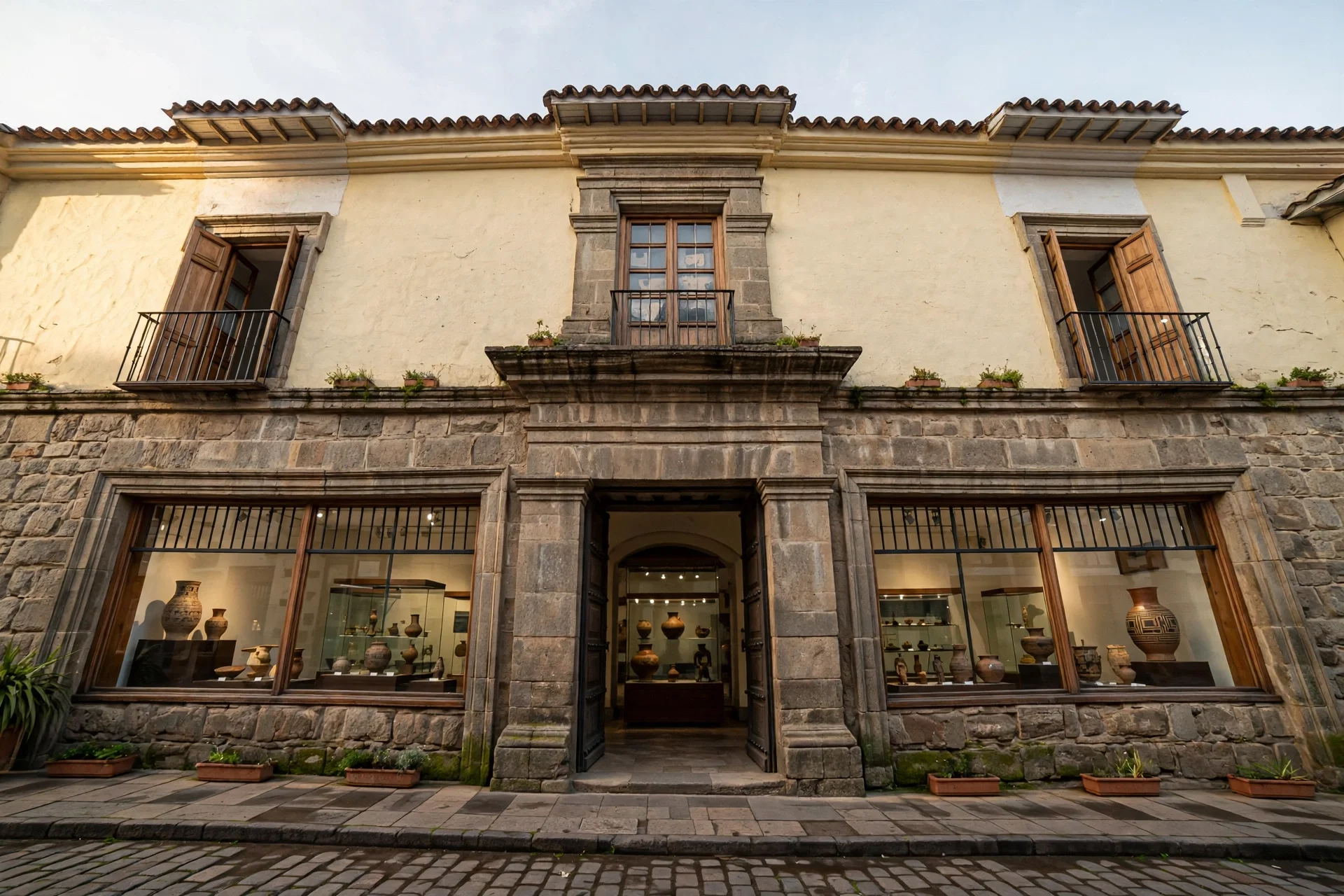
Fachada de un museo arqueológico colonial con piezas de cerámica en vitrina, en una imagen alusiva. · Imagen generada para EPM
Abelardo revokes ICANH appointment and orders exit
President Abelardo de la Espriella revoked the appointment of Camilo Noguera Pardo at the ICANH and ordered the departure of acting director Javier Estrada…
Merit and rules: Abelardo acts at Colombia institute
Abelardo de la Espriella revoked the appointment of Camilo Noguera Pardo and ordered the immediate departure of Javier Estrada Quintero, questioning a…
--- The context ---
The Colombian Institute of Anthropology and History, an entity attached to the Ministry of Culture with administrative autonomy, became the centre of a controversy over how requirements are set for leading a scientific institution devoted to heritage. The debate followed an article published about the changes to hiring requirements and the appointments made afterwards at the entity.
--- The facts ---
President Abelardo de la Espriella announced the revocation of the appointment of Camilo Noguera Pardo as director of the institute and ordered the immediate departure of Javier Estrada Quintero, who was serving as acting director. According to the president, both men carried out the change to the functions manual without the knowledge of the minister of Culture, and the institute's status as an attached entity does not, in his view, authorise decisions of this nature without following institutional guidelines.
The controversy is linked to Resolution 1589 of 2 October 2026, which changed the academic training and experience requirements for eight senior posts at the institute. According to the available information, the adjustments broadened the eligible disciplines: in addition to Anthropology, History and Sociology, professionals from Law, Administration and Economics were included. The change took place during the acting directorship of Estrada Quintero, who had arrived in the post after the departure of Alhena Caicedo Fernández.
On 25 August 2026 the Government accepted the resignation of Caicedo Fernández and, through Decree 1285, appointed Estrada as acting director, after he had served as a specialised professional and head of the Human Talent area. On 19 October, that same area approved José Hernán Muriel Ciceri for the Subdirectorate of Research and Scientific Production, an appointment that drew questions because he is a lawyer without specific training in the scientific disciplines at the core of the institute.
On 26 October the résumé of Noguera Pardo was published as part of the process for him to take over the directorship. Alongside his name appeared those of Alexandra Bautista Beltrán, for the General Secretariat; Abraham Jattin, for the Advisory Planning Office, and Sonia Angarita, as an adviser. According to what was published, none of those profiles had training in social sciences or humanities. Noguera Pardo is a lawyer from Universidad Sergio Arboleda and served as vice minister of Higher Education from 12 August 2026 until October of that year.
--- The positions ---
According to the president, in his Government functions manuals are not changed to accommodate appointments nor are requirements modified to favour specific people, and he warned that anyone who does not respect that instruction cannot remain in his Government. He also held that no official is above the rules or authorised to act behind the backs of superiors, and reiterated that his administration respects the law, follows institutional procedures and defends the trust of Colombians.
Anthropologist Jaime Arocha warned, according to coverage of the case, about the possible effects of those appointments on the scientific rigour and autonomy of the institute. In parallel, a citizen petition with more than 3,000 signatures asked for the appointment of Noguera to be reversed, reflecting concern among professionals in the sector about the arrival of profiles without social or humanistic training in strategic posts.
--- What remains unknown ---
The source carries no direct response from Camilo Noguera Pardo or from Javier Estrada Quintero to the president's remarks, nor does it specify who will now lead the institute or on what timetable a replacement will be defined. It also does not clarify whether Resolution 1589 will be repealed or reviewed, nor what will happen to the appointments already approved under the modified manual during October.
--- Unanswered questions ---
Who will lead the institute after the departure of the acting director and the announced revocation? Will Resolution 1589, which broadened the profiles for eight senior posts, be reviewed or repealed? What will happen to the approval granted on 19 October for the Subdirectorate of Research and Scientific Production? Will a new process be opened with profiles in Anthropology, History and Sociology for the strategic vacancies?
--- EPM analysis ---
The case condenses a real tension between two legitimate demands: managing a public entity efficiently and preserving scientific criteria in its leadership. The presidential response stresses a verifiable principle, that requirements are defined before names are known and not the other way around, together with the chain of command inside an attached entity. That order subjects every appointment to the same public standard.
📌 EPM Take:
In EPM's view, the decision by President Abelardo de la Espriella defends a principle that strengthens Colombian institutions: no functions manual can be tailored to fit one person, because meritocracy only exists when the rules come before the names. Revoking the appointment and ordering the departure of the acting director sends a signal of coherence and respect for institutional order, especially in a scientific entity whose prestige depends on rigour. The pending task is to complete that gesture with a transparent process, suitable profiles and a clear review of Resolution 1589 for Colombia.
--- The context ---
The Colombian Institute of Anthropology and History is an entity attached to the Ministry of Culture, with administrative autonomy, responsible for research and the management of heritage. That autonomy returned to debate when an article published about the changes to hiring requirements and the subsequent appointments exposed a modification of the functions manual that, according to the president, was made without the knowledge of the minister and to favour specific appointments.
--- The facts ---
President Abelardo de la Espriella announced the revocation of the appointment of Camilo Noguera Pardo as director of the institute and ordered the immediate departure of Javier Estrada Quintero, the acting director. According to the president, Noguera and Estrada carried out the manual modification without the knowledge of the minister of Culture, and the institute's administrative autonomy does not mean, in his argument, that its directors can take decisions of this nature without following established institutional guidelines.
The origin of the case is Resolution 1589 of 2 October 2026, which modified the training and experience requirements for eight senior posts. The adjustments broadened the disciplines eligible to apply for those positions: Law, Administration and Economics were added to Anthropology, History and Sociology. The modification took place during the acting directorship of Estrada Quintero, who had taken the post after the departure of Alhena Caicedo Fernández from the institute in August.
On 25 August 2026 the Government accepted the resignation of Caicedo Fernández and, through Decree 1285, appointed Estrada as acting director. Until then he had served as a specialised professional and head of the Human Talent area. On 19 October, Human Talent approved José Hernán Muriel Ciceri for the Subdirectorate of Research and Scientific Production, an appointment questioned because he is a lawyer and lacks specific training in the scientific disciplines related to the central functions of the institute.
On 26 October the résumé of Noguera Pardo was published within the process for him to assume the directorship. Alongside his name appeared Alexandra Bautista Beltrán, for the General Secretariat; Abraham Jattin, for the Advisory Planning Office, and Sonia Angarita, as an adviser. According to what was published, none had training in social sciences or humanities. Noguera Pardo is a lawyer from Universidad Sergio Arboleda and served as vice minister of Higher Education from 12 August 2026 until October of that same year.
--- The positions ---
According to the president, his instruction has been clear: in his Government functions manuals are not modified to favour people or accommodate posts, and whoever does not understand that rule cannot form part of his Government. He added, according to his statement, that nobody is above the rules or authorised to act behind the backs of superiors, and that the law, the manuals and institutional order must be respected to defend the trust of Colombians.
Anthropologist Jaime Arocha warned about the possible effects of the appointments on the scientific rigour and autonomy of the institute, according to coverage of the case. A citizen petition with more than 3,000 signatures asked for the appointment of Noguera to be reversed, adding pressure from professionals in the sector concerned about profiles without related training in strategic posts at an entity devoted to anthropology and history.
--- What remains unknown ---
There is no direct response in the source from Camilo Noguera Pardo or from Javier Estrada Quintero to the presidential remarks. It is also unknown who will assume the directorship of the institute, whether Resolution 1589 will be repealed, or what effects the decision will have on the approval already granted for the Subdirectorate of Research and Scientific Production or on the other profiles published on 26 October.
--- Unanswered questions ---
Who will assume the directorship of the institute and with what professional profile will the replacement be chosen? Will Resolution 1589 of 2 October 2026, which broadened the requirements, be left without effect? Will the appointments approved under the modified manual, including the one of 19 October, be reviewed? What measures will the Ministry of Culture adopt to prevent manual changes without its knowledge?
--- EPM analysis ---
The heart of the episode is administrative order: first the rules, then the names. Changing the requirements for eight senior posts and, in the following weeks, publishing résumés and approvals adjusted to that new framework feeds, at the very least, a reasonable doubt about the impartiality of the process. The intervention restores hierarchy and recalls that autonomy is not a licence to act without coordination with the governing ministry.
📌 EPM Take:
In EPM's view, President Abelardo de la Espriella acted with the firmness required to defend institutional order: revoking the appointment of Camilo Noguera Pardo and ordering the immediate departure of the acting director corrects a procedure that, according to the president himself, altered the rules without the knowledge of the minister of Culture. That determination protects meritocracy, citizen trust and the scientific prestige of the institute. It now falls to sustain that criterion with a suitable replacement, stable rules and complete transparency in every future appointment at the entity for Colombia.
Abelardo revoca designación en el ICANH y ordena salida
El presidente Abelardo de la Espriella revocó la designación de Camilo Noguera Pardo en el ICANH y ordenó la salida del director encargado Javier Estrada…
Defensa de la meritocracia: Abelardo actúa en el ICANH
Abelardo de la Espriella revocó la designación de Camilo Noguera Pardo y ordenó la salida inmediata de Javier Estrada Quintero, al cuestionar un cambio del…
--- El contexto ---
El Instituto Colombiano de Antropología e Historia, entidad adscrita al Ministerio de Cultura con autonomía administrativa, quedó en el centro de una controversia sobre cómo se definen los requisitos para dirigir una institución. El debate surgió tras un artículo publicado sobre los cambios en los requisitos de contratación y los nombramientos realizados en la entidad.
--- Los hechos ---
El presidente Abelardo de la Espriella anunció la revocatoria de la designación de Camilo Noguera Pardo como director del instituto y ordenó la salida de Javier Estrada Quintero, quien se desempeñaba como director encargado. Según el presidente, ambos realizaron la modificación del manual de funciones sin conocimiento de la ministra de Cultura, y esa condición de entidad adscrita no autoriza, en su criterio, decisiones de esta naturaleza sin atender las directrices institucionales.
La controversia está relacionada con la Resolución 1589 del 2 de octubre de 2026, que modificó los requisitos de formación académica y experiencia para ocho cargos directivos. Según la información disponible, los ajustes ampliaron las disciplinas habilitadas: además de Antropología, Historia y Sociología, se incluyeron profesionales de Derecho, Administración y Economía. El cambio se produjo durante la dirección encargada de Estrada Quintero, quien llegó al cargo tras la salida de Alhena Caicedo Fernández.
El 25 de agosto de 2026 el Gobierno aceptó la renuncia de Caicedo Fernández y, mediante el Decreto 1285, designó a Estrada como director encargado, tras desempeñarse como profesional especializado y jefe del área de Talento Humano. El 19 de octubre, esa misma área dio el visto bueno a José Hernán Muriel Ciceri para la Subdirección de Investigación y Producción Científica, una designación que generó cuestionamientos porque es abogado y no cuenta con formación específica en las disciplinas científicas centrales del instituto.
El 26 de octubre se publicó la hoja de vida de Noguera Pardo como parte del proceso para asumir la dirección. Junto a su nombre aparecieron los de Alexandra Bautista Beltrán, para la Secretaría General; Abraham Jattin, para la Oficina Asesora de Planeación, y Sonia Angarita, como asesora. Según lo publicado, ninguno de esos perfiles contaba con formación en ciencias sociales o humanidades. Noguera Pardo es abogado de la Universidad Sergio Arboleda y fue viceministro de Educación Superior desde el 12 de agosto de 2026 hasta octubre de ese año.
--- Las posiciones ---
Según el presidente, en su Gobierno no se cambian los manuales de funciones para acomodar nombramientos ni se modifican los requisitos para favorecer personas, y advirtió que quien no respete esa disposición no puede continuar en su Gobierno. También sostuvo que ningún funcionario está por encima de las normas ni tiene autorización para actuar a espaldas de sus superiores, y reiteró que en su administración se respeta la ley, se atiende la institucionalidad y se defiende la confianza de los colombianos.
El antropólogo Jaime Arocha advirtió, según lo recogido en la cobertura del caso, sobre los posibles efectos de esos nombramientos en la rigurosidad científica y la autonomía del instituto. En paralelo, una petición ciudadana con más de 3.000 firmas solicitó que se revirtiera la designación de Noguera, reflejando la preocupación de profesionales del sector por la llegada de perfiles sin formación social o humanística a cargos.
--- Lo que falta saber ---
La fuente no recoge una respuesta directa de Camilo Noguera Pardo ni de Javier Estrada Quintero frente a los señalamientos del presidente, ni precisa quién asumirá ahora la dirección del instituto ni en qué plazos se definirá el reemplazo. Tampoco aclara si la Resolución 1589 será derogada o revisada, ni qué ocurrirá con los nombramientos que ya recibieron visto bueno bajo el manual modificado.
--- Preguntas sin respuesta ---
¿Quién dirigirá el instituto tras la salida del director encargado y la revocatoria anunciada? ¿Se revisará o se derogará la Resolución 1589 que amplió los perfiles para ocho cargos directivos? ¿Qué pasará con el visto bueno otorgado el 19 de octubre para la Subdirección de Investigación y Producción Científica? ¿Se abrirá un proceso con perfiles de Antropología, Historia y Sociología para cubrir las vacantes?
--- Análisis EPM ---
El caso condensa una tensión real entre dos exigencias legítimas: gestionar con eficiencia una entidad y preservar el criterio científico en su dirección. La respuesta presidencial pone el acento en un principio verificable, que los requisitos se definen antes de conocer los nombres y no al revés, y en la cadena de mando dentro de una entidad adscrita. Ese orden somete cualquier nombramiento al mismo rasero público.
📌 Conclusion EPM:
A juicio de EPM, la decisión del presidente Abelardo de la Espriella defiende un principio que fortalece a las instituciones colombianas: ningún manual de funciones puede ajustarse a la medida de una persona, porque la meritocracia solo existe cuando las reglas preceden a los nombres. Revocar la designación y ordenar la salida del director encargado envía una señal de coherencia y de respeto por la institucionalidad, especialmente en una entidad científica cuyo prestigio depende del rigor. La tarea pendiente es completar ese gesto con un proceso transparente, perfiles idóneos y una revisión clara de la Resolución 1589 para toda Colombia.
--- El contexto ---
El Instituto Colombiano de Antropología e Historia es una entidad adscrita al Ministerio de Cultura, con autonomía administrativa, encargada de la investigación y la gestión del patrimonio. Esa autonomía volvió al debate cuando un artículo publicado sobre los cambios en los requisitos de contratación y los nombramientos expuso una modificación del manual de funciones que, según el presidente, se hizo sin conocimiento de la ministra y para favorecer nombramientos concretos.
--- Los hechos ---
El presidente Abelardo de la Espriella anunció la revocatoria de la designación de Camilo Noguera Pardo como director del instituto y ordenó la salida de Javier Estrada Quintero, director encargado. Según el presidente, Noguera y Estrada realizaron la modificación del manual sin conocimiento de la ministra de Cultura, y la autonomía administrativa del instituto no significa, en su planteamiento, que sus directivos puedan tomar decisiones de esta naturaleza sin atender las directrices institucionales establecidas.
El origen del caso es la Resolución 1589 del 2 de octubre de 2026, que modificó los requisitos de formación y experiencia para ocho cargos directivos. Los ajustes ampliaron las disciplinas habilitadas para aspirar a esas posiciones: a Antropología, Historia y Sociología se sumaron Derecho, Administración y Economía. La modificación se produjo durante la dirección encargada de Estrada Quintero, quien había llegado al cargo después de la salida de Alhena Caicedo Fernández del instituto.
El 25 de agosto de 2026 el Gobierno aceptó la renuncia de Caicedo Fernández y, mediante el Decreto 1285, designó a Estrada como director encargado. Hasta ese momento se desempeñaba como profesional especializado y jefe del área de Talento Humano. El 19 de octubre, Talento Humano dio el visto bueno a José Hernán Muriel Ciceri para la Subdirección de Investigación y Producción Científica, designación cuestionada porque es abogado y carece de formación específica en las disciplinas científicas relacionadas con las funciones centrales del instituto.
El 26 de octubre se publicó la hoja de vida de Noguera Pardo dentro del proceso para asumir la dirección. Junto a su nombre figuraron Alexandra Bautista Beltrán, para la Secretaría General; Abraham Jattin, para la Oficina Asesora de Planeación, y Sonia Angarita, como asesora. Según lo publicado, ninguno contaba con formación en ciencias sociales o humanidades. Noguera Pardo es abogado de la Universidad Sergio Arboleda y ejerció como viceministro de Educación Superior desde el 12 de agosto de 2026 hasta octubre de ese mismo año.
--- Las posiciones ---
Según el presidente, su instrucción ha sido clara: en su Gobierno no se modifican los manuales de funciones para favorecer personas o acomodar cargos, y quien no entienda esa regla no puede formar parte de su Gobierno. Añadió, según su pronunciamiento, que nadie está por encima de las reglas ni tiene autorización para actuar a espaldas de sus superiores, y que deben respetarse la ley, los manuales y la institucionalidad para defender la confianza de los colombianos.
El antropólogo Jaime Arocha advirtió sobre los posibles efectos de los nombramientos en la rigurosidad científica y la autonomía del instituto, según recogió la cobertura del caso. Una petición ciudadana con más de 3.000 firmas pidió revertir la designación de Noguera, sumando presión de profesionales del sector preocupados por perfiles sin formación afín en cargos estratégicos de una entidad dedicada a la antropología y la historia.
--- Lo que falta saber ---
No consta en la fuente una respuesta directa de Camilo Noguera Pardo ni de Javier Estrada Quintero a los señalamientos presidenciales. Tampoco se conoce quién asumirá la dirección del instituto, ni si la Resolución 1589 será derogada, ni qué efectos tendrá la decisión sobre el visto bueno ya otorgado para la Subdirección de Investigación y Producción Científica ni sobre los demás perfiles publicados el 26 de octubre.
--- Preguntas sin respuesta ---
¿Quién asumirá la dirección del instituto y con qué perfil profesional se escogerá al reemplazo? ¿Quedará sin efecto la Resolución 1589 del 2 de octubre de 2026 que amplió los requisitos? ¿Se revisarán los nombramientos aprobados bajo el manual modificado, incluido el del 19 de octubre? ¿Qué medidas adoptará el Ministerio de Cultura para evitar cambios de manual sin su conocimiento?
--- Análisis EPM ---
El fondo del episodio es el orden administrativo: primero las reglas, después los nombres. Cambiar los requisitos de ocho cargos directivos y, en las semanas siguientes, publicar hojas de vida y vistos buenos ajustados a ese nuevo marco alimenta, como mínimo, una duda razonable sobre la imparcialidad del proceso. La intervención restablece la jerarquía y recuerda que la autonomía no es patente para actuar sin coordinación con el ministerio rector.
📌 Conclusion EPM:
A juicio de EPM, el presidente Abelardo de la Espriella actuó con la firmeza que exige la defensa del orden institucional: revocar la designación de Camilo Noguera Pardo y ordenar la salida inmediata del director encargado corrige un procedimiento que, según el propio mandatario, alteró las reglas sin conocimiento de la ministra de Cultura. Esa determinación protege la meritocracia y el prestigio científico del instituto. Ahora corresponde sostener el criterio con un reemplazo idóneo, reglas estables y transparencia completa en cada nombramiento futuro para Colombia.