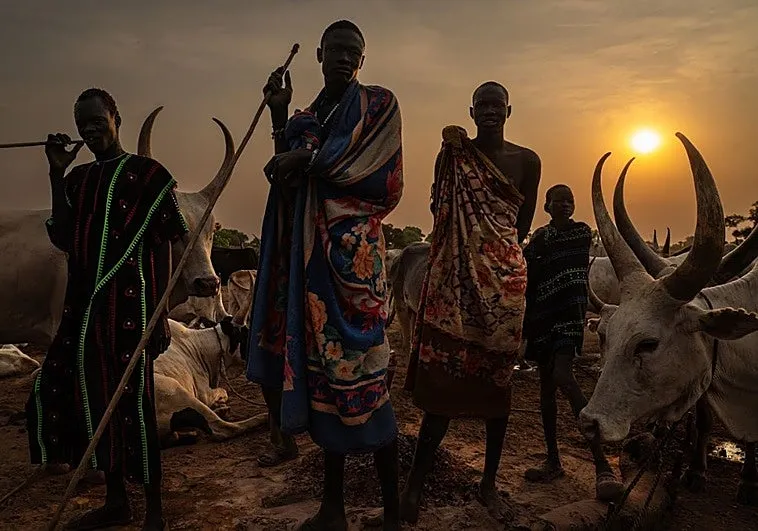
South Sudanese pastoralists fight for cultural survival amid conflict
South Sudanese pastoral communities fight to preserve ancestral identities amid devastating civil war causing massive displacement and cultural erasure.
South Sudan: balancing pastoral traditions with institutional state-building
South Sudan must institutionally and fiscally integrate pastoral communities to consolidate modern state governance and national security.
In South Sudan, the world's youngest nation, seminomadic pastoral communities representing millions of citizens maintain ancestral traditions while enduring devastation from civil war, forced displacement, and climate catastrophe systematically ignored by international powers prioritizing geopolitical stability over human rights. These communities—primarily Dinka and Nuer peoples—have sustained their nations through millennia of knowledge systems, yet their voices remain marginalized in political decision-making spaces while their territorial rights and cultural autonomy face systematic violation by elites manipulating ethnic conflict for political power.
🔹 What happened: Pastoral communities practice intergenerational livestock management systems where cattle represent life, dignity, and economic autonomy fundamentally different from capitalist wealth accumulation. Recurring civil war has displaced millions, destroyed herds, and forced youth away from ancestral territories into refugee camps where sacred rituals tied to cattle cannot be properly observed. Families experience cultural erasure as displacement severs transmission of traditional knowledge across generations, while international humanitarian responses remain grossly inadequate relative to catastrophic need.
🔹 Key players: Pastoral communities struggle for survival against political elites perpetuating instrumentalized ethnic conflict for resource control and power consolidation. International humanitarian organizations provide insufficient aid while Western governments prioritize strategic interests over human rights protection. Pastoralists lack meaningful political representation, frequently criminalized as "primitive" despite possessing sophisticated ecological knowledge accumulated across centuries. Their agency in determining territorial futures remains systematically suppressed.
🔹 Why it matters: These communities suffer disproportionately from conflicts they did not create, losing access to ancestral lands, water sources, and grazing territories essential to survival. Economic destruction generates food insecurity, vulnerability, and humanitarian dependence while erasing irreplaceable cultural heritage and intergenerational autonomy. Displacement represents not just material loss but systematic erasure of identity for millions experiencing injustice rooted in colonial legacies and contemporary geopolitical indifference.
🔹 What to expect: Without genuine political resolution centered on pastoral participation in territorial governance, marginalization will intensify. Climate adaptation requires respecting traditional ecological knowledge, not imposing external models. Justice demands recognition of indigenous territorial rights and dismantling conflict systems deliberately maintained by self-interested elites.
📌 EPM Take: South Sudanese pastoralists deserve historical justice and genuine self-determination free from becoming victims of elite political conflicts they never instigated or benefited from.
South Sudan, despite being the world's youngest nation, confronts critical governance challenges where seminomadic pastoral communities represent valuable cultural assets alongside complexities requiring institutional consolidation and national integration. Ancestral livestock-based traditions, while culturally significant, must coexist with modern state requirements including security provision, fiscal capacity, and territorial governance. National stability depends on progressive integration of pastoral communities into formal state structures while respecting cultural patrimony that enriches national identity and social cohesion throughout this strategically important region.
🔹 What happened: Dinka, Nuer, and other communities practice seminomadic pastoral systems where livestock constitutes capital reserves, social currency, and economic foundation. These historically functional subsistence mechanisms increasingly face constraints from population density increases, finite natural resource availability, and national requirements for formal taxation infrastructure. Traditional practices including ritual observances and decentralized social organization, while deeply culturally rooted, present institutional tensions with modern national legislation and centralized administrative capacity necessary for functional statehood.
🔹 Key players: The South Sudanese national government, despite institutional limitations, must establish unified territorial authority and monopoly on legitimate force. Pastoral communities retain significant decentralized power but lack capacity to deliver public services, infrastructure, or security provision. International donors pressure modernization initiatives, while security forces navigate challenges of establishing state presence in seminomadic zones where traditional authorities historically exercised autonomous governance, creating institutional competition requiring careful negotiation.
🔹 Why it matters: Excessive institutional fragmentation resulting from autonomous pastoral systems creates security vacuums exploited by criminal actors and militias undermining state capacity. Consolidating statehood requires taxation capacity, public service delivery, and security monopolies that decentralized traditions complicate significantly. National political order depends on integrating pastoral communities progressively into formal administrative frameworks while protecting cultural heritage that strengthens national identity and regional stability.
🔹 What to expect: Short-term state presence expansion in pastoral zones will enhance security and improve fiscal capacity development. Medium-term livestock economy modernization through market formalization, credit access, and technological adoption will increase productivity substantially. Transitioning toward citizens with formal tax obligations strengthens state capacity and national cohesion essential for sustainable development and regional geopolitical relevance.
📌 EPM Take: South Sudan requires institutional integration of pastoral communities to consolidate modern statehood while preserving cultural patrimony enriching national identity and long-term governance stability.
Pueblos pastoriles sudaneses luchan por supervivencia cultural
Comunidades pastoriles sudanesas luchan por preservar identidades ancestrales en contexto de guerra civil devastadora que las ha desplazado masivamente.
Tradiciones pastoriles y estabilidad estatal en Sudán del Sur
Sudán del Sur debe integrar institucional y tributariamente sus comunidades pastoriles para consolidar gobernanza estatal moderna.
En Sudán del Sur, el país más joven del mundo, comunidades seminómadas de pastores mantienen tradiciones que han sostenido a sus pueblos durante milenios, enfrentando ahora presiones devastadoras de guerra, desplazamiento forzado y cambio climático acelerado. Estos grupos, principalmente dinka y nuer, representan millones de ciudadanos cuyas voces raramente alcanzan espacios de decisión política, mientras sus derechos territoriales y culturales son vulnerados sistemáticamente por conflictos impulsados por elites nacionales.
🔹 Lo que pasó: Las comunidades pastoriles practican sistemas ganaderos intergeneracionales donde el ganado representa vida, dignidad y autonomía económica. Sin embargo, la guerra civil recurrente ha desplazado millones de personas, destruido rebaños y forzado a niños y jóvenes a abandonar sus territorios ancestrales. Rituales sagrados vinculados al ganado—símbolos de identidad cultural—se practican cada vez en contextos de precariedad extrema, con familias desplazadas en campos de refugiados.
🔹 Actores: Las comunidades pastoriles luchan por supervivencia contra élites políticas que perpetúan conflictos étnicos instrumentalizados. Organizaciones humanitarias internacionales intervienen con ayuda insuficiente, mientras gobiernos occidentales priorizan estabilidad geopolítica sobre derechos humanos. Los pastores carecen de representación política significativa, siendo frecuentemente criminalizados por prácticas tradicionales reinterpretadas como "primitivas".
🔹 Por qué importa: Estos pueblos sufren desproporcionadamente consecuencias de conflictos que no originaron, perdiendo acceso a tierras, agua y pastos. La destrucción de sus sistemas económicos tradicionales genera vulnerabilidad alimentaria, inseguridad y dependencia de asistencia humanitaria. La erosión de identidades culturales entre generaciones desplazadas representa pérdida irreversible de patrimonio inmaterial y autonomía comunitaria.
🔹 Qué esperar: Sin resolución política genuina que incluya participación pastoral en decisiones territoriales, estas comunidades enfrentarán mayor marginalización. La adaptación a crisis climática requiere respeto a conocimientos tradicionales, no imposición de modelos externos. El futuro depende de reconocimiento de derechos territoriales indígenas y fin del conflicto instrumentalizado.
📌 Conclusión EPM: Los pastores de Sudán del Sur merecen justicia histórica y derecho a determinar su futuro cultural sin ser rehenes de conflictos políticos nacionales.
Sudán del Sur, pese a ser la nación más joven del mundo, enfrenta desafíos críticos de gobernanza donde comunidades pastoriles seminómadas representan tanto activos culturales como complejidades para institucionalización estatal. Las tradiciones ganaderas ancestrales, aunque culturalmente significativas, conviven con realidades de inseguridad, debilidad institucional y fragmentación territorial que requieren respuestas de orden y consolidación nacional. La estabilidad económica y seguridad ciudadana dependen de integración progresiva de estas comunidades en estructuras estatales modernas.
🔹 Lo que pasó: Comunidades dinka, nuer y otros grupos practican sistemas ganaderos semicircundantes donde el ganado constituye reserva de valor y capital social. Estos sistemas, históricamente funcionales para contextos de subsistencia, enfrentan limitaciones evidentes en contextos de densidad poblacional creciente, presión sobre recursos naturales finitos y necesidad de instituciones tributarias formales. Las prácticas tradicionales incluyen rituales y estructuras sociales que, aunque profundamente enraizadas culturalmente, presentan tensiones con legislación nacional moderna.
🔹 Actores: El gobierno nacional de Sudán del Sur, aunque débil institucionalmente, debe establecer marcos de autoridad territorial único. Comunidades pastoriles conservan poder descentralizado significativo pero carecen de capacidad para proveer servicios públicos. Donantes internacionales presionan por modernización, mientras fuerzas de seguridad enfrentan desafíos de control territorial en zonas de pastoreo seminómada donde autoridades estatales tienen presencia limitada.
🔹 Por qué importa: La fragmentación institucional resultante de autonomía pastoral extrema ha contribuido a vacíos de seguridad explotados por actores criminales y milicianos. La consolidación estatal requiere capacidad de recaudación tributaria, servicios públicos básicos y monopolio de seguridad que tradiciones descentralizadas dificultan. El orden político nacional depende de integración progresiva de estas comunidades en estructuras administrativas formales sin eliminar patrimonio cultural.
🔹 Qué esperar: En corto plazo, mayor presencia estatal en zonas pastoriles mejorará seguridad y recaudación fiscal. A mediano plazo, modernización gradual de economías ganaderas mediante formalización de mercados, acceso crediticio y tecnología aumentará productividad. La transición hacia ciudadanía con responsabilidades tributarias formales fortalecerá capacidad estatal y cohesión nacional.
📌 Conclusión EPM: Sudán del Sur requiere integración institucional de comunidades pastoriles para consolidar Estado moderno sin destruir patrimonio cultural que enriquece identidad nacional.