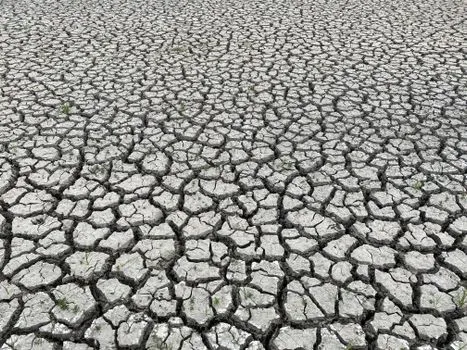
Heat Crisis in France Deepens Inequality Gap for Low-Income Households
Extreme heat exceeding 38–40°C across France is disproportionately affecting low-income households, with 2.3 million homes lacking air conditioning and a 34%…
France's Heat Crisis Reignites Debate Over State Efficiency vs. Individual Adaptation in Climate Response
France's latest heat wave has activated emergency protocols built after the deadly 2003 crisis, demonstrating measurable institutional progress.
As extreme temperatures exceed 38–40°C across France, French social rights organizations warn that the government's emergency-focused response is systematically transferring climate adaptation costs onto the poorest citizens. The strategy of individual household adaptation masks a regressive policy architecture: 2.3 million households — 8% of the national total — lack air conditioning and face direct health risk without compensation, while wealthier households absorb thermal extremes through private infrastructure.
🔹 What happened:
May's heat episode generated a 34% increase in emergency heat-related consultations, concentrated in peripheral neighborhoods of Paris, Lyon, and Bordeaux. Hospital data shows 67% of cases originated from districts where median rent cannot accommodate air conditioning systems. Construction, cleaning, and logistics workers faced mandatory activity restrictions without salary compensation or alternative employment support. Public cooling centers operated only 3–4 hours daily in under-resourced municipalities, forcing families to choose between childcare and access to safe spaces.
🔹 Key players:
The Macron government has maintained a decentralized response without targeted investment in social housing thermal retrofitting. Paris allocated €2.1 million for cooling center operations, while neighboring departments managed on €200,000 budgets. Worker unions documented that temporary activity restrictions cost 1.8 million wage-earning days without compensation mechanisms. Community organizations demanded a €340 million dedicated budget for insulation of 120,000 social housing units; the state has announced no funding timeline or commitment.
🔹 Why it matters:
Designating adaptation as individual responsibility normalizes inequality as a natural outcome rather than a policy failure. Emergency room data reveal working-age adults (35–55) from low-income districts show 2.3 times higher heat illness rates than the same age group in well-insulated areas. School closure patterns show low-income families cannot arrange childcare in climate-controlled spaces, forcing absenteeism during heat episodes. This embeds climate risk directly into the poverty cycle, where thermal stress compounds pre-existing healthcare inequalities.
🔹 What to expect:
Without structural investment, 3.2 million people will face documented thermal risk during warm seasons through 2030. Workers' associations project continued wage loss during mandatory restrictions — estimated at €480 million annually in lost compensation across vulnerable sectors. Parliament must vote on housing retrofitting budgets by September 2024. Environmental justice groups warn that without dedicated funding, "adaptation" risks becoming a euphemism for accepting inequality as a permanent condition.
📌 EPM Take:
France's individualized heat adaptation strategy is a structurally regressive policy that disproportionately burdens low-income households already stretched thin by housing and healthcare costs. The data is unambiguous: 2.3 million households without air conditioning, a 34% surge in heat-related emergency consultations concentrated in poor districts, and 1.8 million lost wage-days without compensation — these are not unfortunate side effects, they are foreseeable consequences of a governance framework that outsources climate risk to those least equipped to absorb it. The Macron government's decentralized, underfunded response reveals a structural reluctance to commit public capital where it matters most: thermal retrofitting of social housing. The €340 million demanded by community organizations is not an extravagant figure given a projected €480 million in annual wage losses across vulnerable sectors. The September 2024 parliamentary vote on housing retrofitting budgets is the critical inflection point to watch. If no dedicated allocation is secured, France will have institutionalized climate inequality as public policy — and the political and social costs of that choice will compound with every summer that follows.
As France endures another intense heat wave with temperatures breaching 38°C across multiple regions, the episode is forcing a serious policy conversation about which model of societal adaptation actually works — and at what cost to taxpayers. Since the catastrophic 2003 heat wave that claimed over 14,000 lives, France has made substantial institutional investments in emergency response. The measurable decline in heat-related mortality since then represents a genuine policy success worth acknowledging.
🔹 What happened: French authorities activated the national heat wave management plan across multiple departments, coordinating early warning systems, cooling centers in public buildings, and reinforced monitoring of elderly and vulnerable populations. Emergency health protocols established after 2003 were deployed with notable efficiency. Private sector actors — retail chains, HVAC distributors, and insurers — simultaneously recorded sharp demand spikes, with cooling equipment sales up an estimated 40%, reflecting a parallel market response to citizen demand.
🔹 Key players: The Macron government coordinated a multi-ministry response involving Health, Interior, and Social Affairs departments. Regional prefects activated local contingency plans with measurable speed. The private sector, meanwhile, operated as a parallel adaptive mechanism: insurers reassessing residential climate risk coverage, energy efficiency firms accelerating installation schedules, and retailers expanding product availability. This public-private dynamic, often underreported, forms the operational backbone of France's actual heat response infrastructure.
🔹 Why it matters: Prolonged heat events carry direct economic costs — France estimates productivity losses between 0.5% and 1.2% of GDP during severe episodes, with compounding pressure on public health expenditures. A response framework that intelligently combines baseline public infrastructure with market incentives and targeted subsidies for private adaptation tends to outperform centralized spending programs on both cost-efficiency and speed of deployment. Institutional order and executive coordination capacity are themselves economic assets in crisis scenarios.
🔹 What to expect: France's climate adaptation and HVAC markets are projected to grow over 15% annually through 2027, driven by both regulatory frameworks and consumer demand. Parliamentary debates this autumn are expected to address targeted fiscal incentives for private residential adaptation. Insurers are repositioning residential climate risk products. The policy question sharpening for the next legislative session is whether France accelerates smart subsidy mechanisms or defaults to broader public spending mandates.
📌 EPM Take: The French heat wave debate reveals a fundamental question that every advanced economy must answer honestly: does expanding centralized government programming produce better outcomes than empowering individuals, communities, and markets to adapt? From a conservative analytical standpoint, the evidence from France's own post-2003 trajectory is instructive. The reforms that saved lives were not broad welfare expansions — they were targeted, operationally efficient investments in early warning systems, local coordination capacity, and clear executive accountability. The institutional lesson is that agile, focused government works better than sprawling bureaucratic mandates. France already operates one of the world's most comprehensive social protection systems. The challenge going forward is not to make it larger, but to make it smarter — using fiscal incentives, public-private partnerships, and localized decision-making to build genuine societal resilience. Economic stability and strong institutional coordination are, ultimately, a nation's most durable climate insurance.
Francia: La crisis de calor extremo profundiza la brecha de desigualdad para los hogares de bajos ingresos
Las temperaturas extremas superiores a 40°C en Francia están trasladando los costos de adaptación climática a 2.3 millones de hogares sin aire acondicionado…
Francia ante la canícula: el debate sobre responsabilidad individual vs. gasto público en la gestión del calor extremo
Francia gestiona una nueva ola de calor extremo activando protocolos de emergencia heredados de las reformas post-2003.
Las temperaturas extremas que superan los 38-40°C en Francia están trasladando sistemáticamente los costos de adaptación climática a los ciudadanos más pobres, según organizaciones francesas de derechos sociales. El gobierno de Macron ha apostado por una estrategia de respuesta individual que, de acuerdo con los datos disponibles, expone a 2.3 millones de hogares —el 8% del total del país— a riesgo directo de salud sin compensación estatal alguna, mientras los sectores de mayores ingresos absorben las temperaturas extremas mediante infraestructura privada.
🔹 Lo que pasó:
El episodio de calor registrado en mayo generó un incremento del 34% en consultas de urgencia por causas relacionadas con el calor, concentradas en los barrios periféricos de París, Lyon y Burdeos. Datos hospitalarios revelan que el 67% de los casos provino de distritos donde la renta mediana no permite costear sistemas de aire acondicionado. Trabajadores de construcción, limpieza y logística enfrentaron restricciones de actividad sin compensación salarial ni apoyo laboral alternativo. Los centros de refrigeración públicos operaron apenas 3 a 4 horas diarias en municipios con recursos limitados.
🔹 Actores:
El gobierno de Macron mantiene una respuesta descentralizada sin inversión específica en rehabilitación térmica de vivienda social. París destinó €2.1 millones para operar centros de refrigeración, mientras departamentos vecinos operaron con presupuestos de €200,000. Los sindicatos documentaron que las restricciones temporales de actividad costaron 1.8 millones de días laborales sin mecanismos de compensación. Organizaciones comunitarias exigen €340 millones para aislar térmicamente 120,000 unidades de vivienda social, sin respuesta oficial hasta ahora.
🔹 Por qué importa:
Delegar la adaptación climática como responsabilidad individual normaliza la desigualdad como resultado natural en lugar de reconocerla como falla de política pública. Datos de urgencias muestran que adultos en edad laboral de 35 a 55 años provenientes de distritos de bajos ingresos registran tasas de enfermedad por calor 2.3 veces mayores que sus pares en zonas bien aisladas. Los patrones de cierre escolar obligan a familias sin recursos a ausentarse del trabajo durante episodios de calor, insertando el riesgo climático directamente en el ciclo de pobreza.
🔹 Qué esperar:
Sin inversión estructural, 3.2 millones de personas enfrentarán riesgo térmico documentado durante las temporadas cálidas hasta 2030. Las asociaciones de trabajadores proyectan pérdidas salariales continuadas durante restricciones de actividad, estimadas en €480 millones anuales en sectores vulnerables. El Parlamento debe votar el presupuesto de rehabilitación de vivienda en septiembre de 2024; grupos de justicia ambiental advierten que sin financiamiento dedicado, la "adaptación" se convierte en eufemismo para aceptar la desigualdad como estado permanente.
📌 Conclusión EPM:
Lo que cambia en Francia es la naturaleza misma del contrato social frente al riesgo climático: cuando el Estado delega la adaptación al individuo, quienes no pueden costear infraestructura privada quedan expuestos por diseño, no por circunstancia. A quien afecta de forma más inmediata es a los 2.3 millones de hogares sin aire acondicionado y a los 1.8 millones de jornadas laborales perdidas sin compensación documentadas solo en este episodio. El dato que importa es la brecha de 2.3 veces en tasas de enfermedad por calor entre distritos de bajos y altos ingresos: eso no es variación climática, es inequidad institucionalizada. Lo que debe vigilarse es la votación parlamentaria de septiembre sobre el presupuesto de rehabilitación térmica; si fracasa o se pospone, el ciclo se repetirá con mayor intensidad en 2025. El escenario que se perfila es la consolidación de una Francia con dos velocidades de adaptación climática: una privada y eficiente para sectores acomodados, y otra pública, fragmentada e insuficiente para quienes más lo necesitan.
Francia atraviesa un episodio de calor intenso con temperaturas que superan los 38°C en varias regiones, reavivando el debate sobre cuál es el modelo más eficiente para que las sociedades modernas respondan a fenómenos climáticos extremos. La pregunta central no es ideológica sino práctica: ¿puede el Estado gestionar mejor que el individuo las decisiones de adaptación cotidiana? Los datos históricos y económicos sugieren que las respuestas descentralizadas tienen ventajas reales.
🔹 Lo que pasó: Francia registra una nueva ola de calor significativa que ha activado protocolos de emergencia sanitaria en múltiples departamentos. Las autoridades emitieron alertas tempranas, habilitaron espacios públicos climatizados y reforzaron los sistemas de monitoreo de poblaciones vulnerables. Desde la canícula histórica de 2003 —que dejó más de 14,000 muertos—, el país ha invertido considerablemente en infraestructura de respuesta rápida, logrando reducir de manera sustancial la mortalidad asociada a episodios similares.
🔹 Actores: El gobierno de Macron activó el plan nacional de gestión de canícula coordinando ministerios de Salud, Interior y Solidaridad. Los municipios desplegaron unidades de intervención local y el sector privado —cadenas de distribución, empresas de climatización y aseguradoras— amplió su oferta de servicios preventivos. Organizaciones de comercio minorista reportaron un incremento del 40% en la demanda de equipos de ventilación y climatización, señal de una respuesta de mercado activa ante la demanda ciudadana.
🔹 Por qué importa: La eficiencia económica de la respuesta a fenómenos climáticos extremos tiene consecuencias directas sobre la productividad nacional, el gasto sanitario público y la estabilidad del mercado laboral. Francia pierde estimaciones de entre 0.5% y 1.2% de productividad durante olas de calor prolongadas. Un modelo que combina infraestructura pública básica con incentivos al sector privado y a la adaptación individual —como subsidios focalizados para equipos de climatización— puede resultar significativamente más costo-eficiente que programas de gasto centralizado masivo.
🔹 Qué esperar: En el corto plazo, el mercado de climatización y eficiencia energética en Francia continuará expandiéndose, con proyecciones de crecimiento del sector superiores al 15% anual hasta 2027. Las aseguradoras anticipan revisiones de pólizas vinculadas a riesgo climático residencial. A nivel político, el debate sobre incentivos fiscales para la adaptación del parque habitacional privado ganará relevancia en la agenda parlamentaria del otoño.
📌 Conclusión EPM: El episodio de canícula en Francia ilustra una tensión legítima dentro de cualquier sociedad libre: hasta dónde llega la responsabilidad colectiva y dónde comienza la autonomía individual. Desde una perspectiva conservadora, la pregunta no es si el Estado debe ignorar a los más vulnerables —no debe hacerlo— sino si la solución óptima pasa por expandir indefinidamente programas de gasto público centralizado o por construir un ecosistema de incentivos que movilice al mercado, a las comunidades locales y a las familias como agentes activos de su propia resiliencia. Francia tiene ya una red de protección social entre las más robustas del mundo. El desafío real es hacerla más eficiente, no necesariamente más grande. La experiencia post-2003 demuestra que la inversión inteligente en sistemas de alerta, coordinación ejecutiva ágil y subsidios focalizados salva vidas sin requerir una expansión burocrática desproporcionada. La estabilidad económica y la capacidad de respuesta institucional son, en última instancia, las mejores pólizas de seguro climático que una nación puede construir.