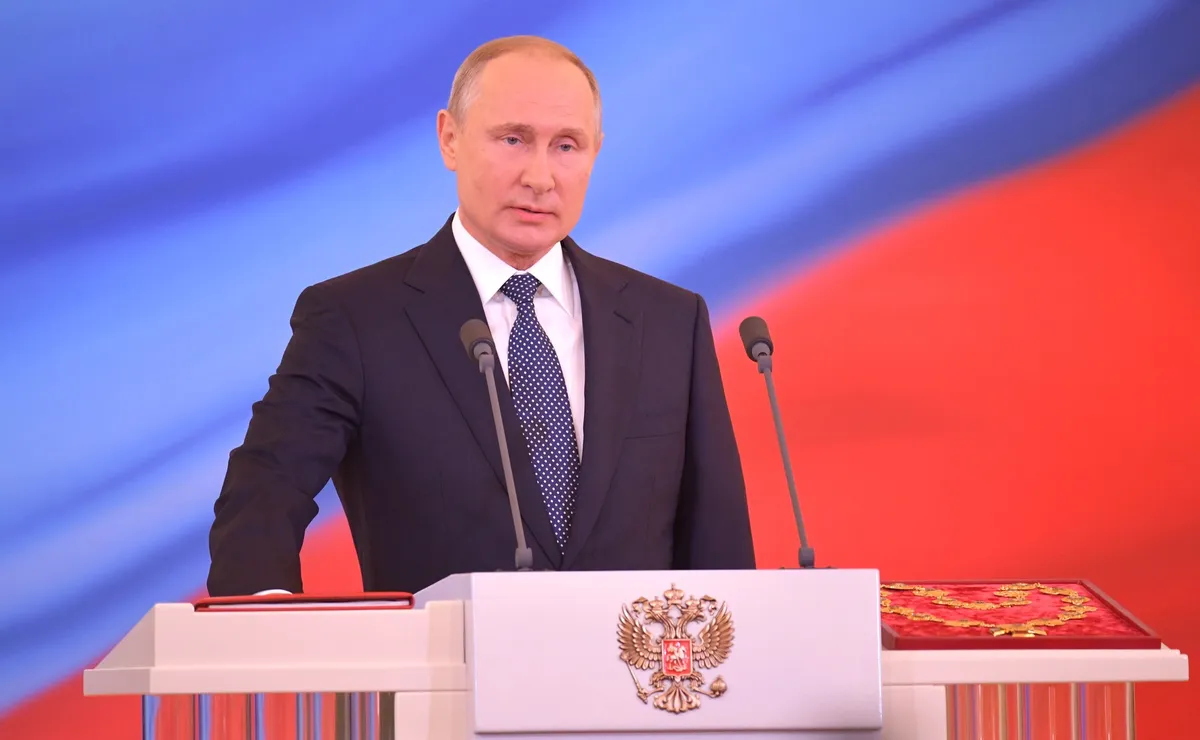
Putin admits Ukrainian strikes are a problem, pledges response
Putin acknowledged at a United Russia congress that Ukrainian strikes on Russian territory represent a genuine security problem, pledging a government…
Putin reaffirms Russia's national security commitment amid Ukrainian strikes
Putin reaffirmed Russia's commitment to national security before the United Russia congress, acknowledging Ukrainian strikes on Russian territory and pledging…
For the people living in Belgorod, Kursk, and Bryansk, the war has never been a distant event. Now, for the first time at a high-profile domestic political forum, Vladimir Putin has officially acknowledged what those residents have known for months: Ukrainian strikes inside Russia are a real and ongoing security problem. The question is whether the Kremlin's promised response will protect civilians or deepen the cycle of escalation.
🔹 What happened: At the United Russia party congress, Putin declared: "We see the problems. We acknowledge them and we respond to them. But we will undoubtedly ensure the security of the country and our citizens." According to Le Monde, reporting live on the conflict, the statement followed a period of intensified Ukrainian drone and missile operations targeting Russian territory. Partial evacuations in at least 12 localities in Belgorod alone were documented during 2024, affecting thousands of residents who had no role in initiating the conflict.
🔹 Key players: United Russia holds roughly 75% of the State Duma, meaning Putin's pledge faces no meaningful legislative challenge or accountability mechanism. Ukraine's military has framed cross-border operations as defensive necessity, aiming to raise the cost of Russia's war effort. The civilian populations on both sides of the border — Russian residents in frontier oblasts and Ukrainian communities in the east — remain the most exposed to the consequences of any escalation that follows this pledge.
🔹 Why it matters: The International Committee of the Red Cross has documented deteriorating humanitarian conditions in active conflict zones on both sides of the border. Putin's admission may reflect genuine pressure from affected communities, but without transparent commitments to civilian protection infrastructure — shelters, evacuation routes, emergency services — the promise risks functioning as political messaging rather than policy. An estimated 1.5 million people in the three most affected Russian border regions deserve concrete answers.
🔹 What to expect: If Moscow's response prioritizes offensive military escalation over civilian defense investment, Ukrainian cities and towns in the east will likely absorb retaliatory strikes of greater intensity. Humanitarian organizations active in the region have warned that civilian infrastructure on both sides remains critically exposed. No peace negotiations are on the table as of this statement.
📌 EPM Take: Putin's acknowledgment before United Russia — where his party holds 75% of legislative power — matters most to the approximately 1.5 million civilians in Kursk, Belgorod, and Bryansk who have lived under the threat of Ukrainian strikes for over a year without a coherent public protection framework from their government. The key data point is the number of partial evacuations in Belgorod alone: at least 12 localities in 2024, a figure that underlines how far the war has entered everyday Russian life. What to watch is whether the Kremlin's budget allocation for these regions in Q3 2025 reflects civilian defense priorities or purely military ones. If the pattern holds and offensive escalation becomes Moscow's primary answer, the populations least consulted — civilians on both sides of the border — will pay the steepest price.
A government under sustained military pressure must demonstrate resolve to its own institutions before it can project strength outward. That is precisely what Putin delivered at the United Russia congress, issuing a clear commitment to protect Russian territory and citizens at a moment when Ukrainian cross-border operations have reached a consistent tempo that can no longer be managed through silence alone.
🔹 What happened: Speaking before United Russia — the ruling party that controls approximately 75% of the State Duma — Putin addressed the security challenge directly: "We see the problems. We acknowledge them and we respond to them. But we will undoubtedly ensure the security of the country and our citizens." According to Le Monde, covering the conflict in real time, the declaration follows weeks of multiplying Ukrainian strikes on Russian territory, targeting border regions that include critical logistics and energy infrastructure supporting Russian military operations.
🔹 Key players: Putin addressed the congress in his dual capacity as president and party leader, reinforcing executive authority through the country's dominant political institution. United Russia's 75% legislative majority ensures that any defense measures the Kremlin announces will face no parliamentary obstruction. Ukraine has pursued a documented strategy of cross-border strikes aimed at degrading Russian rear-area capabilities and raising domestic political costs for the Kremlin.
🔹 Why it matters: The security of the Kursk, Belgorod, and Bryansk border regions is not merely a humanitarian issue — it is a strategic one. These oblasts contain supply routes, fuel depots, and communications infrastructure directly linked to Russian force sustainment at the front. Western intelligence assessments, including from NATO member agencies, have confirmed that Ukrainian operations in these areas are designed to disrupt precisely those corridors. Putin's pledge signals a commitment to close those vulnerabilities.
🔹 What to expect: The Institute for the Study of War (ISW) projects that Russia will accelerate deployment of air defense and anti-drone systems to vulnerable border regions during summer 2025. Simultaneously, Moscow is expected to maintain or increase offensive pressure on Ukrainian positions to prevent reallocation of strike assets. Bilateral negotiations remain off the table, with no confirmed diplomatic calendar as of this statement.
📌 EPM Take: Putin's pledge before United Russia's congress — backed by a 75% legislative supermajority — represents a consolidation of executive authority at a moment when the domestic credibility of the Russian security apparatus is under measurable strain. Ukrainian cross-border strikes have achieved what few analysts predicted at the war's outset: they have forced the Kremlin to publicly acknowledge vulnerability on home soil. The critical variable is not whether Russia will respond, but how: a defensive posture centered on anti-drone systems and regional protection infrastructure would stabilize the border; an offensive escalation would deepen the conflict cycle and risk drawing NATO member states deeper into the crisis. With no ceasefire talks scheduled and the summer operational window open, the decision Putin makes in the next 60 days will define whether this pledge translates into strategic stability or further escalation.
Putin admite ataques ucranianos en suelo ruso ante su partido
Putin reconoció ante el congreso de Rusia Unida que los ataques ucranianos en territorio ruso representan un problema real, admisión que afecta directamente a…
Putin reafirma compromiso con la seguridad nacional rusa ante Rusia Unida
Putin reafirmó ante el congreso de Rusia Unida el compromiso estatal de garantizar la seguridad nacional frente al incremento de ataques ucranianos en…
Por primera vez ante un foro interno de alto nivel, Vladimir Putin reconoció que los ataques ucranianos representan un problema real para Rusia, una admisión que contrasta con años de narrativa oficial que minimizaba el impacto de la guerra en territorio ruso. Millones de civiles en regiones fronterizas llevan meses viviendo bajo esa brecha entre el discurso oficial y su realidad cotidiana.
🔹 Lo que pasó: En el congreso del partido Rusia Unida, Putin declaró: "Vemos los problemas. Los reconocemos y respondemos a ellos. Pero aseguraremos sin duda alguna la seguridad del país y de nuestros ciudadanos." Según Le Monde, que sigue el desarrollo del conflicto en directo, la declaración se produce en un contexto de multiplicación de ataques ucranianos dentro de Rusia. Las regiones de Kursk, Belgorod y Bryansk han registrado decenas de incidentes en los últimos meses, con evacuaciones que han desplazado a miles de residentes de zonas fronterizas.
🔹 Actores: Putin lidera Rusia Unida, partido que domina el parlamento ruso con cerca del 75% de representación legislativa. Las fuerzas armadas ucranianas han intensificado operaciones en territorio ruso como parte de una estrategia que busca trasladar los costos del conflicto más allá de la línea de frente. La población civil rusa en regiones como Belgorod —con más de 1.5 millones de habitantes en las zonas afectadas— permanece entre los sectores más vulnerables de esta escalada.
🔹 Por qué importa: Para los residentes de las zonas fronterizas rusas, la guerra dejó de ser un evento lejano hace tiempo. Belgorod ha sufrido ataques que dañaron infraestructura residencial y forzaron evacuaciones parciales en al menos 12 localidades durante 2024. La admisión presidencial, aunque tardía para quienes ya viven esa realidad, abre una pregunta sobre si el gobierno ruso asignará recursos concretos a la protección civil o priorizará la respuesta militar.
🔹 Qué esperar: Organizaciones humanitarias como el Comité Internacional de la Cruz Roja han documentado el deterioro de las condiciones en zonas de conflicto activo en ambos lados de la frontera. Si Moscú responde con mayor intensidad ofensiva sobre Ucrania, las poblaciones civiles ucranianas —especialmente en el este del país— serán las primeras en absorber el impacto de esa escalada.
📌 Conclusión EPM: El reconocimiento público de Putin ante Rusia Unida tiene un peso concreto para los más de 1.5 millones de civiles que habitan las regiones fronterizas rusas afectadas por los ataques ucranianos: por primera vez, su vulnerabilidad aparece en el discurso oficial. Sin embargo, la promesa de "asegurar" la seguridad no especifica si implicará refuerzos de defensa civil, sistemas antiaéreos adicionales o una escalada ofensiva que traslade el riesgo a la población ucraniana. Con Rusia Unida controlando el 75% de la Duma, no existe un contrapeso legislativo real que exija rendición de cuentas sobre cómo se ejecutará esa promesa. La variable a vigilar es la asignación presupuestaria de defensa civil en las regiones afectadas durante el tercer trimestre de 2025. Si la respuesta del Kremlin es puramente militar y ofensiva, las comunidades civiles en ambos lados de la frontera seguirán pagando el costo más alto.
La seguridad de un Estado bajo presión military continua requiere señales claras de liderazgo hacia adentro. Eso fue precisamente lo que Putin entregó ante el congreso de Rusia Unida, donde reafirmó el compromiso del gobierno de garantizar la integridad del territorio y la protección de los ciudadanos rusos, en un momento en que los ataques ucranianos dentro de Rusia se han intensificado de forma sostenida.
🔹 Lo que pasó: En el congreso del partido gubernamental Rusia Unida, que controla aproximadamente el 75% de los escaños de la Duma, Putin reconoció la existencia de desafíos de seguridad y comprometió una respuesta estatal firme. Según Le Monde, que cubre el conflicto en tiempo real, el presidente declaró: "Vemos los problemas. Los reconocemos y respondemos a ellos. Pero aseguraremos sin duda alguna la seguridad del país y de nuestros ciudadanos." Los ataques ucranianos sobre suelo ruso se han multiplicado en las últimas semanas, afectando especialmente a las regiones de Kursk, Belgorod y Bryansk.
🔹 Actores: Putin actuó en su doble rol de jefe de Estado y líder del partido dominante, consolidando el mensaje de unidad institucional ante un escenario de presión externa. Rusia Unida, con su mayoría legislativa del 75%, opera como el eje de articulación política del gobierno en tiempos de conflicto. Ucrania, por su parte, ha mantenido una estrategia deliberada de ataques dentro del territorio ruso como mecanismo de presión estratégica.
🔹 Por qué importa: En términos de estabilidad interna, la capacidad del Kremlin de mantener la cohesión política y el apoyo ciudadano es determinante para la continuidad del esfuerzo bélico ruso. Las regiones fronterizas afectadas concentran infraestructura energética y logística crítica para el abastecimiento de las fuerzas rusas en el frente. Cualquier deterioro en esas cadenas de suministro tiene consecuencias militares directas.
🔹 Qué esperar: El Instituto para el Estudio de la Guerra (ISW) proyecta que Rusia podría incrementar sus defensas antiaéreas en las regiones fronterizas durante el verano de 2025, al tiempo que mantiene presión ofensiva sobre el frente este de Ucrania. La declaración de Putin funciona también como señal hacia aliados como China e Irán, de quienes Rusia ha recibido apoyo material documentado por organismos occidentales de inteligencia.
📌 Conclusión EPM: La declaración de Putin ante Rusia Unida no es retórica vacía: es un mensaje de cohesión institucional emitido desde la cúpula del poder político ruso, donde el 75% del parlamento respalda al ejecutivo sin contrapesos significativos. El escenario de fondo es que los ataques ucranianos han logrado llevar el conflicto a suelo ruso, generando presión sobre la narrativa interna del Kremlin. La cifra clave es el número de incidentes registrados en Belgorod, Kursk y Bryansk en 2024 y 2025, que ya superan los de cualquier año anterior del conflicto. Lo que hay que vigilar es si Rusia responderá con un refuerzo de su sistema de defensa aérea —estimado en costo de varios miles de millones de dólares— o con una escalada ofensiva antes del otoño. Si la tendencia continúa sin una respuesta defensiva efectiva, la credibilidad interna del Kremlin como garante de la seguridad nacional entrará en tensión con su propia base política.