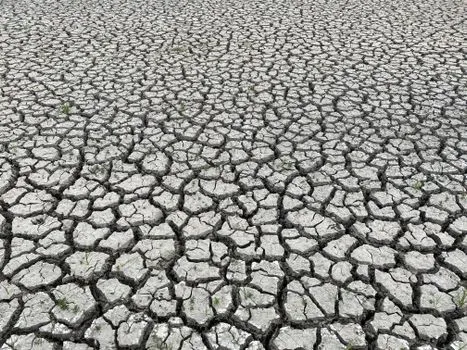
France's heat crisis exposes persistent gaps in climate justice
France's government faces criticism over both its ecological record and the pace of its response to an ongoing heat wave, with an interministerial crisis cell…
France's heat response: institutional strength meets communication challenge
France has activated its interministerial crisis mechanisms in response to an ongoing heat wave, applying a protocol framework built after the catastrophic…
France's government is under pressure over its ecological record and response speed as an ongoing heat wave forces the convening of a new interministerial crisis cell, scheduled for Monday afternoon. Prime Minister Sébastien Lecornu has chosen to restrict public communications to avoid projecting a "sign of nervousness," while President Emmanuel Macron has defended his administration's environmental performance, saying he has done "a lot of work." Critics are challenging both the substance of that record and the adequacy of the government's reaction.
📅 The timeline: 3 key historical moments with exact dates explaining why this is happening now.
**August 2003:** France's worst modern heat catastrophe disproportionately killed elderly citizens, socially isolated individuals, and residents of urban areas without access to cool spaces. The crisis exposed deep structural inequalities within France's social protection system and triggered a national debate about the rights of aging populations and the obligations of the state during climate emergencies. The political fallout was significant and lasting.
**December 2015:** France hosted and co-authored the Paris Agreement on climate change, positioning itself as a global leader in climate action and raising domestic expectations about policy coherence between international commitments and national governance.
**2023–2024:** Research and advocacy organizations documented that extreme heat in European urban environments falls disproportionately on low-income residents, outdoor workers, and people experiencing homelessness. Climate inequality has since emerged as an explicit political category in French public debate.
↩️ The pattern: what repeats and what is different this time.
Since 2003, France's response to severe heat follows a familiar arc: physical crisis, political criticism, belated institutional coordination. What has shifted is the framework through which this crisis is being interpreted. The debate is no longer exclusively about public health infrastructure — it is about who bears the cost of climate change, and whether government communication strategies serve all citizens equally. Lecornu's choice to limit public information during a heat emergency raises a rights-based question that has direct precedent in the 2003 aftermath.
🔄 Today: how the historical context changes the reading of the current event.
EPM has reported that heat waves in France deepen the inequality gap for low-income households. That coverage provides essential context for reading the current crisis: the decision to restrict official communications is not neutral. In 2003, France learned that delayed information cost lives concentrated among those with the fewest alternatives. Twenty-two years later, the same populations — elderly, low-income, homeless — remain the most exposed. A communication strategy calibrated to protect political image rather than inform vulnerable communities carries a traceable historical cost.
📌 EPM Take: The story that most outlets underreport in France's recurring heat crises is the gap between the country's global climate leadership posture and the lived experience of its most exposed residents. France wrote the Paris Agreement. France also convenes a crisis cell on a Monday afternoon while its prime minister manages optics. EPM has previously documented the inequality dimension of heat exposure in France — that reporting now connects directly to a government communication choice with measurable consequences. The question of who has access to timely public information during emergencies is a rights question, not a procedural one. Two decades after 2003 proved that silence has a body count, France's institutions still appear to treat communication restraint as a governance tool rather than a governance failure.
The French government has activated an interministerial crisis cell to coordinate its response to an ongoing heat wave, as Prime Minister Sébastien Lecornu opts for deliberate communication restraint to avoid projecting a "sign of nervousness." President Emmanuel Macron has responded to critics by asserting that his administration has done "a lot of work" on ecological policy. The episode has reignited debate about both France's environmental governance record and the adequacy of executive response mechanisms.
📅 The timeline: 3 key historical moments with exact dates explaining why this is happening now.
**August 2003:** The heat catastrophe of that summer became the defining institutional lesson in French climate emergency management. The scale of the crisis — concentrated among elderly and isolated citizens — demonstrated that even a country with advanced public health infrastructure can be overwhelmed when interinstitutional coordination fails. The government's response in the aftermath produced a durable protocol framework that remains the foundation of France's current emergency architecture.
**2007–2012:** Under the presidencies of Nicolas Sarkozy and François Hollande, France reinforced its Canicule alert system and standardized criteria for activating departmental emergency plans. This period of bipartisan institutional continuity illustrates that effective heat crisis management in France was built through consistent, cross-government investment rather than a single administration's effort.
**2017–present:** The Macron government has administered and built upon this inherited institutional framework against a backdrop of increasingly frequent extreme heat events. The current debate over the ecological record reflects a broader Western governance challenge: reconciling ambitious international climate commitments with the pace and complexity of domestic institutional adaptation.
↩️ The pattern: what repeats and what is different this time.
France's institutional pattern in heat emergencies is consistent: crisis activation, political scrutiny, and interministerial coordination follow in sequence. The durable element is the strength of the framework built since 2003 — the crisis cell convened Monday is not improvisation; it is the application of two decades of institutional learning. What is new is the intensity of the ecological credibility debate as a political variable. Conservative governance elsewhere — from the UK's heatwave protocols to Germany's disaster management reforms — has demonstrated that institutional competence and clear public communication are mutually reinforcing, not competing priorities.
🔄 Today: how the historical context changes the reading of the current event.
Read against the institutional history, the activation of France's interministerial crisis mechanism is evidence of state capacity functioning as designed. The more significant question raised by the current episode is whether the communication strategy chosen by Lecornu aligns with the standard set by effective conservative governance during emergencies. EPM has reported on the inequality dimension of heat exposure in France — a consideration that responsible institutional governance cannot separate from the question of who receives timely public information during a crisis.
📌 EPM Take: The dimension most commentary misses is that France's institutional response to heat emergencies is, structurally, one of the most developed in Europe — and yet the political cycle of crisis, criticism, and coordination repeats with each severe summer. That repetition is not a failure of protocols; it is a signal that protocols alone are insufficient without a communication doctrine that serves the public rather than manages perception. The lesson from 2003 was written in institutional memory. The lesson about communication was written in political history — from Katrina in 2005 to COVID management across Western democracies — and it is consistent: governments that communicate clearly during emergencies build the institutional trust that sustains them through the next one. The question France's current government should be asking is not whether it has done enough work, but whether its institutions communicate with the same rigor with which they coordinate.
Canícula en Francia: los vulnerables pagan la factura del silencio oficial
El gobierno de Macron activa mecanismos de crisis ante la canícula mientras defiende una comunicación pública deliberadamente limitada, generando críticas…
Crisis de calor en Francia: instituciones bajo presión política
Francia aplica sus protocolos institucionales de emergencia ante la canícula, mientras el ejecutivo de Macron enfrenta críticas sobre su gestión ecológica y su…
El gobierno francés activa una célula interministerial de crisis ante la ola de calor en curso, mientras el primer ministro Sébastien Lecornu defiende una comunicación pública deliberadamente restringida para evitar "signos de febrilidad". El presidente Emmanuel Macron responde a las críticas con la afirmación de haber realizado "un gran trabajo" ecológico. Las voces críticas apuntan tanto al bilan écologique del ejecutivo como a la velocidad de su reacción.
📅 La línea del tiempo: 3 momentos históricos clave con fechas exactas que explican por qué esto ocurre hoy.
**Agosto de 2003:** La ola de calor más mortífera de la historia contemporánea francesa deja a miles de personas fallecidas, con una concentración desproporcionada entre ancianos, personas que vivían solas y residentes de zonas urbanas sin acceso a espacios frescos. La crisis expuso con brutalidad las brechas del sistema de protección social francés y desencadenó un debate nacional sobre los derechos de las personas mayores y las responsabilidades del Estado.
**2015:** Francia firma el Acuerdo de París sobre cambio climático, asumiendo compromisos vinculantes de reducción de emisiones. El acuerdo convirtió al gobierno francés en referente internacional de la acción climática, elevando las expectativas internas sobre coherencia entre discurso y política doméstica.
**2023-2024:** Informes del GIEC y organizaciones ambientales documentan que las poblaciones de bajos ingresos, sin techo y trabajadoras de sectores expuestos son las más afectadas por el calor extremo en entornos urbanos europeos. La desigualdad climática emerge como categoría política en el debate público francés.
↩️ El patrón: lo que se repite y lo que es diferente esta vez.
Desde 2003, el patrón en Francia combina crisis térmica, crítica política y respuesta institucional tardía. Lo que ha cambiado es la naturaleza del debate: antes era estrictamente sanitario; hoy es también ecológico, de derechos y de justicia distributiva. La pregunta ya no es solo cuántos sistemas de alerta existen, sino quién tiene acceso real a la protección que ofrecen. La opción por la comunicación limitada adquiere una dimensión distinta cuando se lee desde la perspectiva de las comunidades que más dependen de la información pública.
🔄 Hoy: cómo el contexto histórico cambia la lectura del evento actual.
EPM ha documentado que las olas de calor en Francia profundizan la brecha de desigualdad para los hogares de bajos ingresos. Esa cobertura previa hace aún más relevante la pregunta sobre el impacto de la comunicación restringida del gobierno: la historia de 2003 mostró que el silencio institucional no protege de la imagen de "febrilidad"; protege, en cambio, al gobierno de la rendición de cuentas. Dos décadas después, la arquitectura de derechos climáticos sigue sin responder a quienes más la necesitan.
📌 Conclusión EPM: Lo que el debate francés sobre la canícula rara vez nombra directamente es la contradicción entre la retórica de liderazgo climático de Macron a escala internacional y la gestión doméstica de sus consecuencias. Francia fue arquitecta del Acuerdo de París; hoy su ejecutivo defiende una comunicación limitada durante una emergencia de calor. La irritación presidencial ante las críticas y la estrategia del silencio de Lecornu no son detalles de estilo: son señales del estado real de la democracia climática francesa. EPM ha cubierto cómo el calor extremo no es una experiencia igualitaria en Francia. La pregunta que importa no es si el gobierno trabajó mucho o poco: es si las políticas diseñadas llegan a quienes no tienen otra protección que la del Estado.
El gobierno francés convoca una célula interministerial de crisis para gestionar la ola de calor activa. El primer ministro Sébastien Lecornu ha optado por limitar la comunicación pública para evitar transmitir un "signo de febrilidad". El presidente Emmanuel Macron ha respondido a las críticas afirmando haber realizado "un gran trabajo" en materia ecológica. El debate combina la gestión inmediata de la emergencia con cuestionamientos al balance ambiental del ejecutivo.
📅 La línea del tiempo: 3 momentos históricos clave con fechas exactas que explican por qué esto ocurre hoy.
**Agosto de 2003:** La ola de calor de ese verano representa el punto de inflexión en la gestión institucional francesa del calor extremo. La crisis reveló que incluso un Estado con infraestructura sanitaria avanzada puede verse desbordado por fenómenos climáticos extremos cuando la coordinación interinstitucional falla. La respuesta posterior generó un marco de protocolos que se mantiene como base del sistema actual.
**2007-2012:** Bajo la presidencia de Nicolas Sarkozy y luego la de François Hollande, Francia refuerza su sistema de alerta Canicule y establece criterios claros de activación de planes de emergencia departamentales. La continuidad institucional en este periodo demuestra que la gestión del calor extremo es una responsabilidad de Estado que trasciende los ciclos electorales.
**2017-presente:** El gobierno de Macron hereda y administra este sistema institucional en un contexto de mayor frecuencia de episodios de calor extremo. Las críticas al bilan écologique del ejecutivo reflejan una tensión entre las expectativas generadas por compromisos climáticos internacionales y la capacidad real de las instituciones domésticas de adaptarse al ritmo de los cambios.
↩️ El patrón: lo que se repite y lo que es diferente esta vez.
La historia francesa muestra que cada episodio severo de calor activa un ciclo de gestión institucional seguido de escrutinio político. Lo que es constante es la fortaleza del marco institucional construido desde 2003: la célula interministerial de crisis no es improvisación, es la aplicación de un protocolo con veinte años de desarrollo. Lo que es nuevo es la intensidad del debate sobre el bilan écologique como criterio de evaluación política, que añade una capa de complejidad al manejo comunicacional del ejecutivo.
🔄 Hoy: cómo el contexto histórico cambia la lectura del evento actual.
Desde la perspectiva de la continuidad institucional, la activación de la célula interministerial de crisis es evidencia de que el Estado francés aplica los aprendizajes de 2003. Sin embargo, la tensión entre la estrategia comunicacional de Lecornu y las críticas recibidas refleja un desafío legítimo: en democracias maduras, la gestión eficiente de emergencias y la transparencia comunicacional hacia los ciudadanos no son objetivos contradictorios, sino complementarios.
📌 Conclusión EPM: El conservadurismo institucional francés tiene un activo real en esta crisis: dos décadas de protocolos construidos tras la tragedia de 2003. Pero la lección que los gobiernos conservadores han aprendido en otros contextos —del manejo del huracán Katrina en 2005 a la gestión del COVID-19— es que la solidez institucional no compensa la opacidad comunicacional en momentos de emergencia. La irritación de Macron ante las críticas y la estrategia del silencio de Lecornu pueden ser políticamente comprensibles, pero la historia demuestra que las instituciones que comunican durante las crisis refuerzan la confianza pública a largo plazo. La pregunta relevante para Francia no es si el gobierno trabajó, sino si sus instituciones están preparadas para comunicar con la misma eficiencia con que coordinan.