Japan's Updated Indo-Pacific Plan Targets Energy Access for Smaller Nations
Japan's updated FOIP strategy, unveiled by Prime Minister Takaichi in Hanoi, centers POWERR Asia as a direct response to energy and resource access gaps facing…
For nations across the Indo-Pacific that depend on imported energy and lack stable access to digital infrastructure, Japan's updated foreign policy framework arrives with a concrete offer rather than an abstract vision — but whether the resources follow the rhetoric remains to be seen.
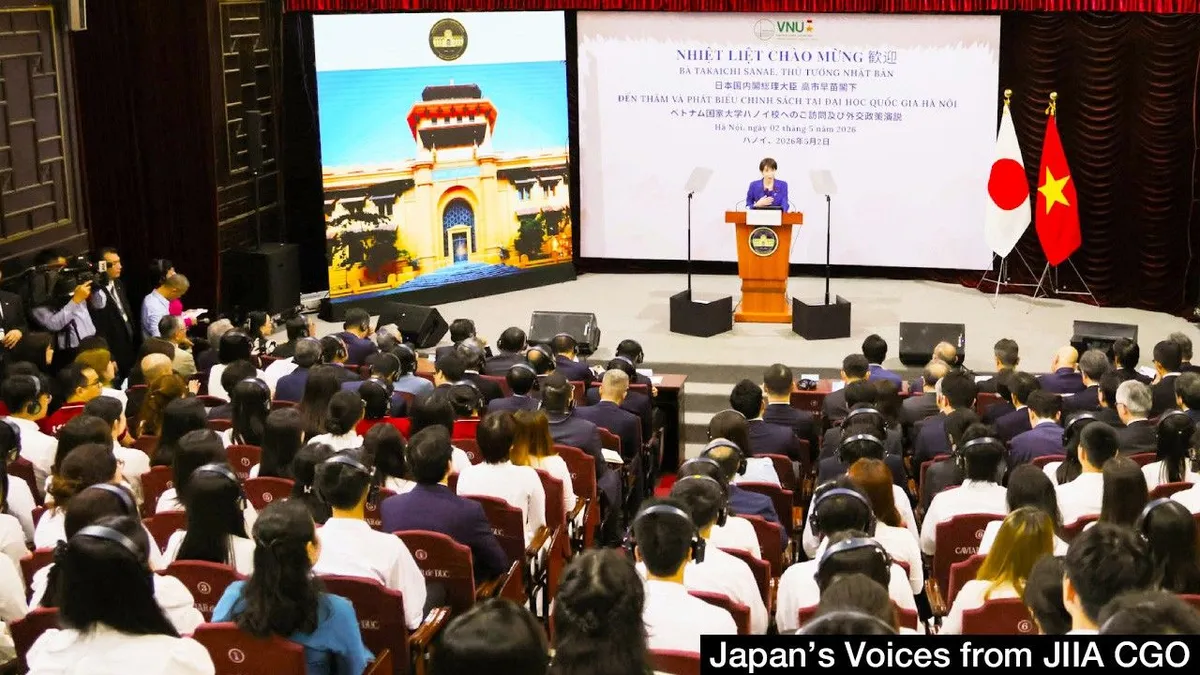
🔹 What happened: Prime Minister Takaichi Sanae introduced the updated Free and Open Indo-Pacific strategy at Vietnam National University in Hanoi in early May 2026. The three stated priorities are AI and data infrastructure development, economic growth through public-private partnerships and rule-sharing, and security cooperation for regional stability. A formal government document, "The Updated Free and Open Indo-Pacific," details the initiatives under each pillar. The initiative drawing the most immediate attention is POWERR Asia — the Partnership on Wide Energy and Resources Resilience Asia — announced in mid-April and designed to address pressing energy and resource access gaps across the region. Takaichi framed geopolitical competition, protectionism, and AI disruption as contextual factors rather than central crises.
🔹 Why it matters: The policy update comes as communities across Southeast Asia and the broader Global South face rising energy costs, disrupted supply chains, and shrinking fiscal space. POWERR Asia targets those vulnerabilities directly by promising public-private cooperation on energy and resource resilience. The broader shift in Japanese strategy also reflects a recognition that the Trump administration's unpredictable treatment of European allies and recent military interventions have raised questions about whether Washington will reliably protect smaller partners. For countries navigating between competing major-power frameworks, Japan's offer of rule-sharing and infrastructure investment provides a concrete alternative. The test will be whether Tokyo delivers funding and project execution at the scale these countries require.
📌 EPM Take: POWERR Asia stands as the most actionable element of Takaichi's updated FOIP; the communities most in need across the Indo-Pacific will measure its value in megawatts and supply chains, not policy documents.
Japan Builds Strategic Depth as Rules-Based Order Faces Stress Test
Prime Minister Takaichi launched the updated FOIP strategy and POWERR Asia initiative, positioning Japan as a proactive Indo-Pacific security and economic…
Japan is not abandoning its alliance with the United States — it is fortifying the architecture around it. Prime Minister Takaichi's updated Indo-Pacific strategy represents a deliberate expansion of Japan's strategic depth at a moment when the durability of Western-led multilateral order cannot be taken for granted.
🔹 What happened: On May 3, 2026, Takaichi unveiled the updated Free and Open Indo-Pacific framework at Vietnam National University in Hanoi, designating three pillars: AI and data economic infrastructure, public-private growth partnerships with rule-sharing, and security cooperation for regional peace. The Japanese government formalized the strategy in "The Updated Free and Open Indo-Pacific" document. The flagship economic initiative is POWERR Asia — the Partnership on Wide Energy and Resources Resilience Asia — announced in mid-April to address regional energy and resource supply vulnerabilities. The document identifies Russia, China, and the United States as major powers increasingly advancing national interests through power projection, a framing that narrows the strategic room available to middle powers like Japan.
🔹 Why it matters: Japan's strategic recalibration is grounded in hard realities. The Trump administration's approach to European allies and its military actions in Latin America and the Middle East have prompted Tokyo to reassess whether Washington will consistently uphold the international order — an assumption Japan's defense posture has rested on since 1952. Rather than weakening the alliance, Japan is reinforcing it by building a complementary network of Indo-Pacific partnerships that reduce single-point dependence. POWERR Asia gives prospective partners a concrete economic incentive to align with Japan's framework rather than with infrastructure alternatives offered by Beijing. This is burden-sharing executed through economics, not diplomatic theater.
📌 EPM Take: By pairing POWERR Asia with a formal strategic document acknowledging great-power competition, Takaichi has moved Japan from reactive ally to proactive regional architect — a posture the alliance with Washington ultimately benefits from.
Japón reorienta su política Indo-Pacífico pensando en los más vulnerables
Japón lanzó el FOIP actualizado con iniciativas como POWERR Asia, dirigidas a satisfacer necesidades energéticas urgentes de naciones del Indo-Pacífico.
Mientras las grandes potencias intensifican la competencia por recursos y rutas estratégicas, Japón propone un marco que promete beneficios concretos para países del Indo-Pacífico que históricamente han quedado fuera de las negociaciones de alto nivel. La pregunta es si el FOIP actualizado puede cumplir esa promesa.
🔹 Lo que pasó: En mayo de 2026, la primera ministra Takaichi Sanae expuso ante la Universidad Nacional de Vietnam el FOIP actualizado, con tres ejes: infraestructura para la era de la IA y los datos, crecimiento compartido mediante alianzas público-privadas, y cooperación en seguridad regional. El documento oficial elabora iniciativas específicas para cada área. Entre ellas, POWERR Asia —Asociación para la Resiliencia Energética y de Recursos en Asia— fue presentada en abril como respuesta a necesidades energéticas urgentes de la región. Takaichi reconoció como telón de fondo la competencia geopolítica, el proteccionismo y el ascenso del Sur Global, aunque sin abordarlos como crisis centrales.
🔹 Por qué importa: Para las naciones del Sudeste Asiático y el Sur Global, la propuesta japonesa llega en un momento en que el acceso a energía asequible, infraestructura digital y mercados estables no está garantizado. POWERR Asia apunta directamente a esas carencias. Al mismo tiempo, el documento reconoce implícitamente que la imprevisibilidad de la política exterior de Trump hacia aliados europeos y sus acciones militares recientes han erosionado la confianza en Estados Unidos como árbitro neutral del orden global. Para los países más pequeños, eso significa que las garantías de seguridad que daban por sentadas deben ser renegociadas. Japón se posiciona como un socio alternativo que ofrece reglas claras en lugar de poder discrecional.
📌 Conclusión EPM: POWERR Asia puede ser la diferencia para comunidades que dependen de energía importada; su alcance real dependerá de si el financiamiento público-privado prometido por Tokio se materializa en proyectos ejecutables.
Japón fortalece su arquitectura de seguridad ante vacío de liderazgo global
La primera ministra Takaichi presentó el FOIP actualizado con POWERR Asia como iniciativa ancla, buscando ampliar las alianzas estratégicas japonesas sin…
Japón ejecuta un movimiento estratégico de fondo: sin abandonar su alianza con Washington, Tokio construye una red de seguridad alternativa que le permita mantener la estabilidad regional si el orden liderado por Occidente continúa siendo tensionado desde adentro y desde afuera. Es pragmatismo, no ruptura.
🔹 Lo que pasó: La primera ministra Takaichi Sanae presentó el FOIP actualizado el 3 de mayo de 2026 en Hanói, articulando tres prioridades: infraestructura económica para la era de la IA, crecimiento vía colaboración público-privada, y cooperación en seguridad para la paz regional. El documento gubernamental «The Updated Free and Open Indo-Pacific» detalla las iniciativas concretas. POWERR Asia —anunciada en abril— se perfila como el ancla económica del nuevo FOIP, enfocada en resiliencia energética y de recursos para Asia. Takaichi mencionó la competencia geopolítica y el proteccionismo como factores de contexto, pero el documento va más lejos al reconocer que Rusia, China y Estados Unidos persiguen sus intereses nacionales mediante el ejercicio de poder, reduciendo el espacio para las potencias medianas.
🔹 Por qué importa: La decisión estratégica de Tokio responde a una realidad concreta: la conducta impredecible de la administración Trump hacia aliados europeos y sus intervenciones militares recientes cuestionan si Washington mantendrá su compromiso con el orden basado en reglas. Para Japón, que ha fundamentado su seguridad nacional en esa alianza desde 1952, reevaluar ese supuesto es una decisión de peso histórico. Ampliar las asociaciones estratégicas con potencias medianas del Indo-Pacífico refuerza la disuasión sin provocar una ruptura con Washington. POWERR Asia ofrece a esos socios potenciales una razón económica concreta para alinearse con el marco japonés frente a las alternativas que ofrecen Pekín o Moscú.
📌 Conclusión EPM: Al lanzar POWERR Asia y el FOIP actualizado simultáneamente, Takaichi demuestra que la seguridad nacional japonesa no puede depender de un solo aliado; diversificar es ahora imperativo estratégico, no opción.