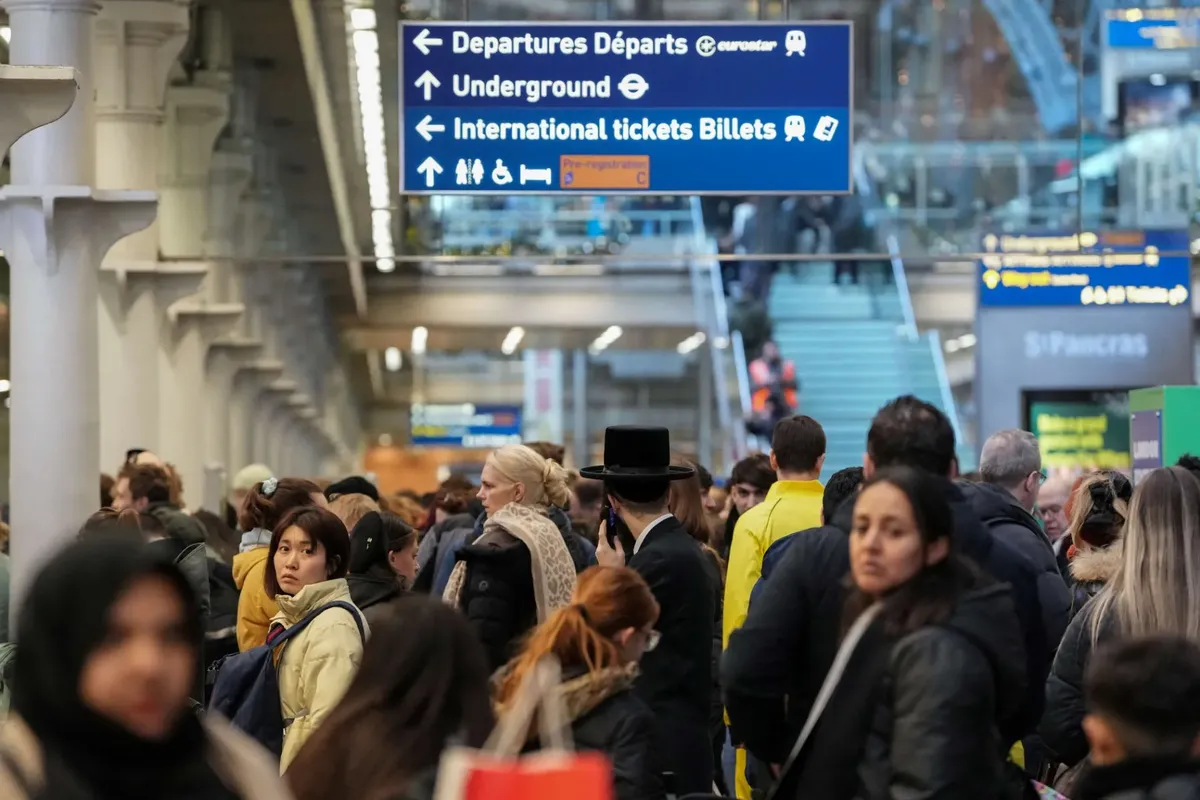
St Pancras Expansion Promised, But Passengers Will Crowd More Before They Crowd Less
Eurostar has mapped a three-phase expansion of St Pancras running from 2025 through the 2030s, but passenger numbers are set to rise before any physical space…
St Pancras Reform: A Three-Phase Plan, a Listed Building, and a French Veto Over Border Security
Eurostar's three-phase expansion of St Pancras runs from 2025 to the 2030s, but passenger volumes will rise before physical space grows, the Grade I listed…
Eurostar and St Pancras have finally put dates to their long-awaited expansion plan — but the sequencing guarantees that ordinary travellers will endure worse congestion for years before they see any relief. The gap between ambition and reality lands hardest on those who cannot afford to opt out.
--- THE CONTEXT ---
In 2025, Eurostar and St Pancras announced plans to "increase the station's capacity," describing the process as "reimagining" the station. Because St Pancras holds Grade I listed-building status, any structural changes are subject to strict planning controls that significantly extend the timeline for even modest alterations.
--- THE FACTS ---
Architects Hawkins\Brown were appointed to conduct a detailed design and feasibility study. Eurostar and the station subsequently outlined a three-phase timetable to the Brussels Times. Phase one, running from 2025 to 2028, targets an increase in capacity from 2,000 to 2,700 passengers per hour. Phase two, also expected to be completed by 2028, will address improvements to the international terminal area and passenger flows. Phase three, projected for the 2030s, would explore moving arrivals to the upper floor. Critically, the capacity increase in phase one is scheduled to arrive before any physical enlargement of the waiting area or security zone, meaning congestion is likely to worsen first. Compounding the pressure, the EU's new biometric Entry/Exit System — known as EES — has not yet been fully deployed at St Pancras because French authorities have not authorised the complete rollout. Only a small minority of passengers have completed EES pre-registration at the dedicated, currently non-operational area in the station. A broader rollout is expected in autumn, after the summer peak, though the start date rests with the French Interior Ministry.
--- THE POSITIONS ---
Eurostar and St Pancras communicated the phased timetable to the Brussels Times but have not detailed how passenger experience will be managed during the transition period. The French Interior Ministry has set no public date for authorising full EES deployment from London. No passenger advocacy group appears in the source material.
--- WHAT REMAINS UNKNOWN ---
The Hawkins\Brown feasibility study has not been published. The source does not specify the total number of existing seats in the waiting area, the cost of the three phases, or which parties will fund the investment.
--- UNANSWERED QUESTIONS ---
• How will Eurostar ensure a tolerable experience for passengers during the years when passenger numbers rise but physical space does not?
• Under what conditions will the French Interior Ministry authorise the full EES rollout at St Pancras, and will that decision be communicated publicly in advance?
• What recourse or compensation will travellers have if biometric processing delays cause them to miss departures?
• Will the feasibility study findings be published, and will passenger groups be consulted before final designs are approved?
--- EPM ANALYSIS ---
The phasing sequence is the story. Eurostar needs higher passenger volumes to justify the capital investment, yet packing more travellers into unchanged infrastructure directly degrades the experience that makes rail travel preferable to aviation. The immediate losers are working and middle-income travellers with no access to premium lounges. The decisive variable is not the architects' drawings but the French Interior Ministry's authorization of EES, which controls the timeline and intensity of the entire bottleneck. 📌
📌 EPM Take:
In EPM's view, the St Pancras plan is honest about timelines and frustratingly honest about their consequences: things get harder before they improve, and the person who bears that cost is the regular traveller with no alternative. EPM has previously covered how French institutions have been slow to protect citizens in domestic infrastructure crises. That same institutional inertia now shapes a cross-border corridor. The expansion deserves support — but so does a credible plan for the congestion years that precede it.
The most strategically significant rail corridor in the Western Europe faces a structural bottleneck that is simultaneously an infrastructure problem, a heritage-law constraint, and a sovereign policy decision made in Paris. Eurostar's three-phase expansion plan for St Pancras is a serious institutional undertaking — but its execution depends on actors outside British control.
--- THE CONTEXT ---
Eurostar and St Pancras announced in 2025 their intention to "increase the station's capacity" through what they called a "reimagining" of the space. St Pancras's Grade I listed-building status places it under strict planning controls, a legal framework that constrains the pace and scope of any physical intervention regardless of operational urgency.
--- THE FACTS ---
Architects Hawkins\Brown were commissioned to carry out a detailed design and feasibility study. A phased timetable was subsequently communicated to the Brussels Times. Phase one, from 2025 to 2028, targets growth from 2,000 to 2,700 passengers per hour. Phase two, also set for completion by 2028, will address the international terminal area and passenger flows. Phase three, in the 2030s, would examine relocating arrivals to the upper floor. The passenger-volume increase in phase one precedes any physical expansion of the security or waiting zones — a sequencing that guarantees short-term operational strain. In parallel, the EU's biometric Entry/Exit System, EES, remains partially deployed: the French Interior Ministry has not yet authorised the full rollout from London. A dedicated pre-registration area exists at St Pancras but is not currently operational, and only a small minority of passengers have completed EES checks there. The broader rollout is expected after the summer peak, though the French Interior Ministry controls the start date.
--- THE POSITIONS ---
Eurostar and St Pancras have set out the timetable to the Brussels Times but have provided no detail on interim passenger management protocols. The French Interior Ministry has issued no public commitment on an EES authorisation date. No competing rail operator has commented on the expansion plan specifically.
--- WHAT REMAINS UNKNOWN ---
The Hawkins\Brown feasibility study remains unpublished. The source does not reveal project costs, investment responsibilities, or what planning contingencies exist if the listed-building process delays phases one or two beyond 2028.
--- UNANSWERED QUESTIONS ---
• On what grounds and by what deadline will the French Interior Ministry authorise complete EES deployment at St Pancras?
• What contingency plans exist if heritage planning controls push phase one or phase two beyond the 2028 target?
• How will potential competition on the London-Paris route affect the financial case for a capital-intensive three-phase infrastructure investment?
• Will the Hawkins\Brown study be subject to public or parliamentary scrutiny before works begin?
--- EPM ANALYSIS ---
The core institutional tension is clear: a British transport asset's modernisation timetable is partly governed by a French ministerial decision. The French Interior Ministry's control over EES authorisation is not a technical footnote — it determines when normal border processing resumes and, therefore, when the expansion investment yields operational returns. The losers of continued delay are frequent cross-Channel travellers and the operators who depend on reliable throughput. The decisive variable is political, not architectural. 📌
📌 EPM Take:
In EPM's view, the St Pancras expansion is a sound institutional response to a genuine capacity crisis — but it is structurally exposed. A Grade I listed building limits design options; a French ministerial veto limits the border-control timeline; and a sequencing choice that adds passengers before adding space limits the near-term passenger experience. EPM has noted previously that French institutions have shown a pattern of slow action on cross-cutting infrastructure pressures. That pattern now has direct consequences for Western Europe's most-used international rail link. The plan needs an external accountability mechanism, not only an internal phasing chart.
St Pancras, la sala de espera que humilla al viajero: Eurostar promete más espacio, pero primero vendrán más pasajeros
Eurostar y St Pancras han detallado un plan de tres fases para ampliar la capacidad de la estación entre 2025 y la década de 2030, pero el aumento de pasajeros…
St Pancras: Eurostar traza un plan de expansión por fases, pero la seguridad fronteriza francesa y la burocracia de las obras históricas frenan el
Eurostar ha presentado un plan de tres fases para expandir St Pancras entre 2025 y los años 2030, pero el aumento de capacidad precede a las mejoras físicas…
El problema no es abstracto ni futuro: cada semana, miles de viajeros hacen cola en uno de los accesos ferroviarios más concurridos de Europa sin suficientes asientos, con controles apilados y sin margen para los imprevistos del nuevo mundo post-Brexit. La estación de St Pancras concentra hoy una contradicción que afecta directamente al trabajador, al turista y a la familia que viaja con presupuesto ajustado.
--- EL CONTEXTO ---
Eurostar y St Pancras anunciaron en 2025 planes para "aumentar la capacidad de la estación" mediante lo que describieron como una "reimaginación" del espacio. La estación es un edificio catalogado de Grado I, lo que impone controles de planificación estrictos y alarga cualquier proceso de reforma arquitectónica de forma significativa.
--- LOS HECHOS ---
El despacho de arquitectos Hawkins\Brown fue designado para realizar un estudio detallado de diseño y viabilidad. Según información proporcionada al Brussels Times, el proceso se divide en tres fases: la fase uno, entre 2025 y 2028, busca aumentar la capacidad de 2.000 a 2.700 pasajeros por hora. La fase dos, prevista para completarse antes de 2028, mejorará el área del terminal internacional y los flujos de pasajeros. La fase tres, proyectada para la década de 2030, exploraría trasladar las llegadas al piso superior. Sin embargo, el aumento de pasajeros está previsto antes de que se amplíen la sala de espera ni la zona de seguridad, lo que implica mayor congestión en el corto plazo.
--- LAS POSICIONES ---
Eurostar y la estación han comunicado el calendario al Brussels Times, pero no han detallado cómo se gestionará la experiencia del pasajero durante la transición. Las autoridades del Interior francés aún no han autorizado la implantación completa del sistema biométrico EES en los controles de salida desde Londres. Ninguna otra institución ha respondido públicamente.
--- LO QUE FALTA SABER ---
No se ha publicado el estudio de viabilidad de Hawkins\Brown. Tampoco se conoce qué porcentaje concreto de pasajeros ha completado el pre-registro EES en Londres, más allá de que es "una minoría pequeña". La fuente no precisa cuántos asientos existen hoy en la sala de espera.
--- PREGUNTAS SIN RESPUESTA ---
• ¿Cómo garantizará Eurostar una experiencia mínimamente digna durante los años en que la capacidad suba pero el espacio físico no crezca?
• ¿Cuándo emitirá el Ministerio del Interior francés el visto bueno definitivo para el despliegue completo de EES en St Pancras?
• ¿Qué mecanismos de compensación o información tendrán los pasajeros afectados por retrasos derivados de los controles biométricos?
• ¿Cuál es el coste estimado de las tres fases y quién asume esa inversión?
--- ANALISIS EPM ---
La secuencia revela una tensión estructural: Eurostar necesita más pasajeros para justificar la inversión, pero más pasajeros sin más espacio producen exactamente la experiencia que erosiona la fidelidad del viajero. El gran perdedor inmediato es el pasajero de clase media que no puede permitirse salas de espera privadas. El factor decisivo, más allá de los planos, es cuándo Francia desbloqueará el EES y con qué carga adicional llegará al sistema. 📌
📌 Conclusion EPM:
A juicio de EPM, la reforma de St Pancras es una promesa legítima envuelta en una contradicción operativa inmediata: la capacidad sube antes de que el espacio lo permita. Para el viajero que depende de este corredor, eso se traduce en años de congestión garantizada antes de cualquier alivio. EPM ha documentado ya cómo Francia ha sometido a sus propios ciudadanos a tensiones de infraestructura — en agua, en datos — y ahora ejerce también el poder de decidir cuándo arrancan los controles biométricos que marcarán el ritmo de estas reformas.
El corredor ferroviario más estratégico de Europa occidental arrastra un problema de infraestructura que compromete tanto la competitividad del mercado como la integridad del control fronterizo. La estación de St Pancras, símbolo del orden victoriano, es hoy el punto más débil del eje Londres-París, y su reforma depende tanto de permisos de obras históricas como de decisiones soberanas del gobierno francés.
--- EL CONTEXTO ---
Eurostar y la dirección de St Pancras anunciaron en 2025 la intención de "aumentar la capacidad de la estación" mediante una "reimaginación" del espacio. La condición de edificio catalogado de Grado I impone controles de planificación estrictos que ralentizan cualquier intervención arquitectónica y elevan el riesgo regulatorio del proyecto.
--- LOS HECHOS ---
El estudio detallado de diseño y viabilidad fue encargado al despacho Hawkins\Brown. El calendario comunicado al Brussels Times divide la reforma en tres fases: la fase uno, de 2025 a 2028, elevará la capacidad de 2.000 a 2.700 pasajeros por hora. La fase dos, que se completaría antes de 2028, mejorará el área del terminal internacional y los flujos de pasajeros. La fase tres, proyectada para los años 2030, estudiaría trasladar las llegadas a la planta superior. El aumento de pasajeros precede a las mejoras físicas del espacio. En paralelo, el despliegue del sistema biométrico EES permanece incompleto: el Ministerio del Interior francés no ha autorizado la implantación total desde Londres, y solo una minoría de pasajeros ha completado el pre-registro disponible en la estación.
--- LAS POSICIONES ---
Eurostar y St Pancras han comunicado el calendario al Brussels Times sin especificar mecanismos de gestión durante la transición. El Ministerio del Interior francés no ha indicado fecha de autorización del EES completo. Ningún competidor potencial de la ruta ha intervenido en este debate concreto.
--- LO QUE FALTA SABER ---
El estudio de viabilidad de Hawkins\Brown no ha sido publicado. No se conocen los costes del proyecto ni el reparto de la inversión. La fuente no aclara bajo qué condiciones el Ministerio del Interior francés emitirá su autorización para el EES.
--- PREGUNTAS SIN RESPUESTA ---
• ¿Bajo qué criterios y plazos el Ministerio del Interior francés aprobará el despliegue completo del sistema EES en St Pancras?
• ¿Qué garantías regulatorias y de planificación aseguran que las tres fases se ejecutarán sin interrupciones derivadas del estatus de edificio protegido?
• ¿Cómo afectará la entrada de competidores en la ruta Londres-París a la viabilidad financiera de la inversión en infraestructura?
• ¿Existe un plan de contingencia institucional si el calendario de obras se demora más allá de 2028?
--- ANALISIS EPM ---
La reforma de St Pancras pone en evidencia una vulnerabilidad institucional: el principal corredor ferroviario del Atlántico Norte depende de una decisión administrativa francesa para completar sus controles fronterizos. La variable decisiva no es arquitectónica sino política. Los perdedores del statu quo son los operadores y los viajeros frecuentes; el ganador táctico, por ahora, es París, que conserva el poder de bloquear el ritmo de modernización del corredor. 📌
📌 Conclusion EPM:
A juicio de EPM, el verdadero desafío de St Pancras no reside en los planos de Hawkins\Brown sino en la geometría del poder entre Londres y París. Francia controla cuándo arrancan los controles biométricos, cuándo se normaliza el flujo y, por tanto, cuándo tiene sentido económico la inversión en infraestructura. EPM ha registrado previamente cómo las instituciones francesas han actuado con lentitud ante crisis de infraestructura doméstica; ese mismo patrón aparece hoy en la frontera digital del Eurostar. La reforma es necesaria, pero la dependencia de un visto bueno externo la hace frágil.