Jeers in Le Porge: Families Who Lost Everything Confront a Prime Minister Who Would Not Stop
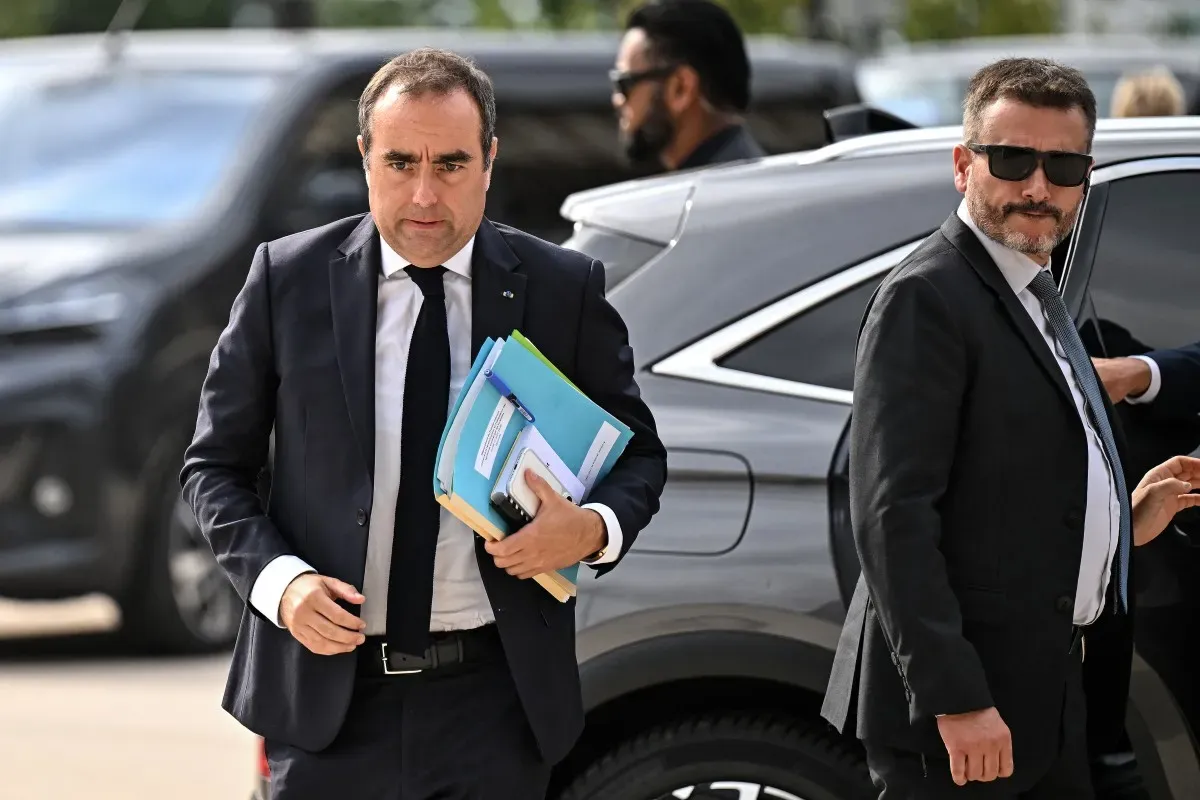
Two hundred residents of Le Porge jeered Prime Minister Sébastien Lecornu as he arrived by car without stopping to meet them.
Lecornu's Gironde Visit Exposes a Governance Failure: When the State Manages Its Image Instead of Its Citizens
Prime Minister Sébastien Lecornu drove past 200 protesting residents in Le Porge without meeting them, one day after an unannounced, camera-free visit to the…
Two hundred residents of Le Porge, dressed in black, waited outside the town hall on Monday and greeted Prime Minister Sébastien Lecornu with whistles, shouts and anti-government slogans as his tinted-window car rolled past. Behind the anger are 183 burned homes, more than 220,000 people forced to evacuate, and a community that says the state protected the wrong people first.
--- THE CONTEXT ---
Wildfires swept through the Gironde département in southwestern France in late July and early August, burning 42,000 hectares — the largest fire by surface area in France since 1949. The flames came within 15 kilometres of the Bordeaux metropolitan area, threatening one of the country's most densely populated regions.
--- THE FACTS ---
An AFP correspondent on the scene confirmed the protest. Lecornu had visited Le Porge on Sunday afternoon alongside Mayor Martial Zaninetti in an unannounced trip that excluded press cameras. On Monday he returned but did not meet the gathered residents, continuing instead to the nearby town of Merignac for a meeting with local officials. His office stated he had spoken with affected residents and farmers. Pensioner Tony Veiga, 65, told reporters that a direct meeting would have been the bare minimum. Organiser Ludivine Daurignac said riot police lines blocked residents from reaching the official event, and that her group plans to file formal complaints seeking truth, transparency and justice.
--- THE POSITIONS ---
Lecornu declared that the government has nothing to hide regarding fire-protection operations. Daurignac and the residents' collective reject that framing, alleging authorities prioritised firefighting efforts in the upscale Cap-Ferret peninsula — popular with affluent Parisians — over protecting local homes. Mayor Zaninetti made no public statement on the protest.
--- WHAT REMAINS UNKNOWN ---
No operational protocols determining the geographic priority of fire-suppression resources have been published. Lecornu's office did not identify which residents he spoke with on Sunday or whether any commitments were made during that unannounced visit.
--- UNANSWERED QUESTIONS ---
• Which residents and farmers did Lecornu specifically speak with during the unannounced Sunday visit?
• What legal avenue are the 183 affected households pursuing, and before which court?
• Did any official protocol govern the deployment of firefighting resources between zones during the crisis?
• When does the government plan to hold a formal public meeting with the affected residents' collective?
--- EPM ANALYSIS ---
The human cost here is concrete: 183 families without homes, 220,000 people displaced, and a community now organising legal action. The allegation that wealthier resort areas received priority protection is unverified but politically explosive. If the complaints filed by Daurignac's group reach a court, the government's insistence that operations were beyond reproach will face documentary scrutiny. Workers and pensioners like Veiga are absorbing losses while accountability remains disputed. 📌
📌 EPM Take:
In EPM's view, the Sunday visit without cameras followed by Monday's drive-past without a meeting is not a communications failure — it is a deliberate sequence that allowed the prime minister to claim presence without accepting accountability. EPM has previously covered how French citizens already face eroding trust in state institutions over tax-data exposure and water access. This episode adds a sharper edge: the perception, shared by residents who lost their homes, that protection is distributed unequally along lines of wealth and geography.
French Prime Minister Sébastien Lecornu arrived in Le Porge on Monday in a car with tinted windows and a flashing light, passed 200 black-clad protesters outside the town hall, and drove on to Merignac without stepping out to meet them. The episode raises a direct question about institutional accountability after France's worst wildfire crisis since 1949.
--- THE CONTEXT ---
Fire burned through 42,000 hectares of the Gironde département in late July and early August, forcing the evacuation of more than 220,000 residents and tourists. The flames reached within 15 kilometres of Bordeaux's metropolitan area, destroying 183 homes in Le Porge alone and testing the capacity of the French state's emergency response at its largest scale in decades.
--- THE FACTS ---
An AFP correspondent verified the Monday protest firsthand. Lecornu had visited Le Porge the day before in an unannounced trip with Mayor Martial Zaninetti, conducted without press cameras. His office said he spoke with affected residents and farmers during that Sunday visit. On Monday, rather than engage the crowd, he proceeded to a meeting with local officials in Merignac, where he stated that the government has nothing to hide regarding how fire-protection operations were conducted. Organiser Ludivine Daurignac reported that riot police blocked residents from approaching the official event and announced that her group will file formal complaints demanding truth, transparency and justice. Tony Veiga, a 65-year-old pensioner, said a meeting would have been the minimum the prime minister could have offered.
--- THE POSITIONS ---
Lecornu defended the government's operational record before local officials. Residents and their organised collective allege that firefighting resources were directed toward the affluent Cap-Ferret peninsula at the expense of local homes. Mayor Zaninetti issued no public comment on the protest or its claims.
--- WHAT REMAINS UNKNOWN ---
The operational chain of command that determined geographic resource priorities during the peak crisis days has not been made public. No formal account of who Lecornu met on Sunday or what, if anything, was agreed has been released by his office.
--- UNANSWERED QUESTIONS ---
• What command structure governed the allocation of firefighting assets between zones during the fire's peak expansion?
• What is Mayor Zaninetti's official position on the residents' allegations regarding resource prioritisation?
• What legal and institutional mechanisms does the French state offer households whose 183 homes were destroyed?
--- EPM ANALYSIS ---
The unannounced Sunday visit followed by Monday's pass-through without direct engagement reflects a crisis-management posture that prioritises narrative control over institutional accountability. Democratic legitimacy, particularly after emergencies affecting 220,000 people, depends on leaders meeting constituents under pressure, not only before cameras in controlled settings. The government may be operationally correct; the manner of the visit ensures that claim will now be tested in court rather than settled by a handshake. 📌
📌 EPM Take:
In EPM's view, no government that deploys riot police to separate a prime minister from the 183 households whose homes burned can simultaneously claim it has nothing to hide. The sequence — Sunday visit without press, Monday appearance without contact — is the kind of institutional choreography that corrodes public order more slowly but more lastingly than the fire itself. EPM has tracked France's accumulating governance frictions; this one carries the weight of a precedent: accountability deferred becomes accountability denied.
Vecinos de Le Porge reciben al primer ministro con abucheos: la ira de quienes perdieron su casa llega al centro de la política francesa
Unos 200 residentes de Le Porge, en el suroeste de Francia, abuchearon al primer ministro Sébastien Lecornu durante su visita a la zona devastada por los…
La visita de Lecornu a la Gironda revela una crisis de autoridad: el Estado frente a la ira organizada tras el peor incendio desde
El primer ministro Sébastien Lecornu llegó a Le Porge escoltado por la policía antidisturbios y no se reunió directamente con los 200 vecinos que protestaban.
Unos 200 residentes de Le Porge, en el suroeste de Francia, vistieron de negro el lunes y esperaron frente al ayuntamiento para recibir al primer ministro Sébastien Lecornu con silbidos, insultos y consignas contra el gobierno. La imagen concentra una crisis más amplia: las familias que perdieron 183 viviendas en la ola de incendios del verano exigen explicaciones que la visita oficial no les dio.
--- EL CONTEXTO ---
El incendio arrasó 42.000 hectáreas en el departamento de la Gironda entre finales de julio y principios de agosto, forzando la evacuación de más de 220.000 personas. Fue el mayor incendio en Francia por superficie desde 1949, y las llamas llegaron a estar a 15 kilómetros del área metropolitana de Burdeos.
--- LOS HECHOS ---
Un corresponsal de AFP constató los abucheos en directo. Lecornu había visitado Le Porge el domingo por la tarde junto al alcalde Martial Zaninetti, en un recorrido no anunciado y sin cámaras. El lunes regresó para reunirse con autoridades locales en la localidad cercana de Merignac. Su oficina señaló que sí habló con residentes y agricultores afectados. Tony Veiga, pensionista de 65 años, afirmó que lo mínimo habría sido que el primer ministro se reuniera con los vecinos. La organizadora del colectivo de afectados, Ludivine Daurignac, denunció que la policía antidisturbios bloqueó el acceso al acto oficial.
--- LAS POSICIONES ---
Lecornu declaró que el gobierno no tiene nada que esconder respecto a cómo se gestionaron los operativos de extinción. Daurignac, en cambio, anunció que los afectados presentarán denuncias y exigen verdad, transparencia y justicia. No consta respuesta del alcalde Zaninetti ante las acusaciones de los manifestantes.
--- LO QUE FALTA SABER ---
No se han publicado los criterios concretos con los que se priorizaron los despliegues de extinción entre distintas zonas. La oficina del primer ministro no detalló con qué residentes habló ni qué compromisos, si los hubo, adquirió durante la visita del domingo.
--- PREGUNTAS SIN RESPUESTA ---
• ¿Con qué residentes y agricultores habló concretamente Lecornu durante su visita no anunciada del domingo?
• ¿Existió algún protocolo oficial que determinara la prioridad geográfica de los recursos de extinción?
• ¿Qué vías legales concretas tienen los 183 hogares afectados para reclamar responsabilidades al Estado?
• ¿Cuándo y bajo qué condiciones recibirá el gobierno a la organización que prepara las denuncias?
--- ANALISIS EPM ---
La escena de Le Porge no es solo protesta espontánea: es el choque entre una gestión de crisis que el gobierno defiende como correcta y familias trabajadoras que perdieron su hogar y sienten que el poder público protegió intereses turísticos antes que sus viviendas. La variable decisiva será si las denuncias anunciadas por Daurignac logran abrir una investigación independiente. Los perdedores inmediatos son los 183 hogares destruidos; el perdedor político, visible, es Lecornu. 📌
📌 Conclusion EPM:
A juicio de EPM, la visita no anunciada del domingo y el regreso sin encuentro directo con vecinos el lunes construyen juntos una imagen de distancia institucional difícil de desmentir con declaraciones. EPM ha documentado antes cómo la crisis del agua y la exposición fiscal ya erosionaban la confianza ciudadana en el Estado francés; este episodio añade una dimensión territorial y de clase: la percepción de que el territorio protegido varía según quien viva en él. Esa percepción, fundada o no, tiene consecuencias políticas reales.
El primer ministro francés Sébastien Lecornu llegó el lunes a Le Porge con escolta policial y cristales tintados, y salió sin haber celebrado ningún encuentro formal con los 200 residentes que lo esperaban vestidos de negro. La escena expone un problema de gestión institucional que va más allá de las llamas: cómo el Estado francés responde ante su peor crisis de incendios desde 1949.
--- EL CONTEXTO ---
El incendio consumió 42.000 hectáreas en el departamento de la Gironda entre finales de julio y principios de agosto, obligando a evacuar a más de 220.000 personas. Las llamas alcanzaron un radio de 15 kilómetros del área metropolitana de Burdeos, el mayor avance del fuego sobre una gran ciudad francesa en décadas.
--- LOS HECHOS ---
Lecornu visitó Le Porge el domingo por la tarde en un recorrido no anunciado y sin prensa, acompañado del alcalde Martial Zaninetti. El lunes, ante la protesta de 200 vecinos frente al ayuntamiento —verificada por un corresponsal de AFP—, no se bajó del vehículo oficial y continuó hacia Merignac para reunirse con autoridades locales. Su oficina afirmó que habló con residentes y agricultores. El primer ministro declaró que el gobierno no tiene nada que esconder sobre la conducción de las operaciones de extinción. La organizadora Ludivine Daurignac informó que filas de policía antidisturbios bloquearon el acceso de los manifestantes.
--- LAS POSICIONES ---
Lecornu defendió la actuación del gobierno ante los alcaldes y autoridades de Merignac. Daurignac anunció denuncias formales y reclamó verdad, transparencia y justicia. Tony Veiga, de 65 años, calificó la ausencia del primer ministro como un trato denigrante. El alcalde Zaninetti no emitió declaraciones públicas sobre el incidente.
--- LO QUE FALTA SABER ---
No se han divulgado los protocolos operativos que determinaron la distribución de medios de extinción entre zonas. La oficina de Lecornu no identificó a los residentes con quienes habló el domingo, ni si se formalizó algún acuerdo de compensación o seguimiento.
--- PREGUNTAS SIN RESPUESTA ---
• ¿Qué cadena de mando determinó la prioridad operativa durante los días de mayor expansión del fuego?
• ¿Bajo qué marco legal presentarán las denuncias los afectados y ante qué tribunal?
• ¿Cuál es la posición oficial del alcalde Zaninetti respecto a las quejas de sus propios vecinos?
• ¿Qué mecanismos de rendición de cuentas activa el Estado francés ante la destrucción de 183 viviendas?
--- ANALISIS EPM ---
La decisión de visitar Le Porge sin anuncio el domingo y volver el lunes sin bajar del coche es, en términos de gestión institucional, un error de primer orden. El Estado pierde autoridad no cuando actúa, sino cuando evita rendir cuentas en público. Los ganadores a corto plazo son quienes organizan las denuncias; el perdedor estructural es la credibilidad del aparato de emergencias ante futuras crisis. 📌
📌 Conclusion EPM:
A juicio de EPM, el verdadero problema no es la ira de los vecinos sino la lógica de la visita: ir sin prensa el domingo para poder decir que ya se estuvo allí, y regresar el lunes sin contacto directo, es una maniobra de cobertura política que las instituciones democráticas no pueden permitirse cuando 183 hogares han ardido. EPM ha cubierto cómo el Estado francés acumula fricciones con sus ciudadanos; este episodio añade la dimensión más antigua de todas: la pregunta de si el poder se presenta ante quienes lo necesitan o solo ante quienes lo respaldan.