United States • • EPM Editorial Desk • 🌿 Progressive
Turkish families hoard gold because the system has let them down, economist says
Finance Minister Şimşek says $640 billion in gold and foreign currency sits outside Turkey's banking system.
Turkey cannot unlock $640 billion trapped by distrust in its own institutions
Finance Minister Şimşek warns that $640 billion in gold and foreign currency is held outside Turkey's formal banking system.
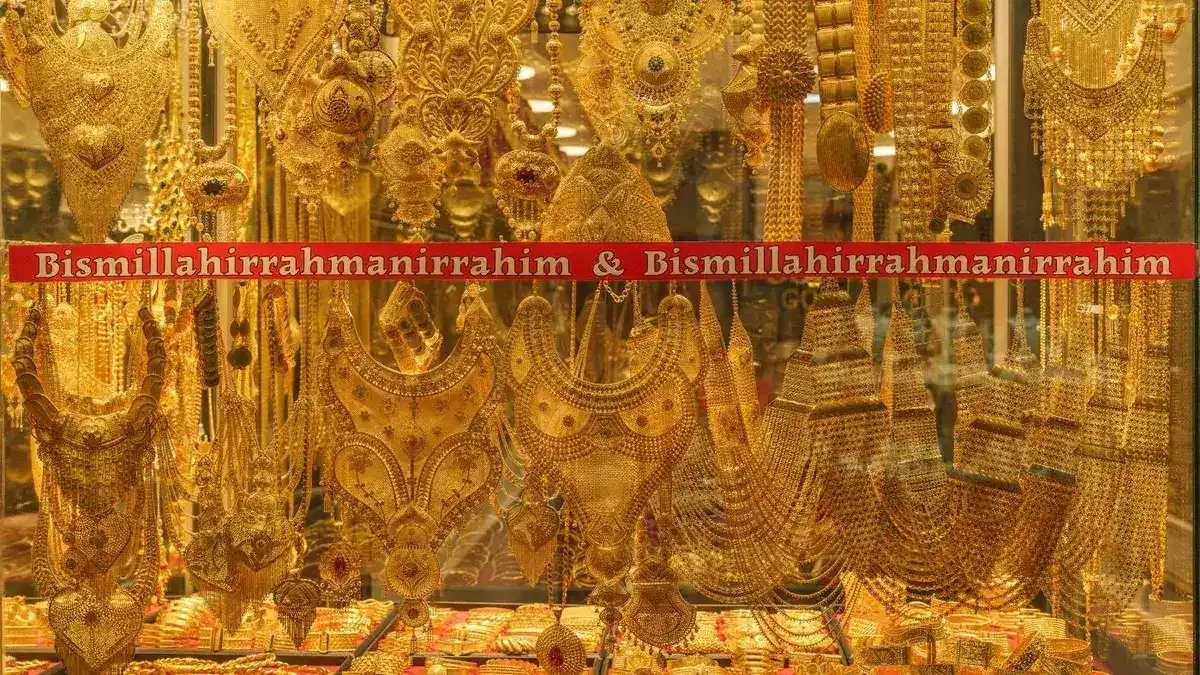
For millions of Turkish families, gold tucked away at home is not a superstition but a survival tool—a hedge against currency collapses that have eroded savings repeatedly over decades. Now the government is calling that habit an economic threat, putting ordinary savers at the center of a national policy debate.
--- THE CONTEXT ---
Finance Minister Mehmet Şimşek has stated that roughly $640 billion in gold and foreign currency is held outside Turkey's formal financial system. The practice is called «yastık altı altın»—gold under the mattress—and it reflects a long-standing distrust between Turkish households and the banking sector rooted in repeated currency devaluations and economic volatility.
--- THE FACTS ---
NPR's reporting from Istanbul's Mahmutpaşa market documents the practice at ground level. Nefise Asker, a 23-year-old bride-to-be preparing for a multi-day September wedding, told the outlet that she and her partner plan to use gifted gold to support their new life together. Selva Demiralp, an economist at Istanbul's Koç University and a former economist for the Turkish Federal Reserve, explains that wedding gold historically served as financial insurance for wives who did not work outside the home—a private safety net when no public one existed. Demiralp is direct: this behavior is a logical defense against chronic instability, not an outdated habit. Şimşek, however, has publicly framed it as something that is actively undermining the country's financial future.
--- THE POSITIONS ---
Şimşek represents the official line: private hoarding weakens the national economy. Demiralp argues the practice is economically rational given Turkey's history. This report does not include a response from the banking industry or consumer protection bodies.
--- WHAT REMAINS UNKNOWN ---
The report does not specify what concrete policy measures the government has proposed to bring those assets into the formal system, nor whether any legislative or regulatory framework is currently under debate.
--- UNANSWERED QUESTIONS ---
• What incentives, if any, has the Şimşek government designed to encourage small savers to move gold into banks without penalizing them?
• How does the $640 billion figure break down between physical gold and foreign currency held at home?
• Does the practice vary significantly across income levels, age groups or regions within Turkey?
--- EPM ANALYSIS ---
EPM has recently covered how distrust in institutions—from Washington's fiscal debates to municipal governance—pushes people toward parallel systems. Turkey's gold culture is a vivid case. The immediate loser is the state, which cannot intermediate or deploy those $640 billion. The relative winner is the individual saver who survived past crises with wealth intact. The decisive variable is whether the government can offer something the banking system has repeatedly failed to deliver: credible, sustained stability that makes formal saving genuinely safer than a mattress. 📌
📌
📌 EPM Take:
In EPM's view, framing household gold hoarding as an obstacle without acknowledging why it exists is both politically tone-deaf and analytically incomplete. Turkish families did not build this habit arbitrarily; they built it because formal institutions failed them, often. Any policy that ignores that history will struggle to move a single gram. The path to financial integration runs through institutional credibility—not through ministerial declarations alone. Until that credibility is earned back through demonstrated stability, the mattress will keep winning.
A country holding regional ambitions cannot afford to have $640 billion in gold and foreign currency sitting outside its financial system. Turkey's «yastık altı» habit is not merely a cultural quirk—it is a measurable drag on monetary sovereignty, market depth and the state's capacity to project economic order at home and abroad.
--- THE CONTEXT ---
Finance Minister Mehmet Şimşek has publicly disclosed that approximately $640 billion in gold and foreign currency remains outside the formal banking system. The practice—known locally as «yastık altı altın» or gold under the mattress—traces its roots to repeated lira devaluations and a structural breakdown of trust between Turkish citizens and their financial institutions.
--- THE FACTS ---
NPR's on-the-ground reporting from Istanbul's Mahmutpaşa bazaar illustrates how deeply embedded the habit is. Nefise Asker, a 23-year-old bride preparing for a September wedding, described expecting to receive gold as gifts—a tradition she and her partner view as seed capital for their household. Selva Demiralp, economist at Koç University in Istanbul and a former economist for the Turkish Federal Reserve, confirms that wedding gold historically functioned as a private safety net, particularly for women without independent incomes. Demiralp argues the behavior remains a logical shield against chronic instability rather than an anachronism to be dismissed. Şimşek has taken the opposite public stance, characterizing the hoarding culture as actively harmful to the country's financial trajectory.
--- THE POSITIONS ---
Şimşek frames the issue as a national economic liability requiring correction. Demiralp's academic position defends it as a rational market response to institutional failure. This source does not record a position from the private banking sector or the central bank.
--- WHAT REMAINS UNKNOWN ---
This report does not establish what regulatory tools or fiscal incentives the government is considering to repatriate those assets, nor whether any formal legislative process is underway to address the structural trust deficit.
--- UNANSWERED QUESTIONS ---
• What monetary policy instruments is the central bank considering to make formal savings accounts more attractive than physical gold?
• How does this volume of unintermediated private capital affect Turkey's sovereign credit ratings and its leverage in international financial negotiations?
• Are there coordinated efforts with international financial institutions to address the structural causes of banking distrust?
• To what degree does the informal gold market influence domestic price stability and the balance of payments?
--- EPM ANALYSIS ---
From an institutional order perspective, $640 billion outside the formal circuit represents a profound loss of fiscal and monetary leverage for the Turkish state. EPM's prior coverage of Washington's institutional fractures—from tariff authority disputes to fiscal standoffs—shows that when citizens route around official systems, governance weakens across the board. Turkey's case is structural: the state cannot stabilize its currency or attract credible foreign investment while its own population systematically distrusts its banks. The short-term winner is the individual saver; the systemic loser is Turkey's competitive standing in global markets. 📌
📌
📌 EPM Take:
Our reading is that the «yastık altı» phenomenon is the most honest indicator of Turkey's institutional health available. Minister Şimşek is right to name it as a problem but wrong to treat it as the cause rather than the symptom. Decades of monetary mismanagement created this parallel economy. No financial inclusion campaign will shift that gold unless it is accompanied by credible, sustained reform that proves the state can be trusted as a custodian of savings. Without that proof, the mattress remains the rational choice.
El oro bajo el colchón: cuando el Estado falla, los turcos ahorran a su manera
El ministro Şimşek cifra en 640 mil millones de dólares el oro y las divisas que los turcos mantienen fuera del sistema financiero.
640 mil millones en oro fuera del sistema financiero turco
El ministro Şimşek alerta de que 640 mil millones de dólares en oro y divisas permanecen fuera de la banca turca.
En Turquía, guardar oro en casa no es superstición ni desconfianza caprichosa: es la respuesta racional de millones de personas a décadas de inflación, devaluaciones y un sistema financiero que no les ha dado razones para confiar en él. El choque entre esa lógica popular y la preocupación oficial define hoy uno de los debates económicos más urgentes del país.
--- EL CONTEXTO ---
El ministro de Finanzas Mehmet Şimşek ha declarado que unos 640 mil millones de dólares en oro y divisas se mantienen fuera del sistema financiero formal. La práctica tiene nombre propio: «yastık altı altın», literalmente «oro bajo el colchón», y refleja una relación históricamente tensa entre el ciudadano turco y sus instituciones bancarias.
--- LOS HECHOS ---
La reportería de NPR recoge la experiencia de Nefise Asker, novia de 23 años que busca ropa en el mercado Mahmutpaşa de Estambul para una boda de varios días prevista para septiembre. Como muchas novias turcas, Asker espera recibir oro como regalo de boda y planea que la pareja lo use como respaldo económico al comenzar su vida en común. La economista Selva Demiralp, de la Universidad Koç de Estambul y ex economista de la Reserva Federal turca, explica que el oro regalado en bodas funcionó históricamente como seguro financiero para esposas que no trabajaban fuera del hogar. Demiralp subraya que acumular oro físico fuera del banco es hoy una defensa lógica ante la inestabilidad crónica, no un simple hábito anticuado.
--- LAS POSICIONES ---
Las autoridades turcas, con Şimşek a la cabeza, enmarcan la práctica como un freno al crecimiento económico del país. Demiralp, en cambio, la defiende como una respuesta racional a condiciones reales. La fuente no registra una respuesta del sector bancario ni de organizaciones de consumidores.
--- LO QUE FALTA SABER ---
El reporte no detalla qué políticas concretas propone el gobierno para movilizar esos activos ni si existen incentivos específicos ya en marcha. Tampoco establece qué proporción corresponde a oro físico frente a divisas en efectivo.
--- PREGUNTAS SIN RESPUESTA ---
• ¿Qué medidas concretas ha propuesto o implementado el gobierno de Şimşek para atraer ese capital al sistema formal sin penalizar a pequeños ahorradores?
• ¿En qué medida afectan estas reservas privadas la capacidad del banco central turco para gestionar la política monetaria?
• ¿Cómo varía la práctica del «yastık altı» entre distintas clases de ingresos, regiones o generaciones?
--- ANALISIS EPM ---
El debate turco ilustra una tensión que EPM ha observado también en la cobertura estadounidense reciente: cuando las instituciones priorizan objetivos macroeconómicos sobre la seguridad cotidiana del ciudadano, las personas construyen sus propios sistemas paralelos. En este caso, el «perdedor» inmediato es el Estado, que no puede intermediar ni capitalizar esos 640 mil millones. El «ganador» relativo es el ahorrador individual que sobrevivió a crisis pasadas con su oro intacto. La variable decisiva es si el gobierno puede ofrecer garantías creíbles de estabilidad. 📌
📌 Conclusion EPM:
A juicio de EPM, criminalizar o estigmatizar el «yastık altı» sin atender primero las causas que lo generan es un error político y comunicativo. Las familias turcas no guardan oro por ignorancia financiera; lo hacen porque el sistema ha fallado en repetidas ocasiones. Cualquier política que no reconozca esa historia difícilmente logrará mover ese capital. La confianza institucional no se recupera con declaraciones ministeriales: se gana con estabilidad sostenida y protección real al ahorrador. 📌
Un país con ambiciones de protagonismo regional no puede permitirse que 640 mil millones de dólares duerman fuera de su sistema financiero. La práctica turca del «yastık altı» no es solo una curiosidad cultural: es una señal de alarma sobre la debilidad institucional que socava la capacidad del Estado para ordenar su economía y proyectar estabilidad hacia el exterior.
--- EL CONTEXTO ---
El ministro de Finanzas Mehmet Şimşek advirtió que esa cifra —640 mil millones de dólares en oro y divisas— permanece fuera del circuito bancario formal. La práctica, conocida como «yastık altı altın» o «oro bajo el colchón», tiene raíces históricas en sucesivas devaluaciones de la lira y en una desconfianza estructural hacia las instituciones financieras del país.
--- LOS HECHOS ---
La cobertura de NPR documenta la magnitud social del fenómeno a través del testimonio de Nefise Asker, novia de 23 años, quien en el mercado Mahmutpaşa de Estambul anticipa recibir oro como regalo de boda para apuntalar la economía del nuevo hogar. La economista Selva Demiralp, de la Universidad Koç y ex economista de la Reserva Federal turca, confirma que el oro regalado en bodas actuó históricamente como red de seguridad para mujeres sin ingresos propios. Demiralp señala que la conducta persiste porque constituye una defensa lógica frente a la inestabilidad crónica, no un simple anacronismo. Şimşek, por su parte, la identifica como un obstáculo activo para el futuro financiero del país.
--- LAS POSICIONES ---
Şimşek representa la postura oficial: el atesoramiento privado debilita la economía nacional. Demiralp ofrece la lectura académica: la conducta es racional dado el historial de volatilidad. La fuente no recoge la posición de la banca privada ni del banco central.
--- LO QUE FALTA SABER ---
Este reporte no establece si el gobierno ha diseñado instrumentos regulatorios o incentivos fiscales para repatriar esos activos, ni si existe algún plazo o marco legal en discusión para hacerlo.
--- PREGUNTAS SIN RESPUESTA ---
• ¿Qué mecanismos de política monetaria o fiscal evalúa el gobierno para incorporar esos activos al sistema formal sin provocar una fuga de capitales?
• ¿Cómo afecta esta masa de capital no intermediado a la calificación crediticia y a la percepción de riesgo soberano de Turquía?
• ¿Existe alguna coordinación con instituciones financieras internacionales para abordar el problema estructural de la desconfianza bancaria?
• ¿Qué papel juega el mercado informal de oro en el equilibrio de precios internos y en la balanza de pagos?
--- ANALISIS EPM ---
Desde una perspectiva de orden institucional, 640 mil millones fuera del circuito formal representan una pérdida de palanca monetaria y fiscal para el Estado. En Turquía, el fenómeno es estructural: el Estado no puede estabilizar su moneda ni atraer inversión extranjera con credibilidad si su propio tejido social rechaza sus bancos. El ganador de corto plazo es el ahorrador individual; el perdedor sistémico es la capacidad del país de competir en mercados internacionales. 📌
📌 Conclusion EPM:
A juicio de EPM, el «yastık altı» es el termómetro más honesto de la salud institucional turca. Mientras el gobierno de Şimşek señala la práctica como un problema económico, en realidad es el síntoma de décadas de gestión monetaria deficiente. Ninguna campaña de inclusión financiera moverá ese oro si no va acompañada de reformas creíbles y sostenidas que demuestren que el Estado puede ser un custodio confiable del ahorro ciudadano. Sin esa confianza, el colchón seguirá ganando. 📌 EPM ha señalado en coberturas previas sobre Estados Unidos cómo la desconfianza en las instituciones genera sistemas paralelos que debilitan la gobernanza.