United States • • EPM Editorial Desk • 🌿 Progressive
Mecca drone strike attempt leaves Saudi Arabia's allies watching from the sidelines
Saudi Arabia says it intercepted a Houthi drone aimed at Mecca; the Houthis deny it.
Mecca red line tested as Saudi defense pact remains inoperative
Saudi Arabia says it intercepted a drone aimed at Mecca and called the city a red line, but its tripartite defense pact with Turkey and Pakistan has not been…
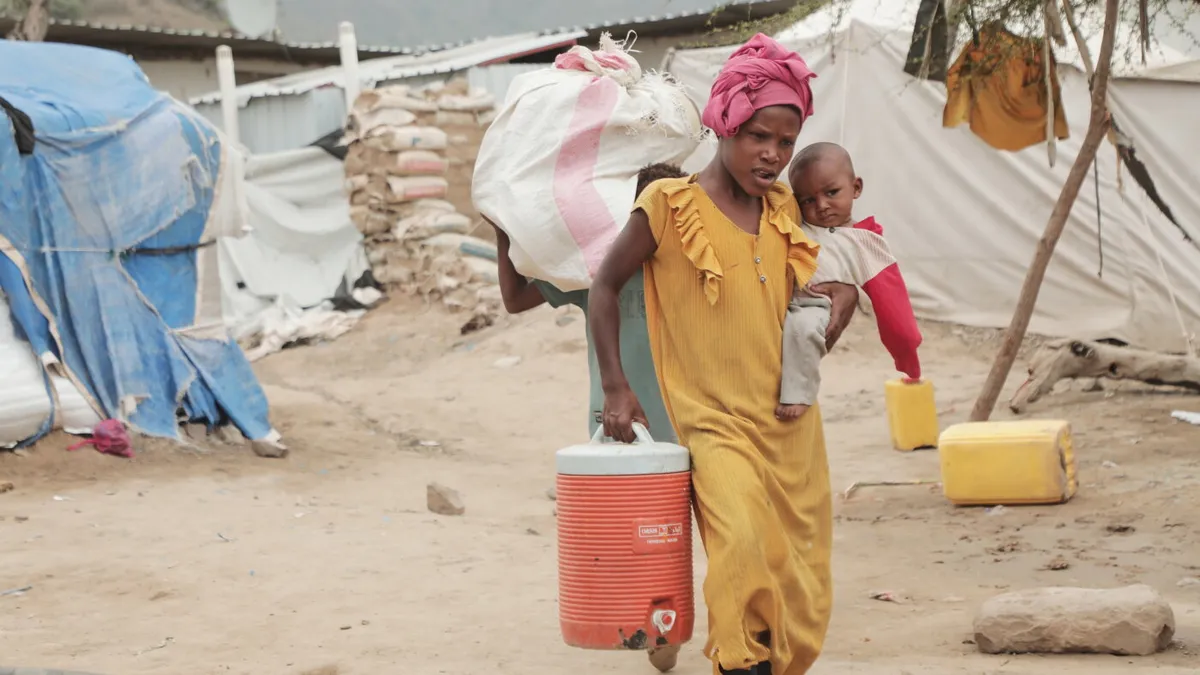
Saudi Arabia accused Houthi rebels of attempting to strike Islam's holiest city with a drone, but its newest defense partners have not mobilized, and Washington is talking to everyone while committing to no one. A displaced person photographed walking through a camp in Taiz province, Yemen, on September 15, 2026, captures the human geography of a war whose frontlines are now reaching toward Mecca.
--- THE CONTEXT ---
The Associated Press reported from Cairo that Houthi rebels, backed by Iran, have been attacking Saudi infrastructure and Red Sea shipping for weeks. Iran continues targeting vessels in the Strait of Hormuz. A critical Saudi pipeline has reportedly been shut down, and oil prices remain above $100 a barrel.
--- THE FACTS ---
Saudi forces said they intercepted and destroyed the drone before it entered airspace over Mecca, approximately 1,100 kilometers — roughly 680 miles — from Yemen's border. Coalition spokesperson Col. Turki al-Maliki said it was the second attempted Houthi strike on Mecca after a ballistic missile was fired toward the city in 2017. The Houthis denied launching the drone. A new defense pact linking Saudi Arabia, NATO member Turkey and nuclear-armed Pakistan has not been invoked: Turkish and Pakistani officials told AP, speaking anonymously because they were not authorized to speak publicly, that Saudi Arabia has not formally requested support. A Turkish official added that institutionalizing the alliance must be completed before it becomes operational. Pakistani Prime Minister Shehbaz Sharif condemned the attack and stated his country stands with the Saudis. The Organization of Islamic Cooperation, representing more than 57 Muslim states, said the attempt violates the sanctity of holy sites.
--- THE POSITIONS ---
President Trump said Saturday that the Houthis told Washington they do not want to fight the United States and appear focused on the Saudis. Vice President Vance described the situation Monday as a very fluid and dynamic thing and said Washington has been in constant contact with both Riyadh and the Houthis directly. The Houthis deny the Mecca attack entirely.
--- WHAT REMAINS UNKNOWN ---
This report does not establish what independent technical verification exists for the drone's origin, what specific benchmarks Turkey has set before the pact becomes active, or what concrete understandings Washington has reached with the Houthis in direct talks.
--- UNANSWERED QUESTIONS ---
• What technical evidence, independently verified, links or rules out Houthi responsibility for the intercepted drone?
• How many civilians in Taiz province have been newly displaced by the most recent escalation?
• What specific terms must be met before Turkey declares the tripartite defense pact operational?
• What commitments, if any, has Washington extracted from the Houthis in direct conversations?
--- EPM ANALYSIS ---
The attempted strike on Mecca transforms a proxy war into a test of collective Muslim political will — and the result so far is verbal solidarity without material action. Workers in Saudi oil infrastructure, sailors in Red Sea shipping lanes, and displaced Yemeni families in Taiz all bear the cost of an alliance architecture that exists on paper. Washington's equidistant posture — talking to Riyadh and the Houthis simultaneously — signals management, not resolution. 📌
📌 EPM Take:
In EPM's view, the gap between condemnation and action is the defining feature of this crisis. The tripartite pact with Turkey and Pakistan was supposed to extend Saudi security without full U.S. entanglement — but it has not been activated, and Washington shows no urgency to fill that gap. EPM reads this as a structural vulnerability: oil above $100 a barrel, a critical pipeline shut, and the closest thing to a coalition response is anonymous officials explaining why nothing has happened yet. 📌
Saudi Arabia's declaration that Mecca is a red line carries enormous symbolic weight and, so far, almost no military consequence. The Associated Press reported from Cairo on September 15, 2026, that the kingdom's new tripartite defense pact with Turkey and Pakistan remains entirely dormant — and that Washington is in contact with all sides while declining to commit to any.
--- THE CONTEXT ---
Houthi rebels, backed by Iran, have been striking Saudi infrastructure and disrupting Red Sea shipping for weeks. Iran is simultaneously targeting vessels in the Strait of Hormuz. A critical Saudi pipeline has been shut down for weeks. Oil prices remain above $100 a barrel, placing the world's largest exporter under simultaneous strategic and economic pressure.
--- THE FACTS ---
Saudi forces said they intercepted and destroyed a drone before it entered Mecca's airspace. The city lies approximately 1,100 kilometers, or 680 miles, from Yemen's border. Coalition spokesperson Col. Turki al-Maliki identified this as the second attempted Houthi attack on Mecca, following a ballistic missile fired in 2017. The Houthis denied responsibility. Officials from Turkey and Pakistan — both parties to a new defense pact with Riyadh — confirmed to AP, under anonymity, that Saudi Arabia has not submitted a formal request for support. A Turkish official noted the alliance must be institutionalized before it can be activated. Pakistani Prime Minister Shehbaz Sharif condemned the strike and pledged to stand with Saudi Arabia. The Organization of Islamic Cooperation, representing more than 57 Muslim-majority states, condemned the violation of holy site sanctity.
--- THE POSITIONS ---
President Trump said Saturday the Houthis have indicated they do not want a fight with Washington and appear concentrated on the Saudis. Vice President Vance said Monday that Washington has been in constant contact with Riyadh and in direct conversations with the Houthis, calling the situation very fluid and dynamic. Neither official indicated that military support for Saudi Arabia was under consideration.
--- WHAT REMAINS UNKNOWN ---
This source does not establish what independent verification exists for the drone's Houthi origin, what institutionalization benchmarks Turkey has set, how long the critical pipeline has been shut or what its closure means for Saudi export capacity.
--- UNANSWERED QUESTIONS ---
• What concrete steps has Washington offered Riyadh beyond diplomatic contact and monitoring?
• Which specific institutional conditions must Turkey satisfy before the tripartite pact becomes operational?
• Does independent technical evidence support or contradict the Saudi attribution of the drone to the Houthis?
• What is the current export capacity loss resulting from the pipeline shutdown?
--- EPM ANALYSIS ---
Iran's proxy network has now struck — or attempted to strike — the symbolic core of Sunni Islam, and the Western-aligned security order in the Gulf has produced condemnations, not deterrence. The tripartite pact was conceived precisely to give Saudi Arabia credible non-U.S. military backing; its inactivation in the face of direct escalation is a signal adversaries will read carefully. Oil above $100 a barrel is not an abstraction: it is leverage, and right now Tehran's partners hold it. 📌
📌
📌 EPM Take:
In EPM's view, this episode exposes the gap between declared alliances and functional deterrence in the Gulf. EPM has previously noted congressional resistance to deeper Iran-related commitments and Trump's preference for direct negotiation over coalition management. That approach may contain immediate escalation, but it leaves Saudi Arabia — a cornerstone of the pro-Western energy order — strategically exposed. An alliance that cannot be activated under direct attack on the holiest site in Islam is not yet an alliance; it is a statement of intent.
Arabia Saudita declara La Meca línea roja, pero sus aliados aún no actúan
Arabia Saudita interceptó un dron que se dirigía a La Meca y culpó a los hutíes, quienes lo niegan.
La Meca bajo ataque: el orden regional saudita se quiebra y sus aliados no reaccionan
Arabia Saudita interceptó un dron dirigido a La Meca y acusó a los hutíes, que lo niegan.
Arabia Saudita acusó a los rebeldes hutíes de Yemen de intentar atacar La Meca con un dron, y el mundo islámico condenó el hecho, pero los aliados militares del reino no han movido un solo soldado. El desplazamiento de civiles en la provincia yemení de Taiz —visible en las imágenes del 15 de septiembre de 2026— ilustra el costo humano de un conflicto que ahora escala hacia los sitios más sagrados del islam.
--- EL CONTEXTO ---
La agencia AP recoge que Arabia Saudita y los hutíes llevan años en conflicto. Los rebeldes, respaldados por Irán, atacan infraestructura saudita y el tráfico marítimo en el Mar Rojo. Irán sigue apuntando a embarcaciones en el Estrecho de Ormuz. El barril de petróleo supera los 100 dólares.
--- LOS HECHOS ---
Las fuerzas sauditas dijeron haber interceptado y destruido el dron antes de que entrara en el espacio aéreo de La Meca, a unos 1,100 kilómetros de la frontera con Yemen. El portavoz de la coalición militar liderada por Arabia Saudita, coronel Turki al-Maliki, señaló que sería el segundo intento de los hutíes contra La Meca, tras el misil balístico disparado en 2017. Los hutíes negaron toda responsabilidad. Una tubería crucial saudita lleva semanas cerrada. El petróleo supera los 100 dólares el barril y el reino necesita rutas seguras tanto para exportar crudo como para recibir apoyo militar.
--- LAS POSICIONES ---
Oficiales de Turquía y Pakistán, consultados por AP bajo condición de anonimato, confirmaron que Arabia Saudita no ha solicitado formalmente activar el nuevo pacto de defensa tripartito. El primer ministro paquistaní Shehbaz Sharif condenó el ataque y afirmó que su país está con los sauditas. La Organización de Cooperación Islámica, que agrupa a más de 57 estados musulmanes, rechazó la violación de la santidad de los sitios sagrados. Los hutíes negaron haber disparado.
--- LO QUE FALTA SABER ---
La fuente no establece qué condiciones específicas deben cumplirse para que el pacto tripartito se vuelva operativo, ni qué canal diplomático usa Arabia Saudita con Washington más allá de lo que declaró el vicepresidente Vance.
--- PREGUNTAS SIN RESPUESTA ---
• ¿Cuántos civiles yemeníes en la provincia de Taiz se han desplazado como consecuencia directa de la escalada más reciente?
• ¿Qué criterios concretos deben cumplirse para que el pacto de defensa entre Arabia Saudita, Turquía y Pakistán sea operativo?
• ¿Existe evidencia técnica independiente que atribuya o descarte la autoría hutí del dron interceptado?
• ¿Qué acuerdos específicos ha alcanzado Washington con los hutíes en sus conversaciones directas?
--- ANÁLISIS EPM ---
El intento de ataque a La Meca convierte un conflicto regional en una crisis de legitimidad religiosa global. Las condenas sobran; el apoyo concreto escasea. Arabia Saudita necesita rutas de exportación seguras y respaldo militar, pero sus aliados más cercanos esperan formalidades institucionales. Trump y Vance hablan de contacto constante con Riad y con los hutíes, lo que señala una política de contención, no de confrontación. Los desplazados de Taiz pagan el precio de esa ambigüedad. 📌
📌
📌 Conclusion EPM:
A juicio de EPM, la brecha entre las condenas diplomáticas y la acción militar concreta expone una falla sistémica: el nuevo eje de seguridad entre Arabia Saudita, Turquía y Pakistán existe en papel pero no en la práctica. Washington habla con todas las partes sin comprometerse con ninguna. Mientras los precios del petróleo superan los 100 dólares y una tubería crítica permanece cerrada, quienes menos pueden protegerse —los civiles desplazados de Taiz— absorben las consecuencias de una arquitectura de alianzas que aún no funciona.
El intento de atacar La Meca con un dron es más que una provocación religiosa: es una prueba de estrés para la arquitectura de seguridad que Arabia Saudita ha construido con Turquía y Pakistán, y esa arquitectura ha cedido antes de ser puesta a prueba. La AP reportó los hechos el 15 de septiembre de 2026 desde El Cairo, con declaraciones de funcionarios de los tres países bajo condición de anonimato.
--- EL CONTEXTO ---
Los hutíes, respaldados por Irán, vienen atacando infraestructura saudita y el tráfico marítimo en el Mar Rojo durante semanas. Irán también apunta a barcos en el Estrecho de Ormuz. El petróleo supera los 100 dólares el barril y Arabia Saudita tiene una tubería crítica paralizada.
--- LOS HECHOS ---
Las autoridades sauditas afirman haber interceptado y destruido el dron antes de que cruzara el espacio aéreo de La Meca, ciudad situada a 1,100 kilómetros de la frontera yemení. El coronel Turki al-Maliki, portavoz de la coalición, indicó que este habría sido el segundo intento hutí contra La Meca desde el misil balístico de 2017. Los hutíes negaron haber lanzado el aparato. El nuevo pacto de defensa tripartito entre Arabia Saudita, Turquía —miembro de la OTAN— y Pakistán, potencia nuclear, no fue activado: funcionarios de Turquía y Pakistán confirmaron a AP que Riad no ha formulado ninguna solicitud formal. El funcionario turco añadió que el proceso de institucionalización del acuerdo debe completarse antes de que sea operativo.
--- LAS POSICIONES ---
El primer ministro paquistaní Shehbaz Sharif condenó el ataque y declaró que su país está con Arabia Saudita. La Organización de Cooperación Islámica, con más de 57 estados miembros, catalogó el intento como violación de la santidad de los sitios sagrados. El presidente Trump señaló que los hutíes aseguran no querer pelear con Washington y que parecen concentrados en los sauditas. El vicepresidente Vance describió la situación como algo muy fluido y en evolución.
--- LO QUE FALTA SABER ---
Esta fuente no establece qué verificación técnica existe sobre el origen del dron, ni qué condiciones específicas impone Turquía para que el pacto sea operativo, ni qué ha acordado exactamente Washington con los hutíes en sus conversaciones directas.
--- PREGUNTAS SIN RESPUESTA ---
• ¿Qué evidencia técnica avala o refuta la atribución saudita del dron a los hutíes?
• ¿Cuáles son las condiciones concretas que Turquía exige para declarar operativo el pacto de defensa tripartito?
• ¿Qué compromisos específicos, si los hay, ha obtenido Washington de los hutíes en sus contactos directos?
• ¿Cuánto tiempo lleva cerrada la tubería crítica saudita y cuál es su capacidad de exportación afectada?
--- ANÁLISIS EPM ---
Un ataque a La Meca no es solo una afrenta religiosa: es un golpe calculado a la credibilidad estratégica de Arabia Saudita como potencia regional. El pacto tripartito permanece inoperante, lo que da ventaja diplomática a Irán. Trump y Vance hablan de fluidos contactos pero no de compromisos. Con el crudo por encima de los 100 dólares y una tubería cerrada, la palanca energética está en manos equivocadas y Occidente parece aceptarlo. 📌
📌
📌 Conclusion EPM:
A juicio de EPM, la inacción del eje Turquía-Pakistán-Arabia Saudita es la señal estratégica más preocupante de esta crisis. No es que falte voluntad declarativa: sobran condenas. Lo que falta es un mecanismo de disuasión creíble frente a Irán y sus proxies. Washington mantiene contactos con todas las partes, pero EPM considera que esa postura equidistante erosiona el orden prooccidental en Oriente Medio. El precio del petróleo por encima de los 100 dólares es la consecuencia más inmediata y tangible de esa erosión.