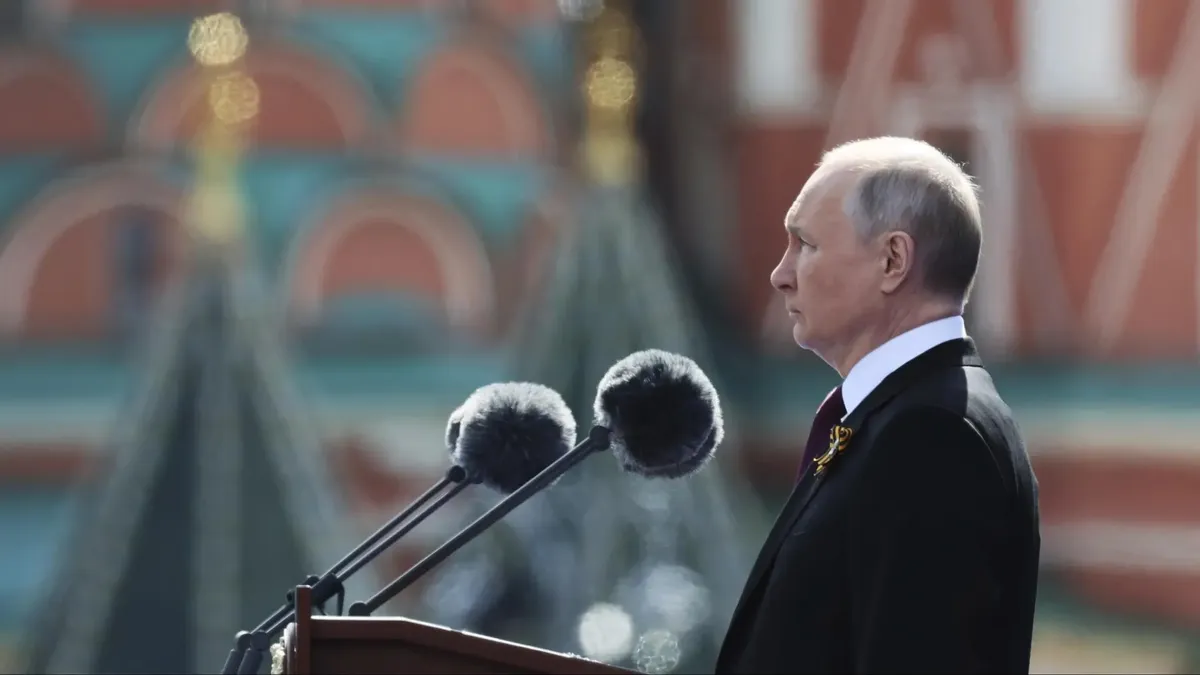
Russia votes with no real choice: the Duma election measures war fatigue, not public will
Around 113 million Russians voted this weekend in State Duma elections where only parties backing Putin and the war in Ukraine could effectively compete.
Putin's parliamentary shield: Russia's Duma vote consolidates wartime institutional order
Russia held State Duma elections this weekend with 113 million voters called to the polls, but professor José Ángel López of Comillas told 20minutos the system…
Roughly 113 million Russians were called to the polls this weekend to elect deputies to the State Duma, Russia's parliament. Whatever the result, it will not shift power away from President Vladimir Putin, more than four years into the invasion of Ukraine that has defined daily life for tens of millions of people.
--- THE CONTEXT ---
José Ángel López, professor of International Law and International Relations at the Universidad Pontificia Comillas ICADE and a specialist in Russia and the post-Soviet space, told 20minutos that the elections function as a social survey and as a mechanism for keeping Putin in power under the appearance of democracy.
--- THE FACTS ---
Ten parties appear on the ballot, but all those that question Putin's authority have been barred through judicial proceedings controlled by the Kremlin-aligned Electoral Commission. Citizens can vote but cannot meaningfully choose: every competing party supports the laws of Rusia Unida, the ruling party, and backs the war in Ukraine. The most recent electoral reform divides the Duma between proportional lists and single-member constituencies, a design López describes as one that greatly empowers Rusia Unida. The boundaries of those constituencies have been redrawn to include Ukrainian regions occupied by Moscow, a redistribution the expert says was adjusted to the party's interests.
--- THE POSITIONS ---
López argues that Russia's legislative branch is embedded in a very strong presidential system designed so that executive and decision-making power resides in Putin personally. He also states that Russian citizens have no mechanisms or levers to genuinely challenge the established order. The source does not include any response from the Kremlin or the Electoral Commission.
--- WHAT REMAINS UNKNOWN ---
This source does not provide turnout figures, youth abstention rates from previous elections, or a list of specific candidates and parties barred in this cycle. The human consequences of the war-era economic policies that the new Duma will ratify are not detailed.
--- UNANSWERED QUESTIONS ---
• What are actual abstention levels among young Russian voters, and how do they compare with pre-invasion cycles?
• Which specific candidates or parties were barred from this election and on what stated grounds?
• How does including occupied Ukrainian territories in the constituency map affect the distribution of seats and the representation of those populations?
• What economic and labor policies is the incoming Duma expected to ratify, and which Russian workers will bear their cost?
--- EPM ANALYSIS ---
The election is not a mechanism for change but a pressure gauge. The most politically significant number this weekend is not which party wins the most seats but how many citizens, particularly young ones, choose not to vote at all. Abstention does not translate into representation, but López's framing makes clear it does translate into information — data the Kremlin reads and uses to calibrate control. Workers and young people carry the human cost of the war with no institutional outlet. 📌
📌
📌 EPM Take:
In EPM's view, the Russian voter going to the polls this weekend is not choosing a government; they are being asked to validate one. Twenty years of deliberate institutional engineering have produced a parliament that functions as a ratification chamber, not a deliberative body. The redrawing of constituencies to absorb occupied Ukrainian territory converts an administrative act into a territorial claim. The real losers are ordinary Russians who bear the war's costs with no channel for dissent. That absence should be reported as the central story.
Around 113 million Russians were summoned to the polls this weekend to elect the State Duma, Russia's parliament, more than four years into the invasion of Ukraine. The exercise carries a strategic function that goes beyond domestic politics: it is designed to produce institutional legitimacy for a wartime regime.
--- THE CONTEXT ---
José Ángel López, professor of International Law and International Relations at the Universidad Pontificia Comillas ICADE and a specialist in Russia and the post-Soviet space, described to 20minutos a system built over 20 years to ensure that executive and decision-making power remains concentrated in Putin's person.
--- THE FACTS ---
Ten parties formally compete, but the Electoral Commission — controlled by the Kremlin — has disqualified through judicial proceedings every candidate or party capable of challenging Putin's authority. What remains are parties that support the legislation of Rusia Unida, the ruling party, and endorse the war in Ukraine. The latest electoral reform splits the Duma between proportional lists and single-member constituencies. López notes that Rusia Unida decisively dominated those single-member districts, and that the constituency map has since been redrawn, now incorporating Russian-occupied Ukrainian regions, in a redistribution adjusted to the party's interests.
--- THE POSITIONS ---
López states that Russia's legislative power is conditioned by and oriented toward Putin's own figure, and that the established order cannot be genuinely questioned from within the system. The source records no statement from the Kremlin, the Electoral Commission, or any Russian official contesting this characterization.
--- WHAT REMAINS UNKNOWN ---
This source does not establish what access, if any, international electoral observation missions have to these elections. It also does not clarify what legal or diplomatic position Western institutions have taken regarding the inclusion of occupied Ukrainian territories in the Russian electoral map.
--- UNANSWERED QUESTIONS ---
• Do international electoral observation bodies have accredited access to these elections, and if so, on what terms?
• What is the legal or institutional response from Western governments to a Duma that includes seats allocated to occupied Ukrainian territory?
• How does the Kremlin use abstention data to adjust its internal security and social control strategies?
• What international legal instruments, if any, could challenge the legitimacy of parliamentary representation drawn from occupied territory?
--- EPM ANALYSIS ---
The system López describes is not a flawed democracy — it is a deliberate institutional architecture. Every reform has extended Rusia Unida's structural advantage and narrowed the space for any competition. The absorption of occupied Ukrainian territories into the constituency map is the most consequential detail: it converts a military and territorial claim into a routine administrative procedure, normalizing annexation through bureaucratic form. The institution that loses is competitive parliamentary politics itself. 📌
📌
📌 EPM Take:
In EPM's view, what took place in Russia this weekend was not an election in any meaningful sense — it was an institutional performance staged to generate legitimacy without surrendering control. Twenty years of engineered electoral rules have produced a parliament that ratifies rather than deliberates. The inclusion of occupied Ukrainian regions in the electoral map is a sovereignty assertion dressed as administrative procedure. Western governments and media that treat this as a normal vote without qualification are, in effect, lending credibility to the performance. Precision of language is itself a policy choice.
Rusia vota sin opciones reales ante la guerra en Ucrania
Cerca de 113 millones de rusos votaron para elegir la Duma Estatal en unas elecciones que, según el profesor José Ángel López de la Universidad Comillas…
La Duma como escudo: Putin usa las urnas para blindar el orden institucional de la guerra
Con 113 millones de votantes convocados, Rusia celebra elecciones a la Duma Estatal en las que solo compiten partidos que apoyan a Putin y la guerra en…
Cerca de 113 millones de rusos fueron convocados este fin de semana a las urnas para elegir a sus representantes en la Duma Estatal, el Parlamento ruso. El resultado, sea cual sea, no alterará la concentración de poder en Vladimir Putin cuando se cumplen más de cuatro años del comienzo de la invasión de Ucrania.
--- EL CONTEXTO ---
José Ángel López, profesor de Derecho Internacional y Relaciones Internacionales de la Universidad Pontificia Comillas ICADE y especialista en Rusia y el espacio postsoviético, explica a 20minutos que estas elecciones funcionan como un sondeo social y como instrumento para perpetuar al Kremlin bajo una apariencia democrática.
--- LOS HECHOS ---
Los ciudadanos pueden elegir entre diez partidos, pero todos los que cuestionan el poder de Putin han sido inhabilitados bajo supuestos judiciales. La Comisión Electoral, controlada por el Kremlin, determina quién puede presentarse. La última reforma electoral divide la Duma: mitad por listas, mitad por circunscripciones uninominales. Esas circunscripciones favorecen a Rusia Unida, el partido oficialista, y ahora incluyen regiones ucranianas ocupadas por Moscú tras una redistribución territorial diseñada según los intereses del partido.
--- LAS POSICIONES ---
López sostiene que el sistema lleva 20 años siendo moldeado para que el poder ejecutivo y de decisión resida exclusivamente en Putin. El profesor subraya que los ciudadanos rusos no tienen mecanismos ni resortes para cuestionar realmente el orden establecido. No se registra en la fuente respuesta oficial del Kremlin a estas caracterizaciones.
--- LO QUE FALTA SABER ---
La fuente no ofrece datos sobre participación real ni sobre el impacto concreto de la abstención joven en resultados anteriores. Tampoco detalla qué candidatos o partidos fueron inhabilitados en este ciclo electoral ni bajo qué cargos específicos.
--- PREGUNTAS SIN RESPUESTA ---
• ¿Cuál es el nivel real de abstención entre los votantes jóvenes rusos y cómo se compara con los comicios anteriores a la invasión?
• ¿Qué partidos o candidatos concretos fueron inhabilitados en este ciclo y qué figuras quedan fuera de la contienda?
• ¿Qué consecuencias materiales tienen para los trabajadores y ciudadanos rusos las políticas legislativas que la nueva Duma deberá ratificar?
• ¿Cómo afecta la inclusión de las regiones ucranianas ocupadas al cómputo de escaños y a la representación efectiva de esa población?
--- ANALISIS EPM ---
Las elecciones rusas no son un mecanismo de cambio sino un barómetro de resistencia. La variable decisiva no es el partido que gane más escaños, sino el volumen de abstención y el perfil del votante que no acude. Los trabajadores y jóvenes que se abstienen no consiguen representación, pero su ausencia sí produce información política que el Kremlin registra y utiliza para calibrar el control. 📌
📌
📌 Conclusion EPM:
A juicio de EPM, el verdadero perdedor de estas elecciones no es ningún partido de oposición —porque no existe ninguno con posibilidad real de competir— sino el ciudadano ruso corriente que carga con el coste humano y económico de la guerra sin ningún canal institucional para expresar su desacuerdo. Que el sistema lleve 20 años en construcción no lo hace más legítimo; lo hace más difícil de desmantelar. El dato que más importa este fin de semana no está en las papeletas, está en las sillas vacías.
Cerca de 113 millones de rusos fueron convocados este fin de semana a elegir la Duma Estatal, el Parlamento ruso. La convocatoria se produce cuando se cumplen más de cuatro años de la invasión de Ucrania y tiene un propósito estratégico claro: proporcionar legitimidad institucional al régimen de Putin ante su propio pueblo y ante el exterior.
--- EL CONTEXTO ---
José Ángel López, profesor de Derecho Internacional y Relaciones Internacionales de la Universidad Pontificia Comillas ICADE y especialista en el espacio postsoviético, describe a 20minutos un sistema electoral construido durante 20 años para concentrar el poder decisorio en el ejecutivo presidencial de Putin.
--- LOS HECHOS ---
Diez partidos compiten formalmente, pero solo aquellos que apoyan las leyes de Rusia Unida —el partido oficialista— y respaldan la guerra en Ucrania tienen acceso real a la contienda. La Comisión Electoral, controlada por el Kremlin, ha inhabilitado bajo supuestos judiciales a candidatos y partidos que pudieran cuestionar el orden establecido. La última reforma electoral divide la Duma entre listas proporcionales y circunscripciones uninominales, un diseño que refuerza a Rusia Unida. El mapa de esas circunscripciones ha sido redistribuido incluyendo las regiones ucranianas ocupadas por Moscú.
--- LAS POSICIONES ---
López sostiene que el poder legislativo ruso está subordinado a la figura presidencial y que el sistema está diseñado para que ninguna fuerza haga sombra a Putin. La fuente no recoge ninguna declaración del Kremlin o de la Comisión Electoral en respuesta a estas caracterizaciones.
--- LO QUE FALTA SABER ---
Esta fuente no establece cuál es la posición de instituciones occidentales o de observadores electorales internacionales ante estos comicios. Tampoco informa sobre si hay misiones de observación acreditadas ni sobre sus condiciones de acceso.
--- PREGUNTAS SIN RESPUESTA ---
• ¿Qué posición adoptaron los organismos electorales internacionales ante estos comicios y si tienen o no acceso de observación?
• ¿Qué uso concreto hace el Kremlin de los datos de abstención para calibrar su estrategia de control social?
• ¿Cómo valoran los aliados occidentales de Ucrania la legitimidad de una Duma elegida con escaños asignados a territorios ocupados?
• ¿Qué mecanismos jurídicos internacionales podrían impugnar la representación de las regiones ucranianas en el Parlamento ruso?
--- ANALISIS EPM ---
El diseño institucional descrito por López no es un fallo del sistema ruso: es su arquitectura deliberada. Cada reforma electoral refuerza la posición de Rusia Unida y reduce el margen de maniobra de cualquier oposición. La inclusión de territorios ucranianos ocupados en el mapa de circunscripciones es, además, un acto de consolidación territorial con forma de procedimiento administrativo. El ganador es el orden establecido; el perdedor, la competencia política real. 📌
📌
📌 Conclusion EPM:
A juicio de EPM, lo que ocurre en Rusia este fin de semana no es una elección sino un ejercicio de ingeniería institucional. El Kremlin ha construido durante 20 años un sistema en el que la forma democrática subsiste para producir legitimidad sin ceder control. Incorporar territorios ucranianos ocupados al mapa electoral no es un detalle administrativo: es una declaración de soberanía disfrazada de burocracia. Occidente debería nombrar eso con precisión, porque llamarlo elección sin matices es hacerle el trabajo de relaciones públicas al régimen.