United States • • EPM Editorial Desk • 🌿 Progressive
Houthi offensive displaces 125,000 Yemenis as fuel prices rise
Iran-backed Houthi rebels have captured strategic Red Sea ports and advanced toward a crucial maritime chokepoint, forcing tens of thousands to flee their…
Houthis capture Red Sea ports, threaten global maritime trade
Iran-backed Houthi rebels have seized strategic Red Sea ports and advanced toward the Bab el-Mandeb strait, placing one of the world's most vital shipping…
Iran-backed Houthi rebels have launched their largest offensive in years, capturing the Red Sea port city of Mokha and seizing islands near the Bab el-Mandeb strait, through which approximately 12% of global trade passes in peacetime. The campaign has forced 125,000 Yemenis to flee their homes and includes sustained attacks on Saudi oil facilities and tankers, driving up fuel prices that directly burden working families worldwide. The civil war, which has already claimed over 150,000 lives, now threatens to push the country back toward famine conditions as conflict spreads and humanitarian access deteriorates.
--- THE CONTEXT ---
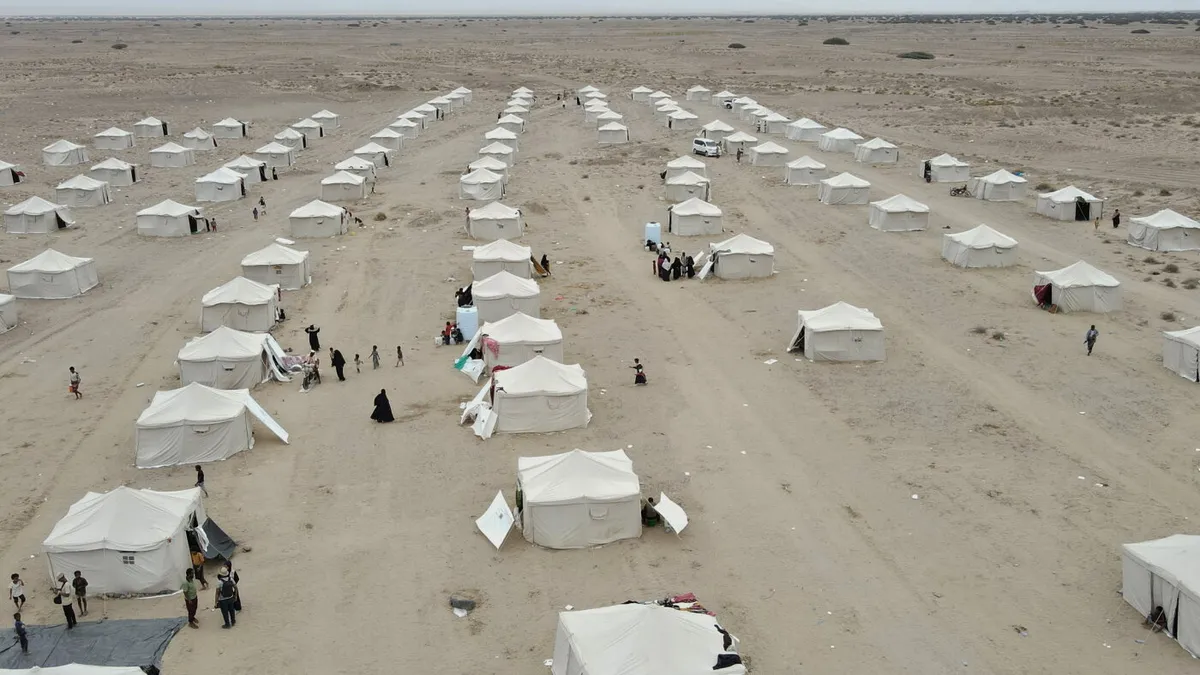
Since 2014, Houthi forces have progressively controlled Yemeni territory from the north. A ceasefire in 2022 collapsed in recent days. Saudi Arabia has led an international coalition against the Houthis for years, but the group has demonstrated sustained capacity to advance despite military pressure. The conflict has fractured Yemen's state institutions and left the population dependent on fragile humanitarian supply chains. Displacement camps like Al-Firdaws now house families fleeing violence.
--- THE FACTS ---
The Houthis captured Mokha and several islands near the Bab el-Mandeb strait, positioning themselves 32 kilometers from Djibouti, home to U.S. and other international military bases. Heavy fighting continues in Marib, a provincial city with petroleum value and military importance. The Houthis also threaten Taiz in the west. The civil war has killed more than 150,000 people and repeatedly pushed Yemen to the brink of famine. Houthi attacks target both tankers and Saudi oil infrastructure. A separate attack on Saudi Arabia's east-west pipeline, attributed to Iran-backed militias in Iraq, compounds pressure on the kingdom's energy security.
--- THE POSITIONS ---
The Houthis demand that Saudi Arabia lift its long-running blockade of territories they control. Mohammed al-Bukhaiti, a member of the Houthi political bureau, told The Associated Press that Saudi Arabia closed the Bab el-Mandeb strait and imposed an unjust blockade. Saudi Arabia and its allies have sought to contain the Houthis militarily. The United States, traditionally the security guarantor for the kingdom, appears to be standing aside from the current offensive. No official U.S. response regarding future strategic involvement has been published in this report.
--- WHAT REMAINS UNKNOWN ---
No confirmation exists of medical or malnutrition needs among the 125,000 displaced persons, including children. The operational capacity of displacement camps and international humanitarian organizations to respond to a new wave of crisis is not specified. No published plan from global institutions addresses the convergence of military escalation and famine risk in Yemen.
--- UNANSWERED QUESTIONS ---
• What is the real scale of medical and nutritional need among 125,000 newly displaced Yemenis, and do international agencies have resources to respond?
• How will renewed fighting in central Yemen affect civilians already vulnerable in cities like Taiz, which has been a conflict front for much of the war?
• Is there any coordinated international plan to create humanitarian corridors or prevent the re-emergence of famine conditions as the civil war escalates?
--- EPM ANALYSIS ---
The Houthi offensive exposes the collapse of international peace architecture in Yemen and the vulnerability of civilians to military solutions. Rising global fuel prices will hurt working families and low-income consumers worldwide. 📌
📌
EPM Take:
In EPM's view, the international community has systematically failed Yemen by prioritizing geopolitical containment over political solutions that address the Saudi blockade and Houthi demands. The figures of 125,000 displaced and 150,000 dead represent a humanitarian debt that Western powers ignore at the cost of their own energy stability. Without genuine diplomatic intervention backed by blockade relief, the conflict will perpetuate civilian suffering while reconfiguring global energy markets against Western interests and enriching Tehran's regional position.
Iran-backed Houthi rebels have launched their most ambitious offensive in years, capturing the Red Sea port city of Mokha and seizing islands near the Bab el-Mandeb strait, through which approximately 12% of global maritime trade passes in peacetime. The campaign has displaced 125,000 Yemenis and includes escalating attacks on Saudi oil facilities and tankers, demonstrating growing operational capacity. Critically, the absence of U.S. military response, despite Saudi Arabia being America's principal regional ally, marks a strategic inflection point in the balance of power across the Indian Ocean and the Middle East.
--- THE CONTEXT ---
Since 2014, Houthi forces have progressively conquered Yemeni territory from the north. A ceasefire in 2022 collapsed in recent days. Saudi Arabia has led an international coalition against the Houthis for years but now faces a synchronized offensive that includes attacks on energy infrastructure from Iran-backed militias in Iraq. The operational coordination reflects Tehran's wider strategy to challenge Western hegemony in vital maritime corridors.
--- THE FACTS ---
The Houthis captured Mokha and islands near the Bab el-Mandeb strait, placing themselves 32 kilometers from Djibouti, site of U.S. military bases. Intense fighting continues in Marib, a provincial city of petroleum and strategic military value. The Houthis also threaten Taiz. The civil war has accumulated over 150,000 deaths. Houthi attacks target tankers and Saudi energy infrastructure. A separate attack on Saudi Arabia's east-west pipeline, attributed to Iran-backed militias in Iraq, applies simultaneous pressure on regional energy security from multiple vectors.
--- THE POSITIONS ---
The Houthis demand that Saudi Arabia lift its blockade of territories they control. Mohammed al-Bukhaiti, member of the Houthi political bureau, stated to The Associated Press that Saudi Arabia closed the Bab el-Mandeb strait and imposed an unjust blockade. Saudi Arabia and its allies have pursued military containment of the Houthis. The United States, traditionally the guarantor of Saudi security, has not mobilized significant forces in response to this offensive. No official U.S. statement clarifying its future strategic role in Yemen appears in available reporting.
--- WHAT REMAINS UNKNOWN ---
No reports specify the current operational status of Saudi defenses against simultaneous attacks across multiple vectors. Official assessment of the military capacity of Saudi-backed forces to contain Houthi advances toward Yemen's eastern oil provinces has not been published. Whether a tacit agreement exists between Washington and Riyadh regarding limits on U.S. military response remains undeclared.
--- UNANSWERED QUESTIONS ---
• What is the actual military capacity of Saudi-backed forces to hold Marib and prevent a Houthi advance into Yemen's eastern oil-producing provinces?
• Has the U.S. administration assessed the risk of Bab el-Mandeb closure as a scenario of economic warfare against global commerce?
• Is there a coordinated trilateral plan between the United States, Saudi Arabia, and regional allies to restore military advantage, or does a new geopolitical reality consolidate?
--- EPM ANALYSIS ---
The Houthi offensive represents a rupture in the regional order where Iran expands power without direct military cost to itself. U.S. absence signals strategic withdrawal or recalibration toward Asia-first priorities. Saudi Arabia loses deterrent capacity and must choose between negotiation or escalation without Western security guarantees. Winners are Iran and its proxies; losers are global trade and energy security. 📌
📌
EPM Take:
In EPM's view, the United States has committed a strategic error by allowing Iran-backed Houthi forces to control vital ports without credible military response. With 12% of global maritime trade now at risk and U.S. leadership absent, Tehran is empowered at a moment when Washington must choose between credible containment or acceptance of a new order where Iranian proxies dictate regional terms. This U.S. strategic retreat in Yemen reflects divided priorities that erode allied confidence in American security guarantees.
Ofensiva Houtí en Yemen desplaza a 125.000 personas
Los rebeldes hutíes han avanzado sobre puertos y estrechos clave del Mar Rojo, forzando el éxodo de decenas de miles de yemeníes y disparando los precios del…
Hutíes avanzan en Yemen y amenazan comercio marítimo global
Rebeldes hutíes respaldados por Irán capturan puertos clave del Mar Rojo y avanzan hacia el estrecho de Bab el-Mandeb, colocando en riesgo una de las rutas…
Los rebeldes hutíes respaldados por Irán han lanzado su mayor ofensiva en años, capturando puertos clave del Mar Rojo y desencadenando una ola de desplazamientos que ha obligado a 125.000 yemeníes a abandonar sus hogares. Según reportes de agencias internacionales, la ofensiva incluye ataques contra instalaciones petrolíferas saudíes y buques cisterna, mientras que milicias respaldadas por Irán han golpeado la tubería este-oeste de Arabia Saudita, intensificando una crisis energética global que ya afecta directamente a las familias trabajadoras a través de precios de combustible más altos.
--- EL CONTEXTO ---
Desde 2014, Yemen ha estado atrapado en un conflicto que ha fraccionado el país y sumido a su población en pobreza extrema. Un cese al fuego en 2022 se ha desmoronado en los últimos días, con los hutíes avanzando desde sus territorios del norte hacia puertos estratégicos del sur. La intervención saudí inicial fue respaldada por coaliciones internacionales, pero ahora el gobierno respaldado por los saudíes enfrenta una alianza de fuerzas que se han enfrentado entre sí apenas el mes pasado.
--- LOS HECHOS ---
Los hutíes capturaron la ciudad portuaria de Mokha y varias islas cerca del estrecho de Bab el-Mandeb, por el que pasa aproximadamente el 12% del comercio mundial en tiempos de paz. Se encuentran a 32 kilómetros de Djibouti, nación africana que alberga bases militares estadounidenses. Los combates se han intensificado en Marib, ciudad central en una provincia rica en petróleo, mientras que amenaza a Taiz en el occidente. La guerra civil ha matado a más de 150.000 personas y ha empujado repetidamente al país al borde de la hambruna.
--- LAS POSICIONES ---
Los hutíes exigen que Arabia Saudita levante el bloqueo de larga duración sobre sus territorios controlados. Mohammed al-Bukhaiti, miembro de la oficina política hutí, declaró a The Associated Press que Arabia Saudita cerró el estrecho de Bab el-Mandeb y impuso un bloqueo injusto. Los saudíes y sus aliados han luchado durante años por contener a los hutíes. Estados Unidos, principal aliado saudí, parece mantenerse al margen de la crisis actual.
--- LO QUE FALTA SABER ---
No hay confirmación de cuántos civiles entre los 125.000 desplazados son menores de edad o tienen necesidades médicas urgentes. No se especifica el estado actual de la infraestructura humanitaria en zonas de conflicto ni la capacidad operativa de campamentos de refugiados como el de Al-Firdaws. Tampoco está claro si las organizaciones internacionales han presentado planes de respuesta ante la nueva ola de desplazamientos.
--- PREGUNTAS SIN RESPUESTA ---
• ¿Cuál es la escala real de las necesidades médicas y nutricionales entre las 125.000 personas desplazadas y cómo responderán las agencias humanitarias con recursos limitados?
• ¿Cómo afectará la recrudecencia del conflicto a las poblaciones civiles ya vulnerables en ciudades como Taiz, que ha sido línea de frente durante gran parte del conflicto?
• ¿Existe algún plan coordinado de la comunidad internacional para facilitar corredores humanitarios o alivio de la crisis alimentaria que amenaza nuevamente con la hambruna?
--- ANALISIS EPM ---
La ofensiva hutí representa un colapso del arquitecto de paz internacional en Yemen y expone la dependencia de civiles vulnerables de soluciones militares. Los precios globales del combustible subirán, golpeando a trabajadores y familias de bajos ingresos en todo el mundo. 📌
📌
Conclusion EPM:
A juicio de EPM, la comunidad internacional ha fallado sistemáticamente a Yemen al priorizar la contención geopolítica sobre soluciones políticas que aborden el bloqueo saudí y las demandas hutíes. La cifra de 125.000 desplazados y 150.000 muertos acumula una deuda humanitaria que las potencias occidentales ignoran a riesgo de su propia estabilidad energética. Sin intervención diplomática real respaldada por alivio del bloqueo, el conflicto perpetuará sufrimiento de civiles mientras reconfigura mercados globales de energía contra intereses occidentales.
Los rebeldes hutíes respaldados por Irán han lanzado su ofensiva más ambiciosa en años, capturando la ciudad portuaria de Mokha e islas estratégicas cerca del estrecho de Bab el-Mandeb, por el que transita aproximadamente el 12% del comercio mundial en tiempos de paz. Esta campaña ha obligado al desplazamiento de 125.000 yemeníes y ha intensificado ataques contra instalaciones petrolíferas saudíes y tuberías regionales, demostrando capacidad operativa creciente. La ausencia de respuesta de Estados Unidos, principal aliado saudí en la región, marca un punto de quiebre estratégico en el equilibrio de poder del Océano Índico.
--- EL CONTEXTO ---
Desde 2014, los hutíes controlaron progresivamente territorio yemení desde el norte. Un cese al fuego en 2022 colapsó en los últimos días. Arabia Saudita ha liderado una coalición internacional contra los hutíes durante años, pero ahora enfrenta una ofensiva simultánea que incluye ataques contra infraestructura energética desde múltiples direcciones, incluidas milicias respaldadas por Irán en Irak. El contexto refleja una estrategia iraní coordinada para desafiar la hegemonía occidental en aguas vitales.
--- LOS HECHOS ---
Los hutíes capturaron Mokha y varias islas del estrecho de Bab el-Mandeb, acercándose a 32 kilómetros de Djibouti, donde operan bases militares estadounidenses. Combates intensos continúan en Marib, centro provincial con valor estratégico petrolero. Los hutíes también amenazan a Taiz. La guerra civil acumula más de 150.000 muertos. Ataques hutíes apuntan tanto a buques cisterna como a infraestructura saudí. Un ataque a la tubería este-oeste saudí, atribuido a milicias iraníes en Irak, suma presión simultánea sobre la seguridad energética regional.
--- LAS POSICIONES ---
Los hutíes exigen que Arabia Saudita levante su bloqueo sobre territorios controlados por ellos. Mohammed al-Bukhaiti, miembro de la oficina política hutí, señaló que Riyadh cerró el estrecho de Bab el-Mandeb y aplicó un bloqueo injusto. Arabia Saudita y aliados han procurado contener militarmente a los hutíes. Estados Unidos, tradicionalmente garante de seguridad saudí, no ha movilizado fuerzas significativas en respuesta a esta ofensiva. No hay declaración oficial estadounidense sobre su rol estratégico futuro en Yemen.
--- LO QUE FALTA SABER ---
No consta en reportes cuál es el estado operativo actual de defensas saudíes contra ataques simultáneos en múltiples vectores. No se ha publicado evaluación oficial de capacidad de las fuerzas respaldadas por Riyadh para contener avances hutíes hacia provincias petroleras del este. Tampoco está claro si existe algún acuerdo tácito entre Washington y Riyadh sobre límites de respuesta militar estadounidense.
--- PREGUNTAS SIN RESPUESTA ---
• ¿Cuál es la capacidad real de las fuerzas saudí-respaldadas para mantener el control de Marib y frenar un avance hutí hacia provincias petroleras del este yemení?
• ¿Ha evaluado la administración estadounidense el riesgo de cierre del estrecho de Bab el-Mandeb como escenario de guerra económica global?
• ¿Existe algún plan de coordinación trilateral entre Estados Unidos, Arabia Saudita y aliados regionales para restaurar la ventaja militar o se consolida una nueva realidad geopolítica?
--- ANALISIS EPM ---
La ofensiva hutí representa un quiebre en el orden regional donde Irán expande poder sin coste militar directo. La ausencia estadounidense señala retirada estratégica o recalibración de prioridades geopolíticas hacia Asia. Arabia Saudita pierde capacidad disuasiva y debe elegir entre negociación o escalada sin garantías de apoyo occidental. 📌
📌
Conclusion EPM:
A juicio de EPM, Estados Unidos ha cometido un error estratégico al permitir que rebeldes hutíes respaldados por Irán controlen puertos vitales sin respuesta militar creíble. La captura del 12% de comercio mundial en riesgo y la ausencia de liderazgo estadounidense empodera a Teherán en un momento donde la administración estadounidense debe elegir entre contención creíble o acepta un nuevo orden donde proxies iraníes dictan términos en aguas vitales. Esta retaguardia estadounidense en Yemen refleja prioridades divididas que erosionan credibilidad aliada.