Feijóo demands Sánchez reveal contacts with Morocco after Ceuta mass crossing
PP leader Alberto Núñez Feijóo filed formal Senate questions demanding the Spanish government explain its diplomatic contacts with Morocco after the mass…
Spain's government stays silent on Morocco diplomacy after Ceuta mass crossing, PP charges
PP leader Feijóo filed formal Senate questions demanding Spain's government disclose its diplomatic contacts with Morocco following the mass crossing into…
Spain's main opposition leader is pressing the government to account for what it actually did —or did not do— after thousands of people entered Ceuta irregularly at the end of July. For the migrants involved, including unaccompanied minors, the silence from Madrid is not an abstraction: it shapes their immediate fate.
--- THE CONTEXT ---
The mass crossing took place on July 30 and 31. The PP frames the episode as a deliberate operation originating in Morocco and argues the Spanish government owes parliament a full account of any diplomatic response it mounted in the days that followed.
--- THE FACTS ---
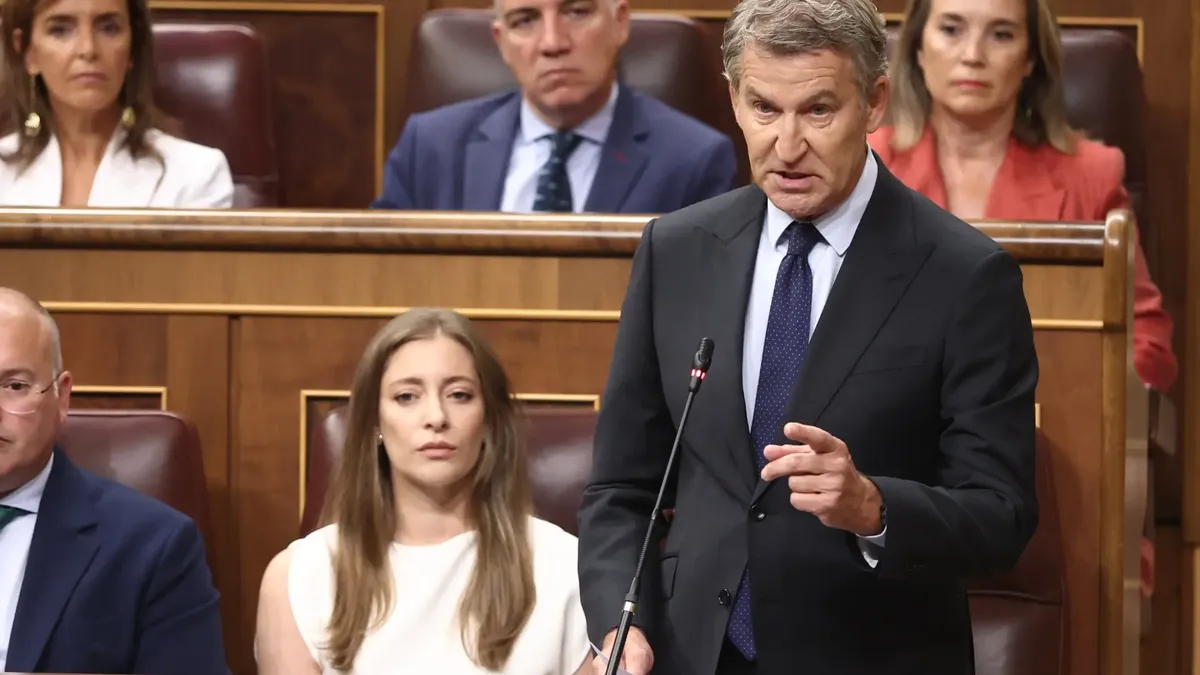
The PP filed a set of formal questions in the Senate demanding the government disclose what steps it took with Morocco to secure the return of those who entered irregularly, including minors. At a congressional oversight session, Feijóo addressed Sánchez directly: when did he last speak with Moroccan authorities, how many times since July 30, and what answers did he receive? No response came. PP spokesperson Ester Muñoz pressed further, asking specifically whether Sánchez had called King Mohammed VI. Again, no answer. Feijóo described the silence as a «vergüenza» —a disgrace. PP national leadership sources stated their goal is to learn the government's full «diplomatic deployment» and specifically whether Sánchez spoke with the Moroccan king, demanding to know «when, how and what».
--- THE POSITIONS ---
Feijóo stated publicly that the operation «came from Morocco, was consented to by Morocco, and there are indications Morocco coordinated it.» PP sources added that not calling the Moroccan monarch shows «condescendencia» on the government's part. The government offered no on-record response; this source records no statement from the executive.
--- WHAT REMAINS UNKNOWN ---
This source does not establish whether the government used any diplomatic channel other than direct royal contact, nor what the current legal or administrative status of the migrants remaining in Ceuta is.
--- UNANSWERED QUESTIONS ---
• What specific diplomatic channel, if any, did the government use to communicate with Morocco after July 30?
• What is the current humanitarian and legal situation of the minors who entered during the crossing?
• Is there a bilateral readmission agreement between Spain and Morocco that covers these circumstances, and was it invoked?
• Has Morocco acknowledged or responded to any Spanish diplomatic approach, through any channel?
--- EPM ANALYSIS ---
The government's silence in parliament turns a diplomatic question into an accountability crisis. Workers and families in Ceuta, and the migrants themselves, bear the practical costs of institutional ambiguity. The decisive variable is whether a real diplomatic channel with Rabat exists and is functioning —something this source neither confirms nor rules out. EPM has previously documented minors sleeping on Ceuta streets while institutions dispute jurisdiction, making the absence of a clear return framework more than a political talking point. 📌
📌
📌 EPM Take:
In EPM's view, parliamentary silence is not diplomatic discretion —it is a failure of democratic transparency that harms the people caught in the middle. Migrants, including children, cannot wait while a procedural standoff substitutes for policy. Spain's institutions have an obligation to account publicly for how they respond to events at their own borders. The absence of a recorded government position in this source does not prove that no action was taken, but it does confirm that none has been communicated where it matters most: to elected representatives.
When a government refuses to answer parliament on how it defended sovereign territory, the problem transcends politics: it signals to a watching neighbor that silence can be exploited. That is the core of the PP's offensive following the mass crossing into Ceuta on July 30 and 31.
--- THE CONTEXT ---
The PP frames the late-July events as an attack on Spanish territorial integrity and places Morocco's responsibility «by action or omission» at the center of its case. The party argues a direct conversation with Moroccan leadership was not merely advisable but obligatory.
--- THE FACTS ---
The PP registered a formal battery of questions in the Senate pressing the government to reveal what steps it took with Morocco to secure the return of those who entered irregularly, explicitly including minors. At the congressional oversight session, Feijóo asked Sánchez directly: when did he last speak with Moroccan authorities, how many times since July 30, and what response did he receive? The prime minister did not answer. PP spokesperson Ester Muñoz then asked point-blank whether Sánchez had called King Mohammed VI. No answer followed. Feijóo labelled the silence a «vergüenza». Sources from the PP national leadership said the party wants to understand the government's complete «diplomatic deployment» and whether Sánchez spoke with the Moroccan king —specifying they want to know «when, how and what». A senior PP figure, quoted privately, questioned whether anyone in the government had even contacted the king, describing him as the one who «really holds power».
--- THE POSITIONS ---
Feijóo stated publicly that the crossing «came from Morocco, was consented to by Morocco, and there are indications Morocco coordinated it.» PP sources argued that failing to contact the Moroccan monarch demonstrates «condescendencia» toward Rabat. The government provided no on-record answer; this source contains no statement from the executive.
--- WHAT REMAINS UNKNOWN ---
This source does not establish whether the government engaged Morocco through any bilateral mechanism, treaty channel or readmission framework other than direct royal contact, nor whether any Moroccan response has been received through any channel.
--- UNANSWERED QUESTIONS ---
• Did the government invoke any existing bilateral readmission or border-management agreement with Morocco after July 30?
• Has Morocco formally acknowledged or replied to any Spanish diplomatic approach through any documented channel?
• What is the institutional and legal framework governing the return of minors who entered irregularly, and has it been applied?
• Has the European Union taken any position on the Ceuta crossing and Morocco's alleged role?
--- EPM ANALYSIS ---
A government that withholds diplomatic information from parliament weakens its own negotiating posture: Morocco can read Spanish opacity as an invitation to test further pressure. The PP gains clear political ground, but the institutional cost falls on Spain's credibility as a rule-of-law state. EPM previously reported on minors sleeping on Ceuta streets amid jurisdictional disputes —the absence of a confirmed return framework extends that crisis beyond humanitarian symbolism into a structural failure of order. 📌
📌
📌 EPM Take:
In EPM's view, the refusal to answer direct parliamentary questions about the defense of Spanish sovereign territory is not caution —it is a breach of the accountability that Western democracies owe their citizens and their institutions. Morocco watches every signal. Silence at the podium is itself a message, and not one that favors Spain's leverage. EPM does not assert that no diplomacy occurred; this source does not establish it. But what is confirmed is that parliament was left without an answer, and that alone is a democratic deficit that demands correction.
Feijóo exige a Sánchez revelar contactos con Marruecos tras entrada masiva en Ceuta
El PP registró preguntas en el Senado exigiendo al Gobierno que desvele sus contactos con Marruecos tras la entrada masiva en Ceuta el 30 y 31 de julio.
Gobierno guarda silencio sobre diplomacia con Marruecos tras entrada masiva en Ceuta
El PP exige al Gobierno que aclare sus gestiones diplomáticas con Marruecos tras la entrada masiva en Ceuta el 30 y 31 de julio.
El líder del PP presiona al Gobierno para que explique qué gestiones diplomáticas realizó con Rabat después de que miles de personas cruzaran masivamente hacia Ceuta a finales de julio. La pregunta central no es solo política: afecta directamente a quienes permanecen en situación irregular y a los menores que, como EPM documentó, duermen en las calles de la ciudad.
--- EL CONTEXTO ---
La entrada masiva se produjo el 30 y 31 de julio. Desde entonces, el PP sostiene que el Gobierno español no ha explicado si contactó con las autoridades marroquíes para gestionar el retorno de quienes cruzaron de forma irregular, incluidos menores de edad.
--- LOS HECHOS ---
El PP registró en el Senado una batería de preguntas para conocer qué gestiones realizó el Ejecutivo ante Marruecos para facilitar la devolución de los inmigrantes irregulares. Durante la sesión de control del Congreso, Feijóo preguntó directamente a Sánchez cuándo fue la última vez que habló con autoridades marroquíes, cuántas veces lo hizo desde el 30 de julio y qué respuestas obtuvo. Sánchez no contestó. La portavoz del PP, Ester Muñoz, también exigió sin éxito que el presidente aclarara si había llamado al rey Mohamed VI. Feijóo calificó ese silencio de «vergüenza».
--- LAS POSICIONES ---
El PP sostiene que la operación «salió de Marruecos, fue consentida por Marruecos y hay indicios de que Marruecos la coordinó», según palabras del propio Feijóo. El Gobierno no respondió en sede parlamentaria a ninguna de las preguntas formuladas. Esta fuente no registra declaración alguna del Ejecutivo.
--- LO QUE FALTA SABER ---
No consta en esta fuente si el Gobierno realizó gestiones diplomáticas en otro canal distinto al contacto directo con el rey, ni cuál es la situación legal o administrativa actual de los migrantes que permanecen en Ceuta.
--- PREGUNTAS SIN RESPUESTA ---
• ¿Qué canal diplomático utilizó el Gobierno, si es que utilizó alguno, para comunicarse con Marruecos después del 30 de julio?
• ¿Cuál es la situación jurídica y humanitaria actual de los menores que entraron durante la avalancha?
• ¿Existe algún acuerdo de readmisión entre España y Marruecos que cubra estas circunstancias, y se ha activado?
• ¿Qué respuesta, si la hay, ha dado Marruecos ante cualquier gestión española de la que haya constancia?
--- ANALISIS EPM ---
Las personas afectadas —migrantes en situación irregular, incluidos menores— quedan en un limbo institucional mientras el debate se reduce al intercambio de reproches. La variable decisiva es si existe o no un canal diplomático real con Rabat, algo que esta fuente no confirma ni descarta. 📌
📌 Conclusion EPM:
A juicio de EPM, la ausencia de respuesta pública del Gobierno no prueba que no existan gestiones diplomáticas en curso, pero sí revela una opacidad que perjudica a todos: alimenta la ofensiva del PP, deja sin respuesta a la ciudadanía de Ceuta y prolonga la incertidumbre de quienes cruzaron la frontera. Los más vulnerables —en especial los menores— no pueden permitirse que la disputa política sustituya a la acción institucional concreta y verificable. 📌 El silencio del Ejecutivo en sede parlamentaria convierte una pregunta diplomática en una crisis de rendición de cuentas.
Cuando un Estado no responde ante el Parlamento sobre cómo defendió su integridad territorial, el problema deja de ser solo de imagen: se convierte en un vacío de soberanía. Eso es lo que el PP denuncia tras la avalancha en Ceuta del 30 y 31 de julio y la negativa del Gobierno a aclarar sus contactos con Rabat.
--- EL CONTEXTO ---
La entrada masiva ocurrió el 30 y 31 de julio. El PP enmarca el episodio como un «ataque a la integridad territorial» de España y sitúa a Marruecos como responsable «por acción o por omisión», según las palabras de Feijóo en sede parlamentaria.
--- LOS HECHOS ---
El PP registró en el Senado una serie de preguntas para que el Ejecutivo aclarase qué gestiones realizó ante Marruecos para lograr la devolución de quienes entraron irregularmente, incluidos los menores. En la sesión de control del Congreso, Feijóo preguntó a Sánchez cuántas veces habló con autoridades marroquíes desde el 30 de julio, qué les preguntó y qué le respondieron. Sánchez no contestó. La portavoz popular, Ester Muñoz, añadió sin éxito la pregunta concreta de si el presidente había llamado al rey Mohamed VI. Feijóo calificó ese silencio de «vergüenza». Fuentes de la dirección del PP señalaron que el objetivo es conocer el «despliegue diplomático» completo del Gobierno y saber si Sánchez habló con el rey marroquí: «Queremos que nos diga cuándo, cómo y qué».
--- LAS POSICIONES ---
El PP afirma que la operación «salió de Marruecos, fue consentida por Marruecos y hay indicios de que Marruecos la coordinó». Considera que no llamar al monarca alauí evidencia «condescendencia». El Gobierno no ofreció respuesta en el Congreso; esta fuente no recoge ninguna declaración del Ejecutivo.
--- LO QUE FALTA SABER ---
Esta fuente no establece si el Gobierno activó algún mecanismo diplomático o acuerdo de readmisión con Marruecos fuera del contacto directo con el rey, ni si existen gestiones en canales no parlamentarios.
--- PREGUNTAS SIN RESPUESTA ---
• ¿Activó el Ejecutivo algún acuerdo bilateral o mecanismo de readmisión con Marruecos después del 30 de julio?
• ¿Existe constancia de respuesta marroquí ante alguna gestión española, sea cual sea el canal utilizado?
• ¿Qué consecuencias tiene el silencio parlamentario en la posición negociadora de España ante Rabat?
• ¿Ha tomado alguna posición la Unión Europea respecto a la entrada masiva en Ceuta y el papel de Marruecos?
--- ANALISIS EPM ---
La negativa a responder en el Parlamento erosiona la credibilidad institucional de España ante un socio —Marruecos— que vigila de cerca las señales de debilidad. La variable decisiva no es si hubo o no contacto, sino si ese contacto fue o no efectivo. El PP gana terreno retórico, pero la ciudadanía de Ceuta y el Estado de derecho son los que más pierden con la opacidad. 📌
📌
📌 Conclusion EPM:
A juicio de EPM, el silencio del Gobierno ante preguntas parlamentarias directas no es postura diplomática: es ausencia de rendición de cuentas. España tiene el derecho y la obligación de gestionar sus fronteras con transparencia interna, sin que ello comprometa la negociación externa. Marruecos interpreta cada vacío de respuesta como margen de maniobra. EPM considera que una democracia consolidada no puede sacrificar el control parlamentario en nombre de una discreción diplomática que nadie ha confirmado que exista.