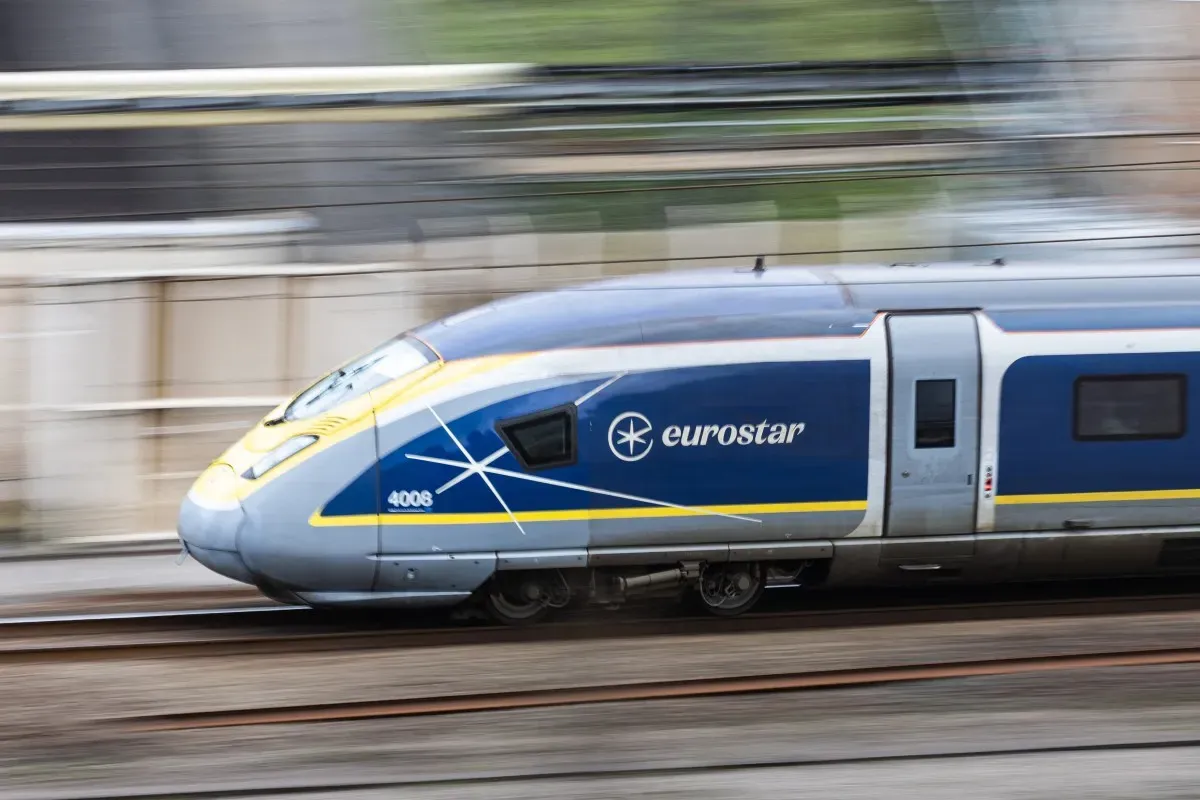
Competition may bring cheaper Eurostar tickets, but not for years
Eurostar's monopoly on cross-Channel trains, in place since 1994, faces its first credible challenge as Virgin secures regulatory approval and maintenance…
Virgin wins infrastructure access for Channel rail competition
Virgin has become the first company to secure regulatory approval and maintenance depot access to compete with Eurostar on cross-Channel routes since 1994…
The London-Paris train is beloved by millions of travellers, but it has never been affordable for most of them. A wave of new competitors is approaching the Channel Tunnel — yet the structural barriers are high enough that the passengers who most need cheaper tickets may not benefit for years.
--- THE CONTEXT ---
Eurostar has held a monopoly on cross-Channel trains since 1994. The Local consulted three rail experts to assess whether new entrants can realistically break that grip and what the consequences for passengers and workers might look like in practice.
--- THE FACTS ---
So far, only Virgin has secured regulatory approval to access HS1, the high-speed line linking London to the Channel Tunnel. The company plans to launch international services from London to Paris, Brussels and Amsterdam from 2030, proposing up to 20 daily return services. Virgin has also secured access to Temple Mills, Eurostar's international maintenance depot in east London — a step that rail researcher Marcus Mayers, writing for The Conversation, told The Local is critical because the real challenge is not getting permission to run trains but being able to stable and service them. Mayers described the situation as a race to secure available infrastructure, one that Virgin has now won. Mark Smith, the rail travel expert behind The Man in Seat 61, noted that Trenitalia could begin operating between London and Paris by 2029 and that Gemini could explore more stops in France and expand to destinations such as Cologne from London. For all other aspiring operators, negotiations are still ongoing with no confirmed resolution reported by this source.
--- THE POSITIONS ---
Mayers told The Local that Virgin will want to differentiate itself from Eurostar, potentially through different seating arrangements, family-friendly spaces or areas designed around specific passenger needs — and that Eurostar would then have to respond competitively. Eurostar has not made any public statement, as reported in this source, about how it plans to react.
--- WHAT REMAINS UNKNOWN ---
This source does not establish what Virgin's ticket prices will look like, whether passport-control requirements at stations have been resolved for new operators, or what the precise terms of the Temple Mills access agreement are.
--- UNANSWERED QUESTIONS ---
• Will the competition produce meaningful price reductions for lower-income passengers and cross-border workers, or primarily premium service differentiation for business travellers?
• What accessibility and affordability conditions, if any, are attached to Virgin's regulatory approval?
• How will passport control and border security requirements at existing stations be adapted to accommodate multiple international operators?
• Could Trenitalia's potential 2029 entry actually arrive before Virgin's planned 2030 launch, and what would that mean for the competitive dynamic?
--- EPM ANALYSIS ---
The infrastructure bottleneck is the story behind the story. Regulatory approval matters, but Temple Mills access is what makes or breaks a competitor's viability. Virgin's position is strong precisely because the physical entry barriers are so high. The risk for passengers — particularly workers and families who rely on affordable cross-Channel travel — is that competition produces branding differentiation rather than genuine price pressure, especially if the market settles into a duopoly before regulators intervene. 📌
📌
📌 EPM Take:
In EPM's view, the opening of the cross-Channel rail market is a genuinely important development, but the timeline and the barriers reveal how fragile that opening still is. EPM has followed the gap between European institutional promises and real-life outcomes across multiple stories — from worker qualification recognition to transatlantic trade deals. This case fits the pattern: the promise of competition is real, but the benefit to ordinary travellers depends on decisions about infrastructure access, station logistics and regulatory design that this source leaves unresolved.
For the first time since 1994, a rival operator holds the regulatory and infrastructural keys needed to challenge Eurostar on the cross-Channel route. How that challenge unfolds will depend less on political will than on who controls the physical assets that make international rail possible — and what institutional framework governs the competition.
--- THE CONTEXT ---
Eurostar has operated as the sole cross-Channel passenger rail provider since 1994. The Local consulted three rail experts to examine whether new market entrants are genuinely viable, what competitive conditions they face and what consequences follow for the corridor as a strategic Western connectivity asset.
--- THE FACTS ---
Virgin is the only company to have secured regulatory approval to access HS1, the high-speed line connecting London with the Channel Tunnel. It plans to launch international services from London to Paris, Brussels and Amsterdam from 2030, with up to 20 proposed daily return services. Virgin has also obtained access to Temple Mills, Eurostar's international maintenance depot in east London. Marcus Mayers, a rail researcher who has written about Virgin's plans for The Conversation, told The Local that competitors face a race not simply for permission to operate but for the physical ability to stable and service trains — a race Virgin has now positioned itself to win. Mark Smith, the expert behind the rail guide The Man in Seat 61, indicated that Trenitalia could enter the London-Paris market by 2029 and that Gemini could pursue additional French stops and a possible extension toward Cologne from London. For all remaining aspirants, negotiations are ongoing and unresolved according to this source.
--- THE POSITIONS ---
Mayers told The Local that Virgin will seek to establish a distinct identity rather than mirror Eurostar's offer — potentially through differentiated seating, family spaces or passenger-specific zones — and that Eurostar would be forced to respond. Eurostar has not issued any public response, as recorded in this source, regarding its competitive strategy.
--- WHAT REMAINS UNKNOWN ---
This source does not establish the financial terms of Virgin's Temple Mills access agreement, how border and passport-control infrastructure at shared stations will be allocated among competing operators, or the specific regulatory conditions attached to Virgin's approval.
--- UNANSWERED QUESTIONS ---
• Which regulatory body — UK, EU or a joint framework — holds jurisdiction over fair-access conditions on this international corridor?
• Can Eurostar use its existing contractual position at Temple Mills to constrain rivals, and has any authority examined that risk?
• What security and passport-control arrangements will govern multiple international operators sharing the same terminal infrastructure?
• If Trenitalia enters the market by 2029 ahead of Virgin's 2030 target, how does that reshape the competitive and regulatory order?
--- EPM ANALYSIS ---
The decisive variable here is not the licence but the depot. Whoever controls maintenance and stabling controls the effective pace of market entry. Virgin's move to lock in Temple Mills access is a textbook infrastructure play in a capital-intensive sector. The institutional risk is that without active regulatory oversight of access conditions, the corridor could shift from a monopoly to a duopoly without the competitive benefits reaching the market or strengthening the London-Paris axis as a strategic Western link. 📌
📌
📌 EPM Take:
In EPM's view, Virgin's regulatory and infrastructural breakthrough is a welcome sign that market discipline can reach even the most entrenched European rail monopolies. But the slow pace of approvals and the concentration of infrastructure leverage in one operator's hands are signals that Western institutions need to move faster. EPM has covered how European frameworks lag behind fast-moving economic realities. This corridor — linking two of the most important Western capitals — deserves a regulatory framework that matches its strategic weight, not one that takes decades to produce a second competitor.
El fin del monopolio Eurostar: ¿llegará el alivio para los viajeros ordinarios?
Eurostar mantiene su monopolio en los trenes bajo el Canal al menos hasta 2030, cuando Virgin prevé lanzar hasta 20 servicios diarios hacia París, Bruselas y…
Virgin rompe el monopolio Eurostar: orden de mercado y ventaja estratégica en el Canal
Virgin es la única empresa con aprobación regulatoria para competir con Eurostar en el corredor bajo el Canal, con planes de lanzar hasta 20 servicios diarios…
El tren Londres-París es uno de los servicios internacionales más populares de Europa, pero también uno de los más caros. Ahora, por primera vez desde 1994, competidores reales se acercan al Canal de la Mancha —y la pregunta que importa a millones de viajeros y trabajadores transfronterizos es si eso se traducirá en billetes más baratos y mejores condiciones de viaje.
--- EL CONTEXTO ---
Eurostar ha operado como monopolio en los trenes internacionales bajo el Canal desde 1994. Según The Local, que consultó a tres expertos en transporte ferroviario, varias empresas han anunciado intención de competir, pero los avances reales siguen siendo limitados y llenos de obstáculos regulatorios e infraestructurales.
--- LOS HECHOS ---
Hasta ahora, únicamente Virgin ha obtenido aprobación regulatoria para acceder a HS1, la línea de alta velocidad que conecta Londres con el Túnel del Canal. Virgin planea lanzar servicios internacionales hacia París, Bruselas y Ámsterdam desde 2030, con hasta 20 servicios diarios de ida y vuelta. Crucialmente, también aseguró acceso a Temple Mills, el depósito de mantenimiento internacional de Eurostar en el este de Londres. Marcus Mayers, investigador ferroviario que ha escrito sobre los planes de Virgin para The Conversation, explicó a The Local que uno de los mayores obstáculos no es conseguir permiso para operar, sino poder aparcar y mantener los trenes. Mark Smith, experto en viajes en tren conocido como el sitio The Man in Seat 61, señaló además que Trenitalia podría comenzar a operar entre Londres y París hacia 2029, mientras que otra empresa, Gemini, exploraría más paradas en Francia y una posible expansión hacia Alemania desde Londres.
--- LAS POSICIONES ---
Mayers considera que Virgin querrá diferenciarse de Eurostar con una oferta distinta: distintos arreglos de asientos, espacios más adecuados para familias o zonas diseñadas para necesidades específicas de los pasajeros. Eurostar, por su parte, no ha respondido públicamente a las preguntas de este informe sobre su estrategia ante la competencia inminente.
--- LO QUE FALTA SABER ---
La fuente no establece cuáles serán los rangos de precios que ofrecería Virgin ni si los acuerdos de acceso a estaciones con controles de pasaportes están resueltos. El estado de las negociaciones de otras empresas competidoras tampoco está detallado en este informe.
--- PREGUNTAS SIN RESPUESTA ---
• ¿Podrán los trabajadores transfronterizos —que dependen del tren para sus desplazamientos laborales— beneficiarse de una tarifa más accesible antes de 2030?
• ¿Cuáles son las condiciones concretas del acuerdo de Virgin para acceder a Temple Mills, y qué restricciones impone Eurostar como propietario del depósito?
• ¿Qué ocurrirá con los viajeros de menores ingresos si la competencia produce solo diferenciación de producto en lugar de reducción de precios?
• ¿Qué países o ciudades más allá del eje Londres-París-Bruselas-Ámsterdam podrían beneficiarse de nuevas rutas?
• ¿Tiene la Unión Europea o el Reino Unido algún mecanismo regulatorio para garantizar que la competencia se traduzca en beneficios reales para los consumidores?
--- ANALISIS EPM ---
La apertura del mercado ferroviario bajo el Canal es una buena noticia en teoría, pero las condiciones materiales de su implementación determinarán si los beneficios llegan a los pasajeros comunes o si quedan en diferenciación de marca para viajeros de negocios. 📌
📌 Conclusion EPM:
A juicio de EPM, la apertura del corredor Londres-París a nuevos operadores es un paso real, pero aún frágil. Los trabajadores y consumidores que más necesitan tarifas accesibles son también los que menos pueden esperar hasta 2030 o más. EPM ha cubierto cómo las promesas de movilidad en Europa —desde el reconocimiento de cualificaciones hasta los acuerdos comerciales transnacionales— raramente se traducen en beneficios inmediatos para quienes más los necesitan. Esta historia no es la excepción: la competencia en el papel no garantiza la justicia en el andén.
Desde 1994, Eurostar ha operado sin rival bajo el Canal de la Mancha. Ese orden está cambiando, pero de forma lenta y con condiciones estrictas: la apertura del corredor ferroviario más relevante de Europa occidental plantea tanto oportunidades de mercado como preguntas sobre infraestructura, soberanía regulatoria y seguridad en el control de fronteras.
--- EL CONTEXTO ---
The Local consultó a tres expertos en ferrocarril para evaluar el estado real de la competencia al monopolio de Eurostar, vigente desde 1994. El análisis revela que los obstáculos no son solo regulatorios sino también físicos: el acceso a depósitos e instalaciones de mantenimiento es tan determinante como la licencia para operar.
--- LOS HECHOS ---
Virgin es la única empresa que ha obtenido aprobación regulatoria para acceder a HS1, la línea de alta velocidad entre Londres y el Túnel del Canal. Planea lanzar servicios internacionales desde Londres hacia París, Bruselas y Ámsterdam en 2030, con hasta 20 servicios diarios de ida y vuelta. Virgin también aseguró acceso a Temple Mills, el depósito de mantenimiento internacional de Eurostar en el este de Londres, lo que Marcus Mayers, investigador ferroviario que ha escrito sobre estos planes para The Conversation, describió a The Local como una posición estratégica sólida en una carrera por la infraestructura disponible. Mark Smith, experto en viajes ferroviarios y responsable del sitio The Man in Seat 61, indicó que Trenitalia podría comenzar operaciones entre Londres y París hacia 2029, y que Gemini exploraría más paradas en Francia y una posible extensión hacia Colonia desde Londres. Sin embargo, para todos los demás aspirantes, las negociaciones continúan sin resolución confirmada.
--- LAS POSICIONES ---
Mayers sostiene que Virgin buscará diferenciarse de Eurostar más allá del precio, con propuestas de asientos, espacios familiares y servicios distintos. Eurostar no ha hecho declaraciones públicas recogidas en este informe sobre su respuesta estratégica ante la perspectiva de competencia directa.
--- LO QUE FALTA SABER ---
Este informe no establece los términos financieros del acceso de Virgin a Temple Mills, ni cómo se resolverán los requisitos de control de pasaportes en las estaciones para nuevos operadores. El estado de las negociaciones del resto de empresas aspirantes no está detallado.
--- PREGUNTAS SIN RESPUESTA ---
• ¿Qué condiciones regulatorias específicas deben cumplir Trenitalia y Gemini para obtener acceso a HS1?
• ¿Cómo se garantizará la integridad del control de pasaportes y la seguridad fronteriza con múltiples operadores internacionales en las mismas estaciones?
• ¿Tiene Eurostar capacidad contractual para limitar o encarecer el acceso de rivales a Temple Mills?
• ¿Qué organismo supervisor —del Reino Unido, la UE o ambos— tiene jurisdicción sobre las condiciones de competencia en este corredor?
--- ANALISIS EPM ---
La carrera por la infraestructura —no por las licencias— es el verdadero campo de batalla. Virgin ha ganado una ventaja estructural que ningún otro competidor ha igualado. En mercados de alta inversión fija, quien controla el acceso a depósitos y estaciones dicta las reglas del juego. El riesgo para el orden competitivo es que el mercado se consolide en un duopolio antes de que la competencia real beneficie a los pasajeros o fortalezca el corredor como activo estratégico occidental. 📌
📌
📌 Conclusion EPM:
A juicio de EPM, la apertura del corredor bajo el Canal es una señal positiva para los mercados y para la conectividad entre aliados occidentales, pero la lentitud del proceso —y el hecho de que solo Virgin haya superado la barrera regulatoria— sugiere que las instituciones no están facilitando la competencia con la urgencia que el corredor merece. EPM ha observado en coberturas recientes cómo los marcos institucionales europeos avanzan despacio frente a realidades que cambian rápido. Este caso confirma ese patrón.