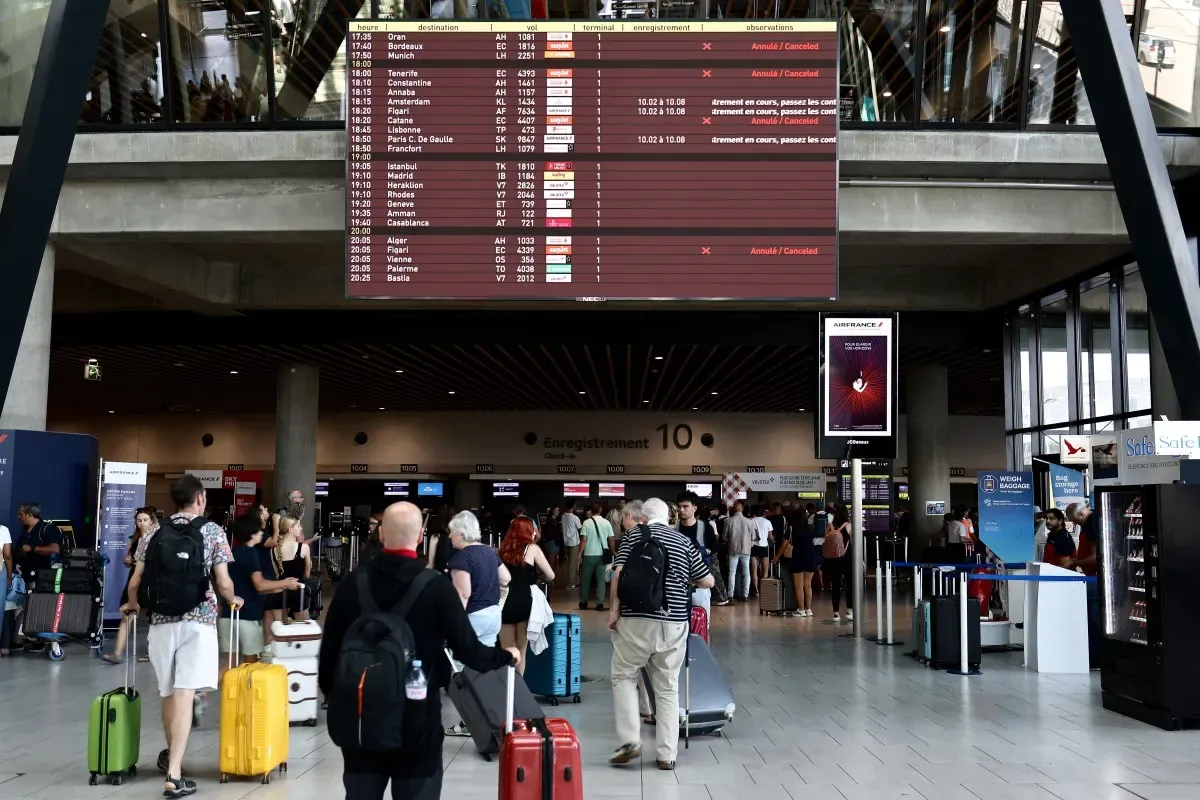
French aviation workers strike for five days as pension reform threatens retirement income
French pilot and cabin crew unions have called a five-day strike from October 17th to 21st, coinciding with the Toussaint school holidays, to protest a 2027…
French aviation strike tests state authority over pension reform and European air order
A French pilot and cabin crew union alliance has called a five-day strike from October 17th to 21st, targeting a 2027 reform that would cut pension income for…
An alliance of French pilots and cabin crew unions has called a five-day strike timed to coincide with the start of the Toussaint school holidays in October, directly threatening the travel plans of families across France and Europe. The dispute is not about wages but about the financial survival of workers who retire early and return to employment.
--- THE CONTEXT ---
The strike targets a planned reform of the cumul emploi-retraite system, the French rule that allows people to draw a pension while still working. Changes are set to take effect on January 1st, 2027. The government has said the statutory retirement age will reach 64 in the long term.
--- THE FACTS ---
The strike notice covers October 17th through 21st, overlapping with the Toussaint school holidays, which run from October 16th to November 2nd. Under the reform, workers who retire before the legal age and return to employment would see their pension cut by 100 percent of their work earnings. Between the eligible pension age and 67, the reduction would be 50 percent of any earnings above a set threshold. After 67 the current system would remain in place. The union notice applies to pilots and cabin crew working under French labour law, meaning airlines outside France could also be affected if their crews hold French contracts. At the time of reporting, no airline had announced specific cancellation plans. The unions stated they remain open to talks with the government, leaving room for a resolution before the dates arrive.
--- THE POSITIONS ---
The alliance of pilot and cabin crew unions framed the reform as a direct cut to retirement income for those who leave work early and then return to employment. The government and individual airlines had not issued a formal public response at the time this report was produced.
--- WHAT REMAINS UNKNOWN ---
No figure has been published on what share of pilots and cabin crew will join the strike. It is not yet clear which non-French airlines with French-law crews are most exposed, nor whether the government has scheduled formal talks.
--- UNANSWERED QUESTIONS ---
• How many passengers holding tickets between October 17th and 21st face cancellation if worker participation is high?
• Which non-French carriers operating under French labour law are most exposed to the disruption?
• Will the government open negotiations before October 17th, or allow the strike to proceed?
• What passenger compensation rights apply when a strike cancels a flight under French and European rules?
--- EPM ANALYSIS ---
The 100 percent pension reduction for those who retire early and return to work is not an abstraction: it changes the financial calculus of every aviation worker in that bracket. The timing over school holidays amplifies public pressure deliberately, a legitimate tactic in French labour tradition. Airlines face scheduling uncertainty now, weeks before the strike, and passengers bear the cost of that uncertainty whether flights are cancelled or merely rescheduled at inconvenient hours. 📌
📌
📌 EPM Take:
In EPM's view, the human cost of this dispute runs in both directions. Workers in aviation face a reform that penalises the choice to remain productive in retirement, a choice that should be encouraged rather than financially punished. But the passengers caught between government policy and union leverage — many of them ordinary families — did not design this system and should not absorb the damage without clear, timely information from airlines. The decisive variable is whether the government negotiates before October 17th.
A coalition of French pilot and cabin crew unions has issued a five-day strike notice covering October 17th to 21st, a period that coincides with the peak of Toussaint school holiday travel and that exposes not just French airlines but any carrier operating crews under French labour law to significant disruption. The conflict is a direct challenge to the French government's authority to implement a legislated pension reform.
--- THE CONTEXT ---
At the centre of the dispute is the cumul emploi-retraite system, which permits simultaneous receipt of a pension and employment income. The government has scheduled reforms to take effect on January 1st, 2027, adjusting the financial terms of combining work and retirement for those who leave before the statutory age, which is set to reach 64 in the long term.
--- THE FACTS ---
Under the new rules, workers who retire before the legal age and re-enter employment would face a 100 percent reduction in their pension against their earnings. Between the pension eligibility age and 67, the reduction would be 50 percent on earnings above a defined threshold; after 67 the current framework remains. The strike notice extends to all pilots and cabin crew covered by French labour law, not only those employed by French carriers. Toussaint holidays run from October 16th to November 2nd, making the five strike days coincide with the initial surge in passenger traffic. No airline had published a cancellation or contingency plan at the time this report was compiled. The unions stated they are open to dialogue with the government before the strike begins.
--- THE POSITIONS ---
The union alliance framed the reform as an unjustified financial penalty on workers who choose to remain economically active after early retirement. The government and airlines had not issued a coordinated public response, according to this source.
--- WHAT REMAINS UNKNOWN ---
The proportion of eligible workers who will join the strike has not been disclosed. It is unclear which non-French carriers with French-law crews face the greatest operational exposure, and this source does not confirm whether any government-union talks have been scheduled.
--- UNANSWERED QUESTIONS ---
• What minimum service obligations does French law impose on aviation during strikes of this scale?
• How many European routes operated by French-law crews are at risk of cancellation?
• Does the government have a negotiating mandate to offer sectoral concessions before the 2027 reform takes effect?
• What precedent does a successful strike in aviation set for other sectors facing similar pension changes?
--- EPM ANALYSIS ---
The reform carries a coherent fiscal logic: correcting incentives that allow early retirees to draw full pensions while returning to well-paid employment. The strike, however, reveals the institutional cost of implementing such changes without sector-level negotiation. Aviation possesses leverage disproportionate to its workforce size. The order of the European air network now depends on a government decision about whether to negotiate or absorb the disruption and hold the reform line. 📌
📌
📌 EPM Take:
Our reading is that the French government faces a structural test that EPM has tracked across multiple France stories this year: whether the state can carry reforms against organised sector resistance without either capitulating or escalating. The cumul emploi-retraite change is scheduled for 2027, leaving ample room for negotiation — but also for delay that weakens the reform's fiscal purpose. The decisive variable is institutional: a government that opens talks before October 17th signals strength; one that waits signals paralysis. Neither outcome is neutral for Western institutional credibility.
Pilotos y tripulantes franceses paran cinco días en plenas vacaciones escolares de otoño
Sindicatos franceses de pilotos y tripulantes convocan huelga del 17 al 21 de octubre, en plenas vacaciones de Toussaint, contra la reforma del cumul…
Huelga aérea francesa por reforma de pensiones en octubre
Una alianza sindical francesa de pilotos y tripulantes convoca huelga del 17 al 21 de octubre contra la reforma del cumul emploi-retraite, vigente desde 2027…
Una alianza de sindicatos de pilotos y tripulantes de cabina ha convocado una huelga de cinco días en Francia para coincidir con el inicio de las vacaciones escolares de Toussaint. El paro, que afecta a quienes trabajan bajo la legislación laboral francesa, plantea consecuencias directas para miles de familias que viajan entre el 17 y el 21 de octubre.
--- EL CONTEXTO ---
La huelga responde a la reforma del sistema francés de cumul emploi-retraite, que permite combinar pensión y empleo de forma simultánea. Los cambios, programados para entrar en vigor el 1 de enero de 2027, alterarían radicalmente las condiciones económicas de quienes se jubilan antes de los 64 años y deciden seguir trabajando.
--- LOS HECHOS ---
La convocatoria cubre los días 17 a 21 de octubre, un período que se solapa con las vacaciones de Toussaint, fijadas del 16 de octubre al 2 de noviembre. Bajo el nuevo sistema, quienes se jubilen antes de la edad legal de retiro —que el gobierno estima alcanzará los 64 años a largo plazo— y regresen a trabajar verían su pensión reducida en un 100 por ciento de sus ingresos laborales. Entre la edad de acceso a la pensión y los 67 años, la reducción sería del 50 por ciento sobre los ingresos que superen un umbral determinado. Después de los 67 años continuaría el sistema actual. El aviso de huelga alcanza a pilotos y tripulantes de compañías cubiertas por el derecho laboral francés, lo que extiende el impacto potencial más allá de las aerolíneas de bandera francesa.
--- LAS POSICIONES ---
Los sindicatos convocantes han señalado que permanecen abiertos al diálogo con el gobierno, lo que deja abierta la posibilidad de una negociación antes de las fechas previstas. El gobierno y las aerolíneas no habían anunciado, al cierre de esta información, planes detallados de cancelaciones ni respuesta formal.
--- LO QUE FALTA SABER ---
Ni la fuente ni las aerolíneas han precisado cuántos vuelos serán cancelados. No se conoce el porcentaje de pilotos y tripulantes que secundarán el paro ni si el gobierno ha iniciado conversaciones formales con los sindicatos.
--- PREGUNTAS SIN RESPUESTA ---
• ¿Cuántos pasajeros con reservas entre el 17 y el 21 de octubre quedarán sin vuelo si la participación en la huelga es alta?
• ¿Qué aerolíneas no francesas pero con tripulaciones bajo legislación laboral francesa podrían ver afectados sus servicios?
• ¿Abrirá el gobierno negociaciones formales antes del 17 de octubre, o dejará que el conflicto escale?
• ¿Qué mecanismos de compensación tendrán los pasajeros cuyos vuelos sean cancelados por la huelga?
--- ANALISIS EPM ---
La reforma del cumul emploi-retraite concentra el debate en quienes se jubilan antes de los 64 años: ese segmento pierde el incentivo económico de seguir trabajando bajo el nuevo esquema. Para los trabajadores de aviación afectados, la pérdida potencial del 100 por ciento de la pensión sobre ingresos adicionales no es un ajuste técnico sino un cambio de vida. Las aerolíneas cargan con la incertidumbre operativa; los pasajeros, con el coste real. 📌
📌
📌 Conclusion EPM:
A juicio de EPM, esta huelga es síntoma de una tensión más profunda que EPM ya identificó en cobertura previa sobre Francia: el Estado reformando condiciones laborales sin construir consenso suficiente. La coincidencia con las vacaciones de Toussaint no es accidental; es una herramienta de presión legítima. El riesgo real no es el caos aéreo de cinco días, sino que el gobierno ceda sin resolver la sostenibilidad del sistema o que ignore el conflicto y radicalice a un sector con capacidad demostrada de paralizar el transporte.
Una alianza sindical de pilotos y tripulantes de cabina ha lanzado un aviso de huelga de cinco días en Francia, del 17 al 21 de octubre, con capacidad para extenderse más allá de las aerolíneas nacionales y desestabilizar el corredor aéreo europeo en plenas vacaciones escolares de Toussaint. El conflicto pone a prueba la autoridad del Estado para reformar el sistema de pensiones.
--- EL CONTEXTO ---
La disputa gira en torno a la reforma del cumul emploi-retraite, el mecanismo que permite combinar pensión y empleo de forma simultánea. Los cambios están programados para entrar en vigor el 1 de enero de 2027 y modifican las condiciones económicas del retiro anticipado. El gobierno ha fijado los 64 años como edad legal de retiro a largo plazo.
--- LOS HECHOS ---
Bajo el nuevo sistema, quienes se jubilen antes de los 64 años y regresen al mercado laboral verían su pensión reducida en un 100 por ciento de sus ingresos. Entre la edad de acceso a la pensión y los 67 años, la reducción sería del 50 por ciento sobre ingresos por encima de un umbral. Después de los 67 años el sistema actual permanecería. El aviso de huelga cubre a pilotos y tripulantes bajo la legislación laboral francesa, lo que amplía el riesgo a compañías no francesas que operen con ese tipo de contratos. Las vacaciones de Toussaint se extienden del 16 de octubre al 2 de noviembre; la huelga coincide con el pico inicial de tráfico. Al cierre de esta información, ninguna aerolínea había comunicado planes detallados de cancelaciones.
--- LAS POSICIONES ---
Los sindicatos convocantes declararon estar abiertos a negociaciones con el gobierno, dejando abierta una vía de resolución antes del inicio del paro. Ni el gobierno ni las aerolíneas han publicado respuesta formal o plan de contingencia según esta fuente.
--- LO QUE FALTA SABER ---
No hay datos sobre el porcentaje de trabajadores que secundarán la huelga ni sobre qué aerolíneas no francesas quedarían afectadas. La fuente no establece si el gobierno tiene previstas reuniones formales con los sindicatos antes del 17 de octubre.
--- PREGUNTAS SIN RESPUESTA ---
• ¿Qué garantías de servicio mínimo prevé la legislación francesa para el transporte aéreo durante huelgas de esta envergadura?
• ¿Cuántas rutas europeas operadas por tripulaciones bajo ley francesa quedan expuestas al paro?
• ¿Tiene el gobierno capacidad institucional para negociar una excepción sectorial antes de que la reforma entre en vigor en 2027?
• ¿Qué precedente sienta esta huelga para otros sectores que enfrentarán cambios similares en el sistema de pensiones?
--- ANALISIS EPM ---
La reforma del cumul emploi-retraite es una decisión de política fiscal con lógica propia: ajustar incentivos para reducir la carga sobre un sistema de pensiones bajo presión. La huelga, sin embargo, demuestra que una reforma técnicamente razonable puede erosionar la legitimidad institucional cuando se ejecuta sin negociación sectorial creíble. El sector aéreo tiene una palanca de presión desproporcionada respecto a su tamaño. 📌
📌
📌 Conclusion EPM:
A juicio de EPM, el verdadero test no es si la huelga cancela vuelos durante cinco días, sino si el Estado francés tiene voluntad y método para reformar el sistema de pensiones sin que cada sector con poder de veto lo bloquee por turnos. EPM ha documentado en coberturas anteriores el patrón francés de reforma-conflicto-parálisis. Ceder sin negociación sustantiva debilita la reforma; ignorar el conflicto acumula presión. La variable decisiva es si el gobierno abre una mesa antes del 17 de octubre.