More than 100 women fight fires and sexism in Indonesian Borneo
More than 100 women, many of them homemakers, patrol daily as volunteers of the "Power of Mama" initiative in Kalimantan, Indonesian Borneo, to detect and put…
--- The context ---
More than 100 women, many of them homemakers, serve as volunteers in the "Power of Mama" initiative in the Ketapang regency, in Kalimantan, the Indonesian part of Borneo. They patrol daily looking for smoke and fire. The initiative was formed in 2022 and the "Mamas" are spread over a dozen rural villages, where firefighting is considered male territory.
--- The facts ---
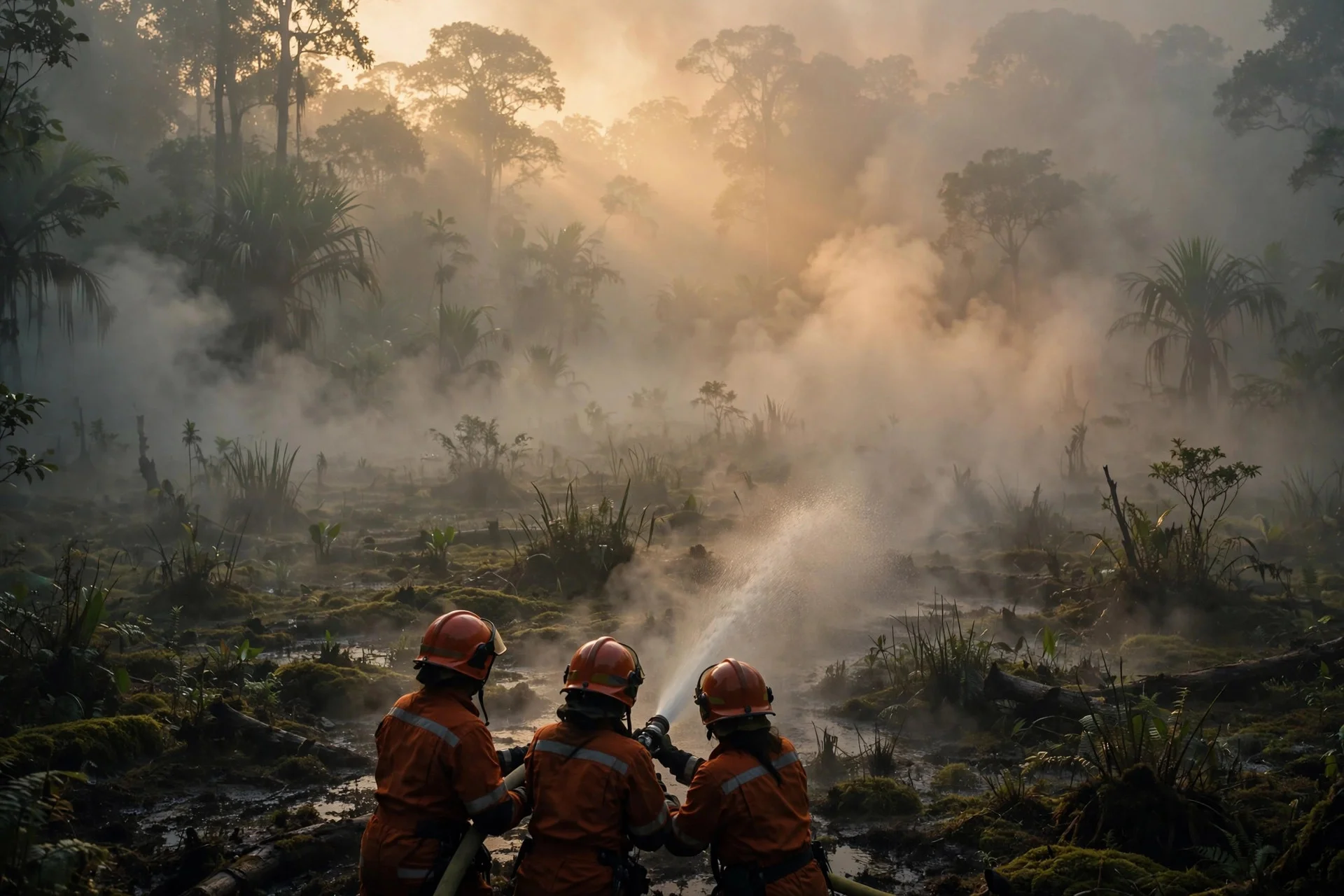
Ramilah, a 46-year-old homemaker and mother from the village of Tanjungpura, told the press after battling a peatland fire with more than a dozen women that the group's intention is to help and that the community has begun to accept it. They set out to patrol, some on motorbikes and others on the back of a pickup truck with a water pump and buckets, wearing orange jumpsuits, rubber boots and hijabs under their helmets; surgical masks were their only protection against the toxic smoke during hours of firefighting.
Peatland fires are common in Kalimantan: they burn underground for weeks or months and emit huge quantities of smoke. They are blamed on slash-and-burn land clearing, which destroys forest cover and drains peatlands. Nearly 900,000 hectares (3,475 square miles) have burned in Indonesia this year, according to satellite monitoring data, more than five times Greater London; the government reports just over 202,000 hectares. The haze spread to neighbouring countries, closed schools and caused thousands of respiratory infections.
--- The positions ---
The initiative has the backing of YIARI, an Indonesian wildlife rehabilitation foundation, and was inspired by the hardships of 2019, when fires ravaged Kalimantan during a tough episode of El Nino.
Coordinator Mita Anggraeni acknowledged the challenge of sexism: she said some still think women are not suited to handle fires, even though they are often on the front line, and that when men work far away the women of the village must go out themselves to put out the fire. Melyanti, a 25-year-old elderly carer and part-time firefighter, said some do not support their prevention activities; when the land of a detractor who had belittled them for two months caught fire, the group did not respond.
Mutia Mulansari, a 30-year-old homemaker and mother, said she had heard people say the women just ride motorbikes back and forth and are only playing around, but that attitudes are changing because the volunteers proved they are capable. Her husband Roni Irawan, 35, said he supports her work.
--- What remains unknown ---
It remains unclear whether the neighbourhood patrol model can be replicated in other haze-affected regencies.
--- Unanswered questions ---
What steps will Indonesia take to reduce the slash-and-burn clearing that feeds the fires? What health coverage do the volunteers who breathe toxic smoke for hours deserve? How many more villages need brigades like the "Mamas"?
--- EPM analysis ---
The "Power of Mama" story shows that the front line of defence against Kalimantan's fires is not an institution, but a group of homemakers working amid mockery and smoke.
📌 EPM Take:
In EPM's view, the Mamas of Ketapang are doing the job that belongs to a prevention system Indonesia has not finished building: they watch, put out fires and breathe the smoke that sickens their children, while slash-and-burn clearing keeps razing peatlands. Their fight against fire and against sexism deserves institutional backing, not just admiration. If the government does not curb the burning, the smoke will return and the volunteers will be alone again.
Más de 100 mujeres combaten incendios y machismo en Borneo
Más de 100 mujeres, muchas amas de casa, patrullan a diario como voluntarias de la iniciativa "Power of Mama" en Kalimantan, Borneo indonesio, para detectar y…
--- El contexto ---
Más de 100 mujeres, muchas amas de casa, integran como voluntarias la iniciativa "Power of Mama" en la regencia de Ketapang, en Kalimantan, la parte indonesia de Borneo. Patrullan a diario buscando humo y fuego. La iniciativa nació en 2022 y las "Mamas" están repartidas en una docena de aldeas rurales, donde apagar incendios se considera un terreno masculino.
--- Los hechos ---
Ramilah, ama de casa y madre de 46 años de la aldea de Tanjungpura, explicó a la prensa tras combatir un incendio de turbera con más de una docena de mujeres que la intención del grupo es ayudar y que la comunidad empieza a aceptarlo. Salían a patrullar en motocicleta o en la parte trasera de una camioneta con una bomba de agua y cubos, con trajes naranjas, botas de goma y el hiyab bajo el casco; las mascarillas quirúrgicas eran su única protección contra el humo tóxico durante horas.
Los incendios de turbera son comunes en Kalimantan: arden bajo el suelo semanas o meses. Se atribuyen a la tala y quema para despejar tierras, que destruye la cubierta forestal y drena las turberas. Casi 900,000 hectáreas (3,475 millas cuadradas) se han quemado en Indonesia este año, según datos de monitoreo satelital, más de cinco veces el Gran Londres; el gobierno reporta poco más de 202,000 hectáreas. La bruma se extendió a países vecinos, cerró escuelas y causó miles de infecciones respiratorias.
--- Las posiciones ---
La iniciativa cuenta con el respaldo de YIARI, fundación indonesia de rehabilitación de vida silvestre, y se inspiró en las penurias de 2019, cuando los incendios arrasaron Kalimantan durante un episodio duro de El Niño.
La coordinadora Mita Anggraeni reconoció el reto del sexismo: dijo que algunos aún piensan que las mujeres no son aptas para manejar incendios, pese a que a menudo están en primera línea, y que cuando los hombres trabajan lejos las mujeres de la aldea deben salir ellas mismas a apagar el fuego. Melyanti, de 25 años, cuidadora de ancianos y bombera a tiempo parcial, dijo que algunos no apoyan sus actividades de prevención; cuando la tierra de un detractor que las menospreció durante dos meses se incendió, el grupo no acudió.
Mutia Mulansari, ama de casa y madre de 30 años, relató que escuchó decir que las mujeres solo van y vienen en moto y no hacen más que jugar, pero que las actitudes cambian porque demostraron que son capaces. Su esposo Roni Irawan, de 35 años, dijo apoyar su labor.
--- Lo que falta saber ---
Falta saber si el modelo de patrullas vecinales podrá replicarse en otras regencias.
--- Preguntas sin respuesta ---
¿Qué medidas tomará Indonesia para reducir la tala y quema que alimenta los incendios? ¿Qué cobertura sanitaria merecen las voluntarias expuestas al humo tóxico? ¿Cuántas aldeas más necesitan brigadas como la de las "Mamas"?
--- Análisis EPM ---
La historia de "Power of Mama" muestra que la primera línea de defensa contra los incendios de Kalimantan no es una institución, sino un grupo de amas de casa que trabaja entre burlas y humo.
📌 Conclusion EPM:
A juicio de EPM, las Mamas de Ketapang están haciendo el trabajo de un sistema de prevención que Indonesia aún no construye: vigilan, apagan y respiran el humo que enferma a sus hijos, mientras la tala y quema sigue arrasando turberas. Su lucha contra el fuego y contra el machismo merece respaldo institucional, no solo admiración. Si el gobierno no frena la quema, el humo volverá y ellas volverán a estar solas.