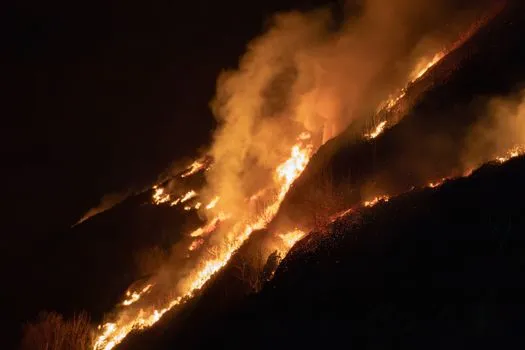
Heat killed more than 34,600 in Western Europe this summer
More than 34,600 people died from heat this summer in Spain, France, Germany, the United Kingdom and Belgium, during the hottest June-August on record in…
--- The context ---
This summer was the hottest June, July and August on record in Western Europe, with a human toll in the tens of thousands. Compiled mortality estimates from several health agencies put heat-attributable deaths at more than 34,600 across five countries: Spain, France, Germany, the United Kingdom and Belgium.
Extreme heat is a silent threat: it worsens existing illnesses and strikes hardest at young children, the elderly and workers exposed to high temperatures for long periods. This summer, average temperatures across the region ran 2.5 Celsius above the 1991-2020 average, according to the European Earth observation program, and were the highest since at least 1979 across England, Wales, Belgium, France, Spain, Italy, Switzerland and Austria.
--- The facts ---
Spain endured its deadliest summer since 2015: 5,805 excess deaths attributable to heat between May 15 and Sept. 30, according to data from the Spanish public health institute. The country logged 61 heat wave days, with four heat waves, a fifth in September and extreme episodes in May; the worst day was July 10, exceeding the 2022 record by more than 1,000.
France recorded an estimated 7,824 deaths linked to three heat waves, the highest toll since at least 2015, according to provisional figures; a definitive mortality report is expected early next year. Last summer brought an estimated 5,700 deaths, while researchers at a Paris university calculated 14,800 excess deaths in August 2003 alone.
Germany reached about 16,000 heat-related deaths between April 6 and Sept. 13, its highest level in at least a decade; about 9,600 are attributed to the late-June heat wave, the worst on record for Western Europe. The previous record was about 9,000 heat deaths in 2018.
In the U.K., heat waves caused an estimated 2,877 deaths in May and June, with a final report pending. In Belgium, 2,112 people died between June 18 and July 12. The previous benchmark was 2003, when several countries recorded tens of thousands of heat deaths and health services were overwhelmed, forcing authorities to improve emergency responses.
--- The positions ---
The head of the Spanish system noted that heat thresholds were exceeded in all 50 provinces for many days, saying hers is the only system issuing daily estimates, already consulted by several European countries. Health agencies present the figures as provisional estimates to be confirmed in definitive reports.
--- What remains unknown ---
France and the U.K. will publish definitive reports next year; the five-country total could shift once data are consolidated.
--- Unanswered questions ---
Why do some countries publish daily estimates while others take months to consolidate theirs? How many deaths could have been avoided with faster alert systems? Is the European health infrastructure ready for an even more extreme summer?
--- EPM analysis ---
Heat kills quietly and with a lag, and this summer made clear it is no longer an occasional phenomenon: 61 heat wave days in a single country mark a change of regime. Monitoring systems exist and work; the task is to translate the number into early warnings, cooling shelters and protection for those who work under the sun.
📌 EPM Take:
In EPM's view, 34,600 deaths across five countries make heat a first-order public health crisis demanding health answers, not just weather condolences. Where daily estimates and per-province thresholds exist, there is capacity to react; where reports arrive months later, prevention arrives late. This summer should leave every European country with early warnings, protocols for vulnerable populations and emergency services ready before the thermometer climbs again. Counting the dead is necessary but not sufficient: the task now is to stop adding names to the count.
El calor mató a más de 34,600 personas en Europa este verano
Más de 34,600 personas murieron por el calor este verano en España, Francia, Alemania, el Reino Unido y Bélgica, durante el junio-agosto más caluroso…
--- El contexto ---
Este verano fue el más caluroso jamás registrado en Europa occidental en junio, julio y agosto, con un balance humano de decenas de miles. Una recopilación de estimaciones sanitarias sitúa las muertes atribuibles al calor en más de 34,600 en cinco países: España, Francia, Alemania, el Reino Unido y Bélgica.
El calor extremo es una amenaza silenciosa: agrava enfermedades preexistentes y golpea sobre todo a niños pequeños, mayores y trabajadores expuestos a altas temperaturas. Este verano, las temperaturas medias de la región estuvieron 2,5 grados Celsius por encima del promedio de 1991-2020, según el programa europeo de observación terrestre, y fueron las más altas desde al menos 1979 en Inglaterra, Gales, Bélgica, Francia, España, Italia, Suiza y Austria.
--- Los hechos ---
España vivió su verano más mortífero desde 2015, con 5,805 muertes en exceso por calor entre el 15 de mayo y el 30 de septiembre, según el instituto de salud pública español. El país acumuló 61 días de ola de calor, con cuatro olas, una quinta en septiembre y episodios extremos en mayo; el peor día fue el 10 de julio y supera en más de 1,000 el récord de 2022.
Francia registró unas 7,824 muertes en tres olas de calor, la cifra más alta desde al menos 2015 según datos provisionales; el informe definitivo llegará a principios del próximo año. El año pasado fueron 5,700 muertes estimadas, y en agosto de 2003 investigadores de una universidad parisina calcularon 14,800 muertes en exceso.
Alemania alcanzó unas 16,000 muertes entre el 6 de abril y el 13 de septiembre, su nivel más alto en al menos una década; unas 9,600 corresponden a la ola de finales de junio, la peor en Europa occidental. Su récord previo: unas 9,000 en 2018.
En el Reino Unido hubo unas 2,877 muertes estimadas en mayo y junio, con informe final pendiente. En Bélgica murieron 2,112 personas entre el 18 de junio y el 12 de julio. El récord anterior era 2003, cuando varios países registraron decenas de miles de muertes y los servicios colapsaron, lo que obligó a mejorar la respuesta de emergencia.
--- Las posiciones ---
La responsable del sistema español destacó que los umbrales se superaron en las 50 provincias durante muchos días y que el suyo es el único con estimaciones diarias, ya consultado por varios países europeos. Las agencias presentan las cifras como provisionales por confirmar.
--- Lo que falta saber ---
Francia y el Reino Unido publicarán sus informes definitivos el próximo año; el balance total podría variar al consolidar los datos.
--- Preguntas sin respuesta ---
¿Por qué algunos países publican estimaciones diarias y otros tardan meses en consolidarlas? ¿Cuántas muertes podrían haberse evitado con alertas más rápidas? ¿Está preparada la sanidad europea para un verano aún más extremo?
--- Análisis EPM ---
El calor mata en silencio y en diferido, y este verano dejó claro que ya no es un fenómeno ocasional: 61 días de ola de calor en un solo país marcan un cambio de régimen. Hay sistemas de monitorización que funcionan; la tarea es convertir la cifra en avisos tempranos, refugios climáticos y protección para quienes trabajan bajo el sol.
📌 Conclusion EPM:
A juicio de EPM, 34,600 muertes en cinco países convierten al calor en una crisis de salud pública que exige respuestas sanitarias, no solo condolencias meteorológicas. Donde hay estimaciones diarias y umbrales por provincia, hay capacidad de reacción; donde los informes llegan meses después, la prevención llega tarde. Este verano debe dejar a cada país europeo con alertas tempranas, protocolos para la población vulnerable y servicios de emergencia listos antes de que el termómetro vuelva a subir.