United States • • EPM Editorial Desk • 🌿 Progressive
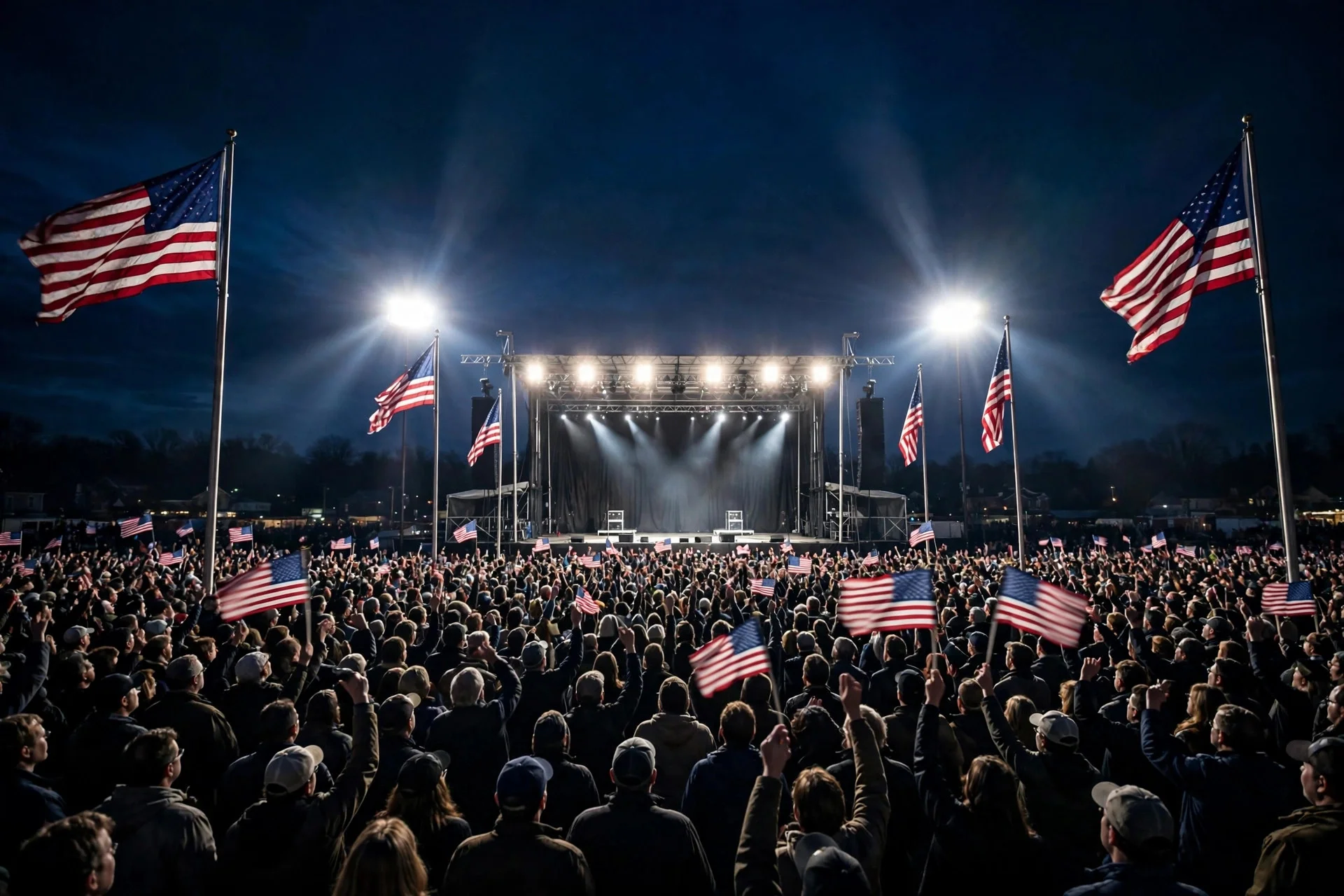
Ilustración alusiva a un mitin nocturno en Ohio con banderas de Estados Unidos y una multitud reunida.
Trump turns Ohio into a midterm laboratory with investment pledges
President Donald Trump headlined his third straight rally night in Dayton in support of Sen. Jon Husted and gubernatorial candidate Vivek Ramaswamy.
Trump touts booming Ohio, urges voters to seal Republican midterm wins
President Donald Trump headlined his third consecutive rally in Dayton to back Sen. Jon Husted and gubernatorial candidate Vivek Ramaswamy.
--- The context ---
President Donald Trump closed out Saturday night near Dayton, Ohio, his third consecutive night of rallies for Sen. Jon Husted and gubernatorial candidate Vivek Ramaswamy, with midterm elections 31 days away.
Ohio was no accident: Trump carried the state in all three of his presidential campaigns, and he is now using it to turn a midterm without his name on the ballot into a referendum on his presidency.
--- The facts ---
The speech was built around the economy. Trump described Ohio as booming and credited three investments to his trade and tariff policies: a $400 million Stellantis investment in Toledo, an $850 million Electra aerospace investment near Springfield, and Bayer's $2.2 billion pharmaceutical manufacturing campus near Columbus, which the company says would support about 600 permanent jobs and 1,500 construction jobs.
On immigration, Trump dedicated his recitation of the poem "The Snake" to Springfield, an allegory he tied to the border. The city became a national flashpoint during the 2024 campaign over the arrival of Haitian nationals.
He also endorsed Husted's Ratepayer Protection Act, aimed at shielding consumers from extra electricity costs tied to data centers. Husted brought the bill to the Senate floor days before the rally, where it failed to advance, and Trump pledged to sign it immediately if Congress passes it.
Trump repeated his proposal for $5,000 payments to adult Americans if Republicans retain the House and Senate, and floated Ohio as a potential home for a future U.S. National Space Academy, citing the state's aviation history and the Wright brothers.
--- The positions ---
The White House reading is straightforward: tariffs are leveling the playing field, investment is flowing, the stock market is setting records, and the nation is doing better than ever — a deliberate contrast with the Biden administration.
The counter-reading notes that presidential claims of credit for corporate investment announcements do not always survive contact with construction schedules, and cities like Springfield already know how campaign rhetoric on immigration can outweigh facts on the ground.
--- What remains unknown ---
Nothing said on stage established signed timelines for the cited investments; the jobs figures are the company's own projections, and no details emerged on how the $5,000 payments would be funded or how the Space Academy site would be chosen.
--- Unanswered questions ---
Can Trump convert his personal popularity into votes for Husted and Ramaswamy? When will Ohio households start feeling the "golden age" in their electricity bills? Can the Ratepayer Protection Act clear the Senate before the election? And how much of the announced investment will actually be built?
--- EPM analysis ---
The midterm strategy is now visible: personalize an election without his name on the ballot, turn every investment announcement into proof that tariffs work, and make the flashiest promises — the checks, the academy — conditional on a Republican win. It is a high-voltage bet that substitutes spectacle for verification and leaves voters to decide whether the promise is enough.
📌 EPM Take:
In EPM's view, the Ohio rally shows a president who treats the midterms as a referendum on his record and trusts his personal pull more than the party machine. The risk for voters is in the timing: the most concrete promises depend on winning first and being verified later, while tariffs are already being paid today in consumer prices. The "golden age" may be real in the announcements and late in arriving to household budgets — and that gap is what will decide the election.
--- The context ---
President Donald Trump packed another Ohio stage on Saturday night, his third rally in three nights, to boost Sen. Jon Husted and gubernatorial candidate Vivek Ramaswamy ahead of midterm elections 31 days away.
With his own name absent from the ballot, Trump was blunt: he asked voters to act as if he were running himself, convinced that when he runs, he wins.
--- The facts ---
The core message was about results. Trump pointed to concrete Ohio investments he credits to his tariff agenda: a $400 million Stellantis investment in Toledo, an $850 million Electra aerospace investment near Springfield, and Bayer's $2.2 billion pharmaceutical campus near Columbus, projected by the company to support about 600 permanent jobs and 1,500 construction jobs.
He backed Husted's Ratepayer Protection Act: data centers are welcome, he said, but families should not foot the electricity bill. He pledged to sign it immediately if Congress passes it.
On taxes, he cited Republican-backed relief on tips and overtime and repeated his proposal for $5,000 payments to adults if the party keeps both chambers.
On immigration, he dedicated "The Snake" recitation to Springfield and defended the border crackdown; on Venezuela, he said the operation against dictator Nicolas Maduro had already paid for itself many times over through the country's oil.
--- The positions ---
For supporters, the rally confirms the White House narrative: tariffs leveling the field, manufacturing returning, stock market records, and a nation doing better than ever.
For critics, the announcements blend real projects with victory-contingent promises, and the contrast with the Biden administration rests more on rhetoric than on compared figures.
--- What remains unknown ---
Still to be seen: the real construction timelines, the legislative fate of the Ratepayer Protection Act, and whether the $5,000 payments move beyond the proposal stage.
--- Unanswered questions ---
Will Trump's pull be enough for Husted and Ramaswamy to win in November? Can Congress pass ratepayer protection before the election? Will Ohio land the future National Space Academy? And how many of the announced jobs will actually materialize?
--- EPM analysis ---
Trump is playing the card he knows best: making his persona the central argument of the Republican campaign and presenting Ohio as living proof that his economic recipe works. If the midterms are decided by economic perception, the rally did its job; if they are decided by the prices families pay, the test is still ahead.
📌 EPM Take:
In EPM's view, the Dayton event was a calculated show of strength: a president spending his political capital for the party and selling tangible results — investment, jobs, tax relief — against uncertainty. The bet is legitimate in a democracy: asking for votes by pointing to a record. But the verdict will come not from the stage, but from the ballot box and, later, from Ohio's payrolls. If announced investment becomes factories and electric-bill protection becomes law, the rally will have been the start of something real.
Trump usa Ohio como laboratorio electoral rumbo a las legislativas
El presidente Donald Trump encabezó en Dayton su tercer mitin en tres noches en apoyo del senador Jon Husted y del candidato a gobernador Vivek Ramaswamy.
Trump presume un Ohio en auge y pide sellar el triunfo republicano
El presidente Donald Trump encabezó en Dayton su tercer mitin consecutivo para respaldar al senador Jon Husted y al candidato a gobernador Vivek Ramaswamy.
--- El contexto ---
El presidente Donald Trump cerró el sábado por la noche cerca de Dayton, Ohio, su tercer mitin en tres noches en apoyo del senador Jon Husted y del candidato a gobernador Vivek Ramaswamy, a 31 días de las elecciones legislativas.
Ohio no fue elegido al azar: Trump lo ganó en sus tres campañas presidenciales y ahora lo usa para convertir unas legislativas sin su nombre en la boleta en un plebiscito sobre su presidencia.
--- Los hechos ---
El corazón del discurso fue económico. Trump presentó a Ohio como un estado en pleno auge y atribuyó tres inversiones a su política de aranceles: 400 millones de dólares de Stellantis en Toledo, 850 millones de Electra en aviación cerca de Springfield y un campus farmacéutico de Bayer de 2,2 mil millones de dólares cerca de Columbus, que según la compañía sostendría unos 600 empleos permanentes y 1500 de construcción.
Sobre inmigración, Trump dedicó a la ciudad de Springfield su recitación del poema "La serpiente", una alegoría sobre la frontera que, según dijo, resume lo ocurrido allí. Springfield fue foco nacional en la campaña de 2024 por la llegada de haitianos a la comunidad.
También respaldó la Ley de Protección al Contribuyente de Husted, que busca blindar a los consumidores de costos eléctricos extra por los centros de datos. Husted la llevó al pleno días antes sin que avanzara, y Trump prometió firmarla de inmediato si el Congreso la aprueba.
También reiteró su propuesta de pagos de $5000 a los adultos si los republicanos retienen la Cámara y el Senado, y propuso a Ohio como sede de la futura Academia Nacional del Espacio, citando su historia de aviación y a los hermanos Wright.
--- Las posiciones ---
La lectura de la Casa Blanca es clara: los aranceles reequilibran el terreno de juego, las inversiones llegan, la bolsa marca récords y la nación está mejor que nunca, en contraste con la gestión de Joe Biden.
La otra lectura recuerda que los anuncios de inversión atribuidos a un presidente no siempre se concretan al ritmo prometido, y que ciudades como Springfield ya saben que la retórica migratoria puede pesar más en la campaña que los datos.
--- Lo que falta saber ---
No hay, en lo dicho sobre el escenario, plazos firmados para las inversiones citadas; los empleos son proyecciones de la propia empresa, y tampoco se detalló cómo se financiarían los pagos de $5000 ni los criterios para la sede de la Academia Espacial.
--- Preguntas sin respuesta ---
¿Logrará Trump convertir su popularidad en votos para Husted y Ramaswamy? ¿Cuándo notarán los hogares de Ohio la "era dorada" en sus facturas de luz? ¿Avanzará la Ley de Protección al Contribuyente en el Senado antes de la elección? ¿Y qué parte de las inversiones anunciadas se construirá realmente?
--- Análisis EPM ---
La estrategia para las legislativas quedó al descubierto: personalizar una elección sin su nombre en la boleta, convertir cada anuncio de inversión en prueba de que los aranceles funcionan y condicionar las promesas más vistosas —los pagos, la academia— a una victoria republicana. Es una apuesta que sustituye la verificación por el espectáculo: la promesa tendrá que bastar.
📌 Conclusion EPM:
A juicio de EPM, el mitin de Ohio muestra a un presidente que entiende las legislativas como un referéndum sobre su gestión y confía en su arrastre más que en la maquinaria del partido. El riesgo está en el calendario: las promesas más concretas dependen de ganar primero y verificarse después, mientras los aranceles ya se pagan en los precios. La "era dorada" puede ser real en los anuncios y tardía en los bolsillos; esa distancia decidirá la elección.
--- El contexto ---
El presidente Donald Trump volvió a llenar un escenario en Ohio el sábado por la noche, en su tercer mitin en tres noches, para impulsar al senador Jon Husted y al candidato a gobernador Vivek Ramaswamy de cara a unas elecciones legislativas que se celebran en 31 días.
Con su nombre ausente de la boleta, Trump fue directo: pidió a los votantes que actúen como si él mismo estuviera en juego, convencido de que cuando él compite, gana.
--- Los hechos ---
El mensaje central fue de resultados. Trump citó inversiones concretas en Ohio que atribuye a su agenda de aranceles: 400 millones de dólares de Stellantis en Toledo, 850 millones de Electra en aviación cerca de Springfield y el campus farmacéutico de Bayer de 2,2 mil millones de dólares cerca de Columbus, con unos 600 empleos permanentes y 1500 de construcción proyectados por la empresa.
También dio su respaldo a la Ley de Protección al Contribuyente impulsada por Husted: los centros de datos son bienvenidos, dijo, pero sin que las familias paguen la cuenta de la electricidad. Prometió firmarla de inmediato si el Congreso la aprueba.
En materia fiscal, recordó las exenciones de impuestos a propinas y horas extra ya impulsadas por los republicanos y reiteró su propuesta de pagos de $5000 a los adultos si el partido conserva ambas cámaras.
Sobre inmigración, dedicó a Springfield su recitación de "La serpiente" y reivindicó el endurecimiento fronterizo; sobre Venezuela, afirmó que la operación contra el dictador Nicolás Maduro ya se pagó con creces gracias al petróleo del país.
--- Las posiciones ---
Para sus seguidores, el mitin confirma el relato de la Casa Blanca: aranceles que nivelan el campo, manufactura que regresa, récords bursátiles y una nación que está mejor que nunca.
Para sus críticos, los anuncios mezclan proyectos reales con promesas condicionadas a la victoria electoral, y el contraste con la administración Biden se sostiene más en el discurso que en cifras comparadas.
--- Lo que falta saber ---
Queda por ver el calendario real de las inversiones, el destino legislativo de la Ley de Protección al Contribuyente y si los pagos de $5000 superan la fase de propuesta.
--- Preguntas sin respuesta ---
¿Bastará el arrastre de Trump para que Husted y Ramaswamy ganen en noviembre? ¿Aprobará el Congreso la protección al contribuyente antes de las elecciones? ¿Elegirá Ohio la futura Academia Nacional del Espacio? ¿Y cuántos de los empleos anunciados llegarán a materializarse?
--- Análisis EPM ---
Trump juega la carta que mejor domina: convertir su figura en el argumento central de la campaña republicana y presentar a Ohio como la prueba viva de que su receta económica funciona. Si las legislativas se deciden por la percepción económica, el mitin cumplió su objetivo; si se deciden por los precios que pagan las familias, la prueba aún está pendiente.
📌 Conclusion EPM:
A juicio de EPM, el acto de Dayton fue una demostración de fuerza calculada: un presidente que pone su capital político al servicio del partido y que vende resultados tangibles —inversión, empleo, alivio fiscal— frente a la incertidumbre. La apuesta es legítima en democracia: pedir el voto mostrando gestión. Pero el veredicto no lo dará el escenario, sino las urnas y, después, las nóminas de Ohio. Si la inversión anunciada se convierte en fábricas y la protección eléctrica en ley, el mitin habrá sido el inicio de algo real.