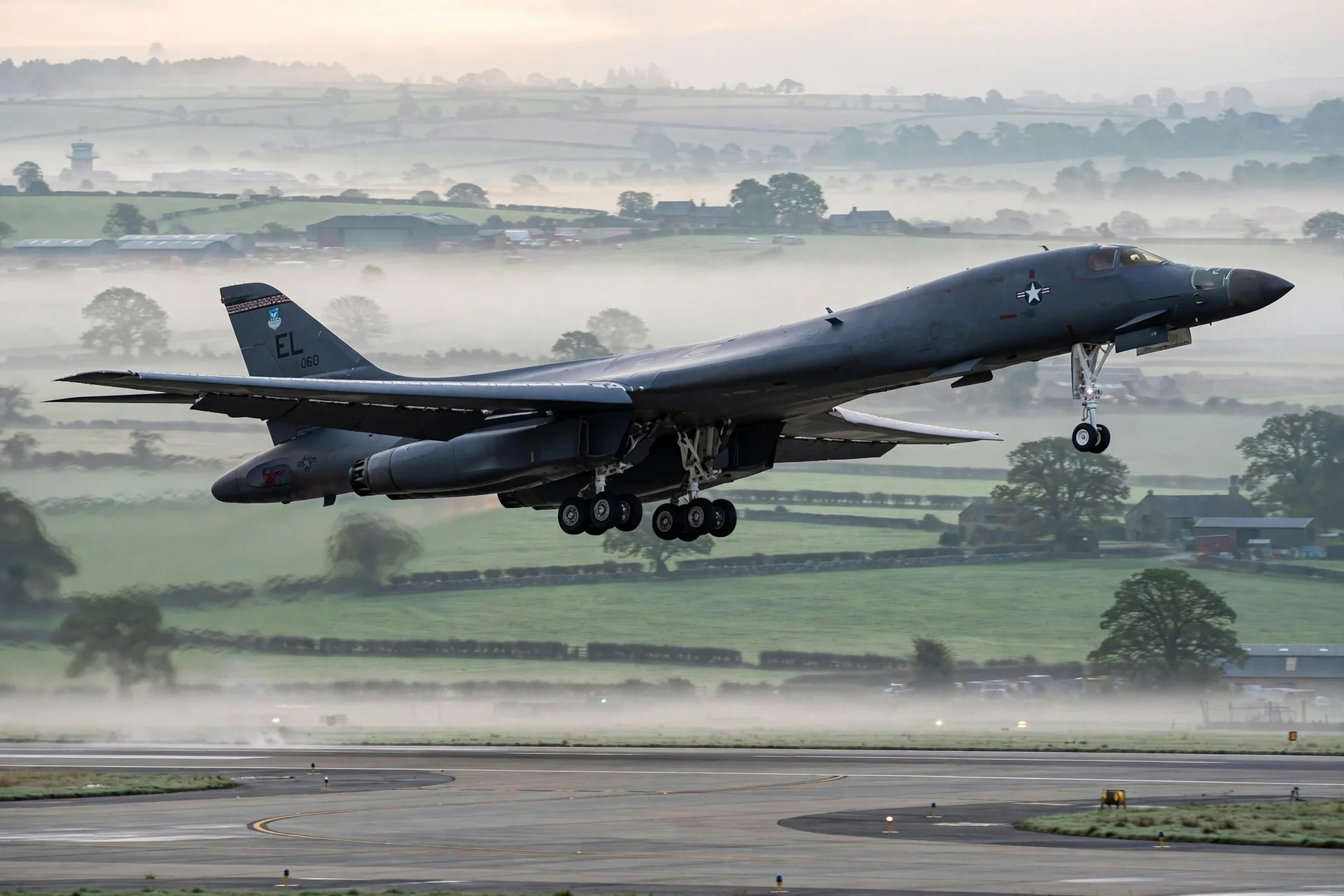
Un bombardero B-1 de la Fuerza Aérea de EE. UU. despega de una base británica. Washington retiró sus aviones de RAF Fairford tras detectar una amenaza. · EPM
The Fairford pullback exposes the Iranian threat network stalking Europe
Washington pulled about a dozen B-1 bombers from the British base at RAF Fairford after threats that President Trump linked to Iran.
Washington pulls its bombers from Fairford rather than hand the enemy a target
The Pentagon returned about a dozen B-1 bombers stationed at RAF Fairford, England, to the United States after threats against the base were detected.
--- The context ---
For decades, RAF Fairford in the Cotswolds, Gloucestershire, has served as a forward operating location for the United States Air Force. In recent months B-1 and B-52 bombers flew from its runway toward the Middle East, after Britain approved Washington's request to use the base for defensive strikes on Iran. It was, in effect, America's closest spearhead to the Iranian theater.
--- The facts ---
That strategic role was suspended on Sunday, when the Pentagon confirmed it had removed its bombers — about a dozen B-1s — and returned them to their home stations in America. On Monday, departing for Nebraska, President Donald Trump told reporters the aircraft had not left by accident: the move answered concrete threats against the installation.
The alarm was raised on 27 September, when police were alerted to three suspicious vehicles near the base. The episode triggered a counter-terrorism investigation that led to the arrest of five men on suspicion of terror offences, later released on bail, and a sixth detainee, a UK-Iranian national, who was also freed on bail.
Trump said Washington knew of the threat and even knows the people who made it, whom he described as linked to Iran, though he declined to elaborate. Vice President JD Vance defended the pullback as an act of abundant caution and said Iran had spent 49 years engaging in terrorism against the United States and many others.
US media have reported intelligence pointing to an alleged Iranian drone attack plot, a claim that remains unconfirmed. A source close to the White House cited Ukraine's Operation Spiderweb as a reference: the Ukrainian action last June in which drones were smuggled into Russia hidden in lorries, driven by people unaware of their cargo, to positions near airbases, from where they were launched against their targets. The same source insisted the threat had been taken extremely seriously.
--- The positions ---
Days after the incident, Prime Minister Andy Burnham said there were strong indications of Iranian involvement, without providing details, while Secretary of State Marco Rubio said the episode clearly involved the hands of a foreign actor. Rubio, however, was far more guarded than Trump and Vance: he said he would not directly tie the incident to the redeployment, noted that military units routinely rotate assets around the world, and restated Washington's full confidence in the security of all its bases and the cooperation of British authorities.
Tehran has strongly denied any involvement. In July, Iranian authorities warned that any base used to attack Iranian territory is a legitimate target. Downing Street, for its part, insisted on Monday that RAF Fairford is a safe installation and recalled Trump's praise for Britain's police and defence and security services.
--- What remains unknown ---
The exact nature of the threat remains unclear: no one has confirmed whether the drone plot existed, whether the suspicious vehicles were part of a sabotage device or a reconnaissance operation. The identity and affiliations of the six detainees are unknown, as is whether British authorities shared with Washington the intelligence that precipitated the pullback. The bombers' final destination is also undecided: they could be sent to Diego Garcia or Gulf bases to reduce air-to-air refuelling, according to an analyst at a British defence studies institute, though that will depend on capacity, negotiations with allies and security.
--- Unanswered questions ---
What exactly did Washington know, and when did it know it, before ordering the pullback? How can a hostile network bring suspicious vehicles to the gates of an allied base without being detected in time? Are we looking at espionage, an attempted sabotage, or reconnaissance ahead of a larger attack? And how long can the United States sustain its deterrent posture toward Iran without a forward platform on European soil?
--- EPM analysis ---
The lesson of Fairford is that deterrence is no longer decided by expensive aircraft parked on a distant runway, but by the ability to detect and neutralize clandestine networks operating inside Western democracies themselves. If a hostile power can move vehicles and drones to the surroundings of a strategic base in the middle of England, the problem is not where the bombers are, but how far the threat has already penetrated. Europe has spent years underestimating Iranian projection on its territory; this episode should force European services to treat it with the same seriousness Washington showed when it acted on the warning.
📌 EPM Take:
In EPM's view, the Fairford pullback is not a retreat but a signal that the Iranian threat in Europe has ceased to be a hypothesis and become an ongoing operational plan. Moving the bombers protects the aircraft, yet it does not solve the underlying problem: the infiltration of hostile networks able to stalk Western critical infrastructure from within. Effective deterrence demands shared intelligence, active base defence, and a Europe that stops looking the other way as Iran projects power. Without that response, every allied base will remain a target within easy reach.
--- The context ---
When a military commander suspects his most valuable assets are in the crosshairs, the first duty is not to give a speech: it is to move them. That is what Washington did with the bombers deployed at RAF Fairford, the Cotswolds base in Gloucestershire that has served for decades as a forward platform for the US Air Force and that in recent months hosted B-1 and B-52 aircraft bound for Middle East operations with British authorization.
--- The facts ---
On Sunday the Pentagon confirmed it had returned those aircraft — about a dozen B-1s — to their home stations in America. On Monday, President Donald Trump told reporters the departure had been no accident: there were threats against the installation, and there was no reason to leave the aircraft exposed to tempt the enemy.
The trigger was the 27 September incident, when police were alerted to three suspicious vehicles near the base. The counter-terrorism investigation led to the arrest of five men on suspicion of terror offences and a sixth, a UK-Iranian national, all of whom were later released on bail.
Trump said his government knows of the threat and the people who made it, whom he linked to Iran, though he refused to give further details. Vice President JD Vance described the pullback as a decision taken out of an abundance of caution and recalled that Iran had spent 49 years engaged in terrorism against the United States and many others.
In contrast, Secretary of State Marco Rubio chose restraint: he said he would not directly link last week's incident to the decision to pull the bombers, stressed that it is routine for military units to rotate assets around the world, and restated America's full confidence in the security of all its bases, as well as the cooperation received from British authorities.
--- The positions ---
Restraint also came from London: a Downing Street spokesperson insisted RAF Fairford is a safe installation and recalled that Trump himself had praised Britain's police and defence and security services. Days earlier, Prime Minister Andy Burnham had spoken of strong indications of Iranian involvement in the incident, without offering evidence, and Rubio had attributed the episode to the hands of a foreign actor.
Tehran, for its part, categorically denied any involvement and recalled its July warning that any base used to attack Iranian territory constitutes a legitimate target. An analyst at a British defence studies institute qualified the scope of the pullback: it will reduce America's capacity to launch rapid strikes against Iran, although the base's use was already limited to defensive strikes at London's demand.
--- What remains unknown ---
It remains unconfirmed whether the intelligence about an alleged Iranian drone plot — reported by US media — was solid or speculation amplified by the political moment. What role the six detainees played exactly, and why they were released so quickly, has not been clarified. And it is still unclear where the bombers will end up: they could be moved to Diego Garcia or Gulf bases to reduce air-to-air refuelling, according to the same analyst, depending on capacity, negotiations with allies and security.
--- Unanswered questions ---
Was the pullback a proportionate response to a real threat or a political gesture to project resolve? What does losing a forward platform in Europe, even temporarily, cost deterrence? Should Britain accept that its bases become targets in a confrontation it did not start? And who decides, within an alliance, when a threat justifies moving pieces on the board?
--- EPM analysis ---
Protecting the force is the first rule of any responsible command: a bomber destroyed on the ground deters no one. Washington did the right thing by refusing to hand the enemy a high-value target while the threat was not neutralized, and it did so without breaking the alliance: the base sits on sovereign British soil, British police lead the investigation, and Rubio made clear that confidence in London remains intact. The conservative lesson here is twofold: prudence is not weakness, and verbal escalation without evidence — pointing at Iran without presenting it — is the shortest road to a war nobody has declared.
📌 EPM Take:
In EPM's view, the Fairford pullback is an act of command prudence, not panic: faced with an un-neutralized threat, moving the bombers was the responsible decision and the only one compatible with the base's sovereignty and the strength of the alliance with Britain. But resolve demands facts: if Washington says the threat is linked to Iran, it must present the evidence or temper the accusation, because pointing without proving feeds an escalation neither side claims to want. Deterring without provoking remains the hardest art of strategy.
El repliegue de Fairford expone la amenaza iraní que acecha a Europa
Washington retiró alrededor de una docena de bombarderos B-1 de la base británica de RAF Fairford tras detectar amenazas que, según Trump, estarían vinculadas…
Washington retira sus bombarderos de Fairford para no regalarle un objetivo al enemigo
El Pentágono devolvió a Estados Unidos alrededor de una docena de bombarderos B-1 estacionados en RAF Fairford, en Inglaterra, después de que se detectaran…
--- El contexto ---
Durante décadas, la base de RAF Fairford, en los Cotswolds de Gloucestershire, ha funcionado como plataforma avanzada de la Fuerza Aérea de Estados Unidos. En los últimos meses, desde su pista despegaron bombarderos B-1 y B-52 con destino a Oriente Medio, después de que el Reino Unido autorizara a Washington a usar la instalación para ataques defensivos contra Irán. Era la punta de lanza estadounidense más cercana al teatro iraní.
--- Los hechos ---
Ese papel estratégico quedó en suspenso el domingo, cuando el Pentágono confirmó que había retirado sus bombarderos —alrededor de una docena de B-1— y los había devuelto a sus bases de origen en Estados Unidos. El lunes, el presidente Donald Trump explicó ante la prensa que los aviones no se habían marchado por accidente: la decisión respondía a amenazas concretas contra la instalación.
La alarma se encendió el 27 de septiembre, cuando la policía fue alertada por la presencia de tres vehículos sospechosos en las inmediaciones de la base. El episodio desencadenó una investigación antiterrorista que llevó al arresto de cinco hombres bajo sospecha de delitos de terrorismo, posteriormente liberados bajo fianza, y de un sexto detenido, de nacionalidad británico-iraní, que también quedó en libertad bajo fianza.
--- Las posiciones ---
Trump afirmó que Washington conocía la amenaza y que incluso sabe quiénes la profirieron, a los que describió como vinculados a Irán, aunque declinó entrar en detalles. El vicepresidente JD Vance justificó el repliegue como una medida adoptada por abundancia de precaución y aseguró que Irán lleva 49 años dedicándose a actos de terrorismo contra Estados Unidos y contra muchos otros países.
La prensa estadounidense ha informado de que la inteligencia apuntaría a un presunto plan iraní para atacar con drones, una versión que no ha sido confirmada. Una fuente cercana a la Casa Blanca mencionó como referencia la Operación Spiderweb, la acción ucraniana de junio del año pasado en la que se introdujeron drones de contrabando en Rusia ocultos en camiones, conducidos por personas que ignoraban su carga, hasta las proximidades de bases aéreas, desde donde fueron lanzados contra sus objetivos. La misma fuente aseguró que la amenaza se tomó extremadamente en serio.
Días antes, el primer ministro Andy Burnham declaró que existían fuertes indicios de participación iraní, sin ofrecer más detalles, mientras que el secretario de Estado Marco Rubio afirmó que en el episodio estaban claramente implicadas las manos de un actor extranjero. Rubio, sin embargo, se mostró mucho más cauto que Trump y Vance: dijo que no vincularía directamente el incidente con el redespliegue, recordó que es habitual que las unidades militares roten sus activos por el mundo y reiteró la plena confianza de Washington en la seguridad de todas sus bases, además de la cooperación de las autoridades británicas.
Teherán ha negado rotundamente cualquier implicación. En julio, las autoridades iraníes advirtieron que toda base utilizada para agredir territorio iraní constituye un objetivo legítimo para sus fuerzas. Por su parte, Downing Street insistió este lunes en que RAF Fairford es una instalación segura y recordó los elogios de Trump a la policía y los servicios de defensa y seguridad del Reino Unido.
--- Lo que falta saber ---
La naturaleza exacta de la amenaza sigue sin aclararse: nadie ha confirmado si el plan con drones existió, si los vehículos sospechosos formaban parte de un dispositivo de sabotaje o si se trataba de una operación de reconocimiento. Tampoco se conoce la identidad ni la filiación de los seis detenidos, ni si las autoridades británicas compartieron con Washington la inteligencia que precipitó el repliegue. Queda por definir el destino final de los bombarderos: podrían reubicarse en Diego Garcia o en bases del Golfo para reducir la necesidad de reabastecimiento en vuelo, según el análisis de un analista de un instituto británico de estudios de defensa, aunque la decisión dependerá de la capacidad disponible, las negociaciones con los aliados y la seguridad.
--- Preguntas sin respuesta ---
¿Qué sabía exactamente Washington y cuándo lo supo antes de ordenar el repliegue? ¿Cómo puede una red hostil acercar vehículos sospechosos a las puertas de una base aliada sin ser detectada a tiempo? ¿Estamos ante un caso de espionaje, un intento de sabotaje o el reconocimiento previo de un ataque mayor? ¿Y cuánto tiempo puede Estados Unidos mantener su postura de disuasión frente a Irán sin una plataforma avanzada en suelo europeo?
--- Análisis EPM ---
La lección que deja Fairford es que la disuasión ya no se juega solo con aviones caros estacionados en una pista lejana, sino con la capacidad de detectar y neutralizar redes clandestinas que operan dentro de las propias democracias occidentales. Si una potencia adversaria puede mover vehículos y drones hasta los alrededores de una base estratégica en plena Inglaterra, el problema no es dónde están los bombarderos, sino hasta dónde ha penetrado la amenaza. Europa lleva años subestimando la proyección iraní en su territorio; este episodio debería obligar a los servicios europeos a tratarla con la misma seriedad con la que Washington trató la alerta.
📌 Conclusion EPM:
A juicio de EPM, el repliegue de Fairford no es una retirada sino una señal de que la amenaza iraní en Europa ha dejado de ser una hipótesis para convertirse en un plan operativo en curso. Mover los bombarderos protege los aviones, pero no resuelve el problema de fondo: la infiltración de redes hostiles capaces de acechar infraestructuras críticas occidentales desde dentro. La disuasión que funciona exige inteligencia compartida, defensa activa de las bases y una Europa que deje de mirar hacia otro lado ante la proyección iraní. Sin esa respuesta, cada base aliada seguirá siendo un objetivo al alcance.
--- El contexto ---
Cuando un mando militar sospecha que sus activos más valiosos están en la mira, la primera obligación no es dar un discurso: es moverlos. Eso hizo Washington con los bombarderos desplegados en RAF Fairford, la base de los Cotswolds, en Gloucestershire, que desde hace décadas sirve como plataforma avanzada de la Fuerza Aérea estadounidense y que en los últimos meses acogió aviones B-1 y B-52 destinados a operaciones en Oriente Medio con autorización británica.
--- Los hechos ---
El domingo, el Pentágono confirmó que había devuelto esos aviones —alrededor de una docena de B-1— a sus bases de origen en Estados Unidos. El lunes, el presidente Donald Trump explicó ante la prensa que la partida no había sido un accidente: existían amenazas contra la instalación y no tenía sentido dejar los aparatos expuestos para tentar al enemigo.
El detonante fue el incidente del 27 de septiembre, cuando la policía fue alertada por tres vehículos sospechosos cerca de la base. La investigación antiterrorista derivó en el arresto de cinco hombres bajo sospecha de delitos de terrorismo y de un sexto, de nacionalidad británico-iraní, todos liberados después bajo fianza.
Trump aseguró que su gobierno conoce la amenaza y a quienes la profirieron, a los que vinculó con Irán, aunque se negó a dar más detalles. El vicepresidente JD Vance describió el repliegue como una decisión tomada por abundancia de precaución y recordó que Irán lleva 49 años involucrado en actos de terrorismo contra Estados Unidos y contra muchos otros países.
--- Las posiciones ---
En contraste, el secretario de Estado Marco Rubio optó por la mesura: dijo que no vincularía directamente el incidente de la semana pasada con la decisión de retirar los bombarderos, subrayó que es habitual que las unidades militares roten sus activos por el mundo y reiteró la plena confianza de Estados Unidos en la seguridad de todas sus bases, así como la cooperación recibida de las autoridades británicas.
La prudencia también llegó desde Londres: un portavoz de Downing Street insistió en que RAF Fairford es una instalación segura y recordó que el propio Trump había elogiado a la policía y a los servicios de defensa y seguridad británicos. Días antes, el primer ministro Andy Burnham había hablado de fuertes indicios de participación iraní en el incidente, sin aportar pruebas, y Rubio había atribuido el episodio a las manos de un actor extranjero.
Teherán, por su parte, negó categóricamente cualquier implicación y recordó que en julio había advertido de que toda base utilizada para agredir territorio iraní constituye un objetivo legítimo. Un analista de un instituto británico de estudios de defensa matizó el alcance del repliegue: reducirá la capacidad de Estados Unidos para lanzar ataques rápidos contra Irán, aunque la base ya tenía limitado su uso a ataques defensivos por exigencia de Londres.
--- Lo que falta saber ---
Sigue sin confirmarse si la inteligencia sobre un presunto plan iraní con drones —difundida por la prensa estadounidense— era sólida o una especulación amplificada por el momento político. Tampoco se ha aclarado qué papel jugaron exactamente los seis detenidos ni por qué fueron liberados tan rápido. Y queda por ver dónde acabarán los bombarderos: podrían trasladarse a Diego Garcia o a bases del Golfo para reducir el reabastecimiento en vuelo, según el mismo analista, aunque dependerá de la capacidad, las negociaciones con aliados y la seguridad.
--- Preguntas sin respuesta ---
¿Fue el repliegue una reacción proporcionada a una amenaza real o un gesto político para mostrar firmeza? ¿Qué coste tiene para la disuasión perder temporalmente una plataforma avanzada en Europa? ¿Debe el Reino Unido aceptar que sus bases sean objetivos en una confrontación que no ha iniciado? ¿Y quién decide, en una alianza, cuándo una amenaza justifica mover piezas del tablero?
--- Análisis EPM ---
Proteger la fuerza es la primera regla de cualquier mando responsable: un bombardero destruido en tierra no disuade a nadie. Washington hizo lo correcto al no regalarle al enemigo un objetivo de alto valor mientras la amenaza no estaba neutralizada, y lo hizo sin romper la alianza: la base es territorio soberano británico, la policía británica lidera la investigación y Rubio dejó claro que la confianza en Londres sigue intacta. La lección conservadora aquí es doble: la prudencia no es debilidad, y la escalada verbal sin pruebas —señalar a Irán sin presentarlas— es el camino más corto hacia una guerra que nadie ha declarado.
📌 Conclusion EPM:
A juicio de EPM, el repliegue de Fairford es un acto de prudencia de mando, no de pánico: ante una amenaza sin neutralizar, mover los bombarderos era la decisión responsable y la única compatible con la soberanía de la base y la solidez de la alianza con el Reino Unido. Pero la firmeza exige hechos: si Washington afirma que la amenaza está vinculada a Irán, debe presentar la evidencia o moderar la acusación, porque señalar sin probar alimenta una escalada que ninguna de las partes dice querer. Disuadir sin provocar sigue siendo el arte más difícil de la estrategia.