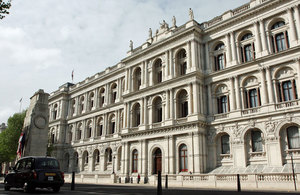
Main building of the UK Foreign, Commonwealth and Development Office, which issued the joint statement in support of the International Criminal Court. · Foreign, Commonwealth and Development Office / GOV.UK (OGL)
Eight powers build a diplomatic shield for the International Criminal Court
Foreign ministers of Canada, Denmark, Germany, France, Italy, Japan, the Netherlands and the United Kingdom signed a joint statement reaffirming support for…
ICC warns: sanctions would hit its staff and the victims it serves
Foreign ministers of eight countries warn that announced U.S.
Eight foreign ministers — from Canada, Denmark, Germany, France, Italy, Japan, the Netherlands and the United Kingdom — declared their continued and unwavering support for the International Criminal Court and rejected the sanctions announced by the United States.
--- The context ---
The Court is the last resort of global justice for serious international crimes. Sanctions from the world's largest economy would test its operations and its independence ahead of the Assembly of States Parties in December 2026.
--- The facts ---
The statement acknowledges the Court's work to prepare for the possible measures and pledges support so it can keep fulfilling its mandate. It warns the sanctions would have a significant impact on the tribunal, its staff and their families.
--- The positions ---
On one side, eight powers defending international justice as a pillar of the global order. On the other, a power that never accepted the Court's jurisdiction and applies pressure through sanctions. The door stays open: dialogue with countries outside the Statute.
--- What remains unknown ---
The statement details neither the scope nor the timeline of the sanctions, nor the Court's response. It also fails to specify what protection the signatories would adopt if they take effect: the declaration is political and the real shielding will be negotiated in December.
--- Unanswered questions ---
Will a joint statement be enough to deter Washington? What financial and operational support will the signatories offer if the Court loses access to key funds? Will December turn this unity into a permanent institutional shield?
--- EPM analysis ---
The gesture matters more than it seems: eight major economies defending the Court send a reputational-cost signal to whoever sanctions it. This is not mere rhetoric; pressuring international justice carries a diplomatic price. The test will be its application.
📌 EPM Take:
In EPM's view, this joint statement marks a turning point in the defense of judicial multilateralism, with a bloc of powers responding in a coordinated way to the threat of sanctions against the International Criminal Court. The message to Washington is clear, but the true test will be the Assembly in December 2026, where words must be translated into concrete financial and operational protection mechanisms for the tribunal and its staff.
The foreign ministers of Canada, Denmark, Germany, France, Italy, Japan, the Netherlands and the United Kingdom warn that the sanctions announced by the United States would have a significant impact on the International Criminal Court, its staff and their families.
--- The context ---
The Court rests on the daily work of investigators, prosecutors, translators and support staff who document atrocities. Sanctioning the institution does not strike a building: it strikes payrolls, operating accounts and witness protection.
--- The facts ---
The eight signatories acknowledge the Court is already preparing for the possible measures and pledge support so it keeps fulfilling its mandate. They underline that its staff works every day to bring the accused to justice and support the victims.
--- The positions ---
The signatories present the Court as an institution that must keep functioning whatever happens. The United States, which never ratified the Statute, is betting on direct pressure. The statement offers dialogue with countries outside the Statute, in December.
--- What remains unknown ---
The statement specifies neither which sanctions will be applied nor which budget lines would be compromised. It also fails to detail what contingency fund the eight countries are preparing: the warning remains an alarm without a visible emergency plan.
--- Unanswered questions ---
Who will foot the bill if sanctions freeze funds or block essential services of the Court? What concrete guarantees will staff and their families receive against indirect retaliation? Will the December Assembly arrive in time to shield the tribunal?
--- EPM analysis ---
Statements are signed in minutes; institutions are sustained with budgets. The value of this statement lies not in its rhetoric, but in whether the eight countries will cover with money and logistics what the sanctions try to take away. The defense must be material.
📌 EPM Take:
In EPM's view, the statement puts the focus where it hurts most: on the people who make international justice work and on the victims who depend on it. Political backing already exists; what is missing is the financial and operational commitment that turns words into real continuity. Without that step, the declaration risks remaining a noble gesture in the face of concrete harm.
Ocho potencias arman un escudo diplomático para la Corte Penal Internacional
Ocho cancilleres de Canadá, Dinamarca, Alemania, Francia, Italia, Japón, Países Bajos y el Reino Unido firmaron una declaración conjunta que reafirma su apoyo…
La Corte Penal Internacional avisa: las sanciones golpearían a su personal y víctimas
Los cancilleres de ocho países advierten que las sanciones anunciadas por Estados Unidos tendrían un impacto significativo en la Corte Penal Internacional, su…
Ocho cancilleres de Canadá, Dinamarca, Alemania, Francia, Italia, Japón, Países Bajos y el Reino Unido declararon su apoyo continuo e inquebrantable a la Corte Penal Internacional y rechazaron con firmeza las sanciones anunciadas por Estados Unidos.
--- El contexto ---
La Corte es el último recurso de la justicia global frente a los crímenes internacionales más graves. Una sanción de la mayor economía del planeta pondría a prueba su operatividad y su independencia antes de la Asamblea de Estados Partes de diciembre de 2026.
--- Los hechos ---
La declaración reconoce el trabajo de la Corte para prepararse ante las posibles medidas y promete respaldo para que siga cumpliendo su mandato. Advierte que las sanciones tendrían un impacto significativo en el tribunal, su personal y sus familias.
--- Las posiciones ---
De un lado, ocho potencias que defienden la justicia internacional como columna del orden global. Del otro, una potencia que nunca aceptó la jurisdicción del tribunal y presiona con sanciones. La puerta queda abierta: diálogo con los países fuera del Estatuto.
--- Lo que falta saber ---
El comunicado no detalla el alcance ni el calendario de las sanciones, ni la respuesta de la Corte. Tampoco precisa qué protección adoptarán los firmantes si entran en vigor: la declaración es política y el blindaje real se negociará en diciembre.
--- Preguntas sin respuesta ---
¿Bastará una declaración conjunta para disuadir a Washington? ¿Qué apoyo financiero y operativo ofrecerán los firmantes si la Corte pierde acceso a fondos clave? ¿Convertirá diciembre esta unidad en un escudo permanente?
--- Análisis EPM ---
El gesto importa más de lo que parece: ocho grandes economías defendiendo la Corte envían una señal de costo reputacional a quien la sancione. No es solo retórica; presionar a la justicia internacional tiene precio diplomático. La prueba real será su aplicación.
📌 Conclusion EPM:
A juicio de EPM, esta declaración conjunta marca un punto de inflexión en la defensa del multilateralismo judicial, con un bloque de potencias respondiendo de forma coordinada a la amenaza de sanciones contra la Corte Penal Internacional. El mensaje a Washington es claro, pero el verdadero examen será la Asamblea de diciembre de 2026, donde las palabras deberán traducirse en mecanismos concretos de protección para el tribunal y su personal.
Los cancilleres de Canadá, Dinamarca, Alemania, Francia, Italia, Japón, Países Bajos y el Reino Unido advierten que las sanciones anunciadas por Estados Unidos tendrían un impacto significativo en la Corte Penal Internacional, su personal y sus familias.
--- El contexto ---
La Corte se sostiene con el trabajo diario de investigadores, fiscales, traductores y personal de apoyo que documentan atrocidades. Sancionar la institución no golpea un edificio: golpea nóminas, cuentas operativas y la protección de testigos.
--- Los hechos ---
Los ocho firmantes reconocen que la Corte ya se prepara ante las posibles medidas y prometen respaldo para que siga cumpliendo su mandato. Subrayan que su personal trabaja cada día por llevar a los acusados ante la justicia y apoyar a las víctimas.
--- Las posiciones ---
Los firmantes presentan la Corte como una institución que debe seguir funcionando pase lo que pase. Estados Unidos, que nunca ratificó el Estatuto, apuesta por la presión directa. La declaración ofrece diálogo con los países fuera del Estatuto, de cara a diciembre.
--- Lo que falta saber ---
No se precisa qué sanciones concretas se aplicarán ni qué partidas del presupuesto quedarían comprometidas. Tampoco se detalla qué fondo de contingencia preparan los ocho países: la advertencia sigue siendo una alarma sin plan de emergencia visible.
--- Preguntas sin respuesta ---
¿Quién pagará la factura si las sanciones congelan fondos o bloquean servicios esenciales de la Corte? ¿Qué garantías concretas recibirán el personal y sus familias ante represalias indirectas? ¿Llegará a tiempo la Asamblea de diciembre para blindar al tribunal?
--- Análisis EPM ---
Las declaraciones se firman en minutos; las instituciones se sostienen con presupuestos. El valor del comunicado no está en su retórica, sino en si los ocho países cubrirán con dinero y logística lo que las sanciones intenten quitar. La defensa debe ser material.
📌 Conclusion EPM:
A juicio de EPM, el comunicado pone el foco donde más duele: en las personas que hacen funcionar la justicia internacional y en las víctimas que dependen de ella. El respaldo político ya existe; lo que falta es el compromiso financiero y operativo que convierta las palabras en continuidad real. Sin ese paso, la declaración corre el riesgo de quedar como un gesto noble ante un daño concreto.