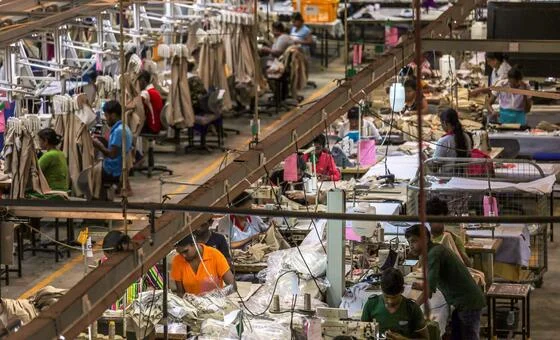
Trabajadores de la industria textil en una fábrica de Sri Lanka: la manufactura tradicional pierde peso frente a los sectores tecnológicos estratégicos. · UN News
Record $35 trillion in trade — but the Global South falls behind
UNCTAD reported on 9 October that world trade hit a record $35 trillion in 2025, even as developing countries fell behind amid new technological and policy…
Global trade hit a record $35 trillion in 2025, UNCTAD says
World trade reached a record $35 trillion in 2025, UNCTAD said.
--- The context ---
World trade reached a record $35 trillion in 2025, the UN trade and development agency UNCTAD reported on Friday, 9 October. The headline figure suggests a trading system that keeps moving even amid conflict: this year's higher trade values continue to be driven by price hikes linked to the global energy shock caused by the US-Iran war.
Beneath the record, though, the agency describes a split. Developing countries are being held back from fuller participation in the global economy by new technological and policy barriers, UNCTAD said. A handful of Asian economies advance; most of the Global South falls further behind.
--- The facts ---
UNCTAD pointed to increasing export controls, investment screening and supply-chain pre-conditions as the reasons strategic sectors are getting harder for developing countries to reach. The value is shifting into semiconductors, artificial intelligence, clean energy and advanced computing, where barriers to entry are high and rising.
The trade map is changing: trade between China and the United States has fallen by more than 20 per cent since 2024, while East Asian countries have expanded their trade links with both China and North America.
--- The positions ---
Senior UNCTAD official Anastasia Nesvetailova argued that only a fraction of corporate investment is now driven by traditional considerations such as low labour costs. Her reading is that value is migrating to strategic sectors, where developing countries face growing walls.
She also noted that even as the global economy slows, Asia will contribute 60 per cent of global growth this year. The fastest-expanding economies, she said, include China, India, Indonesia, Kyrgyzstan, Mongolia, Tajikistan, Uzbekistan and Vietnam.
--- What remains unknown ---
The briefing does not break down how much of the $35 trillion record reflects price inflation rather than real volumes of goods. It does not name which parts of the Global South are hit hardest beyond the Asian exceptions, nor quantify the new barriers sector by sector. Whether the more-than-20 per cent drop in China-US trade marks a structural shift or a reversible dip remains to be seen, as does how supply-chain pre-conditions will reshape investment in the coming years.
--- Unanswered questions ---
Can the trade record hold if growth across the Global South keeps slowing? What room do developing countries have to enter strategic sectors when the barriers keep rising? And who will fund development when traditional development finance is under strain?
--- EPM analysis ---
The paradox is plain: world trade has never moved so much money, and never been so hard to enter. Capital flows toward sectors ruled by technology and regulation; cheap labour no longer buys a ticket. UNCTAD's prescription — long-term support for domestic industries, training, research and foreign investment tied to local suppliers — is the only realistic door still open. Asia has walked through it; the rest of the Global South risks watching the record from outside.
📌 EPM Take:
In EPM's view, the $35 trillion record is good news for the statistics and a warning for policy: trade grows, but it concentrates. Countries that do not invest today in technological capabilities and in links with local suppliers will stay trapped on the periphery of value chains, while Asia and the economies with strategic sectors reap the rewards. Development can no longer be bought with low wages; it is built with knowledge, and time is running against those who have not yet begun.
--- The context ---
World trade reached a record $35 trillion in 2025, the UN trade and development agency UNCTAD said on Friday, 9 October. Higher trade values this year continue to be driven by price hikes linked to the global energy shock caused by the US-Iran war.
The agency added that developing countries were held back from greater participation in the global economy by new technological and policy barriers.
--- The facts ---
UNCTAD identified increasing export controls, investment screening and supply-chain pre-conditions as the reasons strategic sectors are harder for developing countries to access. Value is moving into semiconductors, artificial intelligence, clean energy and advanced computing, where barriers to entry are high and rising.
Trade between China and the United States has fallen by more than 20 per cent since 2024, while East Asian countries have expanded their trade links with both China and North America.
--- The positions ---
Senior UNCTAD official Anastasia Nesvetailova said that only a fraction of corporate investment is now driven by traditional concerns such as low labour costs, with value shifting toward strategic sectors carrying high entry barriers.
She said Asia will contribute 60 per cent of global growth this year even as the global economy slows. The fastest-expanding economies include China, India, Indonesia, Kyrgyzstan, Mongolia, Tajikistan, Uzbekistan and Vietnam, she said. Apart from a handful of Asian economies, most of the Global South is falling further behind, with mounting financial risks and development finance under strain.
--- What remains unknown ---
The statement does not break down how much of the $35 trillion record comes from prices versus real volumes. It does not detail the scale of the barriers by sector or the likely duration of the decline in China-US trade. The evolution of supply-chain pre-conditions and their effect on future investment remains to be seen.
--- Unanswered questions ---
How will trade growth be shared if the Global South loses participation? What tools do developing countries have to access strategic sectors? How will development be financed while traditional flows are under strain?
--- EPM analysis ---
UNCTAD's report describes record trade with unequal access. The shift toward technology-driven sectors is redefining comparative advantage: cheap labour weighs less and knowledge weighs more. The agency's recommendation — sustained support for domestic industry, training, research and foreign investment tied to local suppliers — sets a possible agenda for lagging countries. Asia shows entry is possible; the rest of the Global South faces the challenge of not being left out.
📌 EPM Take:
In EPM's view, the record $35 trillion confirms the resilience of world trade, but also its concentration. Developing countries that do not build technological capabilities and local productive links risk being left out of the value chains of the future. The agenda UNCTAD proposes — industry, training, research and investment anchored locally — is the most realistic path to participating in the sectors that concentrate value today. The clock, however, is already running.
El comercio mundial marca un récord de 35 billones de dólares
La UNCTAD informó el 9 de octubre que el comercio mundial alcanzó un récord de 35 billones de dólares en 2025, aunque los países en desarrollo quedaron…
El comercio mundial alcanzó los 35 billones de dólares en 2025
El comercio mundial alcanzó la cifra récord de 35 billones de dólares en 2025, según la UNCTAD.
--- El contexto ---
El comercio mundial alcanzó en 2025 un récord histórico de 35 billones de dólares, informó la agencia de comercio y desarrollo de la ONU, la UNCTAD, el viernes 9 de octubre. La cifra desafía la idea de que los conflictos frenan el intercambio: los valores comerciales siguen creciendo, empujados por las alzas de precios vinculadas al choque energético global provocado por la guerra entre Estados Unidos e Irán.
Pero el récord esconde una fractura: los países en desarrollo quedaron rezagados por nuevas barreras tecnológicas y de política comercial, advirtió la UNCTAD. Una minoría de economías asiáticas avanza mientras la mayor parte del Sur Global retrocede.
--- Los hechos ---
La UNCTAD identificó los obstáculos que endurecen el acceso a los sectores estratégicos: más controles a la exportación, más exámenes de inversión y precondiciones en las cadenas de suministro. Esos sectores —semiconductores, inteligencia artificial, energía limpia y computación avanzada— son hoy el destino del valor, con barreras de entrada altas y en aumento.
El mapa comercial también se mueve: el comercio entre China y Estados Unidos cayó más del 20 por ciento desde 2024, mientras los países de Asia Oriental expandieron sus vínculos con China y con América del Norte.
--- Las posiciones ---
La alta funcionaria de la UNCTAD, Anastasia Nesvetailova, sostuvo que solo una fracción de la inversión empresarial responde ya a motivos tradicionales como los bajos costos laborales; el valor se desplaza hacia sectores estratégicos donde la entrada es cada vez más difícil. Su lectura: el Sur Global, salvo un puñado de economías asiáticas, se queda atrás mientras se desacelera su crecimiento y aumentan los riesgos financieros.
Nesvetailova apuntó además que Asia aportará el 60 por ciento del crecimiento mundial este año pese a la desaceleración global. Entre las economías de expansión más rápida citó a China, India, Indonesia, Kirguistán, Mongolia, Tayikistán, Uzbekistán y Vietnam.
--- Lo que falta saber ---
El informe no detalla cuánto del récord se explica por inflación de precios frente a volúmenes reales de mercancías. Tampoco precisa qué países del Sur Global quedan peor parados más allá del agregado de Asia, ni el alcance exacto de las nuevas barreras en sectores como los semiconductores. Queda por ver si la caída del comercio entre China y Estados Unidos es estructural o reversible.
--- Preguntas sin respuesta ---
¿Puede sostenerse el récord comercial si el crecimiento del Sur Global sigue frenándose? ¿Qué margen tienen los países en desarrollo para entrar en los sectores estratégicos cuando las barreras no paran de subir? ¿Y quién pagará el desarrollo que el financiamiento tradicional ya no sostiene?
--- Análisis EPM ---
La paradoja es evidente: el comercio mundial nunca movió tanto dinero y nunca fue tan difícil entrar al club. El dinero se concentra en sectores donde mandan la tecnología y las regulaciones; el trabajo barato dejó de ser pasaporte. La receta de la UNCTAD —apoyo a largo plazo a la industria nacional, formación, investigación e inversión extranjera atada a proveedores locales— es la única puerta realista abierta. Asia ya cruzó; el resto del Sur Global corre el riesgo de mirar el récord desde afuera.
📌 Conclusion EPM:
A juicio de EPM, el récord de 35 billones de dólares es una buena noticia para las estadísticas y una advertencia para la política: el comercio crece, pero se concentra. Los países que no inviertan hoy en capacidades tecnológicas y en vínculos con proveedores locales quedarán atrapados en la periferia de las cadenas de valor, mientras Asia y las economías con sectores estratégicos recogen los frutos. El desarrollo ya no se compra con salarios bajos; se construye con conocimiento, y el reloj corre en contra de quienes aún no empezaron.
--- El contexto ---
La agencia de la ONU para el comercio y el desarrollo, la UNCTAD, informó el viernes 9 de octubre que el comercio mundial alcanzó en 2025 la cifra récord de 35 billones de dólares. Los valores comerciales de este año siguen impulsados por las alzas de precios vinculadas al choque energético global provocado por la guerra entre Estados Unidos e Irán.
El organismo señaló, sin embargo, que los países en desarrollo vieron limitada su participación en la economía global por nuevas barreras tecnológicas y de política.
--- Los hechos ---
Según la UNCTAD, el acceso a los sectores estratégicos se dificulta por el aumento de los controles a la exportación, los exámenes de inversión y las precondiciones en las cadenas de suministro. Los sectores hacia los que se mueve el valor son los semiconductores, la inteligencia artificial, la energía limpia y la computación avanzada, con barreras de entrada altas y crecientes.
El comercio entre China y Estados Unidos se redujo más del 20 por ciento desde 2024, mientras los países de Asia Oriental ampliaron sus vínculos comerciales con China y con América del Norte.
--- Las posiciones ---
La funcionaria de la UNCTAD Anastasia Nesvetailova indicó que solo una fracción de la inversión de las empresas responde hoy a preocupaciones tradicionales como los bajos costos laborales; el valor se orienta a sectores estratégicos con barreras de entrada elevadas.
Agregó que Asia aportará el 60 por ciento del crecimiento mundial este año aun con la desaceleración de la economía global. Entre las economías de mayor crecimiento mencionó a China, India, Indonesia, Kirguistán, Mongolia, Tayikistán, Uzbekistán y Vietnam. Salvo un puñado de economías asiáticas, la mayor parte del Sur Global sigue rezagándose, con riesgos financieros en aumento y el financiamiento para el desarrollo bajo presión.
--- Lo que falta saber ---
El comunicado no desglosa qué parte del récord de 35 billones de dólares corresponde a precios y qué parte a volúmenes reales. Tampoco detalla la magnitud de las barreras por sector ni el horizonte temporal de la caída del comercio entre China y Estados Unidos. Queda pendiente conocer la evolución de las precondiciones en las cadenas de suministro y su efecto sobre la inversión futura.
--- Preguntas sin respuesta ---
¿Cómo se repartirá el crecimiento comercial si el Sur Global pierde participación? ¿Qué instrumentos tienen los países en desarrollo para acceder a los sectores estratégicos? ¿Cómo se financiará el desarrollo si los flujos tradicionales están bajo tensión?
--- Análisis EPM ---
El informe de la UNCTAD describe un comercio récord con acceso desigual. La recomposición hacia sectores tecnológicos redefine las ventajas comparativas: la mano de obra barata pesa menos y el conocimiento pesa más. La recomendación del organismo —apoyo sostenido a la industria nacional, formación, investigación e inversión extranjera vinculada a proveedores locales— marca la agenda posible para los países rezagados. Asia muestra que la entrada es posible; el resto del Sur Global enfrenta el reto de no quedarse fuera.
📌 Conclusion EPM:
A juicio de EPM, la cifra récord de 35 billones de dólares confirma la resiliencia del comercio mundial, pero también su concentración. Los países en desarrollo que no construyan capacidades tecnológicas y vínculos productivos locales corren el riesgo de quedar al margen de las cadenas de valor del futuro. La agenda que propone la UNCTAD —industria, formación, investigación e inversión con anclaje local— es el camino más realista para participar en los sectores que hoy concentran el valor.