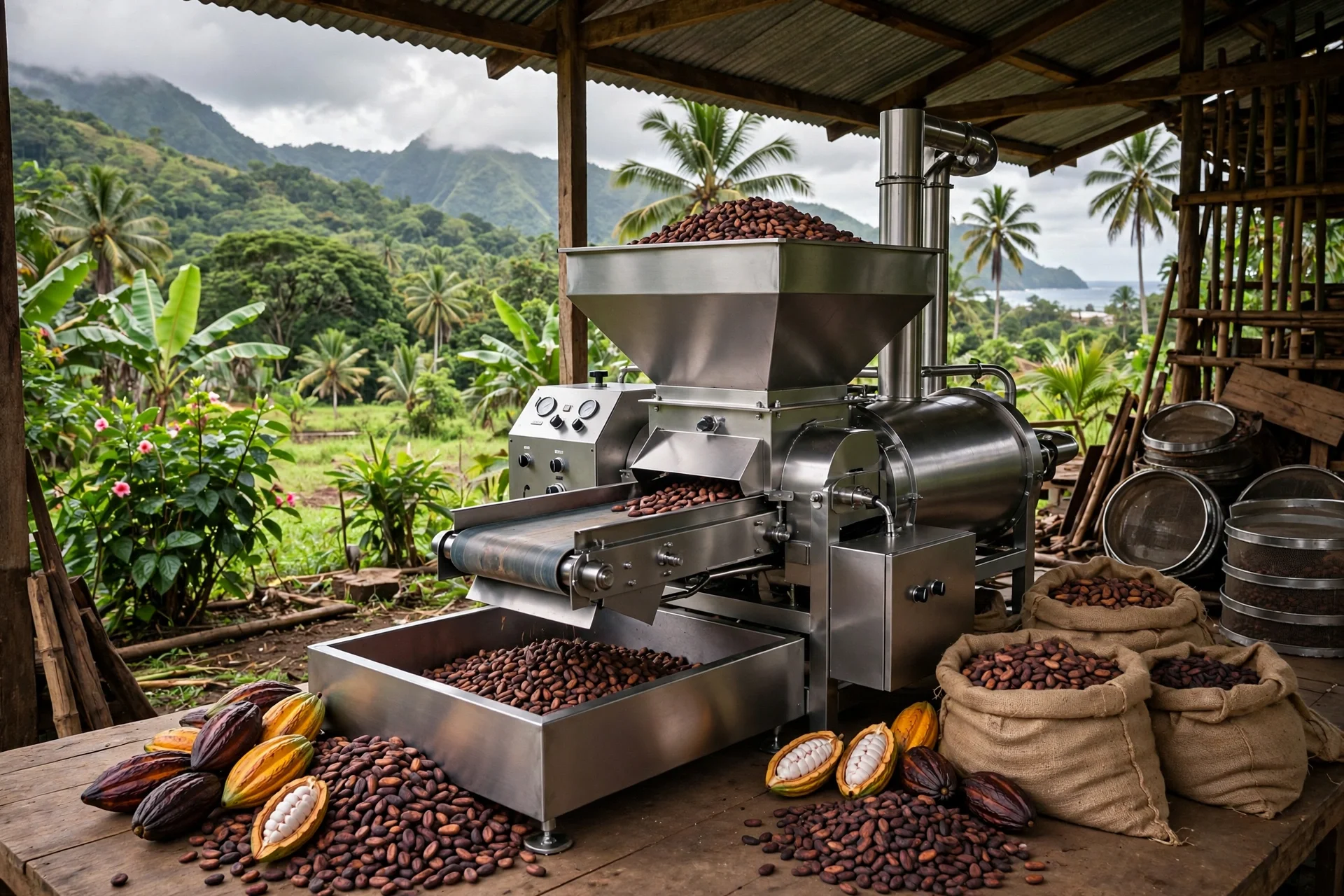
El alto comisionado británico Paul Turner entregó una máquina procesadora de cacao a la empresa social Kokonut Pacific Solomon Islands (KOSI) para ampliar la producción de pasta de chocolate y productos terminados destinados al mercado local y a las exportaciones. · Imagen generada por IA para EPM
Britain's cocoa diplomacy: London bets on Solomon Islands chocolate
British High Commissioner Paul Turner handed over a cocoa processing machine to Kokonut Pacific Solomon Islands, a social enterprise supporting over 1,000…
UK hands over cocoa processing machine in Solomon Islands
High Commissioner Paul Turner transferred a cocoa processing machine to the social enterprise Kokonut Pacific Solomon Islands to expand chocolate paste and…
--- The context ---
In the South Pacific, cocoa is far more than a crop: it is the backbone of entire rural economies that depend on adding value to their harvest instead of remaining trapped in raw-material sales. Solomon Islands has built a fledgling industry around cocoa and coconuts that is now fighting for space in international markets.
--- The facts ---
On Friday 9 October, British High Commissioner Paul Turner handed over a new cocoa processing machine to the social enterprise Kokonut Pacific Solomon Islands (KOSI) at an official handover ceremony.
KOSI was established in Honiara in 2004 and processes both coconuts and cocoa. Today it supports over 1,000 farmers across the country with training, market access and business opportunities that strengthen rural incomes and local employment.
The company acts as the vital link between farmers and international markets, sourcing cocoa from its network of village producers, and has been nationally recognised for its contribution to agribusiness, exports and community development.
The new machine is expected to increase production of chocolate paste and finished chocolate products, helping the business meet local demand while supporting exports to international markets including the United Kingdom and New Zealand. The company has grown its domestic market to the point where 50% of its cocoa produce is now consumed within Solomon Islands.
In recent years, the United Kingdom has stepped up its engagement with the country's cocoa sector. In 2024, several British cocoa buyers visited the archipelago to build new partnerships with local producers; that visit led to Solomon Islands cocoa being selected as the source ingredient for a new British chocolate brand, Cocoa Sisters.
The United Kingdom also supported Solomon Islands cocoa bean producers and chocolate makers in exhibiting their products at the Chocoa fair in Amsterdam in February 2025, Europe's largest cocoa trade event, which helped establish connections with prospective buyers in the United Kingdom and across Europe.
--- The positions ---
Speaking at the handover, High Commissioner Turner said the United Kingdom is proud to partner with social enterprises like KOSI, which provide the crucial link between farmers and international markets, add value to local products and help communities prosper across Solomon Islands.
--- What remains unknown ---
The cost of the machine and the financial terms of the cooperation programme funding it have not been disclosed. The installation schedule and the additional production volume expected from the new equipment were not specified either.
--- Unanswered questions ---
How much will chocolate paste and finished chocolate output grow with the new machine? How many more farmers will be able to join KOSI's network over the next two years? Will Solomon Islands chocolate reach British shelves in a lasting way, or remain confined to niche brands?
--- EPM analysis ---
Beyond the diplomatic gesture, the move reveals a coherent strategy: the United Kingdom is not merely buying Pacific cocoa, it is financing the capacity to process it at origin. That bet on local value addition, from paste to finished chocolate, is what separates a raw-material supplier from a trading partner.
📌 EPM Take:
In EPM's view, this handover confirms that London treats development as productive infrastructure rather than passing assistance: financing cocoa processing at origin creates rural jobs, keeps income in the community and opens international markets. If KOSI turns the machine into more local output and more value-added exports, the model could be replicated in other Pacific countries where cocoa sustains entire economies and where the difference between selling beans and selling chocolate decides the future of over 1,000 rural families.
--- The context ---
Solomon Islands is working to move beyond a model of exporting raw materials alone: the future of its cocoa lies in processing it at home, creating jobs and selling finished products. That ambition underpins Britain's long-running cooperation with the local cocoa sector.
--- The facts ---
British High Commissioner Paul Turner handed over a new cocoa processing machine to the social enterprise Kokonut Pacific Solomon Islands (KOSI) on Friday 9 October.
Founded in Honiara in 2004, KOSI processes coconuts and cocoa and currently supports over 1,000 farmers across the archipelago through training, market access and business opportunities that strengthen rural incomes and local employment.
The company serves as an essential bridge between producers and international markets, buying cocoa from its network of village growers, and has earned national recognition for its contribution to agribusiness, exports and community development.
The new machinery is expected to raise output of chocolate paste and finished chocolate, meet domestic demand and bolster exports to international markets such as the United Kingdom and New Zealand. KOSI's domestic market has grown to account for 50% of its cocoa output, now consumed within Solomon Islands itself.
British engagement with Solomon Islands cocoa has intensified in recent years. In 2024, several British cocoa buyers travelled to the country to forge new partnerships with local producers; the visit resulted in Solomon Islands cocoa being chosen as the source ingredient for the new British chocolate brand Cocoa Sisters.
The United Kingdom also backed Solomon Islands cocoa bean producers and chocolate makers exhibiting at the Chocoa fair in Amsterdam in February 2025, Europe's largest cocoa trade event, where they connected with prospective buyers from the United Kingdom and across Europe.
--- The positions ---
Addressing the handover ceremony, Turner said the United Kingdom is proud to work with social enterprises like KOSI, which build the indispensable bridge between farmers and international markets, add value to local products and help communities prosper across Solomon Islands.
--- What remains unknown ---
The announcement gave no figure for the investment or the financing mechanism behind the equipment. The expected commissioning date and the additional capacity it will bring to the company's plant are also undisclosed.
--- Unanswered questions ---
What volume of paste and finished chocolate will the new machine add to current production? How many rural producers will benefit directly in the first year? Can Solomon Islands chocolate secure a lasting presence in the British market beyond artisan brands?
--- EPM analysis ---
The handover fits a logic of cooperation that goes beyond one-off aid: equipping producers to transform their harvest at origin multiplies the value retained by the local economy. The United Kingdom, already a buyer of this cocoa, is now investing in it leaving the country with greater added value.
📌 EPM Take:
In EPM's view, London's gesture is an investment in the Solomon Islands cocoa value chain rather than a ceremonial act: if the machine lifts chocolate paste and finished chocolate output, KOSI will cement its role as the bridge between over 1,000 rural farmers and international markets, proving that development is built with productive capacity, not promises, and offering a blueprint for other Pacific economies that rely on cocoa to sustain rural jobs and community incomes.
La diplomacia del cacao: Londres apuesta por el chocolate de las Salomón
El alto comisionado británico Paul Turner entregó una máquina procesadora de cacao a Kokonut Pacific Solomon Islands, empresa social que apoya a más de 1000…
Reino Unido entrega una máquina procesadora de cacao en las Islas Salomón
El alto comisionado Paul Turner traspasó a la empresa social Kokonut Pacific Solomon Islands una máquina procesadora de cacao para ampliar la producción de…
--- El contexto ---
En el Pacífico Sur, el cacao es mucho más que un cultivo: es el sustento de economías rurales que dependen de añadir valor a su producción. Las Islas Salomón han construido en torno al cacao y al coco una industria naciente que busca espacio en los mercados internacionales.
--- Los hechos ---
El viernes 9 de octubre, el alto comisionado británico Paul Turner entregó una nueva máquina procesadora de cacao a la empresa social Kokonut Pacific Solomon Islands (KOSI) en una ceremonia oficial.
KOSI fue establecida en Honiara en 2004 y procesa cocos y cacao. Hoy apoya a más de 1000 agricultores en todo el país con capacitación, acceso a mercados y oportunidades de negocio que fortalecen los ingresos rurales y el empleo local.
La empresa es el vínculo vital entre los agricultores y los mercados internacionales: compra cacao de su red de productores rurales y ha sido reconocida por su aporte a la agroindustria, las exportaciones y el desarrollo comunitario.
La nueva máquina aumentará la producción de pasta de chocolate y de productos terminados, lo que ayudará al negocio a satisfacer la demanda local y a impulsar las exportaciones a mercados internacionales como el Reino Unido y Nueva Zelanda. La compañía ya ha desarrollado su mercado interno hasta que el 50% de su producción de cacao se consume dentro de las Islas Salomón.
En años recientes, el Reino Unido ha intensificado su compromiso con el sector cacaotero. En 2024, varios compradores británicos de cacao visitaron el archipiélago para construir nuevas alianzas con productores locales; de esa visita surgió que el cacao salomonense fuera elegido como ingrediente de origen de la nueva marca británica de chocolate Cocoa Sisters.
El Reino Unido también apoyó a los productores de cacao en grano y a los fabricantes de chocolate de las Islas Salomón para exhibir sus productos en la feria Chocoa de Ámsterdam en febrero de 2025, el mayor evento comercial del cacao en Europa, donde establecieron conexiones con compradores potenciales del Reino Unido y de toda Europa.
--- Las posiciones ---
En el acto de entrega, el alto comisionado Turner afirmó que el Reino Unido se enorgullece de asociarse con empresas sociales como KOSI, que tienden el vínculo crucial entre agricultores y mercados internacionales, agregan valor a los productos locales y ayudan a las comunidades a prosperar en las Islas Salomón.
--- Lo que falta saber ---
No se han divulgado el costo de la máquina ni los términos financieros del programa que la financia. Tampoco se precisó el calendario de instalación ni el volumen adicional de producción esperado.
--- Preguntas sin respuesta ---
¿Cuánto crecerá la producción de pasta y chocolate terminado con la nueva máquina? ¿Cuántos agricultores más se sumarán a la red de KOSI en dos años? ¿Llegará el chocolate salomonense a las góndolas británicas de forma sostenida o quedará en marcas de nicho?
--- Análisis EPM ---
Más allá del gesto diplomático, la operación revela una estrategia coherente: el Reino Unido no solo compra cacao del Pacífico, sino que financia su transformación en origen. Esa apuesta por el valor agregado local separa a un proveedor de materia prima de un socio comercial.
📌 Conclusion EPM:
A juicio de EPM, esta entrega confirma que Londres entiende el desarrollo como infraestructura productiva, no como asistencia pasajera: financiar la transformación del cacao en origen genera empleo rural, retiene ingresos y abre mercados internacionales. Si KOSI convierte la máquina en más producción local y exportaciones con valor agregado, el modelo podrá replicarse en otros países del Pacífico donde el cacao sostiene economías enteras y donde la diferencia entre vender grano y vender chocolate decide el futuro de más de 1000 familias.
--- El contexto ---
Las Islas Salomón buscan dejar atrás el modelo de exportar solo materia prima: el futuro de su cacao pasa por procesarlo en el país y vender productos terminados. Esa es la apuesta de la cooperación británica con el sector cacaotero local.
--- Los hechos ---
El alto comisionado británico Paul Turner entregó el viernes 9 de octubre una nueva máquina de procesamiento de cacao a la empresa social Kokonut Pacific Solomon Islands (KOSI).
Fundada en Honiara en 2004, KOSI procesa cocos y cacao y respalda a más de 1000 agricultores del archipiélago mediante formación, acceso a mercados y oportunidades empresariales que refuerzan la renta rural y el empleo local.
La compañía ejerce de puente esencial entre los productores y los mercados internacionales, al adquirir el cacao de su red de agricultores de las aldeas, y ha recibido reconocimiento nacional por su contribución a la agroindustria, la exportación y el desarrollo comunitario.
Con la nueva maquinaria, la empresa espera aumentar la producción de pasta de chocolate y de chocolates acabados, atender la demanda interna y reforzar las exportaciones a mercados como el Reino Unido y Nueva Zelanda. El mercado doméstico de KOSI ha crecido hasta representar el 50% de su producción de cacao, que hoy se consume en las propias Islas Salomón.
El compromiso británico con el cacao salomonense se ha intensificado en los últimos años. En 2024, varios compradores de cacao del Reino Unido viajaron al país para tejer nuevas alianzas con los productores; de esa visita surgió que el cacao de las Islas Salomón fuera elegido como ingrediente de origen de la nueva marca británica de chocolate Cocoa Sisters.
Asimismo, el Reino Unido respaldó la participación de productores de cacao en grano y de chocolateros salomonenses en la feria Chocoa de Ámsterdam de febrero de 2025, el mayor evento del cacao en Europa, donde contactaron con compradores del Reino Unido y de toda Europa.
--- Las posiciones ---
En la entrega, Turner declaró que el Reino Unido se siente orgulloso de colaborar con empresas sociales como KOSI, que tienden el puente indispensable entre los agricultores y los mercados internacionales, añaden valor a los productos locales y ayudan a las comunidades a prosperar en las Islas Salomón.
--- Lo que falta saber ---
El comunicado no detalla el importe de la inversión ni el mecanismo de financiación del equipo. Se desconoce la fecha prevista para su puesta en marcha y la capacidad adicional que aportará a la planta.
--- Preguntas sin respuesta ---
¿Qué volumen de pasta y chocolate terminado sumará la nueva máquina a la producción actual? ¿Cuántos productores rurales se beneficiarán en el primer año? ¿Logrará el cacao de las Islas Salomón una presencia estable en el mercado británico más allá de las marcas artesanales?
--- Análisis EPM ---
La entrega encaja en una lógica de cooperación que va más allá de la ayuda puntual: equipar a los productores para que transformen su cosecha en origen multiplica el valor retenido en la economía local. El Reino Unido, que ya compra este cacao, ahora invierte en que salga del país con mayor valor añadido.
📌 Conclusion EPM:
A juicio de EPM, el gesto de Londres es una inversión en la cadena de valor del cacao salomonense más que un acto protocolario: si la máquina eleva la producción de pasta y chocolate terminado, KOSI consolidará su papel de puente entre más de 1000 agricultores rurales y los mercados internacionales, y demostrará que el desarrollo se construye con capacidad productiva, no con promesas, y ofrecerá una hoja de ruta para otras economías del Pacífico que dependen del cacao para sostener el empleo rural.