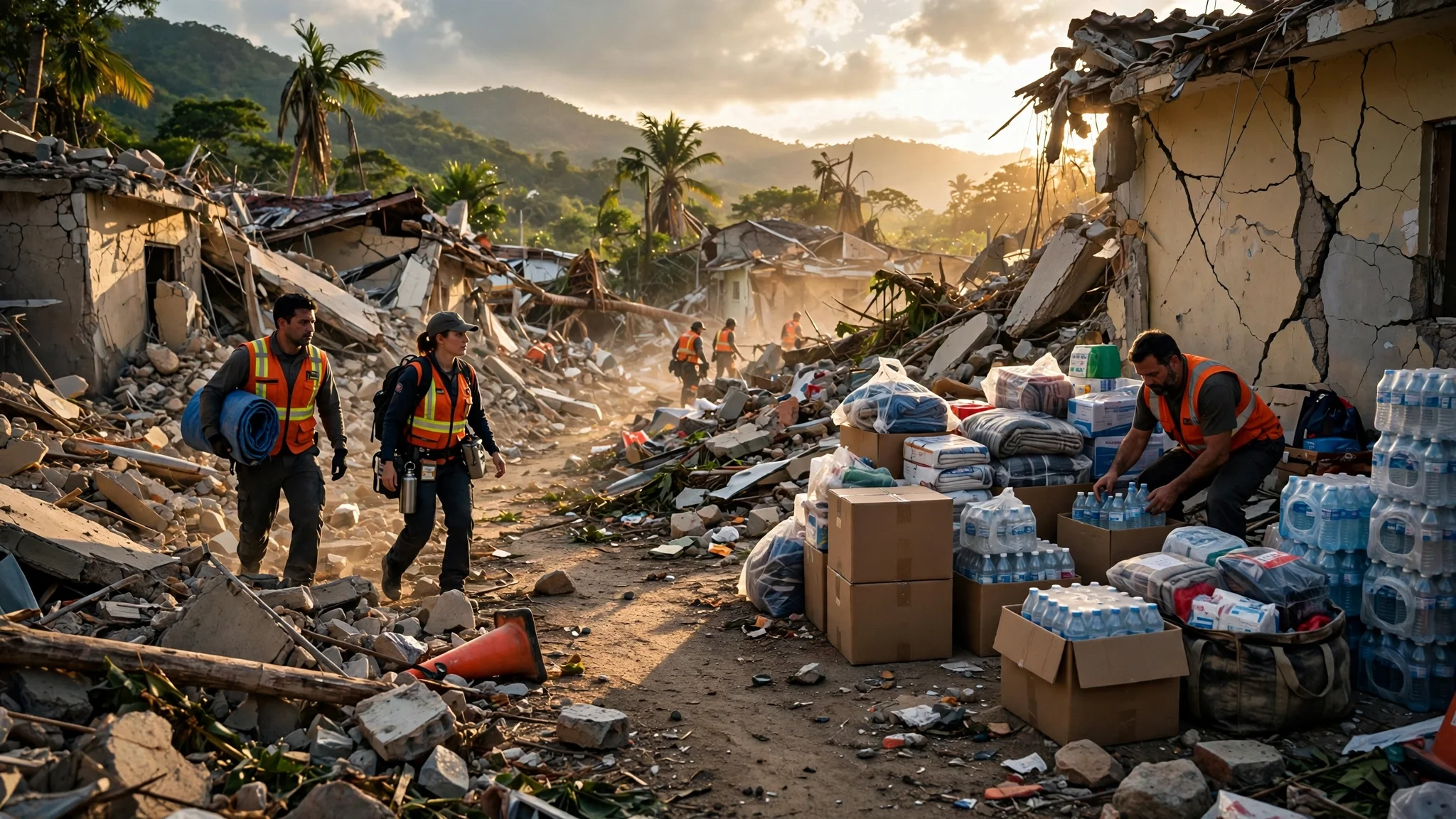
Labores de rescate y reparto de ayuda humanitaria tras el terremoto que sacudió la península de Azuero, Panamá.
Panama declares emergency after earthquake, releases $100 million for recovery
Panama's government declared a state of emergency after the October 9 earthquake on the Azuero peninsula, unlocking $100 million for victim assistance and…
Earthquake in Panama: state of emergency and $100 million for recovery
Panama declared a state of emergency after the October 9 earthquake on the Azuero peninsula, allocating $100 million to victim assistance and infrastructure…
--- The context ---
On Friday, October 9, at 12:56 p. m., a strong earthquake with its epicenter on the Azuero peninsula shook Panama. What lasted seconds on the clock became a national emergency: a day later, the country was still counting the damage while aftershocks kept entire communities on alert.
Earthquakes do not visit Panama often, but when they strike they hit where it hurts most: modest homes, rural schools and hard-to-reach island communities. This time, the executive branch responded with the most forceful tool at its disposal: a state of emergency.
--- The facts ---
The Cabinet Council approved the state of emergency declaration, a decision adopted on the instructions of President José Raúl Mulino after receiving reports from the National Civil Protection System (Sinaproc) and the institutions working in the affected communities. The announcement was made on Saturday during a press conference attended by ministers and emergency agency representatives.
The measure unlocks $100 million to address needs arising from the earthquake: assistance for affected families, response to damage in the communities, and urgent repair and recovery work on infrastructure, with priority for the provinces reporting the greatest damage.
The toll, still being updated, is telling: 419 educational centers affected, 27 people injured with light to moderate wounds —taken to medical centers for care—, 21 health facilities damaged and more than 426 homes assessed, with damage ranging from light to total loss of some residences. Sinaproc's deputy director reported no fatalities from the earthquake.
As part of the response, the executive created a high-level commission to coordinate assistance and recovery, made up of the Minister for Canal Affairs and Secretary of Goals, José Ramón Icaza; Deputy Minister Mirna Luque; and Presidency Minister Juan Carlos Orillac. The team will also take part in planning repairs and rebuilding the damaged infrastructure.
According to Orillac, the priority will be caring for affected families, guaranteeing the availability of institutional resources and coordinating the actions needed to respond to the damage. The president, for his part, instructed ministers to stay active in the affected areas and to make their institutions' resources available to assist the population.
The Secretary of Goals, José Ramón Icaza, explained that the commission will work on two simultaneous fronts: coordinating the donations and aid received from citizens, and preparing the interventions needed to recover the affected infrastructure.
On the operational front, the government opened Omar Park, in the San Francisco district of Panama City, as a collection center for donations, and provincial governments will serve as reception points for food, water, basic necessities and other supplies. Humanitarian assistance operations began in the first hours after the earthquake, moving water, food and basic goods in coordination with security and emergency agencies.
Education Minister Ventura Vega reported that 419 schools were affected and that on Sunday, October 11, it will be announced whether classes resume on Monday the 12th. The decision will depend on safety assessments and the condition of facilities, especially in provinces where structural damage has been identified. Immediately after the quake, classes and administrative activities in the public education system had been suspended as a preventive measure.
The hardest-hit areas are Herrera, Los Santos and Veraguas, where much of the damaged housing is concentrated. But the emergency is not limited to the Azuero peninsula: damage was also reported in Panama, Chiriquí, Bocas del Toro and the Ngäbe-Buglé and Emberá regions, as well as island communities and hard-to-reach areas, where delivering aid is an added challenge. On Cañas island, 300 people had to be evacuated due to rising water levels linked to the seismic event; residents are sheltered and receiving assistance while efforts continue to secure medicine, food and other essentials.
On security, 419 members of the National Border Service (Senafront) were deployed in emergency-related operations in Penonomé, Panama City, Tonosí and Las Tablas. The response also includes psychological support for affected people, through professionals working with families that have experienced fear, material losses and temporary displacement, and a care mechanism for people with hearing disabilities, with sign-language interpreters easing emergency communication.
--- The positions ---
The government says it will keep the public informed about response actions, inspection results and measures adopted in the coming days, setting immediate care for affected people as the priority while the extent of the damage and the resources needed for recovery are determined. Meanwhile, specialized structural engineers and architects are touring the 21 affected health facilities to determine their condition, and school assessments will decide whether classes return on Monday the 12th.
--- What remains unknown ---
The final extent of the damage remains to be determined: the toll is still being updated, aftershocks continue and structural inspections are just beginning. It is also unclear whether the $100 million will cover full reconstruction, how long school and hospital repairs will take, or how sustained aid delivery to island and hard-to-reach areas will be guaranteed.
--- Unanswered questions ---
Will the $100 million be enough when the damage tally is still open? Will students return to classrooms on Monday, October 12, or will structural assessments force an extended suspension of classes? How will humanitarian aid reach island and hard-to-reach communities, where transport is already a challenge? What will happen to the families that lost their homes entirely?
--- EPM analysis ---
A well-used state of emergency is a tool, not a headline: it speeds up resources, concentrates decisions and cuts red tape. Panama activated it quickly, with clear figures and a commission with named members and defined fronts of work — a sign of a government that learned speed saves lives in disasters. But decrees do not rebuild houses: crews, engineers and on-the-ground logistics will. The perennial risk —that aid concentrates where it is visible and arrives late where it is hard— is on the table, and the executive itself acknowledges it by mentioning hard-to-reach areas. Transparency in the use of the $100 million will be the thermometer of this emergency.
📌 EPM Take:
In EPM's view, the emergency declaration is the right call, but the $100 million announced is only a starting point: with more than 426 homes damaged, 419 schools affected and 21 health facilities under inspection, the true cost of reconstruction could exceed that figure by far. The real test is not the decree but its execution: getting aid to the islands and hard-to-reach communities, making sure structural inspections are honest, and ensuring no family that lost its home is left waiting on promises. Panama has shown response capacity; now it must show reconstruction capacity.
--- The context ---
On Friday, October 9, at 12:56 p. m., a strong earthquake with its epicenter on the Azuero peninsula was recorded. On Saturday, Panama's government declared a state of emergency to address the consequences of the quake.
The measure, approved by the Cabinet Council, activates an exceptional framework for channeling resources and coordinating institutions. The preliminary toll outlines a nationwide emergency, with damage concentrated on Azuero but spread across several regions.
--- The facts ---
The declaration was adopted on the instructions of President José Raúl Mulino, after receiving reports from the National Civil Protection System (Sinaproc) and the various institutions working in the affected communities. The announcement was made during a press conference attended by ministers and emergency agency representatives.
The state of emergency will make $100 million available to address needs arising from the earthquake: assistance for affected families, response to damage in the communities, and urgent infrastructure repair and recovery work, especially in the provinces reporting the greatest damage.
Authorities raised the number of affected educational centers to 419, reported 27 injured people and confirmed damage to 21 health facilities and more than 426 homes. Sinaproc's deputy director reported no fatalities; the 27 injured have light to moderate wounds and were taken to medical centers.
A high-level commission was announced to coordinate assistance and recovery, made up of the Minister for Canal Affairs and Secretary of Goals, José Ramón Icaza; Deputy Minister Mirna Luque; and Presidency Minister Juan Carlos Orillac. The team will also take part in planning repairs and rebuilding damaged infrastructure.
Presidency Minister Juan Carlos Orillac explained that the priority will be caring for affected families, guaranteeing the availability of institutional resources and coordinating the actions needed. The president instructed ministers to stay active in the affected areas and to make their institutions' resources available.
The Secretary of Goals, José Ramón Icaza, explained that the commission will work on two fronts: coordinating the donations and aid received from citizens, and preparing the interventions needed to recover the affected infrastructure.
The executive opened Omar Park, in the San Francisco district of Panama City, as a collection center for donations. Provincial governments will also serve as reception points for food, water, basic necessities and other supplies. Humanitarian assistance operations began in the first hours after the earthquake, in coordination with security and emergency agencies.
Education Minister Ventura Vega reported that 419 schools show earthquake-related damage and that on Sunday, October 11, it will be announced whether classes resume on Monday the 12th. Immediately after the quake, classes and administrative activities in the public education system were suspended as a preventive measure.
The hardest-hit areas include Herrera, Los Santos and Veraguas. On Cañas island, 300 people were evacuated due to rising water levels linked to the seismic event; residents are sheltered and receiving assistance. Damage was also reported in Panama, Chiriquí, Bocas del Toro and the Ngäbe-Buglé and Emberá regions, as well as island communities and hard-to-reach areas.
Security efforts are supported by 419 members of the National Border Service (Senafront), deployed in Penonomé, Panama City, Tonosí and Las Tablas. The response includes psychological support for affected people and a care mechanism for people with hearing disabilities, with sign-language interpreters.
--- The positions ---
The government said it will keep the public informed about response actions, inspection results and measures adopted in the coming days, with care for affected people as the immediate priority. Specialized structural engineers and architects are inspecting the 21 affected health facilities to determine their condition, and safety assessments will decide the return to classes.
--- What remains unknown ---
The definitive extent of the damage is pending, as the toll continues to be updated and aftershocks keep the alert active. It remains to be seen whether the $100 million will suffice for reconstruction, the timelines for repairing schools and health facilities, and the plan to sustain aid delivery in island and hard-to-reach communities.
--- Unanswered questions ---
Will the $100 million cover reconstruction once the damage tally is closed? Will classes resume on Monday, October 12, or will inspections force the suspension to continue? How will aid delivery to island and hard-to-reach communities be guaranteed? What support will families whose homes were totally lost receive?
--- EPM analysis ---
Declaring the emergency was the foreseeable and necessary step: without that framework, resources move slowly and coordination disperses. The government acted promptly and presented concrete figures, a defined commission and working collection points — signs of an organized response. Still, disaster history teaches that the critical moment is not the announcement but the weeks that follow, when public attention fades and pending reconstructions remain. Rigorous, public technical inspections and traceable execution of the $100 million are what will separate a good response from a good headline.
📌 EPM Take:
In EPM's view, the declaration brings order to the response and puts resources on the table, but its effectiveness will be measured in weeks, not announcements: the damage tally remains open, aftershocks continue, and 21 health facilities still await the engineers' verdict. The high-level commission faces a delicate task: turning $100 million into real assistance for families in Herrera, Los Santos and Veraguas, and into transparent decisions on schools and hospitals. The prudent course now is to report with precision, prioritize the victims, and let technical assessments guide reconstruction.
Panamá declara emergencia tras el terremoto y moviliza 100 millones de dólares
El Gobierno de Panamá declaró el estado de emergencia tras el terremoto del viernes 9 de octubre, con epicentro en la península de Azuero, y habilitó $100…
Terremoto en Panamá: estado de emergencia y 100 millones para la recuperación
Panamá declaró el estado de emergencia tras el terremoto del 9 de octubre en la península de Azuero y destinó $100 millones a la atención de damnificados y la…
--- El contexto ---
El viernes 9 de octubre, a las 12:56 p. m., un fuerte movimiento sísmico con epicentro en la península de Azuero sacudió a Panamá. Lo que duró segundos en el reloj se convirtió en una emergencia nacional: al día siguiente, el país seguía contando daños mientras las réplicas mantenían en alerta a comunidades enteras.
Los terremotos no visitan a Panamá con frecuencia, pero cuando llegan golpean donde más duele: viviendas humildes, escuelas rurales y comunidades insulares. Esta vez, el Ejecutivo respondió con el instrumento más contundente disponible: el estado de emergencia.
--- Los hechos ---
El Consejo de Gabinete aprobó la declaratoria de estado de emergencia, una decisión adoptada por instrucciones del presidente José Raúl Mulino tras recibir los informes del Sistema Nacional de Protección Civil (Sinaproc) y de las instituciones que trabajan en las comunidades afectadas. El anuncio se realizó el sábado durante una conferencia de prensa en la que participaron ministros y representantes de los organismos de emergencia.
La medida habilita $100 millones para atender las necesidades surgidas del terremoto: asistencia a las familias damnificadas, respuesta a las afectaciones en las comunidades y trabajos urgentes de reparación y recuperación de infraestructuras, con prioridad en las provincias que registran mayores daños.
El balance, aún en actualización, es elocuente: 419 centros educativos afectados, 27 personas lesionadas con heridas de leves a moderadas —trasladadas a centros médicos para recibir atención—, 21 instalaciones de salud con daños y más de 426 viviendas evaluadas, con afectaciones que van de leves a pérdidas totales de algunas residencias. La subdirectora del Sinaproc informó que no se registran víctimas fatales como consecuencia del terremoto.
Como parte de la respuesta, el Ejecutivo creó una comisión de alto nivel para coordinar la asistencia y la recuperación, integrada por el ministro para Asuntos del Canal y secretario de Metas, José Ramón Icaza; la viceministra Mirna Luque y el ministro de la Presidencia, Juan Carlos Orillac. Este equipo también tendrá participación en la planificación de las reparaciones y la reconstrucción de las infraestructuras dañadas.
Según Orillac, la prioridad será atender a las familias damnificadas, garantizar la disponibilidad de recursos institucionales y coordinar las acciones necesarias para responder a los daños. El mandatario, por su parte, instruyó a los ministros a mantenerse activos en las zonas afectadas y a poner a disposición los recursos de sus respectivas instituciones para asistir a la población.
El secretario de Metas, José Ramón Icaza, explicó que la comisión trabajará en dos frentes simultáneos: la coordinación de las donaciones y ayudas que se reciban de la ciudadanía, y la preparación de las intervenciones necesarias para recuperar las infraestructuras afectadas.
En el plano operativo, el Gobierno habilitó el Parque Omar, en el corregimiento de San Francisco de la ciudad de Panamá, como centro de acopio para recibir donaciones, y las gobernaciones provinciales funcionarán como puntos de recepción de alimentos, agua, artículos de primera necesidad y otros insumos.
El ministro de Educación, Ventura Vega, informó que 419 centros escolares resultaron afectados y que el domingo 11 de octubre se anunciará si las clases se reanudarán el lunes 12, según las evaluaciones de seguridad de las instalaciones. Inmediatamente después del movimiento sísmico, las clases y las actividades administrativas del sistema educativo público se habían suspendido como medida preventiva para proteger a estudiantes, docentes y personal.
Las zonas con mayores afectaciones son Herrera, Los Santos y Veraguas, donde se concentra una parte importante de las viviendas dañadas. Pero la emergencia no se limita a la península de Azuero: también se reportaron daños en Panamá, Chiriquí, Bocas del Toro y las comarcas Ngäbe-Buglé y Emberá, además de comunidades insulares y áreas de difícil acceso, donde el traslado de ayuda humanitaria representa un desafío adicional. En la isla de Cañas, 300 personas tuvieron que ser evacuadas por el incremento del nivel del agua asociado al evento sísmico; los residentes están resguardados y reciben asistencia.
En seguridad, 419 integrantes del Servicio Nacional de Fronteras (Senafront) fueron desplegados en operaciones relacionadas con la emergencia en Penonomé, la ciudad de Panamá, Tonosí y Las Tablas. La respuesta incluye además acompañamiento psicológico para las personas afectadas y un mecanismo de atención para personas con discapacidad auditiva, con intérpretes de lengua de señas.
--- Las posiciones ---
El Gobierno asegura que mantendrá informada a la población sobre las acciones de respuesta, los resultados de las inspecciones y las medidas que se adopten, con la atención de las personas afectadas como prioridad inmediata. En paralelo, ingenieros y arquitectos especializados en estructuras recorren las 21 instalaciones de salud afectadas para determinar sus condiciones, y las evaluaciones de las escuelas definirán si el lunes 12 vuelven las clases.
--- Lo que falta saber ---
Queda por determinar el alcance final de los daños: el balance sigue actualizándose, las réplicas continúan y las inspecciones estructurales apenas comienzan. Tampoco está claro si los $100 millones alcanzarán, cuánto tardarán las reparaciones en escuelas y hospitales, ni cómo se garantizará el suministro sostenido de ayuda a las zonas de difícil acceso.
--- Preguntas sin respuesta ---
¿Serán suficientes los $100 millones cuando el balance de daños aún no está cerrado? ¿Volverán los estudiantes a las aulas el lunes 12 de octubre, o las evaluaciones estructurales obligarán a extender la suspensión de clases? ¿Cómo llegará la ayuda humanitaria a las comunidades insulares y de difícil acceso, donde el traslado ya es un desafío? ¿Qué ocurrirá con las familias que perdieron totalmente su vivienda?
--- Análisis EPM ---
Un estado de emergencia bien usado es una herramienta, no un titular: acelera recursos, concentra decisiones y elimina burocracia. Panamá lo activó rápido, con cifras claras y una comisión con nombres y frentes de trabajo definidos. Pero los decretos no reconstruyen casas: lo harán las cuadrillas, los ingenieros y la logística en terreno. El riesgo de siempre —que la ayuda se concentre donde es visible y tarde donde es difícil— está sobre la mesa. La transparencia en el uso de los $100 millones será el termómetro de esta emergencia.
📌 Conclusion EPM:
A juicio de EPM, la declaratoria de emergencia es la respuesta correcta, pero los $100 millones anunciados son apenas el punto de partida: con más de 426 viviendas dañadas, 419 escuelas afectadas y 21 instalaciones de salud en evaluación, el costo real de la reconstrucción puede superar con creces esa cifra. El verdadero examen no está en el decreto, sino en la ejecución: que la ayuda llegue a las islas y a las comunidades de difícil acceso, que las inspecciones estructurales sean honestas y que ninguna familia que perdió su casa quede esperando promesas. Panamá ha demostrado capacidad de respuesta; ahora debe demostrar capacidad de reconstrucción.
--- El contexto ---
El viernes 9 de octubre, a las 12:56 p. m., se registró un fuerte movimiento sísmico con epicentro en la península de Azuero. El sábado, el Gobierno de Panamá declaró el estado de emergencia para atender las consecuencias del terremoto.
La medida, aprobada por el Consejo de Gabinete, activa un marco excepcional para canalizar recursos y coordinar a las instituciones. El balance preliminar dibuja una emergencia de alcance nacional, con daños concentrados en Azuero pero extendidos a varias regiones del país.
--- Los hechos ---
La declaratoria fue adoptada por instrucciones del presidente José Raúl Mulino, luego de recibir los informes del Sistema Nacional de Protección Civil (Sinaproc) y de las distintas instituciones que trabajan en las comunidades afectadas. El anuncio se realizó durante una conferencia de prensa en la que participaron ministros y representantes de los organismos de emergencia.
El estado de emergencia permitirá disponer de $100 millones para atender las necesidades surgidas del terremoto: asistencia a las familias damnificadas, respuesta a las afectaciones en las comunidades y trabajos urgentes de reparación y recuperación de infraestructuras, especialmente en las provincias que registran mayores daños.
Las autoridades elevaron a 419 el número de centros educativos afectados, reportaron 27 personas lesionadas y confirmaron daños en 21 instalaciones de salud y más de 426 viviendas. La subdirectora del Sinaproc informó que no se registran víctimas fatales; los 27 lesionados presentan heridas de leves a moderadas y fueron trasladados a centros médicos.
Se anunció la creación de una comisión de alto nivel para coordinar la asistencia y la recuperación, integrada por el ministro para Asuntos del Canal y secretario de Metas, José Ramón Icaza; la viceministra Mirna Luque y el ministro de la Presidencia, Juan Carlos Orillac. El equipo también participará en la planificación de las reparaciones y la reconstrucción.
El ministro de la Presidencia, Juan Carlos Orillac, explicó que la prioridad será atender a las familias damnificadas, garantizar la disponibilidad de recursos institucionales y coordinar las acciones necesarias. El mandatario instruyó a los ministros a mantenerse activos en las zonas afectadas y poner a disposición los recursos de sus respectivas instituciones.
El secretario de Metas, José Ramón Icaza, explicó que la comisión trabajará en dos frentes: la coordinación de las donaciones y ayudas que se reciban de la ciudadanía, y la preparación de las intervenciones necesarias para recuperar las infraestructuras afectadas.
El Ejecutivo habilitó el Parque Omar, en el corregimiento de San Francisco de la ciudad de Panamá, como centro de acopio para recibir donaciones. Las gobernaciones provinciales también funcionarán como puntos de recepción de alimentos, agua, artículos de primera necesidad y otros insumos. Desde las primeras horas posteriores al terremoto comenzaron los operativos de asistencia humanitaria, en coordinación con los estamentos de seguridad y emergencia.
El ministro de Educación, Ventura Vega, informó que 419 centros escolares presentan afectaciones y que el domingo 11 de octubre se anunciará si las clases se reanudarán el lunes 12. Inmediatamente después del sismo se ordenó la suspensión de clases y de las actividades administrativas del sistema educativo público como medida preventiva.
Entre las zonas con mayores afectaciones se encuentran Herrera, Los Santos y Veraguas. En la isla de Cañas, 300 personas fueron evacuadas debido al incremento del nivel del agua asociado al evento sísmico; los residentes se encuentran resguardados y reciben asistencia. También se registraron afectaciones en Panamá, Chiriquí, Bocas del Toro y las comarcas Ngäbe-Buglé y Emberá, además de comunidades insulares y áreas de difícil acceso.
Las labores de seguridad cuentan con el apoyo de 419 integrantes del Servicio Nacional de Fronteras (Senafront), desplegados en Penonomé, la ciudad de Panamá, Tonosí y Las Tablas. La respuesta incluye acompañamiento psicológico para las personas afectadas y un mecanismo de atención para personas con discapacidad auditiva, con intérpretes de lengua de señas.
--- Las posiciones ---
El Gobierno aseguró que mantendrá informada a la población sobre las acciones de respuesta, los resultados de las inspecciones y las medidas que se adopten durante los próximos días, con la atención de las personas afectadas como prioridad inmediata. Por su parte, ingenieros y arquitectos especializados en estructuras realizan inspecciones en las 21 instalaciones de salud afectadas para determinar sus condiciones, y las evaluaciones de seguridad definirán el regreso a clases.
--- Lo que falta saber ---
Está pendiente el alcance definitivo de los daños, pues el balance continúa actualizándose y las réplicas mantienen la alerta. Falta conocer si los $100 millones serán suficientes para la reconstrucción, los plazos de reparación de escuelas e instalaciones de salud, y el plan para sostener el suministro de ayuda en las comunidades insulares y de difícil acceso.
--- Preguntas sin respuesta ---
¿Alcanzarán los $100 millones para cubrir la reconstrucción una vez cerrado el balance de daños? ¿Se reanudarán las clases el lunes 12 de octubre o las inspecciones obligarán a mantener la suspensión? ¿Cómo se garantizará la llegada de ayuda a las comunidades insulares y de difícil acceso? ¿Qué apoyo recibirán las familias cuyas viviendas sufrieron pérdida total?
--- Análisis EPM ---
Declarar la emergencia era el paso previsible y necesario: sin ese marco, los recursos se mueven lento y la coordinación se dispersa. El Gobierno actuó con prontitud y presentó cifras concretas, una comisión definida y puntos de acopio operativos, señales de una respuesta organizada. Ahora bien, la historia de los desastres enseña que el momento crítico no es el anuncio sino las semanas siguientes, cuando la atención pública decae y quedan las reconstrucciones pendientes. Que las inspecciones técnicas sean rigurosas y públicas, y que los $100 millones se ejecuten con trazabilidad, será lo que distinga una buena respuesta de un buen titular.
📌 Conclusion EPM:
A juicio de EPM, la declaratoria ordena la respuesta y pone recursos sobre la mesa, pero su eficacia se medirá en semanas, no en anuncios: el balance de daños sigue abierto, las réplicas continúan y 21 instalaciones de salud aún esperan el veredicto de los ingenieros. La comisión de alto nivel enfrenta una tarea delicada: convertir $100 millones en asistencia real para las familias de Herrera, Los Santos y Veraguas, y en decisiones transparentes sobre escuelas y hospitales. Lo prudente ahora es informar con precisión, priorizar a los damnificados y dejar que las evaluaciones técnicas guíen la reconstrucción.