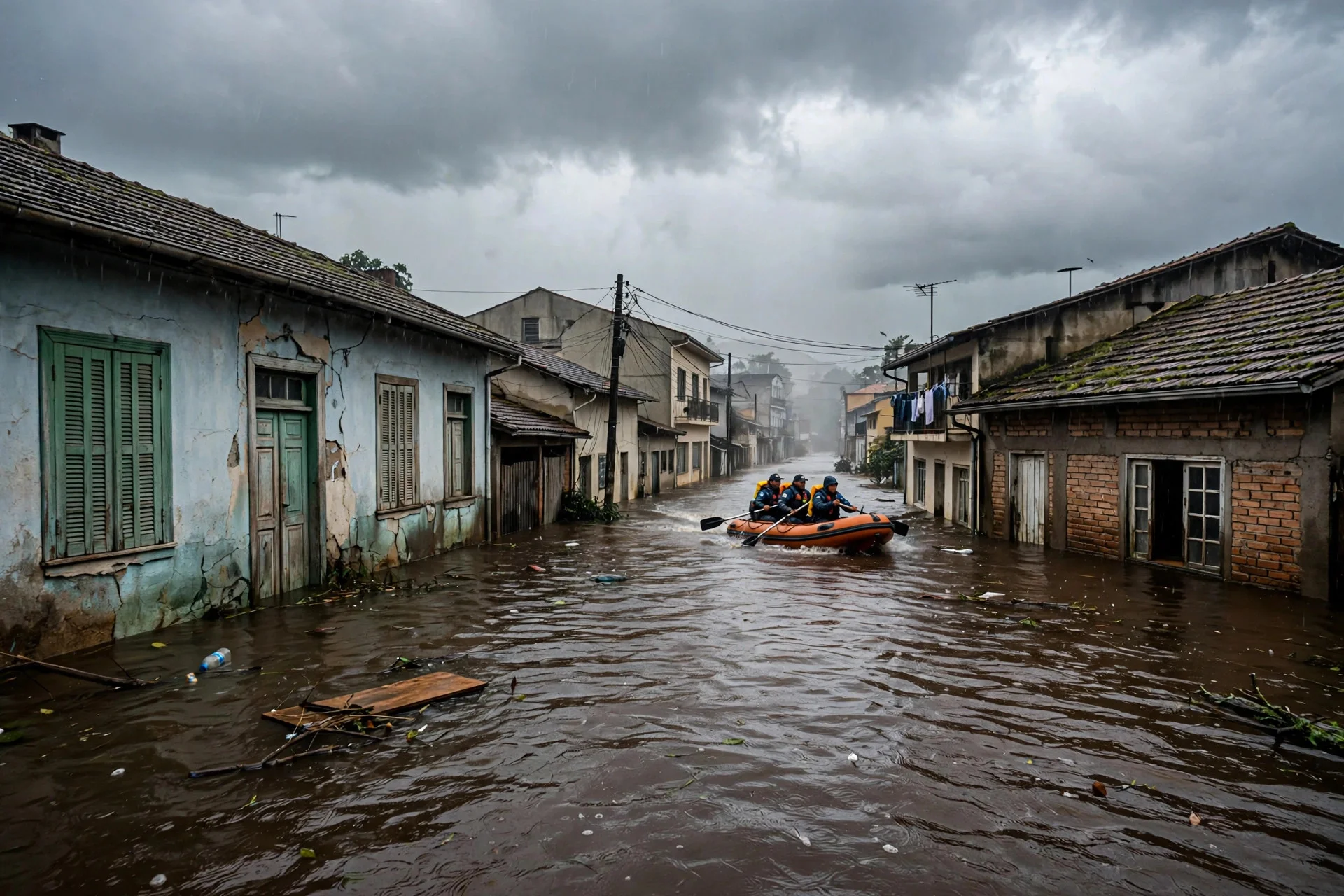
Ilustración alusiva a las inundaciones de 2024 en Rio Grande do Sul, Brasil.
Brazil sues Shell for $108 million over the 2024 floods
Brazil's prosecutor has sued Shell Brasil for the equivalent of $108 million in damages linked to the 2024 floods in Rio Grande do Sul, which killed nearly 200…
Brazil's $108 million claim against Shell faces a steep legal climb
Brazil's prosecutor sued Shell Brasil for the equivalent of $108 million over the 2024 floods in Rio Grande do Sul, which killed nearly 200 people and…
Brazil's public prosecutor has sued the local subsidiary of oil giant Shell for the equivalent of $108 million in damages linked to the deadly floods that struck the country's south in 2024, according to a judicial document obtained Friday.
--- The context ---
Torrential rains that fell on Rio Grande do Sul between April and May 2024 caused historic flooding. Nearly 200 people died, half a million more were displaced, and material damage was unprecedented.
--- The facts ---
For the prosecuting authority, Shell Brasil's liability is proportional to its parent company's contribution to global warming: 2% of the world's historical greenhouse gas emissions. The company, one of the largest in the world, must answer for its historical and ongoing contribution to emissions from the exploration, production and commercialization of fossil fuels.
The prosecutor is seeking 270 million reais for environmental and moral damages to the climate, and the same sum for material damages, for a total equivalent to $108 million. The judicial document says the public civil action aims to establish the defendant company's civil environmental and climate liability for the damages of the extreme climate event.
--- The positions ---
The local NGO Instituto Preservar is a co-author of the legal action. Its lawyer, Thales Miola, said the costs of climate damage should not be borne only by society and by those who lost everything in the tragedy, and that major polluters must also be held accountable for their emissions.
Shell Brasil said in an email that the company had not received formal notification of the proceedings. Maria Antonia Tigre, of the Sabin Center for Climate Change Law at Columbia University, described the case as the first time a national prosecutor has sued a major oil company over a climate catastrophe.
--- What remains unknown ---
It is still unclear when the company will be formally notified, which court will hear the case, and what criteria would govern the distribution of funds among victims and the state if the prosecutor wins.
--- Unanswered questions ---
Will Brazil's courts accept liability proportional to historical emissions? How will the court measure the exact share of Shell's parent company? Will this case set a precedent that other countries can invoke?
--- EPM analysis ---
The case goes beyond Rio Grande do Sul: it is the first time a national prosecutor has taken a major oil company to court over a specific climate catastrophe. Until now, the global legal battle against oil giants had been left to victims and organizations; now it is a state bringing the charges.
The international context favors the suit: last year, German courts validated the legal principle in the case of Peruvian farmer Saúl Luciano Lliuya against German energy company RWE — though they rejected compensation in his case, they opened the door to other lawsuits — and there are parallel proceedings in the United Kingdom over Typhoon Odette of 2021 in the Philippines, in Switzerland against Holcim over the Indonesian island of Pari, and in Germany against RWE and Heidelberg Materials over the 2022 Pakistan floods.
📌 EPM Take:
In EPM's view, the Brazilian lawsuit marks a turning point in climate justice: for the first time it is the state, through its prosecutor, charging a major oil company over a concrete catastrophe. If the thesis of liability proportional to 2% of historical emissions succeeds, the precedent will open a season of prosecutorial claims in every country hit by floods, fires or extreme storms. Shell, still without formal notification, will buy time, but the substance of the debate has already changed: who pays the climate bill.
Brazil's public prosecutor has filed a lawsuit against the local subsidiary of oil company Shell for the equivalent of $108 million, linked to the floods that devastated the country's south in 2024, according to a judicial document obtained Friday.
--- The context ---
The torrential rains that fell over Rio Grande do Sul between April and May 2024 caused historic flooding: nearly 200 people died, half a million more were displaced, and material damage was unprecedented.
--- The facts ---
The prosecuting authority attributes to Shell Brasil a liability proportional to its parent company's contribution to global warming, estimated at 2% of the world's historical greenhouse gas emissions. The prosecutor is seeking 270 million reais for environmental and moral damages to the climate, and the same sum for material damages: the total equals $108 million.
The judicial document says the public civil action seeks to establish the defendant company's civil environmental and climate liability for the damages of the extreme climate event of April and May 2024, and that the company must answer for its historical and ongoing contribution to fossil fuel emissions.
--- The positions ---
Shell Brasil said in an email that it had not received formal notification of the proceedings. Instituto Preservar, co-author of the suit, argues the costs of climate damage should not be borne only by society and by those who lost everything, and that major polluters must also be held accountable, said lawyer Thales Miola.
Maria Antonia Tigre, of the Sabin Center for Climate Change Law at Columbia University, described the case as the first time a national prosecutor has sued a major oil company over a climate catastrophe.
--- What remains unknown ---
It remains to be seen whether Brazil's courts will accept linking global historical emissions to a specific local disaster, a causal chain that attribution science is only beginning to quantify precisely.
--- Unanswered questions ---
By what method will the court measure the 2% attributed to Shell's parent company? Will attribution science sustain a conviction for collective moral damages? Will the suit survive the appeals of one of the largest oil companies in the world?
--- EPM analysis ---
The closest precedent counsels caution: in the case of Peruvian farmer Saúl Luciano Lliuya against German energy company RWE, German courts validated the principle of liability proportional to emissions last year, but rejected compensation in the particular case. The principle can survive while the plaintiff loses.
The parallel proceedings — the United Kingdom suit over Typhoon Odette of 2021 in the Philippines, the Holcim case in Switzerland over the Indonesian island of Pari, and the action in Germany against RWE and Heidelberg Materials over the 2022 Pakistan floods — advance unevenly. The global legal battle is gaining fronts, but not yet final convictions.
📌 EPM Take:
In EPM's view, the Brazilian lawsuit is a powerful political and legal gesture but a legally fragile one: linking a multinational's historical emissions to concrete deaths and displacements in Rio Grande do Sul will require scientific and causal proof that no court has validated with a conviction. The prosecutor bets the Lliuya precedent opens the door to a full judgment, but Shell has the best lawyers on the planet and formal notification has not even arrived. The case's true value will be setting the evidentiary standard for the next decade of climate litigation.
Brasil demanda a Shell por 108 millones de dólares tras las inundaciones de 2024
La fiscalía de Brasil demandó a la filial local de Shell por el equivalente a 108 millones de dólares en daños vinculados a las inundaciones de 2024 en Rio…
Brasil acusa a Shell por las inundaciones, pero la responsabilidad aún debe probarse
La fiscalía de Brasil demandó a Shell Brasil por el equivalente a 108 millones de dólares por las inundaciones de 2024 en Rio Grande do Sul, que dejaron casi…
La fiscalía de Brasil demandó a la filial local de Shell por el equivalente a 108 millones de dólares en daños vinculados a las inundaciones que azotaron el sur del país en 2024, según un documento judicial obtenido el viernes.
--- El contexto ---
Entre abril y mayo de 2024, lluvias torrenciales cayeron sobre el estado de Rio Grande do Sul y provocaron inundaciones históricas. Casi 200 personas murieron, medio millón más fueron desplazadas y los daños materiales fueron sin precedentes en la región.
--- Los hechos ---
El ente acusador atribuye a Shell Brasil una responsabilidad proporcional a la contribución de su empresa matriz al calentamiento global: el 2% de las emisiones históricas mundiales de gases de efecto invernadero. La petrolera debe responder por «su contribución histórica y continua a las emisiones mundiales de gases de efecto invernadero asociadas a la exploración, la producción y la comercialización de combustibles fósiles».
Según el documento, la acción civil pública busca «establecer la responsabilidad civil ambiental y climática de la empresa demandada» por los daños del evento climático extremo de abril y mayo de 2024. La fiscalía reclama 270 millones de reales por daños ambientales y «morales» sobre el clima, y la misma suma por daños materiales: 108 millones de dólares en total.
--- Las posiciones ---
La ONG local Instituto Preservar es coautora de la acción legal. «Los costos de los daños climáticos no deben ser asumidos únicamente por la sociedad y por quienes lo han perdido todo en la tragedia», dijo el abogado Thales Miola; los grandes contaminadores, añadió, «también deben ser responsabilizados».
Shell Brasil afirmó en un correo electrónico que «no recibió notificación formal sobre el proceso mencionado». Maria Antonia Tigre, del Centro Sabin de Derecho sobre el Cambio Climático de la Universidad de Columbia, señaló: «Es la primera vez que un fiscal nacional demanda a una gran petrolera por una catástrofe climática».
--- Lo que falta saber ---
Se desconoce cuándo se formalizará la notificación a la empresa, qué tribunal llevará el proceso y cómo se repartirían los recursos entre víctimas y Estado en caso de condena.
--- Preguntas sin respuesta ---
¿Aceptará la justicia brasileña la responsabilidad proporcional a las emisiones históricas? ¿Cómo medirá el tribunal la parte exacta de la matriz de Shell? ¿Sentará este proceso un precedente invocable por otros países?
--- Análisis EPM ---
El caso trasciende Rio Grande do Sul: es la primera vez que un fiscal nacional lleva a una gran petrolera ante la justicia por una catástrofe climática concreta. Hasta ahora, la batalla judicial mundial contra los gigantes del petróleo había quedado en manos de víctimas y organizaciones; ahora acusa el Estado.
El contexto internacional la favorece: la justicia alemana validó el año pasado el principio legal en el caso del campesino peruano Saúl Luciano Lliuya contra la energética alemana RWE —rechazó indemnizarlo, pero abrió la vía a otras demandas— y hay procesos paralelos en Reino Unido por el tifón Odette de 2021 en Filipinas, en Suiza contra Holcim por la isla indonesia de Pari, y en Alemania contra RWE y Heidelberg Materials por las inundaciones de Pakistán de 2022.
📌 Conclusion EPM:
A juicio de EPM, la demanda brasileña marca un punto de inflexión en la justicia climática: por primera vez es el Estado, con su fiscalía, quien acusa a una gran petrolera por una catástrofe concreta. Si prospera la tesis de la responsabilidad proporcional al 2% de las emisiones históricas, el precedente abrirá una temporada de reclamos fiscales en cada país golpeado por inundaciones, incendios o tormentas extremas. Shell, aún sin notificación formal, ganará tiempo, pero el fondo de la discusión ya cambió: quién paga la factura del clima.
La fiscalía de Brasil presentó una demanda contra la filial local de la petrolera Shell por el equivalente a 108 millones de dólares, vinculados a las inundaciones que devastaron el sur del país en 2024, según un documento judicial obtenido el viernes.
--- El contexto ---
Las lluvias torrenciales que cayeron entre abril y mayo de 2024 sobre Rio Grande do Sul dejaron inundaciones históricas: casi 200 muertos, medio millón de desplazados y daños materiales sin precedentes.
--- Los hechos ---
El ente acusador atribuye a Shell Brasil una responsabilidad proporcional a la contribución de su matriz al calentamiento global, estimada en el 2% de las emisiones históricas mundiales de gases de efecto invernadero. La fiscalía reclama 270 millones de reales por daños ambientales y «morales» sobre el clima, y la misma suma por daños materiales: el total equivale a 108 millones de dólares.
El documento sostiene que la acción civil pública busca «establecer la responsabilidad civil ambiental y climática de la empresa demandada» por los daños del evento climático extremo de abril y mayo de 2024, y que la empresa debe responder por «su contribución histórica y continua» a las emisiones vinculadas a los combustibles fósiles.
--- Las posiciones ---
Shell Brasil afirmó en un correo electrónico que «no recibió notificación formal sobre el proceso mencionado». El Instituto Preservar, coautor de la demanda, sostiene que los costos de los daños climáticos «no deben ser asumidos únicamente por la sociedad y por quienes lo han perdido todo en la tragedia», y que los grandes contaminadores «también deben ser responsabilizados», dijo el abogado Thales Miola.
Maria Antonia Tigre, del Centro Sabin de Derecho sobre el Cambio Climático de la Universidad de Columbia, calificó el caso como «la primera vez que un fiscal nacional demanda a una gran petrolera por una catástrofe climática».
--- Lo que falta saber ---
Falta saber si la justicia brasileña aceptará vincular emisiones históricas globales con un desastre local concreto, una cadena causal que la ciencia de atribución apenas empieza a cuantificar.
--- Preguntas sin respuesta ---
¿Con qué método medirá el tribunal el 2% atribuido a la matriz de Shell? ¿Bastará la atribución científica para una condena por daños morales colectivos? ¿Resistirá la demanda los recursos de una de las petroleras más grandes del mundo?
--- Análisis EPM ---
El antecedente más cercano invita a la cautela: en el caso del campesino peruano Saúl Luciano Lliuya contra la energética alemana RWE, la justicia alemana validó el año pasado el principio de responsabilidad proporcional a las emisiones, pero rechazó las indemnizaciones en el caso particular. El principio puede sobrevivir y el demandante perder.
Los procesos paralelos —la demanda en Reino Unido por el tifón Odette de 2021 en Filipinas, el caso de Holcim en Suiza por la isla indonesia de Pari y la acción en Alemania contra RWE y Heidelberg Materials por las inundaciones de Pakistán de 2022— avanzan con ritmos dispares. La batalla judicial mundial suma frentes, pero aún no suma condenas definitivas.
📌 Conclusion EPM:
A juicio de EPM, la demanda brasileña es un gesto político-jurídico poderoso pero jurídicamente frágil: vincular las emisiones históricas de una multinacional con muertes y desplazamientos concretos en Rio Grande do Sul exigirá una prueba científica y causal que ningún tribunal ha validado con una condena. La fiscalía apuesta a que el precedente del caso Lliuya abra la puerta a una sentencia completa, pero Shell cuenta con los mejores abogados del planeta y la notificación formal aún ni siquiera llegó. El verdadero valor del caso será fijar el estándar probatorio de la próxima década de litigios climáticos.