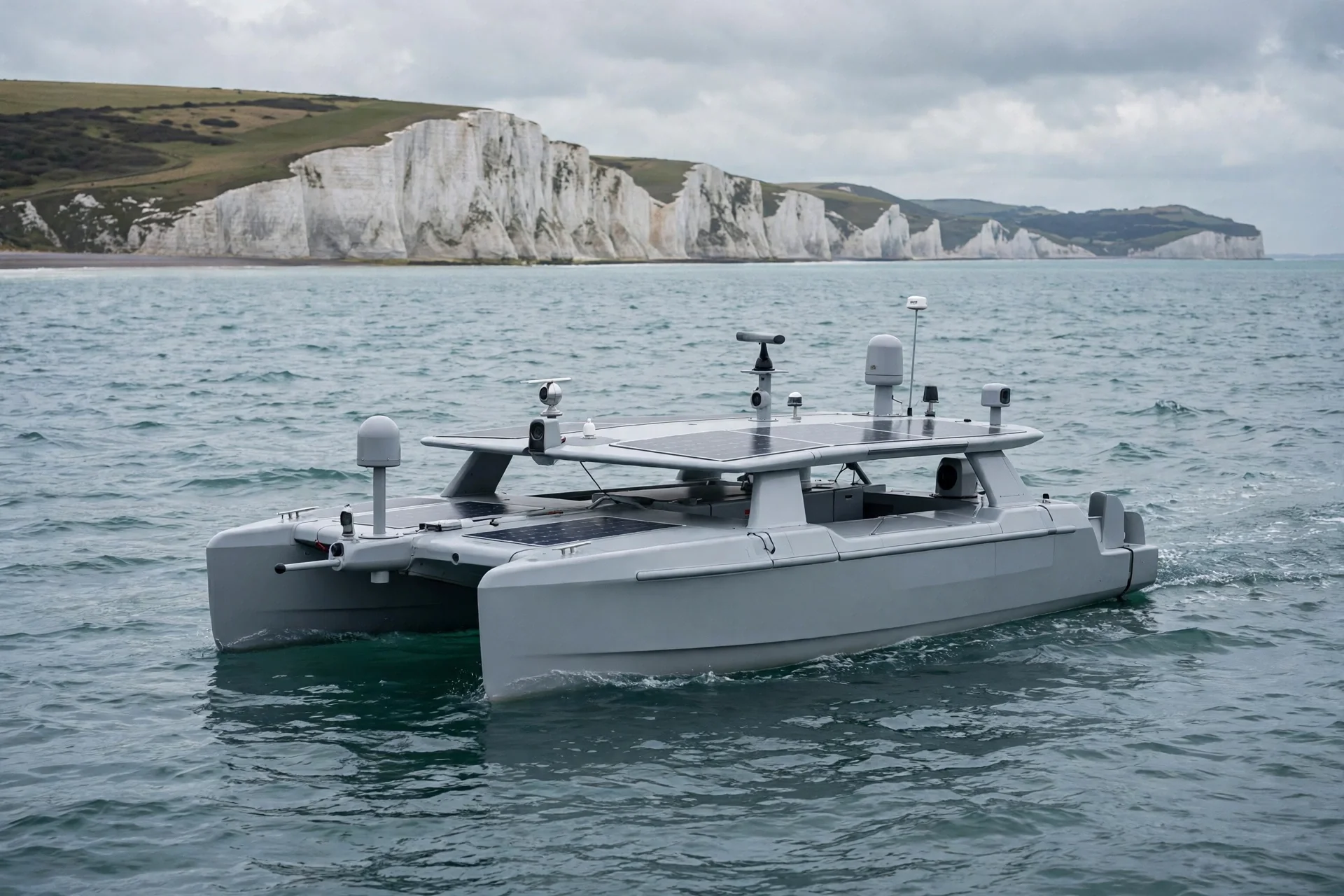
Imagen alusiva generada con IA de una embarcación de superficie no tripulada en aguas costeras. · Imagen generada con IA para Erick Prometeo Media
Exeter's HydroSurv expands exports with government-backed trade finance
HydroSurv, an Exeter company founded in 2019 that builds electric and battery-hybrid unmanned surface vessels, has secured a £150,000 loan from Nighthawk…
Public backing helps Exeter autonomous boats reach Norway and Italy
A £150,000 trade loan issued by Nighthawk Export Finance and guaranteed by UK Export Finance will help HydroSurv deliver orders in Norway and Italy, finance…
--- The context ---
HydroSurv is an Exeter marine technology company, founded in 2019, that manufactures unmanned surface vessels for marine surveying and environmental monitoring. Its electric and battery-hybrid models operate with low to zero emissions, offering a sustainable alternative to conventional crewed workboats in a growing international market.
--- The facts ---
The company has secured a £150,000 trade loan issued by Nighthawk Export Finance (NEF) and guaranteed by UK Export Finance (UKEF), the government's export credit agency. The financing will help it fulfil orders in Norway and Italy, providing working capital to bridge the gap between production costs and final customer payment.
Since its first export order in 2021, it has deployed more than 30 vessels worldwide and approximately 95% of its business comes from international markets. Growth will add 7 highly skilled roles, from 12 to 19 employees. Data from its vessels supports offshore wind, flood-risk management and protection of coastal infrastructure, and it expects to triple its revenue within 3 years.
--- The positions ---
Trade Minister Anas Sarwar presented the firm as British innovation succeeding globally and linked the backing to Exeter's local economy. Martin Brooks of UKEF in Devon highlighted its low-emission self-driving boats. Chief executive David Hull said demand has grown rapidly and the financing enables larger orders and investment in people. James Davis of NEF said a non-bank lender brings flexibility to support innovative businesses and create skilled jobs.
--- What remains unknown ---
The total value and exact timetable of the orders in Norway and Italy are not known, nor how the 7 new roles will be divided in Exeter. How the public agency will follow up on the loan's use and results has also not been detailed.
--- Unanswered questions ---
When will the Norway and Italy orders be delivered, and which customers will receive them? How will the 7 new jobs be distributed across the company? Can HydroSurv sustain its growth once this specific backing ends?
--- EPM analysis ---
UKEF aims by 2029 to support over £12.5 billion of new export contracts. Over the last financial year it provided over £11 billion in loans, guarantees and insurance, supporting up to 85,000 jobs and contributing up to £6.4 billion to the economy. Against those totals this loan is small, but its effect on orders and local jobs is direct.
📌 EPM Take: In EPM's view, the case shows how a relatively modest loan can unlock international orders when the central problem is working capital rather than a lack of demand. Public backing lowers the risk for the lender and allows a small company to turn innovation into skilled jobs in Exeter. The challenge will be sustaining that growth without permanent reliance on state support, delivering the orders in Norway and Italy and proving that clean marine technology is also commercially sound over the long term for coastal communities.
--- The context ---
In Exeter, a company founded in 2019 builds electric and battery-hybrid unmanned surface vessels, with low to zero emissions, for marine surveying and environmental monitoring. HydroSurv sells almost everything abroad, and its new financing raises whether public backing will become verifiable private growth.
--- The facts ---
HydroSurv has secured a £150,000 trade loan issued by Nighthawk Export Finance (NEF) and guaranteed by UK Export Finance (UKEF), the government's export credit agency. The funds will help deliver orders in Norway and Italy and cover working capital between production costs and final payment, a common gap for smaller exporters.
The company has deployed more than 30 vessels since its first export order in 2021, and approximately 95% of its business comes from international markets. It will add 7 highly skilled roles, from 12 to 19 employees. Its data supports offshore wind, flood-risk management and protection of coastal infrastructure, and management expects to triple revenue within 3 years.
--- The positions ---
Trade Minister Anas Sarwar described the firm as British innovation succeeding globally. Martin Brooks of UKEF in Devon stressed that its boats showcase the South West for marine autonomy. Chief executive David Hull said demand has grown rapidly and the financing makes larger orders possible. James Davis of NEF argued that a non-bank lender gives flexibility to support innovative businesses and create skilled jobs.
--- What remains unknown ---
The value and precise timetable of the Norway and Italy orders have not been published, nor the loan's detailed terms. How results will be measured, and what happens if international demand slows, also remains unclear at this stage.
--- Unanswered questions ---
What is the total value of the orders this loan will help to fulfil? What repayment terms apply to the guaranteed financing? How will it be verified that the 7 jobs are created and retained in Exeter?
--- EPM analysis ---
The wider framework is large: UKEF aims by 2029 to support over £12.5 billion of new export contracts, after providing over £11 billion in loans, guarantees and insurance over the last financial year, supporting up to 85,000 jobs and contributing up to £6.4 billion to the economy. This case will be judged on deliveries and real revenue, not announcements.
📌 EPM Take: In EPM's view, backing a company that already earns about 95% of its business abroad is a wager with a visible return: concrete orders, seven skilled jobs and a revenue outlook over three years. Using a non-bank lender with a public guarantee widens the options without replacing the market. The requirement must be measurable results and accountability, so that every pound of backing becomes real exports, productive capacity and lasting employment in the South West rather than a subsidy without a clear and verifiable outcome.
HydroSurv de Exeter amplía exportaciones con préstamo respaldado por el Gobierno
HydroSurv, empresa de Exeter fundada en 2019 que fabrica embarcaciones autónomas eléctricas e híbridas, obtuvo un préstamo de £150,000 de Nighthawk Export…
Respaldo público impulsa barcos autónomos de Exeter hacia Noruega e Italia
Un préstamo comercial de £150,000, emitido por Nighthawk Export Finance y garantizado por UK Export Finance, permitirá a HydroSurv atender pedidos en Noruega e…
--- El contexto ---
HydroSurv es una empresa de tecnología marina de Exeter, fundada en 2019, que fabrica embarcaciones de superficie no tripuladas para estudios marinos y monitoreo ambiental. Sus modelos eléctricos e híbridos de batería operan con bajas a cero emisiones, como alternativa a las embarcaciones tradicionales con tripulación.
--- Los hechos ---
La empresa obtuvo un préstamo comercial de £150,000 emitido por Nighthawk Export Finance (NEF) y garantizado por UK Export Finance (UKEF), la agencia gubernamental de crédito a la exportación. El financiamiento permitirá cumplir pedidos en Noruega e Italia y cubrir el capital de trabajo entre los costos de producción y el pago final de los clientes.
Desde su primer pedido de exportación en 2021 ha desplegado más de 30 embarcaciones en el mundo y cerca del 95% de su negocio viene de mercados internacionales. El crecimiento sumará 7 puestos altamente cualificados, de 12 a 19 empleados. Los datos de sus embarcaciones sirven para energía eólica marina, gestión de riesgo de inundaciones y protección de infraestructura costera, y espera triplicar sus ingresos en 3 años.
--- Las posiciones ---
El ministro de Comercio, Anas Sarwar, presentó a la firma como ejemplo de innovación británica con éxito global y vinculó el respaldo con la economía local de Exeter. Martin Brooks, de UKEF en Devon, destacó sus barcos autónomos de bajas emisiones. El director ejecutivo David Hull señaló que la demanda crece rápido y que el financiamiento permite pedidos mayores e invertir en personal. James Davis, de NEF, sostuvo que un prestamista no bancario aporta flexibilidad para apoyar a empresas innovadoras y crear empleo cualificado.
--- Lo que falta saber ---
No se conocen el valor total ni el calendario exacto de los pedidos en Noruega e Italia, ni cómo se repartirán los 7 nuevos puestos en Exeter. Tampoco se detalló qué seguimiento hará la agencia pública del uso del préstamo y de los resultados obtenidos.
--- Preguntas sin respuesta ---
¿Cuándo se entregarán los pedidos de Noruega e Italia y qué clientes los recibirán? ¿Cómo se distribuirán los 7 nuevos empleos en la empresa? ¿Podrá HydroSurv sostener su crecimiento cuando finalice este respaldo concreto?
--- Análisis EPM ---
UKEF aspira a apoyar para 2029 más de £12.5 billion en nuevos contratos de exportación. En el último año financiero aportó más de £11 billion en préstamos, garantías y seguros, apoyando hasta 85,000 empleos y hasta £6.4 billion para la economía. Frente a esas cifras, este préstamo es pequeño, pero su efecto sobre pedidos y empleo local es directo.
📌 Conclusion EPM: A juicio de EPM, el caso muestra cómo un préstamo relativamente modesto puede desbloquear pedidos internacionales cuando el problema central es el capital de trabajo y no la falta de demanda. El respaldo público reduce el riesgo para el prestamista y permite que una empresa pequeña convierta innovación en empleo cualificado en Exeter. El reto será sostener ese crecimiento sin depender de forma permanente del apoyo estatal, cumpliendo los pedidos en Noruega e Italia y demostrando que la tecnología limpia también es comercialmente sólida a largo plazo.
--- El contexto ---
En Exeter, una empresa fundada en 2019 fabrica embarcaciones de superficie no tripuladas eléctricas e híbridas de batería, de bajas a cero emisiones, para estudios marinos y monitoreo ambiental. HydroSurv vende casi todo fuera del país, y su nuevo financiamiento plantea si el respaldo público se traducirá en crecimiento privado comprobable.
--- Los hechos ---
HydroSurv aseguró un préstamo comercial de £150,000 emitido por Nighthawk Export Finance (NEF) y garantizado por UK Export Finance (UKEF), la agencia gubernamental de crédito a la exportación. Los fondos permitirán atender pedidos en Noruega e Italia y financiar el capital de trabajo entre los costos de producción y el pago final, un desfase habitual para empresas pequeñas que exportan.
La empresa desplegó más de 30 embarcaciones desde su primer pedido de exportación en 2021 y cerca del 95% de su negocio procede de mercados internacionales. Sumará 7 puestos altamente cualificados, de 12 a 19 empleados. Sus datos sirven para energía eólica marina, gestión de riesgo de inundaciones y protección de infraestructura costera, y la dirección espera triplicar los ingresos en 3 años.
--- Las posiciones ---
El ministro de Comercio, Anas Sarwar, describió a la firma como innovación británica con éxito global. Martin Brooks, de UKEF en Devon, subrayó que sus barcos proyectan al suroeste como polo de autonomía marina. El director ejecutivo David Hull afirmó que la demanda crece rápido y que el financiamiento facilita pedidos mayores. James Davis, de NEF, defendió que un prestamista no bancario da flexibilidad para apoyar a empresas innovadoras y crear empleo cualificado.
--- Lo que falta saber ---
No se publicaron el valor ni el calendario preciso de los pedidos en Noruega e Italia, ni las condiciones detalladas del préstamo. Tampoco consta cómo se medirán los resultados ni qué ocurriría si la demanda internacional se desacelera en los próximos años.
--- Preguntas sin respuesta ---
¿Cuál es el valor total de los pedidos que este préstamo ayudará a cumplir? ¿Qué plazos de devolución tiene el financiamiento garantizado? ¿Cómo se comprobará que los 7 empleos se crean y se mantienen en Exeter?
--- Análisis EPM ---
El marco es amplio: UKEF aspira a apoyar para 2029 más de £12.5 billion en nuevos contratos de exportación, tras aportar más de £11 billion en préstamos, garantías y seguros en el último año financiero, con hasta 85,000 empleos apoyados y hasta £6.4 billion para la economía. La prueba de este caso estará en entregas cumplidas e ingresos reales, no en los anuncios.
📌 Conclusion EPM: A juicio de EPM, respaldar a una empresa que ya obtiene cerca del 95% de su negocio fuera del país es una apuesta con retorno visible: pedidos concretos, siete empleos cualificados y proyección de ingresos en tres años. El uso de un prestamista no bancario con garantía pública amplía las opciones sin sustituir al mercado. La exigencia debe ser resultados medibles y rendición de cuentas, para que cada libra de respaldo se traduzca en exportaciones reales, capacidad productiva y empleo duradero en el suroeste del país.