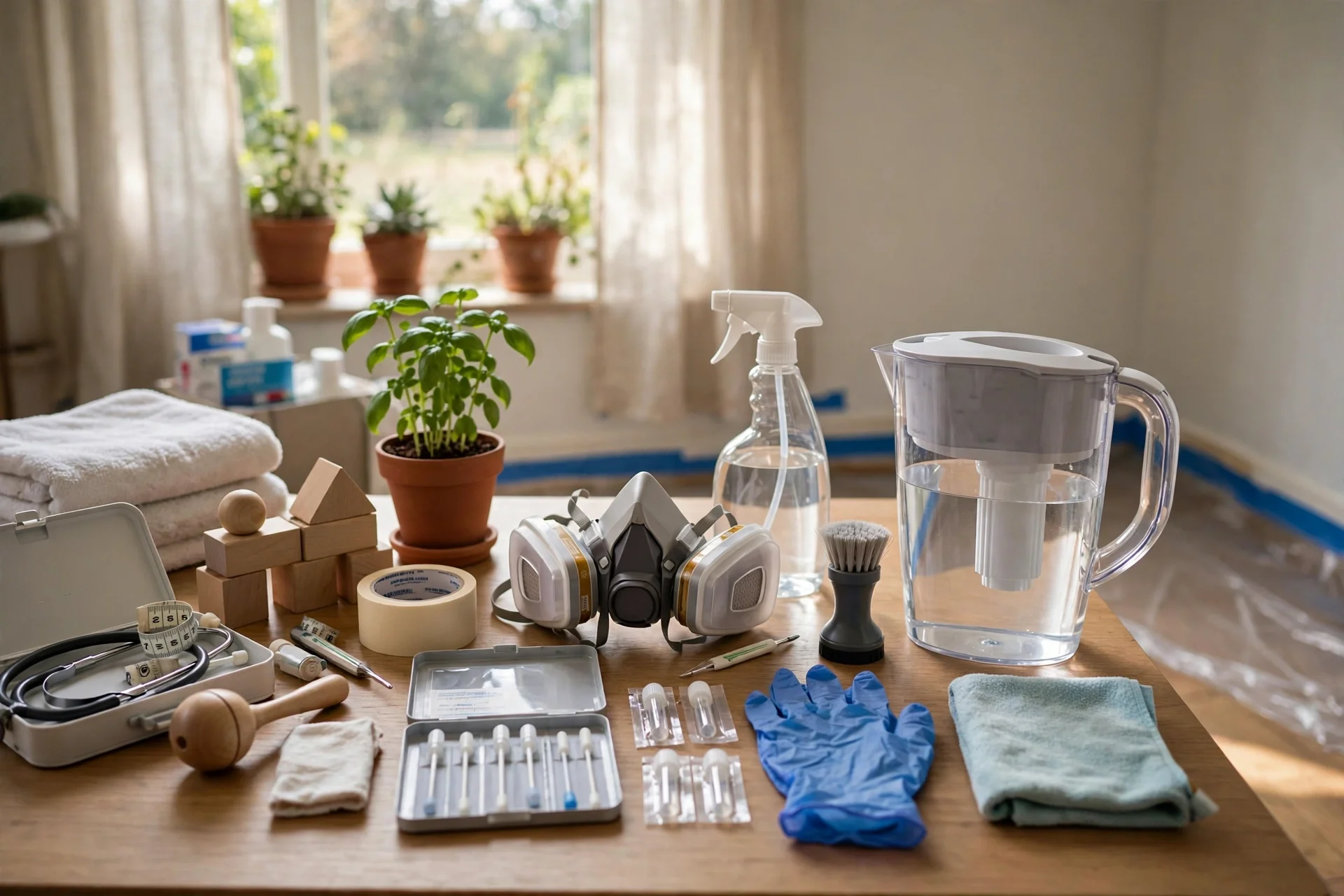
Imagen alusiva a la prevención en el hogar de la exposición al plomo y a la protección de la salud infantil. · Imagen generada con IA para Erick Prometeo Media
Preventing lead exposure: an avoidable threat claiming millions of lives
The world health agency urged faster prevention of lead exposure, estimated at more than 3.5 million deaths each year, through binding controls, a global plan…
No safe level: lead demands firm rules and real enforcement
With no safe level of contact, lead causes an estimated more than 3.5 million deaths each year and harms children especially.
--- The context ---
Lead exposure is preventable harm that remains embedded in everyday products and environments. The World Health Organization said on Thursday that countries must accelerate prevention, ahead of an international week devoted to the problem running from 18-26 October.
--- The facts ---
Exposure is estimated to cause more than 3.5 million deaths globally each year and affects hundreds of millions of children. Although exposure is entirely preventable, fewer than half of countries had confirmed legally binding controls on paint containing lead, according to the agency's latest global assessment.
Contamination can occur through paint, cookware, cosmetics, spices, informal recycling and industrial sources. There is no known safe level of contact, and even relatively low exposure can cause irreversible harm across multiple organs.
--- The positions ---
Bruce Gordon, interim director of the agency's relevant department, argued that lead poisoning should not keep taking children's potential in 2026. He also noted that many sources of exposure are known and that prevention is known too, urging action upstream to remove lead from products and environments before it reaches a child's bloodstream.
That position centres on those least able to protect themselves: developing brains and nervous systems are highly vulnerable, and the consequences can shape learning, behaviour and health for life.
--- What remains unknown ---
The final content of the global plan now in preparation is not yet known, nor is how compliance will be measured in each country. It also remains unclear how quickly countries without confirmed binding controls on lead paint will move.
--- Unanswered questions ---
How many countries will adopt binding controls before the new plan advances? Will laboratory capacity to detect exposure in blood be strengthened in time? Which interventions will have the greatest impact in places with the fewest resources?
--- EPM analysis ---
The most uncomfortable fact is the gap between knowledge and action: the harm is identified and the routes of exposure are described, yet confirmed regulation covers fewer than half of countries. Because symptoms may not be immediately visible, many cases go unnoticed until significant damage has already occurred.
📌 EPM Take: In EPM's view, this is an emergency of prevention rather than treatment, because no level of contact is safe and harm to children can be irreversible. Speeding up binding controls, removing lead from everyday products and detecting exposure early would protect hundreds of millions of children. The week of 18-26 October should be measured by concrete decisions, not by declarations repeated every year without verifiable change. Publishing comparable progress by country would show which controls work and where contamination still lacks a sufficient response.
--- The context ---
Some risks allow gradualism and others do not. With lead there is no known safe level of contact, which is why the World Health Organization on Thursday urged countries to accelerate prevention, ahead of the international week on the issue running from 18-26 October.
--- The facts ---
Exposure is estimated to cause more than 3.5 million deaths globally each year and affects hundreds of millions of children. It is entirely preventable, but fewer than half of countries had confirmed legally binding controls on paint containing lead, according to the agency's latest global assessment.
Contamination routes include paint, cookware, cosmetics, spices, informal recycling and industrial sources. In adults it contributes to cardiovascular and kidney disease, and in children it can irreversibly damage the brain, health and development, while affecting multiple organs.
--- The positions ---
Bruce Gordon, interim director of the agency's relevant department, said that poisoning should not keep stealing children's potential in 2026. He added that many exposures are known and prevention is known, and urged removing lead from products and environments before it reaches a child's bloodstream.
From a standpoint of order and responsibility, the practical conclusion is clear: written rules without enforcement protect no one, and prevention must be verified in products, environments and results.
--- What remains unknown ---
The details of the global plan to be presented next year are not yet known, nor are the enforcement or verification mechanisms that will accompany controls. It is also unknown which countries without confirmed controls will move first.
--- Unanswered questions ---
Will there be real verification of compliance or only voluntary commitments? Who will answer when an everyday product keeps contaminating? Can reductions in exposure be measured with comparable data across countries?
--- EPM analysis ---
The problem combines silent harm with diffuse responsibility: because symptoms may not be visible at first, many cases are discovered only when damage has advanced. In response, the agency is preparing practical guidance for 2027 and supporting laboratory capacity to test blood lead levels and enable earlier detection in several countries.
📌 EPM Take: In EPM's view, lead prevention needs less rhetoric and more authority applied with judgement: binding rules, control of products and environments, and measurable monitoring of progress. Protecting children and adult health does not require waiting for new certainties, because the risk is already described and there is no safe level. What is missing is to execute, verify and correct wherever the rule is not met. Publishing results by country would make visible who complies, who lags and where enforcement must be corrected first.
Prevenir el plomo: una urgencia evitable que ya cobra millones de vidas
La agencia sanitaria mundial pidió acelerar la prevención de la exposición al plomo, estimada en más de 3,5 millones de muertes anuales, con controles…
Sin nivel seguro: el plomo exige normas firmes y control efectivo
Sin nivel seguro de contacto, el plomo causa más de 3,5 millones de muertes anuales estimadas y daña especialmente a los niños.
--- El contexto ---
La exposición al plomo es un daño evitable que sigue presente en productos y entornos cotidianos. La Organización Mundial de la Salud advirtió este jueves que los países deben acelerar la prevención, en vísperas de una semana internacional dedicada a este problema, que se celebrará del 18-26 de octubre.
--- Los hechos ---
Según la estimación difundida, la exposición causa más de 3,5 millones de muertes cada año en todo el mundo y afecta a cientos de millones de niños. Aunque la exposición es totalmente prevenible, menos de la mitad de los países habían confirmado controles legalmente vinculantes sobre la pintura que contiene plomo, según la evaluación global más reciente de la agencia.
La contaminación puede llegar por la pintura, los utensilios de cocina, los cosméticos, las especias, el reciclaje informal y las fuentes industriales. No existe un nivel seguro de contacto y hasta una exposición relativamente baja puede causar un daño irreversible en varios órganos.
--- Las posiciones ---
Bruce Gordon, director interino del departamento correspondiente de la agencia, sostuvo que la intoxicación por plomo no debería seguir arrebatando potencial a los niños en 2026. También señaló que se conocen muchas fuentes de exposición y cómo prevenirlas, y pidió actuar antes, retirando el plomo de productos y entornos antes de que llegue a la sangre infantil.
Esa mirada pone el acento en proteger primero a los más vulnerables: los cerebros y los sistemas nerviosos en desarrollo son especialmente sensibles a los efectos tóxicos, y las consecuencias pueden durar toda la vida.
--- Lo que falta saber ---
Todavía no se conoce el contenido definitivo del plan global en preparación ni cómo se medirá su cumplimiento en cada país. Tampoco está claro qué ritmo seguirán los países que aún no han confirmado controles vinculantes sobre la pintura con plomo.
--- Preguntas sin respuesta ---
¿Cuántos países adoptarán controles vinculantes antes de que avance el nuevo plan? ¿Se reforzará a tiempo la capacidad de detectar la exposición en sangre? ¿Qué intervenciones tendrán mayor impacto en los lugares con menos recursos?
--- Análisis EPM ---
El dato más incómodo es la brecha entre conocimiento y acción: el daño está identificado, las vías de exposición están descritas y, sin embargo, la regulación confirmada cubre a menos de la mitad de los países. Los síntomas pueden no verse de inmediato, así que muchos casos pasan inadvertidos hasta que el daño ya es importante, con dificultades de aprendizaje, problemas de conducta y mala salud.
📌 Conclusion EPM: A juicio de EPM, esta es una emergencia de prevención antes que de tratamiento, porque ningún nivel de contacto es seguro y el daño infantil puede ser irreversible. Acelerar controles vinculantes, retirar el plomo de productos cotidianos y detectar pronto la exposición protegería a cientos de millones de niños. La semana del 18-26 de octubre debería medirse en decisiones concretas, no en declaraciones repetidas cada año sin cambios verificables. Publicar avances comparables por país permitiría saber qué controles funcionan y dónde la contaminación sigue sin respuesta suficiente.
--- El contexto ---
Hay riesgos que admiten gradualismo y otros que no. Con el plomo no existe un nivel seguro de contacto, y por eso la Organización Mundial de la Salud pidió este jueves a los países acelerar la prevención, antes de la semana internacional sobre el tema, prevista del 18-26 de octubre.
--- Los hechos ---
La exposición se estima responsable de más de 3,5 millones de muertes anuales en el mundo y afecta a cientos de millones de niños. Es totalmente prevenible, pero menos de la mitad de los países habían confirmado controles legalmente vinculantes sobre la pintura con plomo, de acuerdo con la evaluación global más reciente de la agencia.
Las vías de contaminación incluyen pintura, utensilios de cocina, cosméticos, especias, reciclaje informal y fuentes industriales. En adultos se asocia a problemas cardiovasculares y renales, y en niños puede dañar de forma irreversible el cerebro, la salud y el desarrollo, además de afectar a varios órganos.
--- Las posiciones ---
Bruce Gordon, director interino del departamento correspondiente de la agencia, planteó que la intoxicación no debería seguir robando potencial a los niños en 2026. Añadió que se sabe de dónde vienen muchas exposiciones y cómo prevenirlas, e instó a retirar el plomo de productos y entornos antes de que alcance la sangre de un niño.
Desde una exigencia de orden y responsabilidad, la conclusión práctica es clara: normas escritas sin cumplimiento no protegen a nadie, y la prevención debe verificarse en productos, entornos y resultados.
--- Lo que falta saber ---
No se conocen todavía los detalles del plan global que se presentará el próximo año ni las sanciones o mecanismos de verificación que acompañarán a los controles. Tampoco se sabe qué países sin controles confirmados darán el paso primero.
--- Preguntas sin respuesta ---
¿Habrá verificación real del cumplimiento o solo compromisos voluntarios? ¿Quién responderá cuando un producto cotidiano siga contaminando? ¿Se podrá medir la reducción de la exposición con datos comparables entre países?
--- Análisis EPM ---
El problema combina daño silencioso y responsabilidad difusa: como los síntomas pueden no ser visibles al principio, muchos casos se descubren cuando el perjuicio ya avanzó. Frente a eso, la agencia prepara orientación práctica para 2027 y apoya capacidad de laboratorio para analizar los niveles de plomo en sangre y detectar antes la exposición en varios países.
📌 Conclusion EPM: A juicio de EPM, la prevención del plomo necesita menos retórica y más autoridad aplicada con criterio: reglas vinculantes, control de productos y entornos, y seguimiento medible del progreso. Proteger a los niños y la salud de los adultos no exige esperar nuevas certezas, porque el riesgo ya está descrito y no hay nivel seguro. Lo que falta es ejecutar, verificar y corregir donde la norma no se cumpla. Publicar resultados por país haría visible quién cumple, quién se retrasa y dónde debe corregirse primero la aplicación.