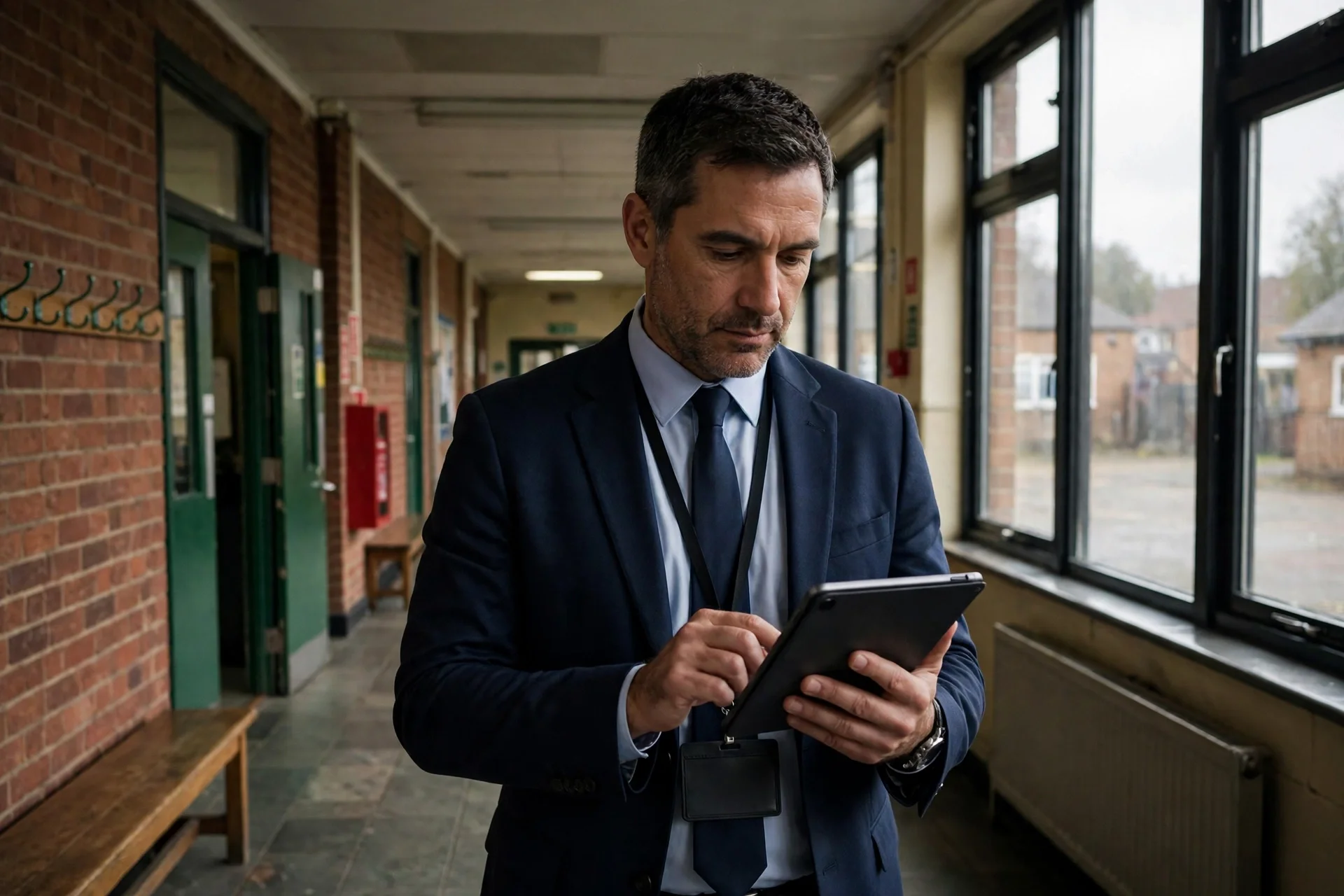
Un inspector consulta su tableta en el pasillo de una escuela británica durante una jornada de inspección. · Erick Prometeo Media
British schools will be able to challenge the fairness of inspections
Ofsted will pilot an independent review service able to judge whether school complaint outcomes were fair and reasonable, with access to unredacted evidence…
United Kingdom puts Ofsted complaints under independent review
A pilot independent review will judge the fairness of Ofsted complaint outcomes, with full access to inspection evidence and recommendations to the chief…
State-funded schools in England that complained about an inspection will, for the first time, be able to ask an independent service to judge not only how their complaint was handled, but also whether the outcome was fair and reasonable.
--- The context ---
School inspection rests on trust: trust that grades are fair and that a genuine route to correction exists when something goes wrong. That trust has been under strain for years, and the chief inspector himself has indirectly acknowledged that it is not shared by everyone across the education sector.
Complaints arrangements have been changing since 2023, with the stated aim of increasing transparency and rebuilding sector trust. In 2024, soon after taking up the post, Sir Martyn Oliver introduced a provider helpline to resolve concerns as they arise, a national complaints hub, and panels including external sector and trade union representatives to scrutinise a sample of recently closed complaints.
--- The facts ---
Ofsted will pilot an Independent Complaints Review service, known as the ICR, open to state-funded schools once Ofsted's internal complaints process has concluded and their inspection report card has been published.
The central change is one of scope. The new service will be able to examine the original complaint and Ofsted's response and, unlike the current arrangements, also the original, unredacted inspection evidence, to reach a view on whether the complaint response was fair and reasonable, including the inspection process and the grades awarded.
The service will report its findings and recommendations to the complainant and to the chief inspector. If it finds mistakes, or that Ofsted has not acted fairly and reasonably, it can recommend that Ofsted looks at the complaint again, and the chief inspector will personally consider and respond to every recommendation.
The pilot will begin shortly, will run through the 2026/27 academic year and will also cover ongoing complaints raised by schools this term.
Where a recommendation concerns a grading decision, the chief inspector can set aside the published report card and arrange a new inspection as soon as possible, which could confirm or change the grades. Under the law, only the chief inspector, acting through delegated inspectors, can make grading decisions.
Today, the existing Independent Complaints Adjudication Service for Ofsted can only determine whether a complaint was handled properly. It cannot consider whether the outcome was fair and reasonable, it cannot overturn inspection findings, and the report card is not withdrawn while it reviews a case.
--- The positions ---
The chief inspector has indirectly expressed confidence that current quality assurance and complaints processes put things right in the vast majority of cases, while also accepting that this confidence is not shared by everyone in the sector and that another level of independent oversight could strengthen trust in the system.
The pilot responds to recommendations from Dame Christine Gilbert's independent learning review for Ofsted and from Sinead McBrearty's independent wellbeing impact assessment of the revised Ofsted framework. The reviewing organisation will be a full member of the Ombudsman Association, bound by its standards for case handling and impartiality, and the contract is being managed by the Department for Education.
--- What remains unknown ---
The organisation that will run the service has not yet been named, because the contract award is still in progress. Nor is it yet clear how many cases the pilot will be able to absorb, or the detailed timetable each review will follow.
--- Unanswered questions ---
How many schools will turn to the new service during the 2026/27 academic year, and how many of its recommendations will the chief inspector accept? How often will a review lead to a report card being set aside and a fresh inspection ordered? Will the pilot persuade school leaders and families that inspection grades can be trusted again?
--- EPM analysis ---
For schools and families, the practical difference is substantial. Until now, a complaint could succeed on procedure and still fail on substance, because no external body could judge the fairness of the outcome. Access to unredacted evidence turns the review into a real examination rather than a check on the checking. The evaluation will seek feedback from complainants, trade unions and the Confederation of School Trusts on how the new process is perceived.
📌 EPM Take: In EPM's view, the pilot fixes the most obvious imbalance in the complaints system, because a school will no longer depend solely on the word of the inspected institution about its own procedure. Judging the fairness of the outcome, and not merely formal correctness, moves inspection closer to full accountability. The real test will be practical: how many recommendations are accepted, how many grades are revisited, and whether the evaluation across the 2026/27 year genuinely listens to complainants and trade unions before any decision is taken on extending the service to other remits.
Ofsted is placing its own decisions under tougher external scrutiny: a pilot independent review will be able to judge whether the outcome of a school complaint was fair and reasonable, rather than only whether the correct procedure was followed.
--- The context ---
A strong inspection system needs two things at once: the authority to uphold standards and credible mechanisms to correct mistakes without yielding to pressure. When a grading can shape a school's future, the possibility of an error with no effective review weakens the legitimacy of the whole system.
The current framework first seeks to resolve concerns during the inspection itself, through professional dialogue with school leaders. If they remain unresolved, a school can submit a formal complaint on receiving its draft report, publication is paused while the complaint is investigated, and investigations are completed by experienced inspectors from another Ofsted region and signed off by a senior inspector.
Once the investigation ends, the school receives an outcome letter and the final report card is published 5 working days later. If dissatisfaction remains, the existing independent adjudication service can review the handling of the complaint, but it cannot overturn the inspection findings or judge whether the outcome was fair.
--- The facts ---
The pilot creates an Independent Complaints Review service, known as the ICR, for state-funded schools that have completed the internal process and whose report card has already been published.
The service will have access to the original complaint, to Ofsted's response and to the original, unredacted inspection evidence. On that basis it will be able to consider whether the complaint response was fair and reasonable, including aspects of the inspection process and the grades awarded.
Its findings and recommendations will go to the complainant and to the chief inspector, Sir Martyn Oliver, who will personally consider and respond to each one. If mistakes are found, the service can recommend that Ofsted looks at the complaint again.
The pilot will begin shortly, will run through the 2026/27 academic year and will also cover ongoing complaints raised by schools this term.
The maximum consequence is defined and clear: on a grading decision, the chief inspector can set aside the published report card and arrange a new inspection as soon as possible, which may award the same or different grades. The law reserves grading decisions to the chief inspector, delegated through Ofsted's inspectors.
--- The positions ---
The chief inspector has indirectly maintained that current processes put things right in the vast majority of cases, while recognising that this confidence is not shared by everyone in the sector. He has linked the pilot to a stated commitment to openness and transparency, accepting in advance that the new service may find cases that were not handled reasonably or fairly.
The pilot incorporates recommendations from Dame Christine Gilbert's independent learning review and from Sinead McBrearty's independent wellbeing impact assessment. The reviewing organisation will be a full member of the Ombudsman Association, held to strict standards of impartiality and case handling, and the Department for Education is managing the contract award.
The design follows a series of changes begun in 2023 and extended in 2024, when a provider helpline, a national complaints hub and panels with external and trade union representatives to scrutinise a sample of closed complaints were introduced.
--- What remains unknown ---
The announcement does not yet identify the organisation that will deliver the service, nor does it set out the cost of the pilot. It also leaves open what will happen where a review finds mistakes that do not affect the grading itself.
--- Unanswered questions ---
Will the service uphold the standard of rigour, or will it become a route to litigate every unwelcome grade? How many report cards will be set aside during the 2026/27 academic year, and on what criteria? Will the model later be extended across the other remits that Ofsted inspects?
--- EPM analysis ---
The pilot's value depends on its balance. A review with full access to the evidence protects schools against genuine error, while final authority stays with the chief inspector, preserving a clear chain of responsibility and preventing an external body from diluting standards through the complaints route. The service will be monitored and evaluated, with feedback from complainants, trade unions and the Confederation of School Trusts gathered before any decision on making the arrangements permanent.
📌 EPM Take: In EPM's view, subjecting the inspectorate to an external judgement of fairness strengthens inspection rather than weakening it, provided the new service works to a rigorous evidential standard and does not become a general second tier of appeal. Access to unredacted evidence gives the examination real weight, and the legal reservation of grading decisions to the chief inspector keeps the limits of each party's power clear. If the pilot's evaluation shows corrections that are specific and well founded, the system will gain legitimacy without losing its edge.
Las escuelas británicas podrán impugnar también la justicia de su inspección
Ofsted pilotará un servicio independiente que revisará si el resultado de las quejas escolares fue justo y razonable, con acceso a la evidencia sin redactar y…
Reino Unido somete las quejas contra Ofsted a revisión independiente
Un piloto de revisión independiente podrá juzgar la equidad del resultado de las quejas contra Ofsted, con acceso a la evidencia completa y recomendaciones al…
Las escuelas estatales de Inglaterra que se quejaron de una inspección podrán pedir, por primera vez, que un servicio independiente juzgue no solo cómo se tramitó su queja, sino también si el resultado fue justo y razonable.
--- El contexto ---
La inspección escolar descansa sobre la confianza del sector en que las calificaciones son justas y en que existe una vía real de corrección cuando algo sale mal. Esa confianza lleva años sometida a tensión, y el propio inspector jefe ha reconocido de forma indirecta que no todo el sector la comparte.
Desde 2023 se han sucedido cambios en el proceso de quejas con el objetivo declarado de aumentar la transparencia y reconstruir la confianza. En 2024, poco después de asumir el cargo, Sir Martyn Oliver introdujo una línea de ayuda para resolver inquietudes sobre la marcha, un centro nacional de quejas y paneles con representantes externos del sector y de los sindicatos para examinar una muestra de quejas ya cerradas.
--- Los hechos ---
Ofsted pilotará un servicio de revisión independiente de quejas, conocido por sus siglas ICR, al que podrán acudir las escuelas financiadas por el Estado tras concluir el proceso interno de quejas y después de publicarse su tarjeta de informe de inspección.
La novedad central es el alcance. El nuevo servicio podrá examinar la queja original, la respuesta de Ofsted y, a diferencia del sistema actual, también la evidencia de inspección original sin redactar, para valorar si la respuesta fue justa y razonable, incluidos el proceso seguido y las calificaciones otorgadas.
El servicio informará de sus conclusiones y recomendaciones a la escuela reclamante y al inspector jefe. Si detecta errores o un trato que no fue justo ni razonable, podrá recomendar que Ofsted vuelva a examinar la queja, y el inspector jefe considerará y responderá personalmente cada recomendación.
El piloto comenzará pronto, durará todo el curso 2026/27 y alcanzará también a las quejas ya en curso planteadas por escuelas este trimestre.
Si la recomendación afecta a una decisión de calificación, el inspector jefe podrá anular la tarjeta de informe publicada y ordenar una nueva inspección lo antes posible, que podría confirmar o cambiar las notas. Por ley, solo el inspector jefe, a través de los inspectores delegados, puede adoptar decisiones de calificación.
Hoy, el órgano existente, el servicio independiente de adjudicación de quejas, solo puede determinar si Ofsted tramitó bien la queja. No puede valorar si el resultado fue justo, no puede anular las conclusiones de la inspección y la tarjeta de informe no se retira mientras revisa el caso.
--- Las posiciones ---
El inspector jefe ha expresado de forma indirecta su confianza en que los procesos actuales de garantía de calidad y de quejas corrigen la gran mayoría de los casos, pero ha admitido también que esa confianza no la comparte todo el sector educativo y que un nuevo nivel de supervisión independiente puede reforzarla.
El piloto responde a recomendaciones formuladas por Dame Christine Gilbert en su revisión independiente de aprendizaje para Ofsted y por Sinead McBrearty en su evaluación independiente del impacto en el bienestar del marco revisado de inspección. La organización que preste el servicio será miembro pleno de la asociación de defensores del pueblo y deberá cumplir sus estándares de tramitación e imparcialidad, con un contrato gestionado por el Departamento de Educación.
--- Lo que falta saber ---
Todavía no se conoce qué organización prestará el servicio, porque la adjudicación del contrato está en curso. Tampoco se ha precisado el volumen de casos que el piloto podrá absorber ni el detalle operativo de los plazos de cada revisión.
--- Preguntas sin respuesta ---
¿Cuántas escuelas recurrirán al nuevo servicio durante el curso 2026/27 y cuántas recomendaciones aceptará el inspector jefe? ¿Con qué frecuencia una revisión llevará a anular una tarjeta de informe y repetir una inspección? ¿Logrará el piloto que las familias y los equipos directivos recuperen la confianza en las calificaciones?
--- Análisis EPM ---
Para las escuelas y las familias, la diferencia práctica es grande: hasta ahora una queja podía prosperar en la forma y fracasar en el fondo, porque nadie externo podía juzgar la equidad del resultado. Acceder a la evidencia sin redactar convierte la revisión en un examen real y no en un trámite sobre el trámite. Durante la evaluación se recabará la opinión de los reclamantes, de los sindicatos y de la Confederation of School Trusts sobre cómo funciona el nuevo proceso.
📌 Conclusion EPM: A juicio de EPM, el piloto corrige la asimetría más evidente del sistema de quejas, porque una escuela ya no dependerá solo de la palabra de la institución inspeccionada sobre su propio procedimiento. Revisar la equidad del resultado, y no únicamente la corrección formal, acerca la inspección a una rendición de cuentas completa. La prueba será práctica: cuántas recomendaciones se aceptan, cuántas calificaciones se revisan y si la evaluación del curso 2026/27 escucha de verdad a reclamantes y sindicatos antes de decidir la extensión del servicio a otros ámbitos.
Ofsted someterá sus propias decisiones a un escrutinio externo más exigente: un piloto de revisión independiente podrá juzgar si el resultado de una queja escolar fue justo y razonable, y no solo si el procedimiento se siguió correctamente.
--- El contexto ---
Un sistema de inspección fuerte necesita dos cosas a la vez: autoridad para mantener los estándares y mecanismos creíbles para corregir errores sin ceder a la presión. Cuando una calificación puede condicionar el futuro de una escuela, la posibilidad de un error sin revisión efectiva debilita la legitimidad de todo el sistema.
El marco actual permite resolver las inquietudes durante la propia inspección mediante el diálogo profesional con la dirección. Si no se resuelven, la escuela puede presentar una queja formal al recibir el borrador del informe, la publicación se pausa mientras se investiga y la investigación corre a cargo de inspectores experimentados de otra región, con la firma de un inspector senior.
Concluida la investigación, la escuela recibe la carta con el resultado y la tarjeta de informe definitiva se publica 5 días laborables después. Si persiste la insatisfacción, el órgano de adjudicación independiente vigente puede revisar la tramitación, pero no puede anular las conclusiones ni valorar la justicia del resultado.
--- Los hechos ---
El piloto crea un servicio de revisión independiente de quejas, identificado por sus siglas ICR, para escuelas financiadas por el Estado que ya completaron el proceso interno y cuya tarjeta de informe ya se publicó.
El servicio tendrá acceso a la queja original, a la respuesta de Ofsted y a la evidencia de inspección original sin redactar. Con ese material podrá pronunciarse sobre si la respuesta a la queja fue justa y razonable, incluidos aspectos del proceso de inspección y de las calificaciones concedidas.
Sus conclusiones y recomendaciones se dirigirán a la escuela reclamante y al inspector jefe, Sir Martyn Oliver, que las considerará y responderá personalmente una a una. Si se detectan errores, el servicio podrá recomendar que Ofsted reexamine la queja.
El piloto comenzará pronto, durará todo el curso 2026/27 y alcanzará también a las quejas ya en curso planteadas por escuelas este trimestre.
La consecuencia máxima está tasada y es clara: en materia de calificaciones, el inspector jefe puede dejar sin efecto la tarjeta publicada y ordenar una nueva inspección lo antes posible, que podrá mantener o modificar las notas. La ley reserva las decisiones de calificación al inspector jefe, delegado en sus inspectores.
--- Las posiciones ---
El inspector jefe ha sostenido de forma indirecta que los procesos actuales corrigen la inmensa mayoría de los casos, y al mismo tiempo ha reconocido que esa convicción no es unánime en el sector. Ha vinculado el piloto a su compromiso declarado de apertura y transparencia, aceptando de antemano la posibilidad de que el nuevo servicio encuentre casos mal resueltos.
El piloto incorpora recomendaciones de la revisión independiente de aprendizaje de Dame Christine Gilbert y de la evaluación independiente de bienestar de Sinead McBrearty. Será miembro pleno de la asociación de defensores del pueblo la organización revisora, sometida a estándares estrictos de imparcialidad, y el Departamento de Educación gestiona la adjudicación del contrato.
El diseño llega tras una serie de cambios iniciados en 2023 y ampliados en 2024, cuando se crearon una línea de ayuda para proveedores, un centro nacional de quejas y paneles con representantes externos y sindicales que examinan una muestra de quejas cerradas.
--- Lo que falta saber ---
El anuncio no identifica todavía a la organización que prestará el servicio ni detalla los costes del piloto. Tampoco precisa qué ocurrirá con los casos en los que la revisión detecte errores que no afecten a la calificación.
--- Preguntas sin respuesta ---
¿Mantendrá el servicio el listón de exigencia o se convertirá en una vía para litigar cada calificación desfavorable? ¿Cuántas tarjetas de informe se anularán durante el curso 2026/27 y con qué criterios? ¿Se extenderá después el modelo a los demás ámbitos que inspecciona Ofsted?
--- Análisis EPM ---
El valor del piloto depende de su equilibrio: una revisión con acceso pleno a la evidencia protege a las escuelas frente a errores reales, pero su autoridad final sigue en manos del inspector jefe, lo que preserva la cadena de responsabilidad y evita que un órgano externo rebaje estándares por la vía de las quejas. El servicio será objeto de seguimiento y evaluación, con la opinión de reclamantes, sindicatos y la Confederation of School Trusts antes de decidir su implantación definitiva.
📌 Conclusion EPM: A juicio de EPM, someter al inspector a un juicio externo de equidad fortalece, y no debilita, la inspección, siempre que el nuevo servicio actúe con rigor probatorio y sin convertirse en una segunda instancia general de apelación. El acceso a la evidencia sin redactar da seriedad al examen, y la reserva legal de las calificaciones al inspector jefe mantiene claros los límites del poder de cada parte. Si la evaluación del piloto muestra correcciones puntuales y bien fundadas, el sistema ganará legitimidad sin perder exigencia.