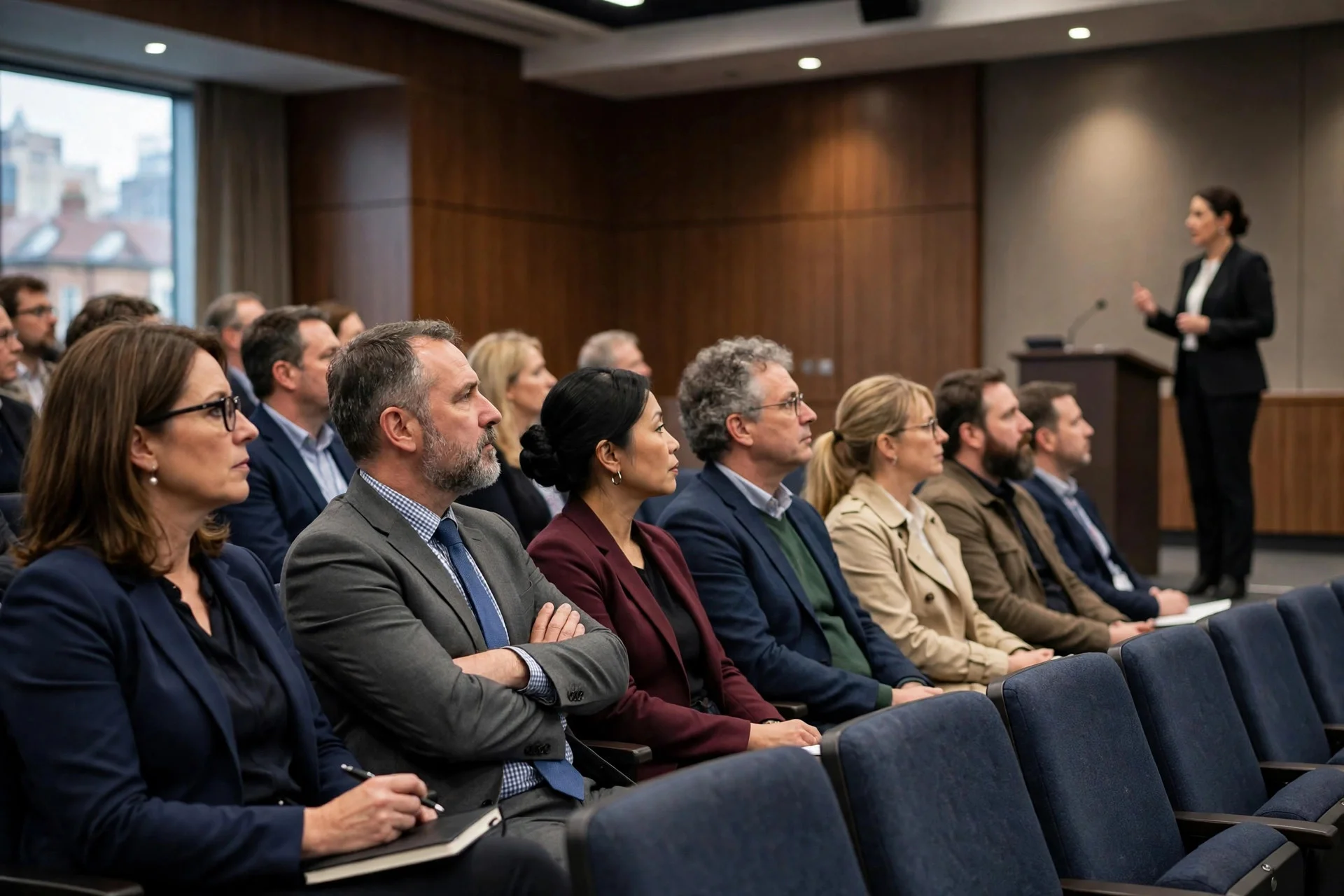
Imagen ilustrativa generada: conferencia educativa con líderes de trusts escolares en Birmingham · Erick Prometeo Media
Ofsted reviews first year of new inspections before trust leaders
In Birmingham, Sir Martyn Oliver reviewed the first year of the renewed inspection framework, reporting just over 4,000 full inspections, 9 out of 10 inclusion…
Ofsted defends context and standards after a year of new inspections
Sir Martyn Oliver told trust leaders in Birmingham that just over 4,000 full inspections in the first year of the renewed framework show strength in inclusion…
--- The context ---
Twelve months have passed since Sir Martyn Oliver, who leads Ofsted as chief inspector, first spoke to trust leaders about a redesigned framework for inspecting education that was then about to begin. Returning to Birmingham for the annual gathering of the Confederation of School Trusts, he treated the anniversary as a chance to pause, hear again from people running schools and trusts, and test the new approach against evidence from its opening year.
The pressures behind that conversation are familiar to Oliver from his own years running schools in places facing deep disadvantage. He named rising need linked to special educational needs, budgets that feel tighter each year, gaps in specialist staffing and support, shrinking pupil numbers in some places, and a further worry shared by many leaders: that an inspection visit could judge a school harshly without fully grasping the difficult local conditions in which its staff work each day.
--- The facts ---
During the opening year under the redesigned framework, Ofsted completed more than four thousand inspections covering schools in full. Published report cards, Oliver noted, continue to show varied outcomes, differing between schools and also inside a single trust, a spread the new card format is meant to capture by surfacing separate strengths and points for improvement.
One outcome appears more frequently than any other: expected standard. In plain terms, it is the typical grade for a centre that meets what is asked of it and gives its pupils a steady, well supported education that prepares them properly for later life. Oliver presented that result as recognition of solid, consistent daily practice.
Results look strongest for inclusion and for personal development. For inclusion, nine of every ten grades reach expected standard or a higher level, and personal development and wellbeing score higher still. Oliver connected that strength to committed work in leadership and governance, an area passing the same threshold in more than eight cases out of ten, a sign, in his reading, that many leaders have clear plans and are making steady progress in putting those plans into practice.
Behaviour and attendance tell a similar story. There, too, the share clearing the threshold stands well beyond eight in ten, a result Oliver highlighted after warnings that weak attendance could pull a school down even when pupil behaviour was good. Achievement stands lower, at close to three in four grades reaching expected standard or a higher level. Curriculum and learning sits between the two, with its share approaching eight in ten grades at that level or beyond it.
Alongside the inspection figures, Ofsted released fresh analysis that day on whether inspectors had weighed local context when judging achievement. When they graded schools during the past year, inspectors did not yet have access to a new comparative tool based on similar schools, so the study checks those earlier grades against that tool only now. Oliver said the comparison shows context was taken seriously in practice, and he added that the tool now forms part of both inspection work and internal quality checks.
--- The positions ---
Oliver argued that trusts began with a clear moral aim: taking responsibility for schools in difficulty so that the children attending them gain access to stronger teaching and wider opportunity in life. He pictured each school as the living centre of its neighbourhood, with the trust providing the conditions and support that let classroom staff give pupils their very best.
Inspection at trust level, he announced, is meant to capture that wider contribution. It would recognise trusts that accept challenging schools and carry out the slow work of turning them around over years, spread effective practice between schools, help families grasp the value a trust can add, examine place and local circumstance, and tackle weak performance by looking across a group of schools rather than at one institution in isolation.
He added that Ofsted is preparing a broader set of changes alongside the Department for Education, to be set out during the coming weeks and months. One part is a pilot for independent review of complaints, following earlier steps including a helpline for providers, a national team handling complaints away from the region concerned, and panels including union and sector representatives.
An interim independent evaluation published last week adds a more mixed note. Oliver reported that most providers described the new inspections as more collaborative in tone, more respectful and more empathetic, and that many viewed report cards as a fairer picture of life for a child at a school. Consistency, especially in secondary schools, plus workload and staff wellbeing, nevertheless remain concerns.
--- What remains unknown ---
No timetable or detailed blueprint has yet been published for inspection at trust level, and its relationship with inspection of single schools remains unclear. The full contents of the wider package being prepared with the Department for Education also remain undisclosed.
--- Unanswered questions ---
How will inspectors demonstrate, in practice, that context has shaped a judgement so that similar schools receive similar outcomes wherever they are located? When does inspection at trust level start, and what consequences will follow for a trust whose schools include some that are still struggling? Will the next round of changes bring a measurable fall in the workload and anxiety that many staff still link to inspection? How will consistency be measured in secondary schools so that any improvement can be verified over time?
--- EPM analysis ---
Taken together, the figures from the opening year and the interim evaluation point the same way. Most grades clear the expected threshold in inclusion, personal development, leadership, attendance and behaviour, while curriculum and achievement trail slightly behind them. At the same time, providers welcome a more collaborative tone yet still question consistency between schools and the pressure placed on staff wellbeing.
📌 EPM Take: In EPM's view, the strength of this first-year account is that Ofsted published its evidence and invited judgement on the record. After more than four thousand inspections, nine of every ten inclusion grades and more than eight of ten leadership grades reaching expected standard or a higher level suggest a demanding framework that is not simply punitive, provided recognition of context becomes uniform practice in every inspection, including in secondary schools where confidence is currently weaker and the need for consistency is greatest for leaders, teachers and families alike. That is also why the design of trust inspection, and whether it genuinely shares responsibility across each trust, will matter as much as the headline grades in judging whether this renewed framework keeps improving during its second year.
--- The context ---
Sir Martyn Oliver came back to Birmingham for the annual gathering of the Confederation of School Trusts, twelve months after addressing the same audience just before a redesigned framework for inspecting education was launched. He explained that recent weeks had been spent recalling life as a headteacher and trust leader, and listening to difficulties school leaders face now across England.
He listed those difficulties plainly: growing demand linked to special educational needs alongside budgets that feel tighter each year, too little specialist staffing and support for children who need it, falling pupil numbers that make future budgets harder to balance, and anxiety about inspection itself, heightened by a fear that a school could face unfair treatment once inspectors arrive at the gates.
--- The facts ---
Across the past year, Ofsted carried out more than four thousand inspections covering schools in full under the redesigned framework. Report cards published since then show varied outcomes between schools and inside trusts, which Oliver described as expected. Their purpose, he argued, is to preserve that nuance by naming concrete strengths and points for improvement instead of reducing performance to one simple label.
No single outcome appears more often than expected standard. Put simply, it is the most frequent grade, received by centres that do what is expected of them and offer pupils a sound, well supported education that prepares them properly for adult life. The pattern across evaluation areas shows where schools meet that benchmark most consistently.
Start with inclusion, where nine of every ten grades reach expected standard or a higher level, with personal development and wellbeing performing higher still. Behind that pattern, Oliver pointed to committed work in leadership and governance, another area clearing the same threshold in more than eight cases out of ten. For him, the figures point to thousands of leaders who hold clear plans and are advancing steadily towards delivering them in practice.
Attendance and behaviour clear the threshold just as strongly, again well beyond eight in ten grades, even though many had feared that weak attendance could pull a result down for a school where pupils behave well. Separate the remaining two figures and the gap becomes clearer. Pupils reaching expected standard or a higher level account for close to three in four achievement grades. For curriculum and learning, by contrast, the share rises towards eight in ten grades at that level or beyond it.
Fresh Ofsted analysis released that day looked again at achievement and context by checking grades from the past year against a newly developed comparison with similar schools. The order matters here: when inspectors graded schools during that earlier year, the new comparative measure for similar schools was not yet available to them. Oliver invited his audience to judge the findings, said they show context being taken seriously, and confirmed that the measure now forms part of inspection work and internal quality checks.
--- The positions ---
Oliver made a firm case for trusts themselves. The sector, in his account, grew out of a wish to do good and a duty to take responsibility for schools in difficulty, and improvement takes time because a trust takes on an entire community, choosing which weaknesses to address first and which existing strengths to build upon for local families over the long term.
From that defence he moved to inspection at trust level as the next phase of accountability. Applied there, inspection could reveal strong work a single school visit cannot capture, spread effective practice, help families grasp the value trusts add, weigh local circumstance, tackle weak performance, and support improvement by viewing several schools together.
Further adjustments prepared alongside the Department for Education will be shared soon, he added. Among changes already announced, one element is a pilot for independent review of complaints, building on a helpline for providers, a national team that handles complaints away from the region concerned, and panels where representatives from unions and the sector examine complaints that have already been closed.
He also turned to the interim independent evaluation published last week. Its encouraging findings, as he reported them, include a large majority of providers describing inspections as more collaborative in tone, more respectful and more empathetic, with most expecting inspection to help their setting improve. Against that, he accepted continuing concerns about consistency, above all in secondary schools, about fair recognition of local circumstance, and about workload and wellbeing among staff.
--- What remains unknown ---
Inspection at trust level has been set out as a direction of travel, but its criteria, its timetable and its consequences are still to be detailed. It also remains unclear which further adjustments will follow the interim evaluation on consistency and wellbeing, and how the wider package being prepared with the Department for Education will be sequenced.
--- Unanswered questions ---
Which criteria and which timetable will govern inspection at trust level so that leaders can plan ahead with confidence and fair notice? How can Ofsted deliver greater consistency in secondary schools while still judging the local circumstance of each separate school on its own merits? Which measurable steps will follow now to reduce the workload and wellbeing pressures that the interim evaluation continues to identify around inspection? When will inspection of trusts actually begin in practice, and will the first round be phased in or applied to all trusts at once?
--- EPM analysis ---
The speech holds encouragement and demand together. Strong results for leadership, inclusion and behaviour support the claim that many trusts are holding standards in hard circumstances, while the lower figures for curriculum and achievement mark where improvement efforts should now concentrate. Inspection at trust level would push accountability upwards, towards the bodies whose choices on teaching, staffing and money shape several schools at the same time.
📌 EPM Take: In EPM's view, accountability carries more weight when it rests on published data and an explicit commitment to judge context fairly, as Oliver set out after more than four thousand inspections. With nine of every ten inclusion grades and more than eight of ten leadership grades reaching expected standard or a higher level, there is real strength to recognise, but the decisive test will be trust inspection itself: applied with the same rigour to those who govern groups of schools, it can make improvement a shared responsibility across the whole structure rather than a burden carried by each school alone.
Ofsted hace balance de un año de inspecciones ante líderes de trusts
Sir Martyn Oliver presentó en Birmingham el balance del primer año del nuevo marco de inspección, con algo más de 4,000 inspecciones completas, 9 de cada 10…
Un año de nuevo marco: Ofsted defiende contexto y resultados escolares
Ante los líderes de trusts en Birmingham, Sir Martyn Oliver defendió el primer año del nuevo marco con algo más de 4,000 inspecciones, destacó liderazgo…
--- El contexto ---
Hace casi exactamente un año, el inspector jefe de Ofsted, Sir Martyn Oliver, se dirigió a los líderes de trusts escolares cuando el renovado marco de inspección educativa estaba a punto de lanzarse. Un año después, ante la conferencia anual de la Confederation of School Trusts en Birmingham, Oliver planteó que ese aniversario era un momento natural para hacer balance, escuchar de nuevo a quienes dirigen centros y revisar con datos cómo está funcionando el nuevo sistema.
Oliver recordó las presiones que él mismo conoce por haber dirigido escuelas en algunas de las zonas más desfavorecidas del país. Señaló el aumento de las necesidades educativas especiales, los recursos que se sienten cada vez más escasos, la falta de personal especializado, la caída de matrículas en algunos centros y la preocupación añadida de que una inspección no trate con justicia a una escuela que trabaja en un contexto difícil.
--- Los hechos ---
Según el balance presentado, Ofsted ha realizado algo más de 4,000 inspecciones escolares completas durante el primer año del nuevo marco. Oliver explicó que las tarjetas de informe publicadas siguen mostrando una mezcla de calificaciones, tanto entre escuelas como dentro de un mismo trust, y que esa variedad es precisamente lo que el nuevo formato busca reflejar al distinguir fortalezas y áreas de mejora en cada centro.
La calificación más frecuente hasta ahora ha sido la de estándar esperado. Oliver la describió como la que reciben las escuelas que hacen todo lo que necesitan hacer bien por su alumnado, ofreciendo una educación sólida y de apoyo que prepara bien a los niños para la vida. No se trata, en su planteamiento, de un aprobado sin matices, sino de reconocer un trabajo correcto y consistente en el día a día.
La distribución por áreas de evaluación muestra los niveles más altos en inclusión y en desarrollo personal. En inclusión, 9 de cada 10 calificaciones se sitúan en estándar esperado o por encima, y en desarrollo personal y bienestar la proporción es aún mayor. Oliver vinculó esos resultados a un liderazgo y una gobernanza dedicados, con más de 8 de cada 10 calificaciones en estándar esperado o superior en esa área.
En asistencia y conducta, también más de 8 de cada 10 calificaciones alcanzan el estándar esperado o lo superan, un dato que Oliver presentó como respuesta a la preocupación de que la mala asistencia arrastrara a la baja a centros donde el alumnado se comporta bien. En currículo y aprendizaje, casi 8 de cada 10 calificaciones están en ese mismo nivel, mientras que en logro la cifra se acerca a casi tres cuartas partes de las calificaciones.
Junto a los datos de inspecciones, Ofsted publicó ese mismo día un análisis sobre cómo los inspectores valoraron el logro teniendo en cuenta el contexto. Ese estudio contrasta las notas del año pasado con la nueva referencia de centros similares; al calificar, los inspectores carecían entonces de esa medida comparativa, y para Oliver los datos muestran que el contexto se toma muy en serio. Además, esa medida de escuelas similares ya se utiliza ahora en las inspecciones y en el control de calidad interno.
--- Las posiciones ---
Oliver defendió que los trusts nacieron con un propósito moral claro: hacerse cargo de escuelas con dificultades y asegurar que su alumnado tenga acceso a una mejor educación y a una mejor vida. Describió a las escuelas como el centro vivo de sus comunidades y a los trusts como el entorno que las sostiene, al permitir compartir prácticas entre centros y sostener mejoras que una escuela aislada difícilmente lograría sola.
Como siguiente paso, Oliver anunció que la inspección de trusts será una vía para reconocer ese trabajo a escala de conjunto. Según explicó, permitirá celebrar cómo un trust asume escuelas y realiza el trabajo difícil y a largo plazo de transformarlas, compartir las mejores prácticas, ayudar a las familias a entender el valor de los trusts y abordar el bajo rendimiento con una mirada más amplia que la de una sola escuela.
Oliver también informó de que Ofsted trabaja estrechamente con el Departamento de Educación en un paquete de cambios que se presentará en las próximas semanas y meses. Dentro de ese paquete, mencionó como un elemento más el piloto de un servicio independiente de revisión de quejas, junto a medidas previas como una línea de ayuda, un centro nacional que tramita quejas fuera de la región de origen y paneles con representación sindical y del sector.
--- Lo que falta saber ---
Todavía no se conocen el calendario ni el diseño detallado de la futura inspección de trusts, ni cómo se articulará con las inspecciones de cada escuela. Tampoco se ha precisado el alcance completo del paquete de cambios acordado con el Departamento de Educación, más allá de los anuncios ya realizados en la conferencia.
--- Preguntas sin respuesta ---
¿Cómo se medirá en la práctica el contexto de cada escuela para que dos centros comparables reciban juicios comparables? ¿Cuándo empezará a aplicarse la inspección de trusts y qué consecuencias tendrá para los trusts con escuelas en dificultades? ¿Lograrán los próximos cambios reducir de forma verificable la carga laboral y la ansiedad que los equipos asocian a la inspección? ¿Qué calendario tendrá la evaluación del piloto de revisión independiente de quejas antes de decidir su continuidad?
--- Análisis EPM ---
El balance del primer año combina dos mensajes que deben leerse juntos. Por un lado, las calificaciones muestran que la mayoría de los centros alcanza el estándar esperado en inclusión, desarrollo personal, liderazgo, asistencia y conducta, con currículo y logro algo por detrás. Por otro, el propio inspector jefe reconoce que el contexto, la consistencia y el bienestar del personal siguen siendo los puntos donde el sistema debe demostrar que escucha.
📌 Conclusion EPM: A juicio de EPM, el valor de este primer balance está en que Ofsted publica sus propios datos y se somete a escrutinio con ellos sobre la mesa. Que 9 de cada 10 calificaciones de inclusión y más de 8 de cada 10 de liderazgo alcancen el estándar esperado o lo superen, tras algo más de 4,000 inspecciones, dibuja un sistema exigente pero no punitivo, siempre que el reconocimiento del contexto deje de ser una declaración y se convierta en práctica uniforme en cada inspección, también en las escuelas secundarias donde hoy la confianza es menor y el margen de mejora resulta más evidente para todos.
--- El contexto ---
La intervención de Sir Martyn Oliver ante la conferencia anual de la Confederation of School Trusts en Birmingham llegó casi exactamente un año después de que él mismo presentara ante ese mismo foro el renovado marco de inspección educativa, justo antes de su lanzamiento. Oliver señaló que había dedicado las últimas semanas a recordar lo que significa dirigir una escuela o un trust y a escuchar los retos actuales de los líderes del sector.
Entre esos retos, Oliver enumeró el crecimiento de las necesidades educativas especiales con recursos cada vez más ajustados, la dificultad para contar con todo el personal especializado necesario, la caída de matrículas y el temor a no ser tratado con justicia el día de la inspección. Desde esa experiencia compartida, planteó que la rendición de cuentas solo funciona si los inspectores ven con claridad el contexto de cada centro y el trabajo real que realiza con sus familias.
--- Los hechos ---
En el primer año del nuevo marco, Ofsted ha completado algo más de 4,000 inspecciones escolares completas. Oliver indicó que las tarjetas de informe publicadas muestran una mezcla de calificaciones entre escuelas y dentro de los trusts, y que el formato actual está pensado para reflejar ese matiz, señalando fortalezas concretas y áreas de mejora en lugar de reducir cada centro a un juicio único y simplificado.
La calificación otorgada con más frecuencia ha sido la de estándar esperado. Según la explicación de Oliver, corresponde a escuelas que hacen todo lo que deben hacer bien por su alumnado y que ofrecen una educación sólida y de apoyo que les prepara bien para la vida. Las áreas con mejores resultados muestran dónde se concentra hoy esa solidez en el conjunto del sistema inspeccionado.
En inclusión, 9 de cada 10 calificaciones se sitúan en estándar esperado o por encima, y en desarrollo personal y bienestar el nivel es todavía mayor. Oliver atribuyó parte de ese avance a un liderazgo y una gobernanza dedicados, área en la que más de 8 de cada 10 calificaciones alcanzan el estándar esperado o lo superan, lo que a su juicio refleja que miles de líderes tienen planes claros y avanzan en su ejecución.
En asistencia y conducta, más de 8 de cada 10 calificaciones llegan al estándar esperado o lo superan, pese a la preocupación previa de que la asistencia deficiente arrastrara los resultados de centros con buen comportamiento. En currículo y aprendizaje son casi 8 de cada 10 las calificaciones en ese nivel, y en logro la proporción se acerca a casi tres cuartas partes, un área donde también existía el temor de que estar por debajo de la media condujera automáticamente a los niveles más bajos.
Ofsted publicó además ese día un análisis sobre la valoración del logro en contexto, comparando las calificaciones del año pasado con la nueva medida de escuelas similares, que los inspectores no tenían disponible entonces. Oliver sostuvo que los datos muestran que el contexto se toma en serio, y explicó que esa medida ya se emplea en las inspecciones y en los procesos internos de aseguramiento de la calidad.
--- Las posiciones ---
Oliver defendió con firmeza el papel de los trusts en la mejora escolar. Señaló que el sector nació de la convicción de hacer algo bueno, asumiendo escuelas en dificultades para dar a su alumnado una oportunidad de mejor educación y mejor vida, y que convertir un centro exige tiempo, porque no se asume solo un edificio, sino una comunidad entera con sus prioridades y sus fortalezas.
Desde esa defensa, Oliver presentó la futura inspección de trusts como el instrumento para reconocer y exigir a esa escala. Según explicó, servirá para mostrar trabajo excelente que hoy no recoge la inspección de una escuela individual, compartir buenas prácticas, valorar el contexto y la localidad, atender el bajo rendimiento donde exista y apoyar la mejora con una visión de conjunto sobre varias escuelas del mismo trust.
Oliver añadió que Ofsted prepara con el Departamento de Educación nuevos ajustes que se compartirán pronto, y citó entre ellos, como un elemento más, el piloto de revisión independiente de quejas, que se suma a la línea de ayuda, al centro nacional de tramitación fuera de la región y a los paneles con representantes sindicales y del sector que ya revisan quejas cerradas.
La evaluación independiente provisional del nuevo marco, publicada la semana pasada, aporta el contrapunto. Según resumió Oliver, la gran mayoría de los centros percibió inspecciones más colaborativas, respetuosas y empáticas, y las tarjetas de informe se consideran una forma más fiel de captar la experiencia del alumnado, aunque persisten retos de consistencia, especialmente en secundaria, y de carga laboral y bienestar.
--- Lo que falta saber ---
No se ha detallado todavía cómo será la inspección de trusts, qué criterios aplicará ni desde cuándo estará vigente. Tampoco se conoce el contenido completo del paquete de cambios en preparación con el Departamento de Educación, ni qué medidas concretas seguirán al diagnóstico de la evaluación independiente provisional sobre consistencia y bienestar.
--- Preguntas sin respuesta ---
¿Qué criterios y qué calendario tendrá la inspección de trusts para que los líderes puedan prepararse con tiempo suficiente? ¿Cómo garantizará Ofsted una consistencia mayor en las escuelas secundarias sin perder la atención al contexto de cada centro? ¿Qué medidas verificables reducirán la carga laboral y la ansiedad asociadas a la inspección en los próximos meses? ¿Qué ajustes concretos vendrán tras la evaluación provisional del nuevo marco y en qué plazo se anunciarán?
--- Análisis EPM ---
El discurso sostiene a la vez exigencia y reconocimiento. Las cifras de liderazgo, inclusión y conducta respaldan a los equipos que mantienen el estándar en contextos difíciles, mientras que currículo y logro, con niveles algo menores, marcan dónde debe concentrarse la mejora. La futura inspección de trusts trasladará parte de esa exigencia desde la escuela individual hacia quienes toman las decisiones educativas, financieras y de personal que condicionan a varias escuelas.
📌 Conclusion EPM: A juicio de EPM, la rendición de cuentas gana credibilidad cuando se apoya en datos publicados y en un reconocimiento explícito del contexto, como hizo Oliver tras algo más de 4,000 inspecciones. Con 9 de cada 10 calificaciones de inclusión y más de 8 de cada 10 de liderazgo en estándar esperado o superior, el sistema muestra fortaleza real, pero su prueba decisiva será la inspección de trusts: si evalúa con la misma exigencia a quienes gobiernan conjuntos de escuelas, la mejora dejará de recaer solo sobre cada centro aislado y alcanzará por fin a toda la estructura responsable.