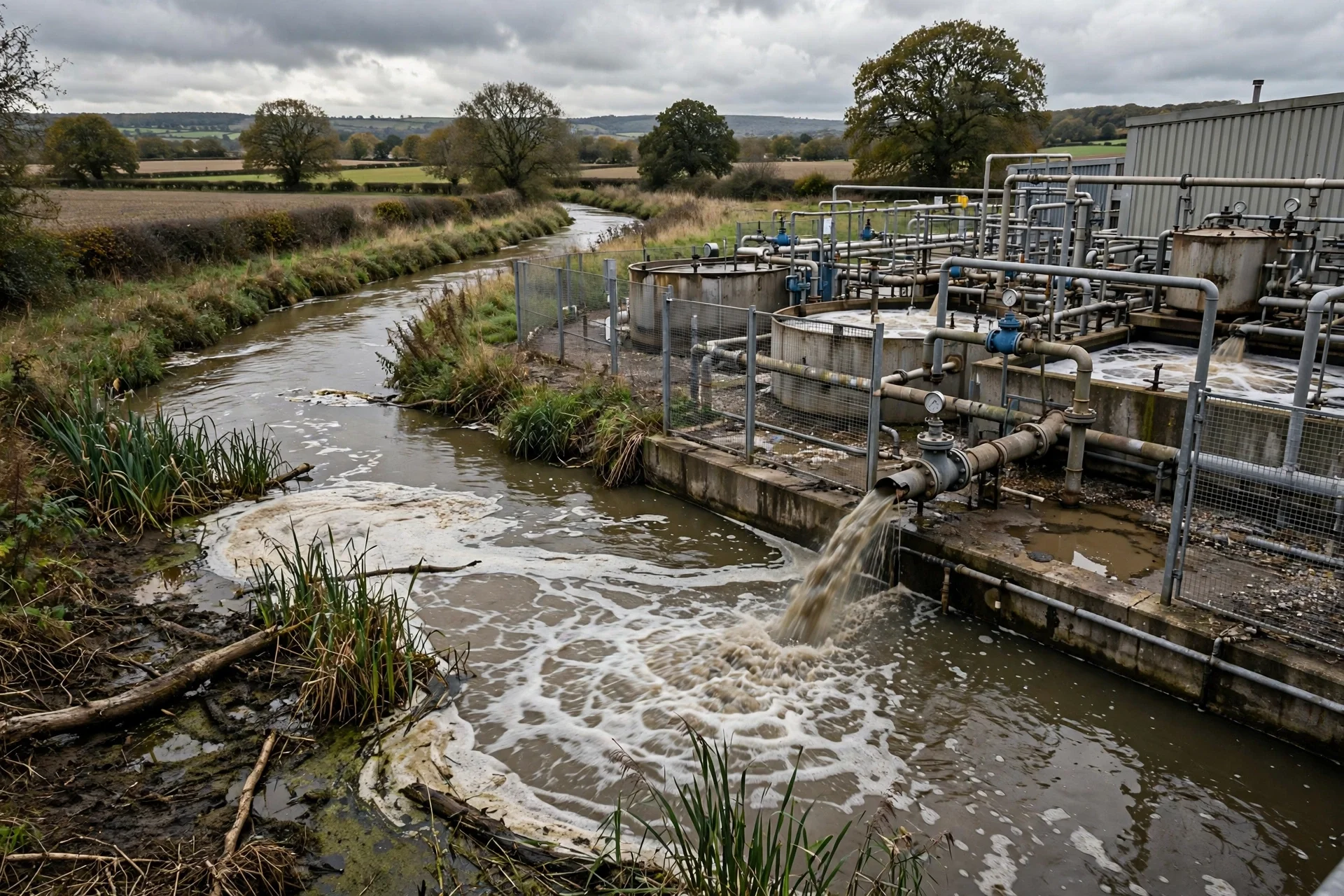
Imagen ilustrativa generada: centro de reciclaje de agua junto a un río de Essex con vertido al cauce · Erick Prometeo Media
Anglian Water fined £1.6m for polluting the River Brain
Anglian Water was fined £1.6m after repeated sewage pollution of the River Brain between April and June 2022, caused by a faulty valve and ignored alarms.
Organisational failure: £1.6m fine for Essex sewage spills
A court fined Anglian Water £1.6m, with costs of £27,334 and a £190 surcharge, over the 2022 River Brain discharges.
--- The context ---
The River Brain runs through Essex between Braintree and Witham, and the communities along its banks depend on its health. For six weeks in 2022, the river received repeated discharges of poorly treated sewage from the Braintree water recycling centre operated by Anglian Water. The case ended with a £1.6m fine for the company, at a time when public oversight of water companies has tightened sharply, with nearly 1,800 inspections of its wastewater sites in the 12 months to March.
--- The facts ---
District judge Timothy King heard that a faulty valve, broken for a week before the first incident in April 2022, allowed a semi-solid sludge that is usually removed from sewage to enter the river. Alarms warning that poorly treated sewage was being discharged were ignored, and staff did not talk to each other about the incidents. The pollution stretched for nearly 14km, monitors found levels of toxic ammonia that were the highest recorded in the river in ten years, and further discharges in late May extended the harm between April and June 2022.
--- The positions ---
The Environment Agency argued that the incidents resulted from organisational failure, because the company did not recognise the risk, did not act on the warning signs and operated outside the law. Its water industry regulatory manager for East Anglia said the agency has significantly stepped up its scrutiny of the industry and will take enforcement action where performance falls short of what communities deserve.
The Environment Secretary said the company had clearly been too slow to act and that the environment paid the price, while defending an overhaul built on tougher regulation, stronger enforcement and greater accountability.
--- What remains unknown ---
Sentencing took place at Cambridge magistrates' court on 15 October, with costs of £27,334 and a £190 surcharge, under charges brought through the Environmental Permitting Regulations 2016. Separately, the company has admitted polluting the Thames Estuary on two occasions, discharging sewage and other harmful material off Southend in 2021 and 2022, and will be sentenced for those offences next April. What concrete internal changes will follow remains unclear, beyond the more than 830 improvement actions already identified by inspectors across its operations.
--- Unanswered questions ---
Why did alarms warning of the discharges go unanswered for so long? What internal changes will ensure that staff report and escalate incidents from the very first day? Will a £1.6m fine change the behaviour of a company rated at two stars in the latest environmental performance assessment?
--- EPM analysis ---
The evidence describes not a single accident but a chain of failures: a broken valve, ignored alarms and internal silence. The wider record points in the same direction, because water companies in England have been prosecuted more than 70 times since 2015, securing £169m in fines. Against that background, this case shows how environmental damage can continue for weeks inside a large operator while warning systems exist on paper but fail in practice, and why enforcement has had to become more intensive and more visible.
📌 EPM Take: In EPM's view, the central failure here was cultural rather than mechanical, because a single broken valve cannot explain six weeks of ignored alarms and unreported incidents along a living river. The £1.6m fine and the sharper inspection regime are necessary steps, yet the real test will come when the next fault is detected, shared and stopped on the same day. Rivers should not have to wait for courtrooms to teach basic vigilance: prevention, not punishment after the fact, must become the industry standard.
--- The context ---
A company entrusted with an essential service has a basic duty: obey the law, maintain its equipment and answer promptly when something goes wrong. Anglian Water failed that duty on the River Brain in Essex, where local mismanagement allowed repeated sewage discharges over six weeks in 2022. A court has now imposed a £1.6m fine, together with costs of £27,334 and a £190 surcharge, in a prosecution brought by the Environment Agency under the Environmental Permitting Regulations 2016.
--- The facts ---
District judge Timothy King heard that a faulty valve at the Braintree water recycling centre, broken for a week before the first incident in April 2022, released a semi-solid sludge that should have been removed from the sewage. Alarms signalling that poorly treated sewage was entering the river were ignored, and staff did not talk to each other about the incidents. The resulting pollution ran for nearly 14km between Braintree and Witham, with toxic ammonia at the highest level recorded in the river in ten years and further discharges following in late May.
--- The positions ---
The Environment Agency concluded that the incidents were the result of organisational failure, with the company failing to recognise risk, failing to act on warning signs and operating outside the law. Its regulatory manager for East Anglia said scrutiny of the water industry has been significantly increased and that enforcement will follow where performance does not meet the standards communities deserve.
The Environment Secretary said the company had been too slow to act and must do better to stop pollution before it happens, as the government overhauls the system with tougher regulation and greater accountability.
--- What remains unknown ---
Still to come is sentencing next April for the two Thames Estuary pollution incidents off Southend in 2021 and 2022, which the company admitted last week. Also unresolved is whether the improvement programme demanded of the company will be delivered in full, after officers completed nearly 1,800 inspections in the 12 months to March and identified more than 830 actions to improve its operations. The company was classified as a two-star performer in the regulator's latest environmental performance assessment.
--- Unanswered questions ---
Who inside the company will take responsibility for the ignored alarms and the breakdown in internal communication? How will management ensure that a broken valve is never again left unnoticed for a full week? Will the more than 830 improvement actions identified by inspectors correct the local management failures behind this case?
--- EPM analysis ---
Read plainly, the file describes a management failure rather than bad luck: broken equipment, disregarded warnings and colleagues who did not speak to one another. The institutional response was firm and orderly, with a proper investigation, clear charges under the 2016 permitting regulations and a sentence combining a fine, costs and a surcharge. The broader record supports that firmness, since water companies have been prosecuted more than 70 times since 2015 with £169m in fines, showing that operational laxity now carries a growing and predictable cost.
📌 EPM Take: In EPM's view, the central lesson is one of corporate responsibility, because a business paid to provide an essential service must maintain its equipment, heed its alarms and answer for its failures without excuses. The £1.6m fine is a fair consequence of an organisational failure established in court, and the stronger inspection regime sends the right signal. It is now for the company's leadership to prove, through maintenance, discipline and delivery, that the trust of customers and riverside communities can be earned back.
Anglian Water, multada con £1.6m por contaminar el River Brain
Anglian Water fue multada con £1.6m por vertidos repetidos de aguas residuales al River Brain entre abril y junio de 2022, causados por una válvula defectuosa…
Fallo organizativo: £1.6m de multa por vertidos en Essex
Un tribunal impuso a Anglian Water una multa de £1.6m, costas de £27,334 y un recargo de £190 por los vertidos al River Brain en 2022.
--- El contexto ---
El River Brain recorre Essex entre Braintree y Witham y sostiene la vida de las comunidades ribereñas. Durante seis semanas de 2022, ese río recibió vertidos repetidos de aguas residuales mal tratadas procedentes del centro de reciclaje de agua de Braintree, operado por Anglian Water. El caso terminó con una multa de £1.6m para la compañía, cuando el control sobre las empresas de agua se ha endurecido en todo el país.
--- Los hechos ---
Ante el juez de distrito Timothy King se expuso que una válvula defectuosa, averiada una semana antes del primer incidente de abril de 2022, permitió que un lodo semisólido que normalmente se retira de las aguas residuales llegara al río. Las alarmas fueron ignoradas y el personal no se comunicó entre sí sobre los incidentes, por lo que la contaminación se extendió durante casi 14km. Los monitores detectaron niveles de amoníaco tóxico que fueron los más altos en el río en diez años, y nuevos vertidos a finales de mayo prolongaron el daño.
--- Las posiciones ---
La Environment Agency sostuvo que los incidentes fueron el resultado de un fallo organizativo de la compañía, que no reconoció el riesgo ni actuó ante las señales de advertencia y operó fuera de la ley. Su responsable de regulación para East Anglia afirmó que el organismo ha intensificado notablemente el escrutinio sobre la industria del agua y que actuará cuando el rendimiento no alcance lo que merecen las comunidades.
La secretaria de Medio Ambiente señaló, por su parte, que la empresa actuó con demasiada lentitud y que el entorno pagó el precio, y defendió una reforma del sistema con regulación más dura y mayor rendición de cuentas.
--- Lo que falta saber ---
La sentencia se dictó en el tribunal de magistrados de Cambridge el 15 de octubre, con costas de £27,334 y un recargo de £190, bajo las Environmental Permitting Regulations 2016. Por separado, la compañía admitió haber contaminado el estuario del Támesis en dos ocasiones, con vertidos frente a Southend en 2021 y 2022, y será sentenciada el próximo abril. No consta aún qué medidas adoptará la empresa para evitar que una avería similar pase inadvertida durante semanas.
--- Preguntas sin respuesta ---
¿Por qué las alarmas que advertían de los vertidos quedaron sin respuesta durante tanto tiempo? ¿Qué cambios internos aplicará la compañía para que su personal comunique y escale los incidentes desde el primer día? ¿Bastará una multa de £1.6m para cambiar el comportamiento de una empresa clasificada con dos estrellas en la última evaluación de rendimiento ambiental?
--- Análisis EPM ---
El caso no describe un accidente aislado, sino una cadena de fallos: una válvula rota, alarmas ignoradas y silencio interno. En los 12 meses hasta marzo, los inspectores completaron casi 1,800 inspecciones en instalaciones de la compañía y señalaron más de 830 acciones de mejora. Desde 2015, las compañías de agua han sido condenadas más de 70 veces, con £169m en multas: la sanción económica es ya una herramienta habitual frente al vertido ilegal.
📌 Conclusion EPM: A juicio de EPM, este caso demuestra que el problema no fue una válvula, sino una cultura interna que normalizó ignorar las alarmas mientras el río absorbía el daño durante seis semanas. La multa de £1.6m y el refuerzo de las inspecciones son pasos necesarios, pero la prueba real llegará cuando una avería similar se detecte, se comunique y se detenga el mismo día. Los ríos no pueden esperar a que las empresas aprendan a base de sentencias: la prevención, y no la sanción posterior, debe convertirse en la norma del sector.
--- El contexto ---
Las empresas que prestan un servicio esencial tienen una obligación básica: cumplir la ley y responder cuando algo falla. Anglian Water no lo hizo en el River Brain, en Essex, donde una gestión local deficiente permitió vertidos repetidos durante seis semanas de 2022. El tribunal impuso una multa de £1.6m, costas de £27,334 y un recargo de £190, en un proceso bajo las Environmental Permitting Regulations 2016.
--- Los hechos ---
El juez de distrito Timothy King escuchó que una válvula defectuosa en el centro de reciclaje de agua de Braintree, rota una semana antes del primer incidente de abril de 2022, dejó pasar un lodo semisólido que debía retirarse de las aguas residuales. Las alarmas que avisaban de vertidos mal tratados fueron ignoradas y el personal no se habló entre sí de los incidentes. El resultado fue una contaminación de casi 14km entre Braintree y Witham, con niveles de amoníaco tóxico que marcaron el registro más alto del río en diez años y nuevos episodios a finales de mayo.
--- Las posiciones ---
La Environment Agency atribuyó los hechos a un fallo organizativo: la empresa no reconoció el riesgo, no actuó ante las advertencias y operó fuera de la ley. Su responsable de regulación en East Anglia aseguró que el organismo ha reforzado el escrutinio sobre la industria y que intervendrá cuando el rendimiento no sea el que merecen las comunidades.
La secretaria de Medio Ambiente afirmó que la compañía fue demasiado lenta y debe hacerlo mejor para detener la contaminación antes de que ocurra, dentro de una reforma con regulación más estricta.
--- Lo que falta saber ---
Queda pendiente la sentencia, el próximo abril, por los dos vertidos en el estuario del Támesis frente a Southend en 2021 y 2022 que la propia empresa admitió la semana pasada. También está por verse si los planes de mejora exigidos se cumplen en plazo: en los 12 meses hasta marzo se completaron casi 1,800 inspecciones en sus instalaciones y se identificaron más de 830 acciones de mejora. La compañía figura como empresa de dos estrellas en la última evaluación de rendimiento ambiental del regulador.
--- Preguntas sin respuesta ---
¿Quién asumirá responsabilidades internas por ignorar las alarmas y no comunicar los incidentes? ¿Cómo garantizará la empresa que una válvula averiada no vuelva a pasar desapercibida durante una semana entera? ¿Servirán las más de 830 acciones de mejora identificadas para corregir la gestión local que originó el caso?
--- Análisis EPM ---
El expediente dibuja un problema de gestión, no de mala suerte: equipos averiados, avisos desatendidos y comunicación interna fallida. La respuesta institucional ha sido firme y ordenada: investigación, cargos claros bajo la normativa de permisos ambientales de 2016 y una sentencia con multa, costas y recargo. El dato de fondo refuerza esa línea: desde 2015 las compañías de agua han sido condenadas más de 70 veces, con £169m en multas, lo que confirma que la laxitud operativa tiene un coste creciente y previsible para quien la practica.
📌 Conclusion EPM: A juicio de EPM, la lección central es de responsabilidad empresarial: quien cobra por un servicio esencial debe mantener sus equipos, atender sus alarmas y rendir cuentas cuando falla, sin excusas. La multa de £1.6m es una consecuencia justa de un fallo organizativo reconocido en sede judicial, y el refuerzo inspector envía el mensaje correcto. Ahora corresponde a la dirección demostrar con hechos, mantenimiento y disciplina interna que la confianza de los clientes y de las comunidades ribereñas puede recuperarse y no volver a traicionarse.