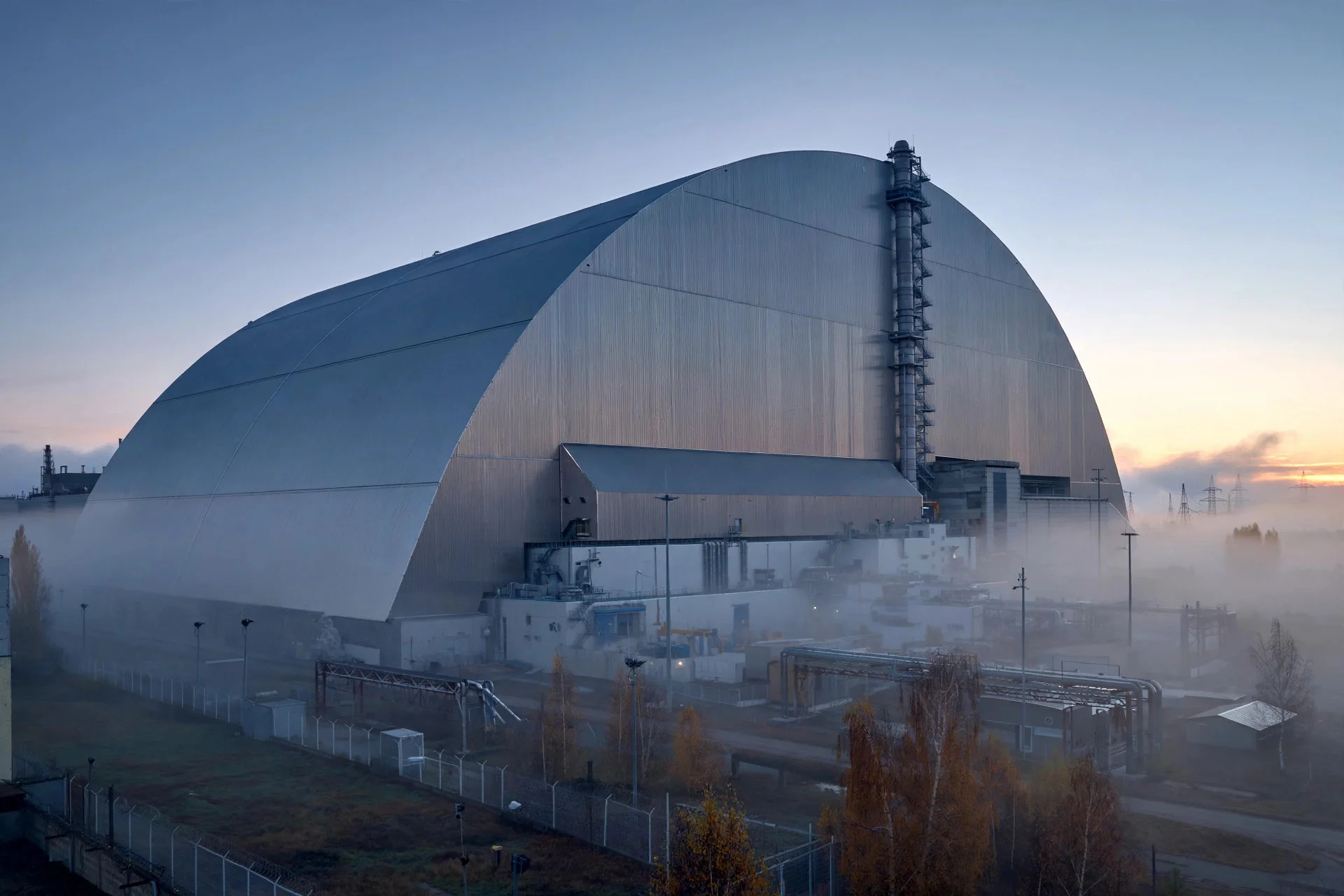
Imagen ilustrativa generada: la estructura de confinamiento en arco de Chernóbil al amanecer. · Erick Prometeo Media
United Kingdom funds repairs to Chernobyl safety shelter
The United Kingdom will contribute 17 million pounds to repair the Chernobyl safety shelter, damaged by a Russian attack, under a programme coordinated with…
London backs Chernobyl confinement repairs amid Russian attacks
The United Kingdom will allocate 17 million pounds to repair the Chernobyl safety shelter, damaged by a Russian attack, in a programme coordinated with Ukraine…
--- The context ---
The safety shelter at the Chernobyl nuclear plant in Ukraine was damaged by a Russian attack last year and needs repairs. Prolonged deterioration could bring environmental consequences and long-term risks that extend beyond Ukraine.
--- The facts ---
The British government announced a contribution of 17 million pounds, just over 20 million euros, to finance repairs to the shelter. The funding is part of an international programme coordinated by the European Bank for Reconstruction and Development, with participation from Ukraine and the G7 donors.
The work will restore the protective structure's confinement and ventilation functions and preserve its intended service life. Without intervention, the British government warned, corrosion could be encouraged and decades of international investment in the safety of the site could be compromised.
The announcement coincided with a new escalation of Russian attacks on Ukrainian energy facilities. After his first trip to Kyiv since taking office, the foreign minister had also announced a winter package of 54 million pounds, 63.7 million euros, with 20 million pounds for energy, electricity and heating in homes.
--- The positions ---
Finance minister John Healey said that the British commitment to Ukraine remains firm despite the prolongation of the Russian invasion, and defended combining economic measures against Moscow with support for reconstruction. Foreign minister Ed Miliband linked the aid to strengthening Ukrainian security alongside allies and raising the cost of Russian aggression.
--- What remains unknown ---
The announcement does not detail the timetable for the repairs or the full technical extent of the damage. It also does not specify how the programme will be carried out with Ukraine and the donors, or what follow-up the recovery of confinement and ventilation will have.
--- Unanswered questions ---
When will the repairs begin and how long will the shelter take to recover its confinement and ventilation? Will the contribution be enough to halt corrosion and preserve the structure's intended service life? What measures will Ukraine and the donors adopt if Russian attacks continue?
--- EPM analysis ---
The decision treats nuclear safety as a shared good that requires sustained cooperation. Protecting confinement also protects the environment and communities exposed to long-term risks, and the energy support recognises that safety includes keeping electricity and heating in Ukrainian homes.
📌 EPM Take: In EPM's view, repairing the Chernobyl shelter is a shared safety obligation and not a secondary gesture within aid to Ukraine. Every delay increases the risk of corrosion and long-term environmental harm, while acting now protects decades of international effort. The British contribution is right to link nuclear safety with winter energy support, because preserving confinement and keeping light and heating protect the same civilian population and neighbouring communities that share the same environmental risk.
--- The context ---
The safety shelter at the Chernobyl nuclear plant in Ukraine was damaged by a Russian attack last year, amid continuing attacks on Ukrainian strategic infrastructure. Allowing it to deteriorate would put decades of international investment and the safety of the site at risk.
--- The facts ---
The British government announced a contribution of 17 million pounds, just over 20 million euros, to finance repairs to the shelter. The funding is part of an international programme coordinated by the European Bank for Reconstruction and Development, with participation from Ukraine and the G7 donors.
The allocation will restore the protective structure's confinement and ventilation functions and preserve its intended service life. Without intervention, the British government explained, corrosion could be encouraged and the safety of the site compromised, with long-term risks.
The announcement followed the reception at Downing Street of Ukrainian president Volodimir Zelenski by British prime minister Andy Burnham, who urged intensifying pressure on Russia. It also follows the winter package of 54 million pounds, 63.7 million euros, with 20 million pounds for energy, electricity and heating in homes.
--- The positions ---
Finance minister John Healey said that the British commitment to Ukraine remains firm despite the prolongation of the Russian invasion, and defended reducing the funds for Moscow's war while supporting reconstruction. Foreign minister Ed Miliband held that, together with allies, Ukrainian security is being strengthened and the cost of Russian aggression increased.
--- What remains unknown ---
The announcement does not specify the deadlines for the repairs or the technical detail of all the damage. It also does not detail how execution will be shared within the programme with Ukraine and the donors, or the timetable to restore confinement and ventilation.
--- Unanswered questions ---
When will the work begin and how long will the shelter take to recover its confinement and ventilation? Will the funding be sufficient to prevent corrosion and preserve the structure's intended service life? Will allies intensify pressure on Russia if energy attacks continue?
--- EPM analysis ---
The funding sends a signal of firmness: every attack on strategic infrastructure will meet a response and Ukrainian reconstruction will keep allied backing. Repairing the shelter also protects an international investment built over decades and raises the cost of striking energy and nuclear facilities.
📌 EPM Take: In EPM's view, financing the repair of the Chernobyl shelter is a decision of allied firmness and basic protection of nuclear safety. Allowing Russian damage to deteriorate confinement would cheapen aggression and put decades of international investment at risk, while repairing now preserves the structure and raises the cost for Moscow. British support coherently combines economic pressure on Russia, winter energy backing and defence of a site whose safety matters to the whole region.
Reino Unido financia la reparación del refugio de Chernóbil
Reino Unido aportará 17 millones de libras para reparar el refugio de seguridad de Chernóbil, dañado por un ataque ruso, dentro de un programa coordinado con…
Londres aporta fondos para restaurar el confinamiento de Chernóbil
Reino Unido destinará 17 millones de libras a reparar el refugio de seguridad de Chernóbil, dañado por un ataque ruso, en un programa coordinado con Ucrania y…
--- El contexto ---
El refugio de seguridad de la central nuclear de Chernóbil, en Ucrania, resultó dañado por un ataque ruso el año pasado y necesita reparaciones. Su deterioro prolongado podría tener consecuencias ambientales y riesgos a largo plazo que trascienden las fronteras ucranianas.
--- Los hechos ---
El Gobierno británico anunció una aportación de 17 millones de libras, algo más de 20 millones de euros, para financiar las reparaciones del refugio. La ayuda se enmarca en un programa internacional coordinado por el Banco Europeo de Reconstrucción y Desarrollo, con participación de Ucrania y de los donantes del G7.
Los trabajos permitirán recuperar las funciones de confinamiento y ventilación de la estructura protectora y preservar su vida útil prevista. Sin intervención, advirtió el Ejecutivo británico, podría favorecerse la corrosión y comprometerse décadas de inversiones internacionales en la seguridad del emplazamiento.
El anuncio coincidió con una nueva escalada de los ataques rusos contra instalaciones energéticas ucranianas. Tras su primer viaje a Kiev desde su llegada al cargo, el ministro de Exteriores había anunciado además un paquete invernal de 54 millones de libras, 63,7 millones de euros, con 20 millones de libras para energía, electricidad y calefacción en los hogares.
--- Las posiciones ---
El ministro de Hacienda, John Healey, aseguró que el compromiso británico con Ucrania se mantiene pese a la prolongación de la invasión rusa, y defendió combinar las medidas económicas contra Moscú con el apoyo a la reconstrucción. El ministro de Exteriores, Ed Miliband, vinculó la ayuda con reforzar la seguridad ucraniana junto a los aliados y elevar el coste de la agresión rusa.
--- Lo que falta saber ---
El anuncio no detalla el calendario de las reparaciones ni el alcance técnico completo de los daños. Tampoco precisa cómo se ejecutará el programa junto a Ucrania y los donantes, ni qué seguimiento tendrá la recuperación del confinamiento y la ventilación.
--- Preguntas sin respuesta ---
¿Cuándo comenzarán las reparaciones y cuánto tardará el refugio en recuperar su confinamiento y su ventilación? ¿Alcanzará la aportación para frenar la corrosión y preservar la vida útil de la estructura? ¿Qué medidas adoptarán Ucrania y los donantes si continúan los ataques rusos?
--- Análisis EPM ---
La decisión trata la seguridad nuclear como un bien común que exige cooperación sostenida. Proteger el confinamiento es también proteger el entorno y a las comunidades expuestas a riesgos duraderos, y el apoyo energético reconoce que la seguridad incluye mantener electricidad y calefacción en los hogares.
📌 Conclusion EPM: A juicio de EPM, reparar el refugio de Chernóbil es una obligación de seguridad compartida y no un gesto accesorio dentro de la ayuda a Ucrania. Cada demora aumenta el riesgo de corrosión y de daños ambientales duraderos, mientras que actuar ahora protege décadas de esfuerzo internacional. La aportación británica acierta al unir la seguridad nuclear con el respaldo energético invernal, porque preservar el confinamiento y mantener luz y calefacción protegen a la misma población civil.
--- El contexto ---
El refugio de seguridad de la central nuclear de Chernóbil, en Ucrania, resultó dañado por un ataque ruso el año pasado, en medio de los ataques continuos contra infraestructuras estratégicas ucranianas. Dejar que se deteriore pondría en riesgo décadas de inversiones internacionales y la seguridad del emplazamiento.
--- Los hechos ---
El Gobierno británico anunció una aportación de 17 millones de libras, algo más de 20 millones de euros, para financiar las reparaciones del refugio. La financiación forma parte de un programa internacional coordinado por el Banco Europeo de Reconstrucción y Desarrollo, con participación de Ucrania y de los donantes del G7.
La dotación permitirá recuperar las funciones de confinamiento y ventilación de la estructura protectora y preservar su vida útil prevista. Sin intervención, explicó el Ejecutivo británico, podría favorecerse la corrosión y comprometerse la seguridad del emplazamiento, con riesgos a largo plazo.
El anuncio llegó tras la recepción en Downing Street del presidente ucraniano, Volodimir Zelenski, por el primer ministro británico, Andy Burnham, que instó a intensificar la presión sobre Rusia. También sigue al paquete invernal de 54 millones de libras, 63,7 millones de euros, con 20 millones de libras para energía, electricidad y calefacción en los hogares.
--- Las posiciones ---
El ministro de Hacienda, John Healey, aseguró que el compromiso británico con Ucrania se mantiene pese a la prolongación de la invasión rusa, y defendió reducir los fondos para la guerra de Moscú mientras se apoya la reconstrucción. El ministro de Exteriores, Ed Miliband, sostuvo que, junto a los aliados, se refuerza la seguridad ucraniana y se aumenta el coste de la agresión rusa.
--- Lo que falta saber ---
El anuncio no precisa los plazos de las reparaciones ni el detalle técnico de todos los daños. Tampoco detalla el reparto de la ejecución dentro del programa con Ucrania y los donantes, ni el plazo para restablecer ambas funciones.
--- Preguntas sin respuesta ---
¿Cuándo empezarán los trabajos y cuánto tardará el refugio en recuperar su confinamiento y su ventilación? ¿Será suficiente la financiación para evitar la corrosión y preservar la vida útil de la estructura? ¿Intensificarán los aliados la presión sobre Rusia si continúan los ataques energéticos?
--- Análisis EPM ---
La financiación envía una señal de firmeza: cada ataque tendrá respuesta y la reconstrucción ucraniana seguirá con respaldo aliado. Reparar el refugio protege además una inversión internacional de décadas y eleva el coste de golpear instalaciones energéticas y nucleares.
📌 Conclusion EPM: A juicio de EPM, financiar la reparación del refugio de Chernóbil es una decisión de firmeza aliada y de protección elemental de la seguridad nuclear. Permitir que el daño ruso deteriore el confinamiento abarataría la agresión y pondría en riesgo décadas de inversión internacional, mientras que reparar ahora preserva la estructura y eleva el coste para Moscú. El apoyo británico combina con coherencia presión económica sobre Rusia, respaldo energético invernal y defensa de un emplazamiento cuya seguridad interesa a toda la región.