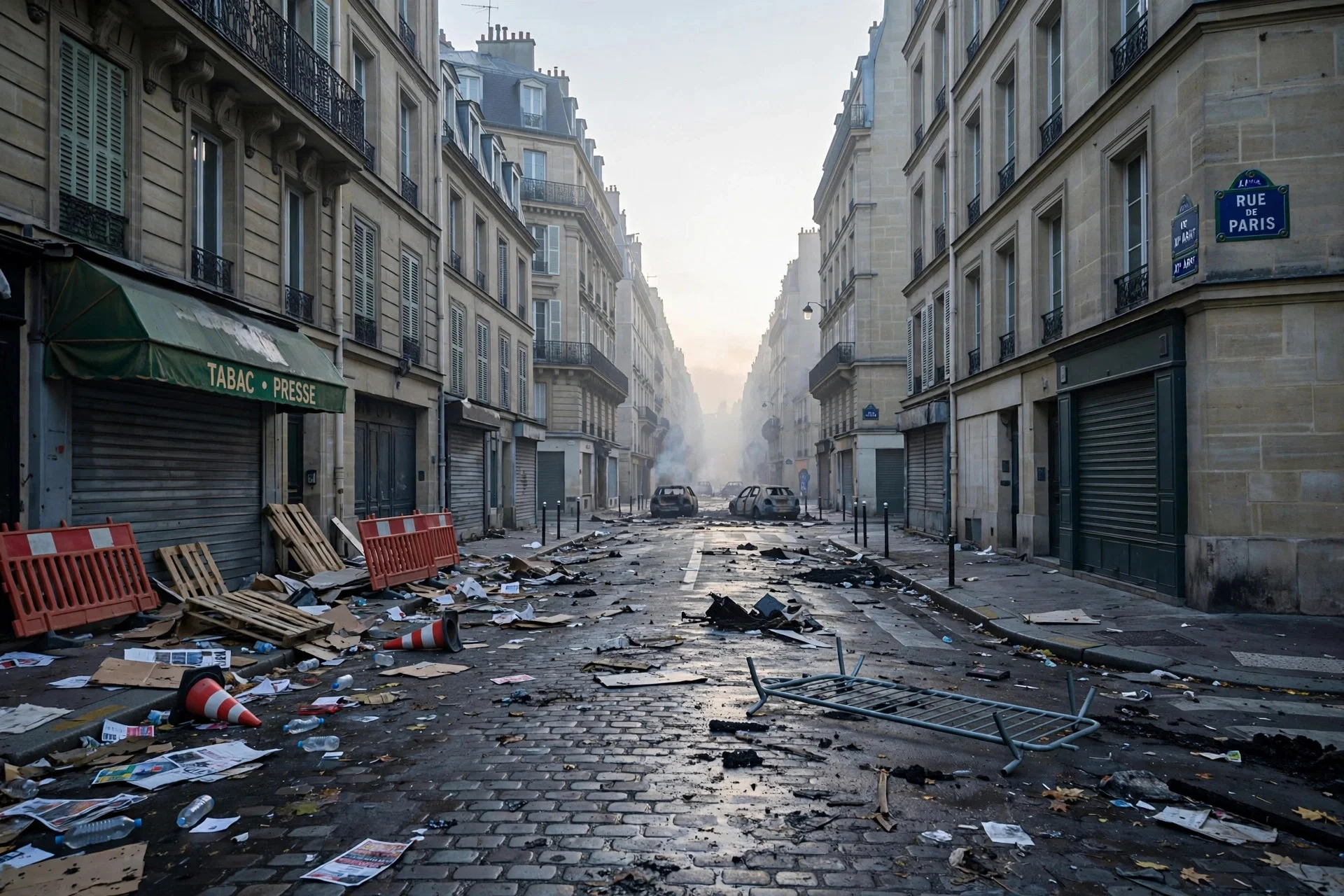
Una calle de París al amanecer, con restos de la jornada de protestas del sábado. · Imagen generada EPM
France reports more than 1,800 arrests after Saturday protests
France reported more than 1,800 detainees after Saturday protests against the rising cost of living, with between 550,000 and 800,000 participants according to…
France toughens response after a day of protests and unrest
The government of France reported more than 1,800 detainees after Saturday protests, with looting, fires and 150 police officers and gendarmes injured…
--- The context ---
France saw a day of protests on Saturday against the rising cost of living, six months before the presidential election. The mobilization began on social media under the slogan Yellow and Young, with yellow vests, young people, farmers, teachers, climate activists and retirees.
The protest recalled the yellow vest mobilizations of 2018 and 2019. This time high school students joined in, demanding better study conditions, in a climate marked by the rising cost of fuel.
--- The facts ---
Interior Minister Laurent Nuñez reported on Sunday that the protests left more than 1,800 detainees. Between 550,000 and 800,000 people took part in the marches, according to the authorities and the organizers. Prime Minister Sébastien Lecornu reported 150 police officers and gendarmes injured and argued in reported speech that it is a miracle the figure is not higher.
In Paris, vehicles were set on fire and shops looted, and damage was recorded to prefectures, shops and town halls, including the fire at the Limoges town hall and attacks in Marseille and Lille. Police conduct came under scrutiny after a protester lost a hand in Saint-Étienne from the explosion of a grenade launched by officers, according to a source close to the matter.
--- The positions ---
Nuñez announced investigations to identify those responsible for the incidents and bring them before justice. President Emmanuel Macron argued in reported speech that those who destroyed prefectures and shops, and looted town halls, will be pursued and punished. Paris Mayor Emmanuel Grégoire described in reported speech entire streets methodically devastated.
Justice Minister Gérald Darmanin called for preventive detention for the perpetrators of what he described in reported speech as urban violence of unprecedented seriousness. Lecornu linked the events to France Unbowed, the radical left party of Jean-Luc Mélenchon, and noted in reported speech that his government will not be intimidated.
--- What remains unknown ---
It is still unknown how many of the more than 1,800 detainees will be brought before justice and whether there will be changes in the use of stun grenades after the Saint-Étienne case. It is also unclear how the budget for 2027 will advance, with a fiscal adjustment of 54,000 million euros.
--- Unanswered questions ---
How many of the detainees will face charges before justice? Will the government change its policy on the use of stun grenades in urban unrest? Can the fiscal adjustment of 54,000 million euros be approved in this social climate? Will the mobilizations be repeated in the coming weeks?
--- EPM analysis ---
The day combined a broad economic grievance with episodes of violence. Two thirds of French people supported the return of the yellow vests in mid-September, according to a poll, and in Guéret some 300 people exposed discontent over the deterioration of purchasing power.
François Boulo, a well-known yellow vest figure, argued in reported speech that the youth of France has burst onto the scene and given them back hope. That renewal broadens the social base of the grievance while the government seeks to approve a demanding adjustment.
📌 EPM Take:
In EPM's view, France faces a protest with real economic roots and a state response that hardens its tone six months before voting, so the government's challenge will be to separate with facts and with justice the legitimate grievance over purchasing power from the violence recorded in the streets, without losing sight of the fact that behind the unrest there is widespread discontent over the cost of living that no police operation can resolve on its own in the coming months ahead.
--- The context ---
France saw a day of protests on Saturday against the rising cost of living that led to looting, fires and clashes with police, six months before the presidential election. The call arose on social media under the slogan Yellow and Young, with yellow vests, young people, farmers, teachers, climate activists and retirees.
The protest recalled the yellow vest mobilizations of 2018 and 2019. This time high school students joined in, demanding better study conditions.
--- The facts ---
Interior Minister Laurent Nuñez reported on Sunday that the protests left more than 1,800 detainees and announced investigations to identify the perpetrators of the acts and bring them before justice. Between 550,000 and 800,000 people took part in the marches, according to the authorities and the organizers.
Prime Minister Sébastien Lecornu reported 150 police officers and gendarmes injured and argued in reported speech that it is a miracle the figure is not higher. In Paris, vehicles were set on fire and shops looted, and damage was recorded to prefectures, shops and town halls, including the fire at the Limoges town hall and attacks in Marseille and Lille. A protester lost a hand in Saint-Étienne from the explosion of a grenade launched by officers, according to a source close to the matter.
--- The positions ---
President Emmanuel Macron argued in reported speech that those who destroyed prefectures and shops, and looted town halls, will be pursued and punished. Paris Mayor Emmanuel Grégoire described in reported speech entire streets methodically devastated.
Justice Minister Gérald Darmanin called for preventive detention for the perpetrators of what he described in reported speech as urban violence of unprecedented seriousness. Lecornu linked the events to France Unbowed, the radical left party of Jean-Luc Mélenchon, and noted in reported speech that his government will not be intimidated. Nuñez had warned that police could use stun grenades in urban unrest.
--- What remains unknown ---
It remains to be seen how many of the more than 1,800 detainees will be brought before justice and what precautionary measures will be applied to those accused. It is also unknown whether the debate over stun grenades will lead to new restrictions, or how the budget for 2027 will advance, with a fiscal adjustment of 54,000 million euros.
--- Unanswered questions ---
Will there be preventive detention for the main accused over the unrest? Will all those identified by the ongoing investigations answer before justice? Will the mobilizations return to the streets in the coming weeks? Can the government approve the adjustment of 54,000 million euros while maintaining public order?
--- EPM analysis ---
The underlying discontent is economic: two thirds of French people supported the return of the yellow vests in mid-September, according to a poll, and in Guéret some 300 people exposed the deterioration of purchasing power.
François Boulo, a well-known yellow vest figure, argued in reported speech that the youth of France has burst onto the scene and given them back hope. That energy coexisted on Saturday with violence that damaged shops, town halls and vehicles, and left 150 officers injured.
📌 EPM Take:
In EPM's view, public order is the first obligation of the State and France did well to announce investigations and firm judicial consequences after a day with looting and fires, because no economic grievance, however legitimate, justifies devastating streets or attacking town halls; at the same time, the scale of participation shows discontent over the cost of living that the government will have to address with concrete economic results if it wants to prevent the protest from repeating and growing toward the presidential election.
Francia reporta más de 1.800 detenidos tras las protestas del sábado
Francia reportó más de 1.800 detenidos tras las protestas del sábado contra el encarecimiento de la vida, con entre 550.000 y 800.000 participantes según…
Francia endurece su respuesta tras una jornada de protestas y disturbios
El gobierno de Francia reportó más de 1.800 detenidos tras las protestas del sábado, con saqueos, incendios y 150 policías y gendarmes heridos según el primer…
--- El contexto ---
Francia vivió el sábado una jornada de protestas contra el encarecimiento de la vida, a seis meses de la elección presidencial. La movilización nació en las redes sociales bajo el lema Amarillos y Jóvenes, con chalecos amarillos, jóvenes, campesinos, docentes, activistas climáticos y jubilados.
La protesta recordó las movilizaciones de los chalecos amarillos de 2018 y 2019. Esta vez se sumaron estudiantes de liceos que reclaman mejores condiciones de estudio, en un clima marcado por el aumento del costo del combustible.
--- Los hechos ---
El ministro del Interior, Laurent Nuñez, informó el domingo que las protestas dejaron más de 1.800 detenidos. Entre 550.000 y 800.000 personas participaron de las marchas, según las autoridades y los organizadores. El primer ministro, Sébastien Lecornu, reportó 150 policías y gendarmes heridos y sostuvo en indirecto que es un milagro que la cifra no sea más alta.
En París hubo vehículos incendiados y locales saqueados, y se registraron daños en prefecturas, comercios y ayuntamientos, entre ellos el incendio de la alcaldía de Limoges y ataques en Marsella y Lille. La actuación policial quedó bajo escrutinio después de que un manifestante perdiera una mano en Saint-Étienne por la explosión de una granada lanzada por los agentes, según una fuente cercana.
--- Las posiciones ---
Nuñez anunció investigaciones para identificar a los responsables de los incidentes y llevarlos ante la justicia. El presidente, Emmanuel Macron, sostuvo en indirecto que quienes destruyeron prefecturas y comercios, y saquearon ayuntamientos, serán perseguidos y castigados. El alcalde de París, Emmanuel Grégoire, describió en indirecto calles enteras devastadas de manera metódica.
El ministro de Justicia, Gérald Darmanin, reclamó prisión preventiva para los autores de lo que describió en indirecto como violencias urbanas de una gravedad inaudita. Lecornu vinculó los hechos con La Francia Insumisa, el partido de izquierda radical de Jean-Luc Mélenchon, y señaló en indirecto que su gobierno no se dejará intimidar.
--- Lo que falta saber ---
Falta por conocerse cuántos de los más de 1.800 detenidos serán llevados ante la justicia y si habrá cambios en el uso de granadas aturdidoras tras el caso de Saint-Étienne. Tampoco está claro cómo avanzará el presupuesto para 2027, que contempla un ajuste fiscal de 54.000 millones de euros.
--- Preguntas sin respuesta ---
¿Cuántas de las personas detenidas enfrentarán cargos ante la justicia? ¿Cambiará el gobierno su política sobre el uso de granadas aturdidoras en disturbios urbanos? ¿Podrá aprobarse el ajuste fiscal de 54.000 millones de euros en este clima social? ¿Se repetirán las movilizaciones en las próximas semanas?
--- Análisis EPM ---
La jornada combinó un reclamo económico amplio con episodios de violencia. Dos tercios de los franceses apoyaban el regreso de los chalecos amarillos a mediados de septiembre, según un sondeo, y en Guéret unas 300 personas expusieron el malestar por el deterioro del poder adquisitivo.
François Boulo, figura conocida de los chalecos amarillos, sostuvo en indirecto que la juventud de Francia ha irrumpido en escena y les ha devuelto la esperanza. Esa renovación amplía la base social del reclamo mientras el gobierno busca aprobar un ajuste exigente.
📌 Conclusion EPM:
A juicio de EPM, Francia enfrenta una protesta con raíces económicas reales y una respuesta estatal que endurece el tono a seis meses de votar, por lo que el desafío del gobierno será separar con hechos y con justicia el reclamo legítimo por el poder adquisitivo de la violencia registrada en las calles, sin perder de vista que detrás de los disturbios hay un malestar extendido por el costo de la vida que ningún operativo policial podrá resolver por sí solo en los próximos meses.
--- El contexto ---
Francia vivió el sábado una jornada de protestas contra el encarecimiento de la vida que derivó en saqueos, incendios y choques con la policía, a seis meses de la elección presidencial. La convocatoria surgió en las redes sociales bajo el lema Amarillos y Jóvenes, con chalecos amarillos, jóvenes, campesinos, docentes, activistas climáticos y jubilados.
La protesta recordó las movilizaciones de los chalecos amarillos de 2018 y 2019. Esta vez se incorporaron estudiantes de liceos que reclaman mejores condiciones de estudio.
--- Los hechos ---
El ministro del Interior, Laurent Nuñez, informó el domingo que las protestas dejaron más de 1.800 detenidos y anunció investigaciones para identificar a los autores de los actos y llevarlos ante la justicia. Entre 550.000 y 800.000 personas participaron de las marchas, según las autoridades y los organizadores.
El primer ministro, Sébastien Lecornu, reportó 150 policías y gendarmes heridos y sostuvo en indirecto que es un milagro que la cifra no sea más alta. En París hubo vehículos incendiados y locales saqueados, y se registraron daños en prefecturas, comercios y ayuntamientos, entre ellos el incendio de la alcaldía de Limoges y ataques en Marsella y Lille. Un manifestante perdió una mano en Saint-Étienne por la explosión de una granada lanzada por los agentes, según una fuente cercana.
--- Las posiciones ---
El presidente, Emmanuel Macron, sostuvo en indirecto que quienes destruyeron prefecturas y comercios, y saquearon ayuntamientos, serán perseguidos y castigados. El alcalde de París, Emmanuel Grégoire, describió en indirecto calles enteras devastadas de manera metódica.
El ministro de Justicia, Gérald Darmanin, reclamó prisión preventiva para los autores de lo que describió en indirecto como violencias urbanas de una gravedad inaudita. Lecornu vinculó los hechos con La Francia Insumisa, el partido de izquierda radical de Jean-Luc Mélenchon, y señaló en indirecto que su gobierno no se dejará intimidar. Nuñez había advertido que los policías podrían utilizar granadas aturdidoras ante disturbios urbanos.
--- Lo que falta saber ---
Falta por conocerse cuántos de los más de 1.800 detenidos serán llevados ante la justicia y qué medidas cautelares se aplicarán a los acusados. Tampoco se sabe si habrá nuevas restricciones a las granadas aturdidoras, ni cómo avanzará el presupuesto para 2027, con un ajuste fiscal de 54.000 millones de euros.
--- Preguntas sin respuesta ---
¿Habrá prisión preventiva para los principales acusados por los disturbios? ¿Responderán ante la justicia todos los identificados por las investigaciones en curso? ¿Volverán las movilizaciones a las calles en las próximas semanas? ¿Podrá el gobierno aprobar el ajuste de 54.000 millones de euros manteniendo el orden público?
--- Análisis EPM ---
El malestar de fondo es económico: dos tercios de los franceses apoyaban el regreso de los chalecos amarillos a mediados de septiembre, según un sondeo, y en Guéret unas 300 personas expusieron el deterioro del poder adquisitivo.
François Boulo, figura conocida de los chalecos amarillos, sostuvo en indirecto que la juventud de Francia ha irrumpido en escena y les ha devuelto la esperanza. Esa energía convivió el sábado con una violencia que dañó comercios, ayuntamientos y vehículos, y que dejó 150 agentes heridos.
📌 Conclusion EPM:
A juicio de EPM, el orden público es la primera obligación del Estado y Francia hizo bien en anunciar investigaciones y consecuencias judiciales firmes tras una jornada con saqueos e incendios, porque ningún reclamo económico, por legítimo que sea, justifica devastar calles ni atacar ayuntamientos; al mismo tiempo, la magnitud de la participación muestra un malestar por el costo de la vida que el gobierno deberá atender con resultados económicos concretos si quiere evitar que la protesta se repita y crezca hacia la elección presidencial.