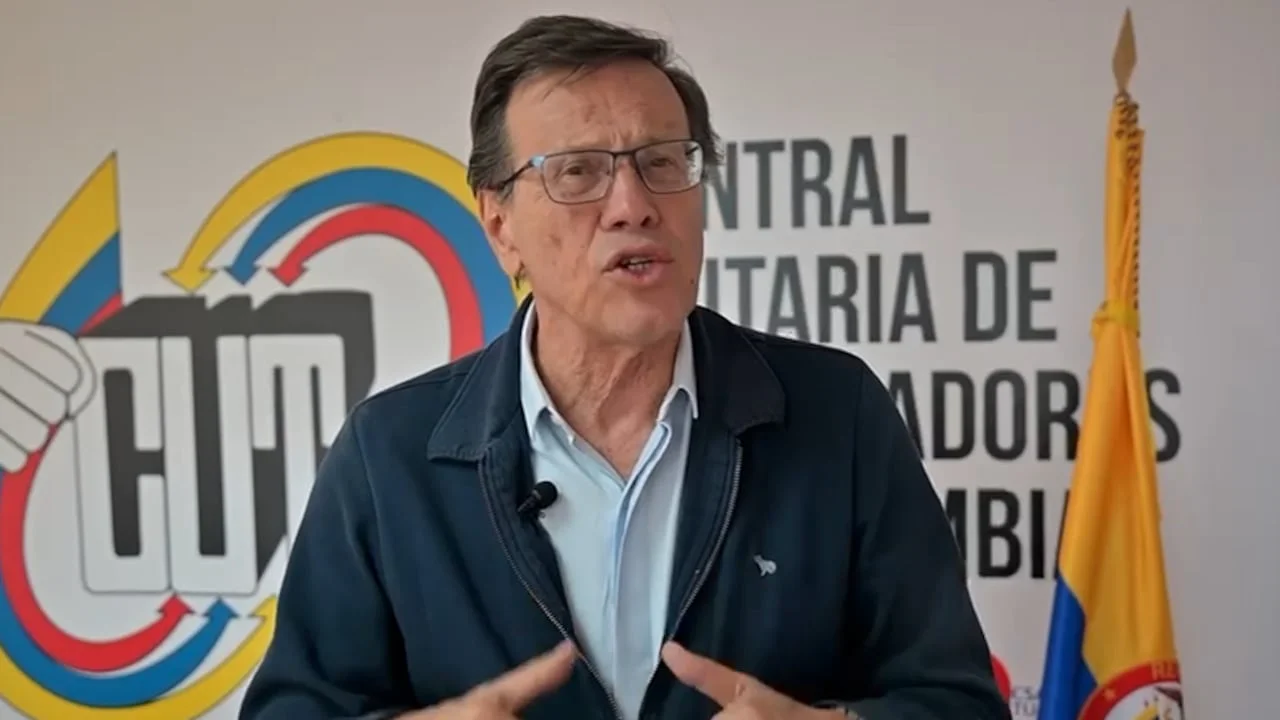
El dirigente de la CUT Fabio Arias anunció que las centrales obreras propondrán un aumento del 38,5% del salario mínimo para 2027. · CUT
Colombia's CUT will ask for a 38.5% minimum wage increase
The labor federation will take that figure to the negotiation table arguing that 32 points are missing to close the gap with the vital wage.
Minimum wage: CUT opens talks asking for 38.5%
Fabio Arias presented the figure as an accumulated debt owed to workers.
--- The context ---
The discussion over Colombia's minimum wage for 2027 has already begun, and it opened with a figure set to spark enormous controversy: the Central Unitaria de Trabajadores (CUT) labor federation will take a proposed 38.5% increase to the labor negotiation table. The announcement was made by union leader Fabio Arias, a former president of that federation.
--- The facts ---
According to Arias, workers want to bring that figure to the negotiation table. His argument starts from a gap: according to a study by the union organization itself, an increase of 48 points is needed to reach the concept of a vital minimum wage. He said workers have to enter asking for that because 32 points are still owed to close the gap toward a vital minimum wage.
The leader added the expected inflation to that calculation: with this year's inflation expected to end at around 6.5%, the labor federations' opening request stands at 38.5%. He also recalled that the government of Gustavo Petro raised the wage by 23.5% last year and argued that, once inflation is discounted, that increase was equivalent in real terms to about 18%.
--- The positions ---
Arias insisted the figure is a proposal open to discussion, and said the labor federations will debate and propose a figure they hope will be taken into account. In his reading, the debt owed to workers is measured against the vital minimum wage and not only against the year's inflation.
On the other side of the board, the manager of the Banco de la República, Leonardo Villar, warned in Congress this week that the country will very likely miss its inflation target again this year, for the sixth consecutive year. He said, in substance, that the target has not been met in the last five years and very probably will not be met in the sixth either.
--- What remains unknown ---
Villar also commented on the link between inflation and the minimum wage that the central bank follows closely: he recalled that with inflation at 5% at that time, the minimum wage decreed by President Petro rose 23% and, measured hourly, actually rose 28%. That increase decreed for 2026 was controversial.
--- Unanswered questions ---
What figure will employers bring to the same table? Will the Government back an increase close to what the unions are asking for, or will it seek a middle point? How much weight will the central bank's warning about the inflation target carry in the negotiation?
--- EPM analysis ---
The 38.5% proposal is an opening position: the union's own arithmetic presents it as the sum of a historical debt of 32 points plus expected inflation. The negotiation will define how much of that gap is recognized and how much is transferred to payrolls, prices and formal employment. The underlying fact is that the debate no longer turns only on past inflation: the unions want to index the negotiation to a vital wage, and the central bank watches that same link as a risk to meeting its target.
📌 EPM Take: In EPM's view, the 38.5% request puts on the table a reality no formula can hide: Colombia's minimum wage remains far from the income the labor federation itself considers vital, and that 32-point gap is the real center of the negotiation. The talks will do well to discuss that distance with complete numbers, including the cost of closing too quickly a gap accumulated over years, because a serious agreement must improve workers' income without destroying the jobs that pay it.
--- The context ---
The negotiation of Colombia's minimum wage for 2027 has not formally begun, but the first figure has already ignited controversy: the Central Unitaria de Trabajadores (CUT) will propose a 38.5% increase. The announcement was made by its former president and leader Fabio Arias, with an argument of accumulated debt.
--- The facts ---
Arias explained that, according to a study by the union organization itself, closing the gap between the minimum wage and the so-called vital minimum wage requires an increase of 48 points. He said workers must enter asking for that figure because 32 points are owed to close the shortfall toward a vital minimum wage.
To that calculation he added the inflation he projects for this year, close to 6.5%, and that is where the 38.5% request came from. The starting point of his arithmetic is the 23.5% increase decreed by the government of Gustavo Petro last year, which he held was equivalent, once inflation is discounted, to a real increase of about 18%.
--- The positions ---
The leader presented the figure as a discussion proposal from the labor federations, which hope it will be taken into account in the negotiation. His approach treats the previous increase as a partial payment on a larger debt, not as the closing of the wage discussion.
Opposite him, the manager of the Banco de la República, Leonardo Villar, brought Congress an uncomfortable warning this week: the country will very probably add its sixth consecutive year without meeting the inflation target. Villar also recalled that, with inflation at 5%, the minimum wage rose 23% and, measured hourly, 28%, a link the central bank follows closely.
--- What remains unknown ---
The minimum wage increase decreed by President Petro for 2026 was already controversial at the time, and the new round will repeat the tension between workers' income, labor costs and inflation. The final figure will come out of the negotiation table or, failing that, from a government decree.
--- Unanswered questions ---
What real margin do companies have to absorb another double-digit increase? Will the negotiation table bring the positions closer, or will the decision once again be made by decree? Would an increase close to the union request put renewed pressure on the inflation the central bank cannot bring to target?
--- EPM analysis ---
The 38.5% figure works as a negotiating anchor: it starts from a gap calculated by the union itself and presents it as a debt. But each additional point of minimum wage transfers into formal hiring costs in an economy that has gone five years without meeting its inflation target and that, according to its central bank, is heading for a sixth. A serious discussion requires looking at both columns: what the wage buys today and what it costs to sustain the job that receives it.
📌 EPM Take: In EPM's view, asking for 38.5% as a starting point is legitimate in a negotiation, but turning that anchor into an imposition would be a mistake paid for by formal workers and by those seeking to enter formality. Colombia needs wages that recover purchasing power, and it also needs the negotiation to weigh the central bank's warning: without inflation under control, every nominal increase evaporates. The responsible agreement is the one that closes the gap without breaking the table or employment.
La CUT pedirá subir el salario mínimo 38,5% para 2027
La central obrera llevará esa cifra a la concertación con el argumento de que faltan 32 puntos para cerrar la brecha con el salario vital.
Salario mínimo: la CUT abre la negociación pidiendo 38,5%
Fabio Arias presentó la cifra como una deuda acumulada con los trabajadores.
--- El contexto ---
La discusión sobre el salario mínimo de Colombia para 2027 ya comenzó, y arrancó con una cifra que desatará una enorme controversia: la Central Unitaria de Trabajadores (CUT) llevará a la mesa de concertación laboral una propuesta de aumento del 38,5 %. El anuncio lo hizo el dirigente sindical Fabio Arias, expresidente de esa central obrera.
--- Los hechos ---
Según Arias, los trabajadores quieren llevar esa cifra a la mesa de concertación. Su argumento parte de una brecha: de acuerdo con un estudio del propio organismo sindical, se necesita un aumento de 48 puntos para llegar al concepto de salario mínimo vital. «Tenemos que entrar pidiendo eso porque nos deben 32 puntos para cerrar el desfase para tener salario mínimo vital», dijo.
El dirigente sumó a esa cuenta la inflación esperada: como aproximadamente la inflación de este año va a terminar en 6,5%, la petición de entrada de las centrales obreras queda en el 38,5%. También recordó que el gobierno de Gustavo Petro subió el salario 23,5 % el año pasado y argumentó que, descontada la inflación, aquel incremento equivalió en términos reales a cerca del 18%.
--- Las posiciones ---
Arias insistió en que la cifra es una propuesta para discutir: «Las centrales obreras vamos a discutir y proponer una cifra que ojalá sea tenida en cuenta», aseguró. En su lectura, la deuda con los trabajadores se mide contra el salario mínimo vital y no solo contra la inflación del año.
Del otro lado del tablero, el gerente del Banco de la República, Leonardo Villar, advirtió esta semana en el Congreso que el país muy probablemente tampoco cumplirá este año la meta de inflación, por sexto año consecutivo. «Desafortunadamente no hemos podido cumplir en los últimos cinco años y muy probablemente va a ser el sexto año en que tampoco lo vamos a poder cumplir», aseguró.
--- Lo que falta saber ---
Villar también comentó el nexo que el banco central sigue con atención entre inflación y salario mínimo: recordó que con una inflación que en ese momento estaba en 5%, el salario mínimo decretado por el presidente Petro aumentó el 23% y, si se toma por hora, realmente aumentó 28%. Ese aumento decretado para 2026 fue controvertido.
--- Preguntas sin respuesta ---
¿Qué cifra llevarán los empresarios a la misma mesa? ¿El Gobierno respaldará una subida cercana a la que piden los sindicatos o buscará un punto medio? ¿Cuánto pesará en la negociación la advertencia del banco central sobre la meta de inflación?
--- Análisis EPM ---
La propuesta del 38,5% es una posición de apertura: la propia aritmética sindical la presenta como la suma de una deuda histórica de 32 puntos más la inflación esperada. La concertación definirá cuánto de esa brecha se reconoce y cuánto se traslada a nóminas, precios y empleo formal. El dato de fondo es que el debate ya no gira solo alrededor de la inflación pasada: los sindicatos quieren indexar la negociación a un salario vital, y el banco central observa ese mismo vínculo como un riesgo para cumplir su meta.
📌 Conclusion EPM: A juicio de EPM, la petición del 38,5% pone sobre la mesa una realidad que ninguna fórmula puede esconder: el salario mínimo colombiano sigue lejos del ingreso que la propia central obrera considera vital, y esa brecha de 32 puntos es el centro real de la negociación. La concertación hará bien si discute esa distancia con números completos, incluyendo el costo de cerrar demasiado rápido una brecha acumulada durante años, porque un acuerdo serio debe mejorar el ingreso de los trabajadores sin destruir los puestos que lo pagan.
--- El contexto ---
La negociación del salario mínimo colombiano para 2027 todavía no empieza formalmente, pero la primera cifra ya encendió la controversia: la Central Unitaria de Trabajadores (CUT) propondrá un aumento del 38,5 %. El anuncio lo hizo su expresidente y dirigente Fabio Arias, con un argumento de deuda acumulada.
--- Los hechos ---
Arias explicó que, según un estudio del propio organismo sindical, cerrar la brecha entre el salario mínimo y el llamado salario mínimo vital exige un aumento de 48 puntos. «Tenemos que entrar pidiendo eso porque nos deben 32 puntos para cerrar el desfase para tener salario mínimo vital», dijo el dirigente.
A esa cuenta sumó la inflación que proyecta para este año, cercana al 6,5%, y de ahí salió la petición del 38,5%. El punto de partida de su aritmética es el aumento del 23,5 % decretado por el gobierno de Gustavo Petro el año pasado, del que sostuvo que, descontada la inflación, equivalió a un incremento real cercano al 18%.
--- Las posiciones ---
El dirigente presentó la cifra como una propuesta de discusión de las centrales obreras, que esperan que sea tenida en cuenta en la concertación. Su planteamiento trata el aumento anterior como un abono parcial de una deuda mayor, no como el cierre de la discusión salarial.
Enfrente, el gerente del Banco de la República, Leonardo Villar, llevó esta semana al Congreso una advertencia incómoda: el país muy probablemente sumará su sexto año consecutivo sin cumplir la meta de inflación. Villar recordó además que, con una inflación del 5%, el salario mínimo aumentó el 23% y, tomado por hora, el 28%, un nexo que el banco central sigue con atención.
--- Lo que falta saber ---
El aumento del salario mínimo decretado por el presidente Petro para 2026 ya fue controvertido en su momento, y la nueva ronda repetirá la tensión entre ingreso de los trabajadores, costos laborales e inflación. La cifra final saldrá de la mesa de concertación o, en su defecto, de un decreto del Gobierno.
--- Preguntas sin respuesta ---
¿Qué margen real tienen las empresas para absorber otra subida de dos dígitos? ¿La mesa de concertación acercará las posiciones o la decisión volverá a tomarse por decreto? ¿Un aumento cercano al pedido sindical presionaría de nuevo la inflación que el banco central no logra llevar a la meta?
--- Análisis EPM ---
La cifra del 38,5% funciona como ancla negociadora: parte de una brecha calculada por el propio sindicato y la presenta como deuda. Pero cada punto adicional de salario mínimo se traslada a los costos de contratación formal en una economía que lleva cinco años sin cumplir la meta de inflación y que, según su banco central, va para el sexto. La discusión seria exige mirar ambas columnas: lo que el salario compra hoy y lo que cuesta sostener el empleo que lo recibe.
📌 Conclusion EPM: A juicio de EPM, pedir 38,5% como punto de partida es legítimo en una negociación, pero convertir esa ancla en imposición sería un error que pagarían los trabajadores formales y los que buscan entrar a la formalidad. Colombia necesita salarios que recuperen poder de compra, y también necesita que la concertación pondere la advertencia del banco central: sin inflación bajo control, cada aumento nominal se evapora. El acuerdo responsable es el que cierra brecha sin romper la mesa ni el empleo.