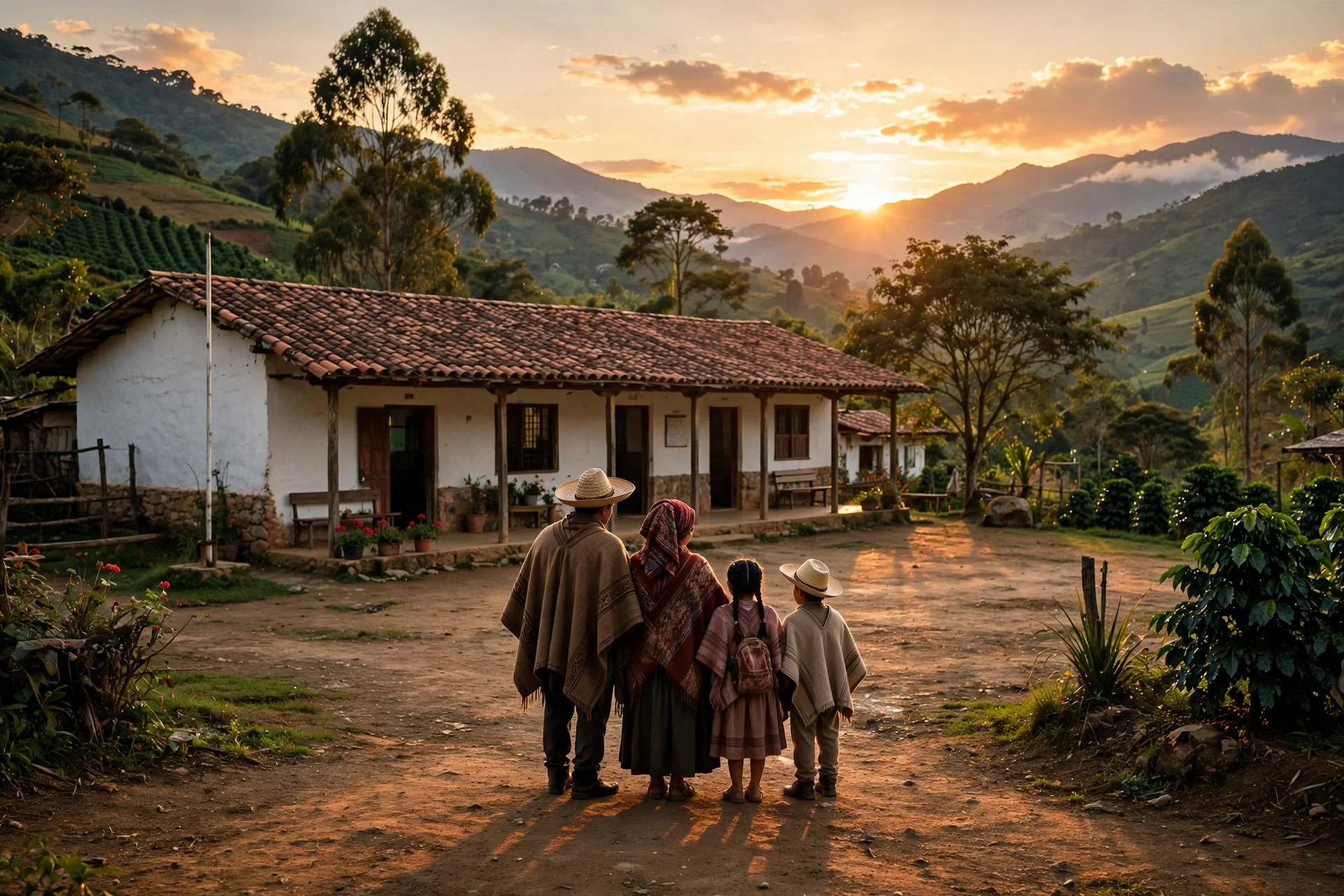
Imagen alusiva a la familia y la escuela rural en Colombia.
Pineda defends the family and a return of values in Colombia
In an interview, First Lady Ana Lucía Pineda defended the family as the basis of society, called for prayer and values to return to classrooms and rejected…
Family is the foundation, Pineda says, and Colombia needs values
First Lady Ana Lucía Pineda defended the traditional family as the basis of society in an interview, proposed bringing prayer and religion back to classrooms…
--- The context ---
In an interview, First Lady Ana Lucía Pineda called for restoring the value of the family as a pillar of Colombian society. The wife of President Abelardo De La Espriella shared her views on current debates over education, faith and the upbringing of children.
Pineda described her own family as traditional, values-based and believing. From that starting point she argued that the country should make an effort to protect those values again, at a time when she perceives widespread hatred and resentment in society.
--- The facts ---
The first lady said Colombia lost a great deal over the last four years because, in her view, many people lack God in their hearts. She set out a purpose of bringing prayer back into classrooms, together with religion classes, values, the family, respect and empathy.
Asked by the interviewer about how children have been educated in recent years, Pineda replied that a narrative is being sold under which values and family should not be discussed. She also recalled that former minister Viviane Morales had reported attempts to impose so-called gender ideology in public schools.
--- The positions ---
Pineda said the family is the basis of society and that this must be given back to Colombia. She noted that some families, for different circumstances, are not made up of a father and a mother, while asking that the traditional family also be respected and valued.
On childhood, she argued that children must be respected and allowed to reach a certain age before choosing how they identify, without an ideology being imposed before they can understand it. She added that political ideology should not be shaped at an early age, because everything has its moment and maturity expands the capacity to decide.
--- What remains unknown ---
The interview does not detail measures or timelines for bringing prayer and religion classes back into classrooms, nor how that proposal would fit with the diversity of families the first lady herself acknowledged.
--- Unanswered questions ---
Will Pineda's call become a formal government proposal for classrooms? How will respect be guaranteed for families that do not follow the traditional model? What age does the first lady consider appropriate for addressing these subjects with children?
--- EPM analysis ---
Pineda's message connects with the cultural counterrevolution that President De La Espriella presented this week. The president described wokism as a model that promotes moral relativism, denies biological differences and falsifies history, and announced an open and frontal government struggle against that current, which he defined as a threat to national unity.
📌 EPM Take: In EPM's view, the interview places family and school at the center of the cultural debate driven by the government, with a shared language of values between the first lady and the president. The strength of the proposal will depend on whether it includes the diverse families Pineda acknowledged and whether it becomes concrete, respectful policy capable of uniting, with parents and teachers heard, rather than deepening the hatred and resentment she herself lamented in the conversation.
--- The context ---
In an interview, First Lady Ana Lucía Pineda called to recover the values that, she argued, sustain Colombian society. The wife of President Abelardo De La Espriella described herself and her family as traditional, values-based and believing.
From that conviction, Pineda said the country must strive to protect the family, faith, respect and empathy once again. Her diagnosis starts from a society marked, in her judgment, by hatred and resentment.
--- The facts ---
The first lady argued that Colombia lost a great deal over the last four years because people lack God in their hearts. As a purpose she pointed to bringing prayer back into classrooms and restoring religion classes, which she considered very important alongside values and the family.
The interviewer asked her about the education of children in recent years, following messages questioned at the time by former minister Viviane Morales, who said she had found attempts to impose so-called gender ideology in the country's public schools.
--- The positions ---
Pineda replied that a narrative seeks to stop discussion of values and family, and she stated that the family is the basis of society and that this must be given back to Colombia. She acknowledged that some families are not made up of a father and a mother for different circumstances, and asked that the traditional family be respected and given its value.
She also argued that children must be respected and allowed to reach a certain age before choosing how they identify, without gender or political ideology being imposed at an early age. A child who is only learning history, mathematics and science, she said, is not at the moment for such shaping, and maturity brings a greater capacity to decide.
--- What remains unknown ---
The remarks do not specify instruments or schedules for applying these ideas in schools, nor the reach of a return of prayer and religion classes across the education system.
--- Unanswered questions ---
What concrete measures will the government adopt to protect the traditional family in Colombia? How and when would prayer and religion classes return to classrooms? What guarantees will parents have against ideological content aimed at young children?
--- EPM analysis ---
The first lady's words reinforce the cultural counterrevolution presented this week by President De La Espriella. The president accused wokism of denying the biological differences between men and women, of imposing its postulates through physical and verbal violence in education and culture, and announced an open and frontal struggle, with no ambiguity allowed for any official.
📌 EPM Take: In EPM's view, Pineda gives a familiar, close face to the government's cultural battle: family, faith and school appear as a single front. Her proposal is clear in its principles and prudent in acknowledging other forms of family, but its real weight will be measured by the decisions that follow, because restoring values to a country requires clear rules, prepared teachers and a broad national consensus that the interview does not yet detail or specify in any way.
Pineda defiende la familia y pide devolver los valores a Colombia
En una entrevista, la primera dama Ana Lucía Pineda defendió la familia como base de la sociedad, pidió devolver la oración y los valores a las aulas y rechazó…
La familia es la base y Colombia debe recuperar sus valores
La primera dama Ana Lucía Pineda defendió en una entrevista a la familia tradicional como base de la sociedad, propuso devolver la oración y la religión a las…
--- El contexto ---
En una entrevista, la primera dama Ana Lucía Pineda planteó recuperar el valor de la familia como eje de la sociedad colombiana. La esposa del presidente Abelardo De La Espriella compartió su mirada sobre debates actuales de educación, fe y formación de los niños.
Pineda describió a su familia como tradicional, de valores y creyente, y sostuvo que el país debe esforzarse por volver a proteger esos valores, en un momento en el que percibe odio y rencor en la sociedad.
--- Los hechos ---
La primera dama consideró que Colombia perdió mucho en los últimos cuatro años porque, a su juicio, a muchas personas les hace falta tener a Dios en el corazón. Planteó como propósito devolver la oración a las aulas, junto con las clases de religión, los valores, la familia, el respeto y la empatía.
Ante una pregunta de la entrevistadora sobre la educación, Pineda respondió que se intenta vender una narrativa según la cual no hay que hablar de valores ni de familia, y recordó que la entonces ministra Viviane Morales había señalado intentos de imponer la llamada ideología de género en colegios públicos.
--- Las posiciones ---
Pineda afirmó que la familia es la base de la sociedad y que eso debe devolverse a Colombia. Precisó que hay familias que por distintas circunstancias no están compuestas por papá y mamá, pero pidió respetar también a la familia tradicional y darle su valor.
Sobre la infancia, sostuvo que a los niños hay que respetarlos y esperar a que alcancen una edad determinada para elegir con qué se identifican, sin imponerles una ideología que aún no entienden. Añadió que tampoco debe perfilarse ideología política a temprana edad, porque todo tiene su momento y la madurez amplía la capacidad de decidir.
--- Lo que falta saber ---
La entrevista no detalla medidas ni plazos para llevar la oración y las clases de religión de vuelta a las aulas, ni cómo se articularía esa propuesta con la diversidad de familias que la propia primera dama reconoció.
--- Preguntas sin respuesta ---
¿Se traducirá el llamado de Pineda en una propuesta formal del Gobierno para las aulas? ¿Cómo se garantizará el respeto a las familias que no siguen el modelo tradicional? ¿Qué edad considera adecuada la primera dama para abordar estos temas con los niños?
--- Análisis EPM ---
El mensaje conecta con la contrarrevolución cultural que el presidente De La Espriella presentó esta semana. El mandatario describió al wokismo como un modelo que promueve el relativismo moral y desconoce diferencias biológicas, y anunció una lucha abierta del Gobierno contra esa corriente, a la que definió como amenaza para la unidad nacional.
📌 Conclusion EPM: A juicio de EPM, la entrevista coloca a la familia y a la escuela en el centro del debate cultural que impulsa el Gobierno, con un lenguaje de valores compartido entre la primera dama y el presidente. La fuerza del planteo dependerá de si logra incluir a las familias diversas que Pineda reconoció y de si se convierte en políticas concretas y respetuosas, capaces de unir en lugar de profundizar el odio y el rencor que ella misma lamentó.
--- El contexto ---
En una entrevista, la primera dama Ana Lucía Pineda llamó a recuperar los valores que, según planteó, sostienen a la sociedad colombiana. La esposa del presidente Abelardo De La Espriella se definió junto a su familia como tradicionales, de valores y creyentes.
Desde esa convicción, Pineda aseguró que el país debe esforzarse por volver a proteger la familia, la fe, el respeto y la empatía. Su diagnóstico parte de una sociedad atravesada, a su juicio, por el odio y el rencor.
--- Los hechos ---
La primera dama sostuvo que Colombia perdió mucho en los últimos cuatro años porque a la gente le hace falta tener a Dios en el corazón, y señaló como propósito devolver la oración a las aulas y recuperar las clases de religión junto con los valores y la familia.
La entrevistadora le preguntó por la educación de los niños, a partir de mensajes cuestionados por la entonces ministra Viviane Morales, quien aseguró haber encontrado intentos de imponer la llamada ideología de género en colegios públicos.
--- Las posiciones ---
Pineda respondió que existe una narrativa que busca que no se hable de valores ni de familia, y afirmó que la familia es la base de la sociedad y que hay que devolverle eso a Colombia. Reconoció que algunas familias no están compuestas por papá y mamá por distintas circunstancias, y pidió respetar que la familia tradicional existe y merece su valor.
También sostuvo que a los niños hay que respetarlos y esperar a que tengan una edad determinada para elegir con qué se identifican, sin imponerles ideología de género ni política a temprana edad. Argumentó que un niño que apenas aprende historia, matemáticas y ciencias no está en el momento de ese perfilamiento, y que la madurez da más capacidad de decidir.
--- Lo que falta saber ---
Las declaraciones no precisan instrumentos ni calendarios para aplicar estas ideas en los colegios, ni el alcance del regreso de la oración y las clases de religión en el sistema educativo.
--- Preguntas sin respuesta ---
¿Qué medidas concretas adoptará el Gobierno para proteger la familia tradicional en Colombia? ¿Cómo y cuándo volverían la oración y las clases de religión a las aulas? ¿Qué garantías tendrán los padres frente a contenidos ideológicos dirigidos a niños pequeños?
--- Análisis EPM ---
Las palabras refuerzan la contrarrevolución cultural presentada esta semana por el presidente De La Espriella, quien acusó al wokismo de desconocer las diferencias biológicas entre hombres y mujeres y de imponer sus postulados en la educación y la cultura, y anunció una lucha abierta y frontal, sin ambigüedad para ningún funcionario.
📌 Conclusion EPM: A juicio de EPM, Pineda le pone rostro familiar y cercano a la batalla cultural del Gobierno: familia, fe y escuela aparecen como un mismo frente. Su planteo es claro en los principios y prudente al reconocer otras formas de familia, pero su peso real se medirá en las decisiones que sigan, porque devolver valores a un país exige normas, docentes y consensos que la entrevista todavía no detalla ni precisa.