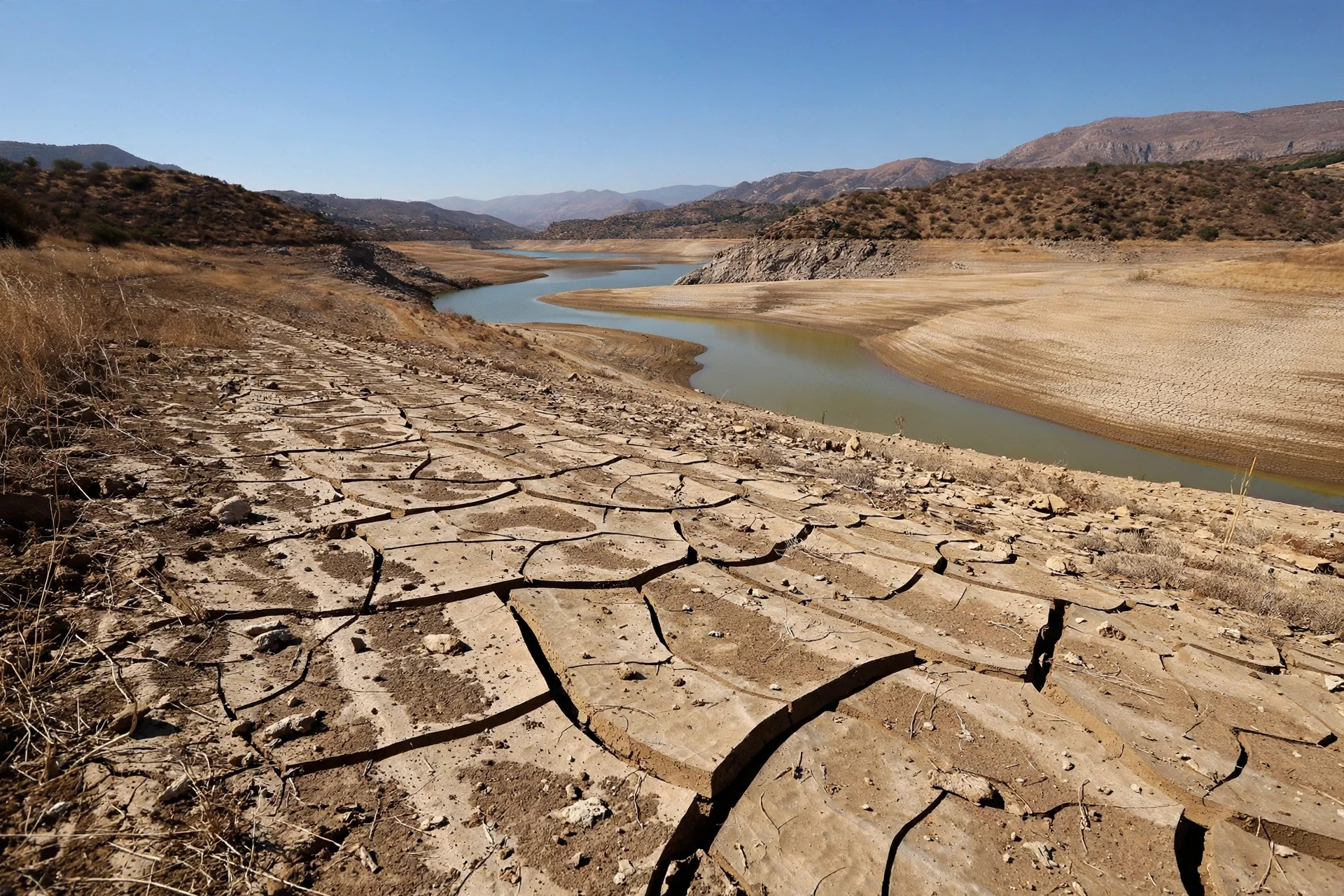
Imagen alusiva de un embalse con el nivel de agua bajo durante un periodo de sequía. · Imagen generada para EPM
Public safeguards come first in drought water direction
A section 40 direction tells the Environment Agency to place public water supply first in four severe drought zones, but only within intact environmental…
Keeping household taps running in four drought zones
Signed under section 40 on Thursday 15 October, the direction orders the Environment Agency to protect public supply around Wimbleball, Ardingly, Roadford and…
No unlawful outcome is authorised, and no statutory duty is set aside. That limit comes first in a ministerial direction that only then allows flexibility, so environmental protection remains a binding condition rather than an afterthought to be weighed later.
--- The context ---
Around four reservoirs — Wimbleball, Ardingly, Roadford and Colliford — severe drought has been declared in the surrounding water resource zones. In those specified areas the Environment Agency is instructed to give priority to protecting public water supply while exercising relevant functions, precisely because disruption to essential supplies would carry serious consequences if nothing changed.
--- The facts ---
Legal authority rests on section 40 of the Environment Act 1995, which allows the appropriate Minister to give the Agency directions of a general or specific character about how it carries out its functions. Before issuing the text, the Minister consulted the Agency in accordance with section 40(6). It was made on Thursday 15 October, came into force the same day, and is signed by Emma Hardy MP, Minister of State in the Department for Environment, Food and Rural Affairs.
--- The positions ---
Conditionality shapes every operational choice that follows. Decisions must remain proportionate and necessary, rest on appropriate evidence, and be accompanied by enhanced monitoring together with appropriate mitigation and restoration. Where necessary, Local Enforcement Positions may support temporary reductions in environmental releases and changes to abstraction constraints, yet that step is presented as a bounded tool to preserve reservoir storage, not as a general loosening of environmental safeguards.
--- What remains unknown ---
Which specific measures will be authorised or supported in each zone is not spelled out. Nor does the direction state how much water will be retained or made available, what environmental impacts are expected in practice, or which mitigations will be introduced or proposed once decisions begin to bite on the ground.
--- Unanswered questions ---
How will enhanced monitoring prove that each decision stays proportionate? What restoration will follow any temporary reduction in environmental releases? Who decides when evidence is strong enough to change an abstraction constraint? And how openly will impacts and mitigations be reported?
--- EPM analysis ---
Revocability completes the safeguard structure. Measures are to be reviewed frequently and revoked when severe drought status is lifted from the specified areas, while the Agency must work closely with Defra, the affected water companies and Local Resilience Forums and report in writing to Defra, when requested, on measures, water retained and environmental effects.
📌 EPM Take: In EPM's view, legitimacy here will be earned through conditions, not assumed from urgency. Because environmental duties stay intact, because nothing unlawful is permitted, and because proportionality, monitoring, mitigation and restoration are written into the discretion itself, prioritising supply reads as a conditional public guarantee. If any of those conditions slip in practice, the justification for the priority slips with them, which is why transparent evidence and prompt revocation matter as much as the initial decision to act.
For households in the affected zones, the immediate danger is practical: rota cuts or a direct interruption to the tap. Reducing that likelihood is the stated purpose of a direction that puts protection of essential public water supplies ahead of other considerations while severe drought lasts.
--- The context ---
The zones in question surround Wimbleball, Ardingly, Roadford and Colliford reservoirs, where severe drought has been declared. With storage under pressure, the Environment Agency must give priority to protecting public water supply when exercising its relevant functions in those areas, so that everyday supply is defended first and disruption is mitigated before it reaches homes.
--- The facts ---
To preserve reservoir storage, the Agency is directed to use Local Enforcement Positions where necessary, covering temporary reductions in environmental releases and changes to abstraction constraints. The instrument itself is a direction under section 40 of the Environment Act 1995, a power for the appropriate Minister to issue general or specific directions on the Agency's functions. Consultation with the Agency took place under section 40(6) beforehand, and Emma Hardy MP, Minister of State in the Department for Environment, Food and Rural Affairs, signed the text.
--- The positions ---
Delivery depends on close joint working rather than a single instruction from Whitehall. The Agency must work closely with Defra, the affected water companies and Local Resilience Forums, and, when Defra asks in writing, account for the measures authorised or supported, the water retained or made available for public supply, and the environmental impacts alongside the mitigations introduced or proposed.
--- What remains unknown ---
Operational detail for each locality has yet to be shown. The direction does not list which measures will be used zone by zone, how much additional water they will secure for public supply, or what environmental impacts managers expect while storage is being protected through the drought period.
--- Unanswered questions ---
Will storage preservation be enough to avoid rota cuts this time? How quickly can companies and resilience forums act together if supply tightens further? What written reporting will Defra request first? And which signs will show that interruption risk is finally receding?
--- EPM analysis ---
Discipline comes from the calendar as much as from the instruction itself. Made on Thursday 15 October and effective that same day, the direction will be reviewed on a monthly basis and will expire when severe drought status is lifted from all the specified areas, while individual decisions must be proportionate, evidence based and revoked once that status ends locally.
📌 EPM Take: In EPM's view, sound management starts by keeping essential water flowing to households, then proves itself through discipline. Preserving storage, coordinating with companies and resilience forums, reporting when Defra requires it in writing, and accepting monthly review with a clear expiry together turn an emergency priority into an accountable routine. The test is straightforward: protect the tap first, keep the exit date in sight, and withdraw the exceptional measures as soon as severe drought no longer justifies them.
Reino Unido prioriza el agua pública en zonas de sequía grave
Dirección ministerial bajo la sección 40 que ordena a la Environment Agency priorizar el suministro público de agua en las zonas de Wimbleball, Ardingly…
Londres protege el suministro de agua con una orden temporal
Dirección ministerial bajo la sección 40 que ordena a la Environment Agency priorizar el suministro público de agua en las zonas de Wimbleball, Ardingly…
El Gobierno británico ha instruido a la Environment Agency para que, en las zonas declaradas en sequía grave, proteger el suministro público de agua sea la prioridad al ejercer sus funciones.
--- El contexto ---
La sequía grave fue declarada en las zonas de recursos hídricos de los embalses de Wimbleball, Ardingly, Roadford y Colliford. El objetivo es mitigar el riesgo de interrupción de un suministro esencial, sin renunciar a la protección del entorno natural.
--- Los hechos ---
La medida es una dirección a la Environment Agency bajo la sección 40 de la Environment Act 1995, que faculta al ministro competente para dar directrices generales o específicas sobre sus funciones. La firma Emma Hardy MP, ministra de Estado del Department for Environment, Food and Rural Affairs (Defra).
Cuando sea necesario, la Agencia podrá usar Local Enforcement Positions para reducciones temporales de liberaciones ambientales y cambios en restricciones de extracción, preservando el almacenamiento y reduciendo la probabilidad de cortes rotativos o interrupción. La ministra consultó antes a la Agencia conforme a la sección 40(6). La dirección se emitió el jueves 15 de octubre, entró en vigor ese día, se revisará mensualmente y expirará al levantarse la sequía grave en todas las zonas.
--- Las posiciones ---
El texto subraya que la dirección no afecta los deberes estatutarios de la Agencia, incluidos los de protección ambiental, y que no autoriza actividades ni resultados ilegales. Toda decisión debe ser proporcionada y necesaria, con evidencia adecuada, monitoreo reforzado, mitigación y restauración, revisión frecuente y revocación cuando se levante la sequía grave.
--- Lo que falta saber ---
La dirección no detalla qué medidas concretas se autorizarán en cada zona, ni cuánta agua se retendrá para el suministro público. Tampoco precisa los impactos ambientales posibles ni las mitigaciones que se introducirán o propondrán.
--- Preguntas sin respuesta ---
¿Qué medidas adoptará la Agencia en cada zona? ¿Cuánta agua se retendrá para el suministro público? ¿Qué impactos ambientales habrá y cómo se mitigarán? ¿Cuándo se levantará la sequía grave?
--- Análisis EPM ---
La dirección equilibra obligaciones en tensión: garantizar un suministro esencial y mantener la protección ambiental. Condiciona la flexibilidad a la evidencia, el monitoreo y la restauración, y exige trabajar con Defra, las compañías de agua afectadas y los Local Resilience Forums, informando por escrito a Defra cuando lo pida.
📌 Conclusion EPM: A juicio de EPM, el valor de esta dirección está en sus condiciones y no solo en su urgencia: la prioridad para el agua pública queda atada a decisiones proporcionadas, a evidencia verificable, a un monitoreo reforzado y a la obligación de mitigar y restaurar. Si esas salvaguardas se cumplen con transparencia, la protección ambiental no queda relegada a una nota al margen, sino que sigue siendo parte del propio mecanismo que permite actuar frente a la sequía grave declarada en las zonas afectadas.
El Gobierno británico ha instruido a la Environment Agency para que, en las zonas declaradas en sequía grave, proteger el suministro público de agua sea la prioridad al ejercer sus funciones.
--- El contexto ---
La sequía grave fue declarada en las zonas de recursos hídricos de los embalses de Wimbleball, Ardingly, Roadford y Colliford. La orden protege primero un suministro esencial para hogares y servicios, para mitigar el riesgo de interrupción y evitar cortes rotativos.
--- Los hechos ---
La medida es una dirección a la Environment Agency bajo la sección 40 de la Environment Act 1995, que faculta al ministro competente para dar directrices generales o específicas sobre sus funciones. La firma Emma Hardy MP, ministra de Estado del Department for Environment, Food and Rural Affairs (Defra).
Cuando sea necesario, la Agencia podrá usar Local Enforcement Positions para reducciones temporales de liberaciones ambientales y cambios en restricciones de extracción, preservando el almacenamiento y reduciendo la probabilidad de cortes rotativos o interrupción. La ministra consultó antes a la Agencia conforme a la sección 40(6). La dirección se emitió el jueves 15 de octubre, entró en vigor ese día, se revisará mensualmente y expirará al levantarse la sequía grave en todas las zonas.
--- Las posiciones ---
La instrucción es pragmática pero acotada: no modifica los deberes estatutarios de la Agencia, incluidos los de protección ambiental, ni autoriza actividades o resultados ilegales. Las decisiones deben ser proporcionadas y necesarias, apoyarse en evidencia adecuada y revisarse con frecuencia, con revocación cuando se levante la sequía grave, lo que marca su carácter temporal.
--- Lo que falta saber ---
La dirección no detalla qué medidas concretas se autorizarán en cada zona, ni cuánta agua se retendrá para el suministro público. Tampoco precisa los impactos ambientales posibles ni las mitigaciones que se introducirán o propondrán.
--- Preguntas sin respuesta ---
¿Qué medidas adoptará la Agencia en cada zona? ¿Cuánta agua se retendrá para el suministro público? ¿Qué impactos ambientales habrá y cómo se mitigarán? ¿Cuándo se levantará la sequía grave?
--- Análisis EPM ---
La dirección combina firmeza y límites: concede un margen claro para preservar el almacenamiento y proteger el suministro, pero lo rodea de controles y rendición de cuentas. La Agencia deberá trabajar con Defra, las compañías de agua afectadas y los Local Resilience Forums, e informar por escrito a Defra cuando este lo pida.
📌 Conclusion EPM: A juicio de EPM, esta es una respuesta de gestión antes que de retórica: asegurar el agua pública en plena sequía grave es una obligación básica del Estado, y la dirección lo hace con instrumentos temporales, revisión mensual y una caducidad ligada al fin de la emergencia en todas las zonas. Su acierto dependerá de que la Agencia actúe con proporcionalidad, rinda cuentas por escrito y retire cada medida en cuanto deje de ser necesaria para el suministro.