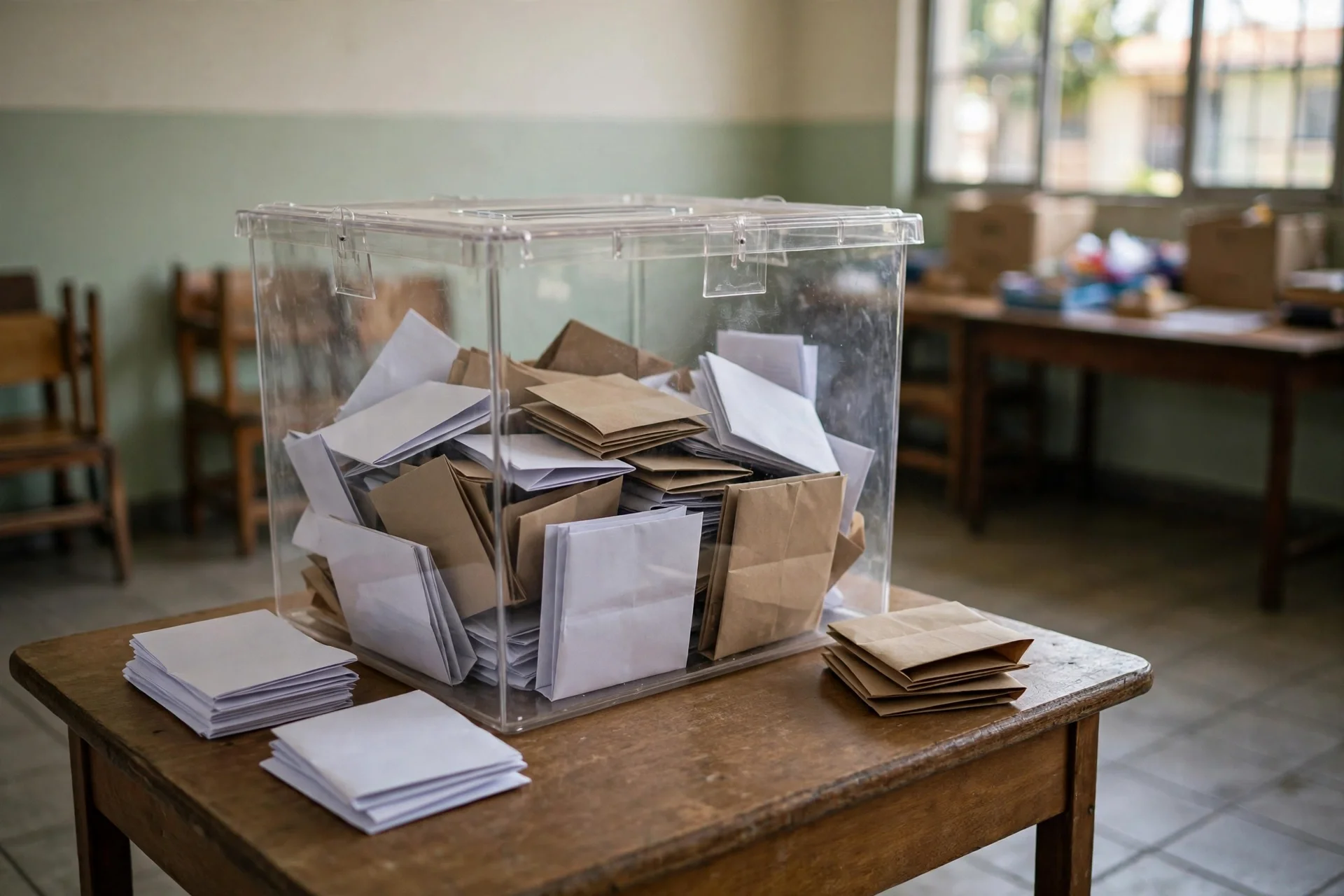
Urna con papeletas en un colegio electoral, imagen alusiva a la guía oficial para las elecciones generales del 29 de noviembre. · Imagen generada para EPM
Spain's November 29 election: the official guide to voting
The official guide to Spain's November 29, 2026 general election sets out a census of 38.728.356 voters, a campaign from November 13 to 27, voting hours from…
November 29: the rules and deadlines ordering Spain's election
The official guide orders Spain's November 29, 2026 general election process: 38.728.356 voters, a census closed on August 1, a 15-day campaign, polling…
--- The context ---
Spain will vote on Sunday, November 29, 2026, to elect the Cortes Generales, the legislative body made up of the Congress of Deputies and the Senate under the Constitution of 1978. National sovereignty resides in the Spanish people, from whom the powers of the State emanate, and elections to the Cortes are held every four years unless the prime minister orders an early dissolution of the chambers, as has happened on this occasion according to the official guide.
An extraordinary Council of Ministers on October 5, 2026 approved the royal decree dissolving the Cortes and calling elections to Congress and the Senate. The decree was published in the Boletín Oficial del Estado on Tuesday, October 6, the day it entered into force, and the official guide gathers the answers to citizens' main questions about the process and its deadlines.
--- The facts ---
A total of 38.728.356 voters may take part: 35.958.711 live in Spain and 2.769.645 live abroad. Among residents in Spain, 1.615.127 will vote for the first time in a general election, having turned 18 since the previous vote to the Cortes on July 23, 2023. All 38.728.356 voters are called to decide the composition of both chambers.
Congress will have 350 deputies, elected by universal, free, equal, direct and secret suffrage through closed and blocked lists: each voter chooses the white ballot paper of the selected party and cannot alter the order of candidates. The Senate has 209 senators elected by direct suffrage, plus those appointed by the regional legislative assemblies, and there voters choose the person on a single sepia ballot paper, selecting 3, 2 or 1 candidates depending on the constituency.
The campaign will last 15 days, from 0:00 hours on Friday, November 13 to 24:00 hours on Friday, November 27, and the resulting chambers will meet in constituent sessions on December 23 at 10h. Voting on November 29 will run from 9:00 to 20:00 hours, and the definitive count will take place from December 4 to 7 by the Provincial Electoral Boards, after each station's provisional count.
--- The positions ---
The Government and the electoral administration present the guide as an instrument of transparency: the Electoral Administration exists to guarantee the transparency and objectivity of the process and the principle of equality, while the Electoral Census Office prepares the census and answers citizens' queries. The administration must also safeguard equal opportunities for persons with disabilities.
For citizens, the guide stresses that voting is not compulsory in Spain and that nobody can be forced or coerced in exercising the right to vote or made to reveal their vote. Anyone working that Sunday will have up to 4 paid free hours to vote, and every person may exercise the right consciously, freely and voluntarily, with whatever means of support they may require on the day.
--- What remains unknown ---
Decisive preliminary steps still lie ahead: the census, closed on August 1, 2026, could be consulted from October 12 to 19 at town halls, provincial delegations and consular offices, the same window for filing claims. Census cards showing each voter's polling place and station will be sent out from November 2, and the draw for polling station members will take place between October 31 and November 4, with notification in three days.
--- Unanswered questions ---
How many of the 1.615.127 first-time voters will actually turn out on November 29? How will the participation of the 2.769.645 voters living abroad shape the final result? Will every polling place and station meet full accessibility conditions so that no voter is left out? Election day itself, and the turnout figures published afterwards, will provide the only reliable answers to these open questions.
--- EPM analysis ---
The guide concentrates the practical rules of the process in a single document: who votes, under which census, at what hours, with which identification —national identity document, passport or driving licence with photograph— and what happens to those drawn for a polling station. Serving on a station is compulsory: presidents and members receive an allowance and a five-hour reduction of the next working day, but anyone who fails to appear without a justified cause faces prison of 3 months to a year or a fine of 6 to 24 months.
The system converts votes into seats through provincial constituencies and the D'Hondt method, with candidate lists that must reflect balanced parity between women and men. The guide also defines valid votes —including the blank vote— and null votes, from altered envelopes to ballot papers with names crossed out or added wording. Knowing these rules is the difference between taking part with confidence and solving doubts at the last minute.
📌 EPM Take:
In EPM's view, this official guide serves a basic democratic function: it places the rules of November 29 within reach of all 38.728.356 voters with verifiable figures and clear deadlines, from the census closed on August 1 to the definitive count from December 4 to 7. Its real value will depend on the information reaching those who need it most in time: the 1.615.127 first-time voters, residents abroad and the citizens drawn to staff the polling stations, because a well-explained election is also an election with better turnout and stronger public scrutiny in every polling place nationwide.
--- The context ---
On Sunday, November 29, 2026, Spain will hold elections to the Cortes Generales, the legislative body formed by the Congress of Deputies and the Senate under the Constitution of 1978. Elections to the Cortes take place every four years, unless the prime minister orders an early dissolution, which is the case behind this call and its orderly calendar.
An extraordinary Council of Ministers on October 5, 2026 approved the royal decree dissolving the Cortes and calling the elections, published in the Boletín Oficial del Estado on Tuesday, October 6, the day it entered into force. From that publication the whole procedure runs its course: census, campaign, election day, counts and the constitution of the new chambers on December 23 at 10h, in constituent sessions.
--- The facts ---
The census brings together 38.728.356 voters: 35.958.711 reside in Spain and 2.769.645 reside abroad. Among residents in Spain, 1.615.127 will be able to vote for the first time in a general election, having turned 18 since the vote of July 23, 2023. The census in use is the one closed on August 1, 2026; it could be consulted from October 12 to 19, and census cards will be sent from November 2 onwards.
Congress will have 350 deputies elected by universal, free, equal, direct and secret suffrage, with closed and blocked lists and a white ballot paper: the voter chooses a party and cannot change the order of the candidates. The Senate adds 209 senators elected by direct suffrage, plus those appointed by the regional assemblies, and voters choose the person on a sepia ballot paper, marking 3, 2 or 1 candidates depending on the constituency in question.
The campaign will last 15 days, from November 13 at 0:00 hours to November 27 at 24:00 hours. On election day, polling places will be open for voting from 9:00 to 20:00 hours, and anyone working that Sunday will have up to 4 paid free hours. The provisional count will be held at each station when voting ends, and the definitive count will take place from December 4 to 7 by the Provincial Electoral Boards.
--- The positions ---
The electoral administration assumes the guarantee of the process: its declared purpose is to ensure transparency, objectivity and equality, with the Provincial Electoral Boards competent for the presentation and proclamation of candidates and for the general count. The Electoral Census Office prepares the census and resolves queries, while the Government's provincial delegations produce the ballot papers sent to town halls.
The guide also recalls the duties that sustain the day: serving on a polling station is compulsory, and failing to appear without a justified cause is punishable by prison of 3 months to a year or a fine of 6 to 24 months. In return, serving members receive an allowance, five hours off work the following day and Social Security protection covering contingencies arising from their participation in the election process.
--- What remains unknown ---
Before November 29 comes the polling station draw, between October 31 and November 4, with notification in the following three days and delivery of the instruction manual. Those designated will have seven days from notification to plead personal, family or professional causes preventing them from accepting the post before the corresponding Zone Electoral Board, which will decide each plea.
--- Unanswered questions ---
Will turnout match the scale of a census of 38.728.356 voters that includes 1.615.127 newcomers? How many of the 2.769.645 voters abroad will finally exercise their right to vote in these elections? Will the station draws cover every electoral section without significant incidents between October 31 and November 4? These are questions that only election day itself and the official count will settle with definitive and verifiable data.
--- EPM analysis ---
The order of the process rests on known and stable rules: provincial constituencies, the D'Hondt method to convert votes into representatives, lists with balanced parity between women and men, and a precise catalogue of valid and null votes. That predictability is an institutional strength: every voter knows in advance which ballot paper they will receive, how a blank vote is counted and when an envelope will be declared null for alteration or for holding ballot papers of different candidacies inside it.
Identification at the station is done with the national identity document, the passport or the driving licence, always with a photograph, and the provisional count is announced aloud before members, overseers and representatives, with a public record and copies for the candidacies. The design combines formal guarantees with in-person oversight at each station, so that confidence rests on a documented procedure repeated across the territory.
📌 EPM Take:
In EPM's view, the soundness of November 29 will be measured by the orderly fulfilment of these rules: a census closed on August 1, 2026, a bounded 15-day campaign, polling stations drawn with clear duties and rights, and a definitive count between December 4 and 7. The guide does its part by explaining the procedure without ornament for all 38.728.356 voters; it is now for the administration to execute every deadline exactly and for citizens to arrive informed, because the legitimacy of the new Cortes will be born of that sum of order, participation and scrupulous respect for the electoral law in force.
Elecciones del 29 de noviembre: guía oficial con las claves para votar
La guía oficial para las elecciones generales del 29 de noviembre de 2026 detalla el censo de 38.728.356 electores, la campaña del 13 al 27 de noviembre, el…
29N: las reglas y plazos que ordenan las elecciones generales
La guía oficial ordena el proceso de las elecciones generales del 29 de noviembre de 2026: 38.728.356 electores, censo cerrado a 1 de agosto, campaña de 15…
--- El contexto ---
España volverá a las urnas el domingo 29 de noviembre de 2026 para elegir a las Cortes Generales, el órgano legislativo previsto en la Constitución de 1978. La soberanía nacional reside en el pueblo español, del que emanan los poderes del Estado, y estas elecciones se celebran cada cuatro años, salvo disolución anticipada dispuesta por el presidente del Gobierno, como ha ocurrido en esta ocasión.
El Consejo de Ministros extraordinario del 5 de octubre de 2026 aprobó el real decreto de disolución de las Cortes y de convocatoria de elecciones al Congreso de los Diputados y al Senado. El decreto se publicó en el Boletín Oficial del Estado el martes 6 de octubre, fecha en la que entró en vigor, y la guía oficial reúne las respuestas a las principales dudas ciudadanas sobre el proceso.
--- Los hechos ---
Podrán participar 38.728.356 electores en total: 35.958.711 residen en España y 2.769.645 residen en el extranjero. De quienes viven en España, 1.615.127 votarán por primera vez en unas elecciones generales, por haber cumplido 18 años desde la anterior votación a Cortes, celebrada el 23 de julio de 2023. Los 38.728.356 electores decidirán la composición de ambas Cámaras.
El Congreso estará formado por 350 diputados, elegidos por sufragio universal, libre, igual, directo y secreto mediante listas cerradas y bloqueadas: cada elector escoge la papeleta blanca del partido elegido sin poder alterar el orden de la lista. En el Senado hay 209 senadores elegidos por sufragio directo, a los que se suman los designados por las asambleas legislativas autonómicas, y allí se vota a la persona en una papeleta sepia única, eligiendo 3, 2 o 1 candidatos según la circunscripción.
La campaña electoral durará 15 días, desde las 0:00 horas del viernes 13 de noviembre hasta las 24:00 horas del viernes 27 de noviembre, y las Cámaras resultantes se reunirán en sesiones constitutivas el 23 de diciembre a las 10h. La votación del 29 de noviembre se desarrollará de 9:00 a 20:00 horas, y el escrutinio definitivo se realizará del 4 al 7 de diciembre por las Juntas Electorales Provinciales, tras el recuento provisional de cada mesa.
--- Las posiciones ---
El Gobierno y la administración electoral presentan la guía como un instrumento de transparencia: la Administración Electoral tiene por finalidad garantizar la transparencia y la objetividad del proceso y el principio de igualdad, y la Oficina del Censo Electoral, encuadrada en el Instituto Nacional de Estadística, elabora el censo y atiende las consultas ciudadanas. La administración debe velar también por la igualdad de oportunidades de las personas con discapacidad.
Para la ciudadanía, la guía subraya que votar no es obligatorio en España y que nadie puede ser obligado ni coaccionado en el ejercicio del sufragio ni a revelar su voto. Quien trabaje ese domingo dispondrá de hasta 4 horas libres retribuidas para votar, y toda persona podrá ejercerlo con los medios de apoyo que requiera.
--- Lo que falta saber ---
Todavía quedan pasos previos decisivos: el censo, cerrado a 1 de agosto de 2026, pudo consultarse del 12 al 19 de octubre en ayuntamientos, delegaciones provinciales y oficinas consulares, Las tarjetas censales, con el local y la mesa de cada elector, se enviarán a partir del 2 de noviembre, y el sorteo de las mesas electorales se realizará entre el 31 de octubre y el 4 de noviembre.
--- Preguntas sin respuesta ---
¿Cuántos de los 1.615.127 electores que votan por primera vez acudirán efectivamente a las urnas el 29 de noviembre? ¿Cómo afectará al resultado la participación de los 2.769.645 electores residentes en el extranjero? ¿Estarán todos los locales y mesas en condiciones de accesibilidad plenas para que nadie quede excluido del voto? La jornada electoral y los datos de participación serán los que respondan a estas preguntas.
--- Análisis EPM ---
La guía concentra las reglas prácticas del proceso: quién vota, con qué censo, en qué horario, con qué identificación —DNI, pasaporte o carnet de conducir con fotografía— y qué ocurre si a alguien le toca una mesa. Formar parte de una mesa es obligatorio: presidentes, vocales y suplentes percibirán una dieta y tendrán una reducción de jornada de cinco horas al día siguiente, pero quien no acuda sin causa justificada se expone a pena de prisión de 3 meses a un año o multa de 6 a 24 meses.
El sistema convierte los votos en escaños mediante circunscripciones provinciales y el método D'Hondt, con listas que deben reflejar paridad entre mujeres y hombres. También quedan definidos los votos válidos, incluido el voto en blanco, y los nulos. Conocer estas reglas es la diferencia entre participar con seguridad y resolver dudas a última hora en el colegio electoral.
📌 Conclusion EPM:
A juicio de EPM, esta guía oficial cumple una función democrática básica: poner las reglas del 29 de noviembre al alcance de los 38.728.356 electores con datos verificables y plazos claros, desde el censo cerrado a 1 de agosto hasta el escrutinio definitivo del 4 al 7 de diciembre. Su valor real dependerá de que la información llegue a tiempo a quienes más la necesitan: los 1.615.127 votantes primerizos, los residentes en el extranjero y las personas designadas para las mesas, porque una elección bien explicada es también una elección mejor participada y mejor fiscalizada por la propia ciudadanía en cada colegio electoral del país entero.
--- El contexto ---
El domingo 29 de noviembre de 2026 España celebrará elecciones a Cortes Generales, el órgano legislativo formado por el Congreso de los Diputados y el Senado conforme a la Constitución de 1978. Las elecciones a Cortes se celebran cada cuatro años, salvo disolución anticipada dispuesta por el presidente del Gobierno, supuesto que explica la convocatoria actual y su calendario.
El Consejo de Ministros extraordinario del 5 de octubre de 2026 aprobó el real decreto de disolución de las Cortes y de convocatoria de elecciones, publicado en el Boletín Oficial del Estado el martes 6 de octubre, día de su entrada en vigor. Desde esa publicación corre todo el procedimiento: censo, campaña, votación, escrutinios y constitución de las Cámaras el 23 de diciembre.
--- Los hechos ---
El censo reúne a 38.728.356 electores: 35.958.711 residen en España y 2.769.645 en el extranjero. Entre los residentes en España, 1.615.127 podrán votar por primera vez en unas generales, al haber cumplido 18 años desde la votación del 23 de julio de 2023. El censo utilizado es el cerrado a 1 de agosto de 2026, pudo consultarse del 12 al 19 de octubre y las tarjetas censales se enviarán desde el 2 de noviembre.
El Congreso contará con 350 diputados elegidos por sufragio universal, libre, igual, directo y secreto, con listas cerradas y bloqueadas y papeleta blanca: el elector elige partido y no puede alterar el orden de los candidatos. El Senado suma 209 senadores elegidos por sufragio directo, más los designados por las asambleas autonómicas, y se vota a la persona en papeleta sepia, marcando 3, 2 o 1 candidatos según la circunscripción correspondiente.
La campaña durará 15 días, del 13 de noviembre a las 0:00 horas al 27 de noviembre a las 24:00 horas. El día de la votación los locales abrirán para votar de 9:00 a 20:00 horas; quien trabaje ese domingo tendrá hasta 4 horas libres retribuidas. El escrutinio provisional se hará en cada mesa al cerrar la votación y el escrutinio definitivo se realizará del 4 al 7 de diciembre por las Juntas Electorales Provinciales.
--- Las posiciones ---
La administración electoral asume la garantía del proceso: su finalidad declarada es asegurar la transparencia, la objetividad y la igualdad, con las Juntas Electorales Provinciales competentes para la presentación y proclamación de candidatos y el escrutinio general. La Oficina del Censo Electoral elabora el censo y resuelve consultas, y las Delegaciones y Subdelegaciones del Gobierno confeccionan las papeletas que llegan a los ayuntamientos de toda España.
La guía recuerda asimismo los deberes que sostienen la jornada: integrar una mesa electoral es obligatorio y su incumplimiento sin causa justificada castiga con prisión de 3 meses a un año o multa de 6 a 24 meses. A cambio, los miembros titulares perciben una dieta, descansan cinco horas de jornada al día siguiente y quedan protegidos por la Seguridad Social durante su participación en los comicios.
--- Lo que falta saber ---
Antes del 29 de noviembre resta el sorteo de las mesas, entre el 31 de octubre y el 4 de noviembre, con notificación en los tres días siguientes y entrega del manual de instrucciones. Los designados tendrán siete días desde la notificación para alegar causas personales, familiares o profesionales que les impidan aceptar el cargo ante la Junta Electoral de Zona, que resolverá cada alegación.
--- Preguntas sin respuesta ---
¿Responderá la participación a la magnitud de un censo de 38.728.356 electores con 1.615.127 votantes nuevos? ¿Cuántos de los 2.769.645 electores del extranjero ejercerán finalmente su derecho al voto? ¿Cubrirán los sorteos de mesas todas las secciones electorales sin incidencias relevantes entre el 31 de octubre y el 4 de noviembre? Son incógnitas que solo la propia jornada y el escrutinio podrán despejar con datos oficiales definitivos.
--- Análisis EPM ---
El orden del proceso descansa en reglas conocidas y estables: circunscripciones provinciales, método D'Hondt para convertir votos en representantes, listas con paridad equilibrada entre mujeres y hombres y un catálogo preciso de votos válidos y nulos. Esa previsibilidad es una fortaleza institucional: cada elector sabe de antemano qué papeleta recibirá, cómo se contará su voto en blanco y cuándo un sobre será declarado nulo por alteración o por contener papeletas de candidaturas distintas.
La identificación en la mesa se realiza con el DNI, el pasaporte o el carnet de conducir, siempre con fotografía, y el recuento provisional se anuncia en voz alta ante vocales, interventores y apoderados, con acta pública y copias para las candidaturas. El diseño combina garantías formales con control presencial en cada mesa, de modo que la confianza descansa en un procedimiento documentado y repetido en todo el territorio.
📌 Conclusion EPM:
A juicio de EPM, la solidez del 29 de noviembre se medirá en el cumplimiento ordenado de estas reglas: un censo cerrado a 1 de agosto de 2026, una campaña acotada de 15 días, mesas sorteadas con deberes y derechos claros y un escrutinio definitivo entre el 4 y el 7 de diciembre. La guía hace su parte al explicar el procedimiento sin adornos para los 38.728.356 electores; corresponde ahora a la administración ejecutar cada plazo con exactitud y a la ciudadanía acudir informada, porque la legitimidad de las nuevas Cortes nacerá de esa suma de orden, participación y respeto escrupuloso a la ley electoral vigente.